Festo Unveils BionicBee for Autonomous Indoor Swarm Flight
Robot Details
BionicBee • FestoPublished
May 5, 2026
Reading Time
2 min read
Author
Origin Of Bots Editorial Team
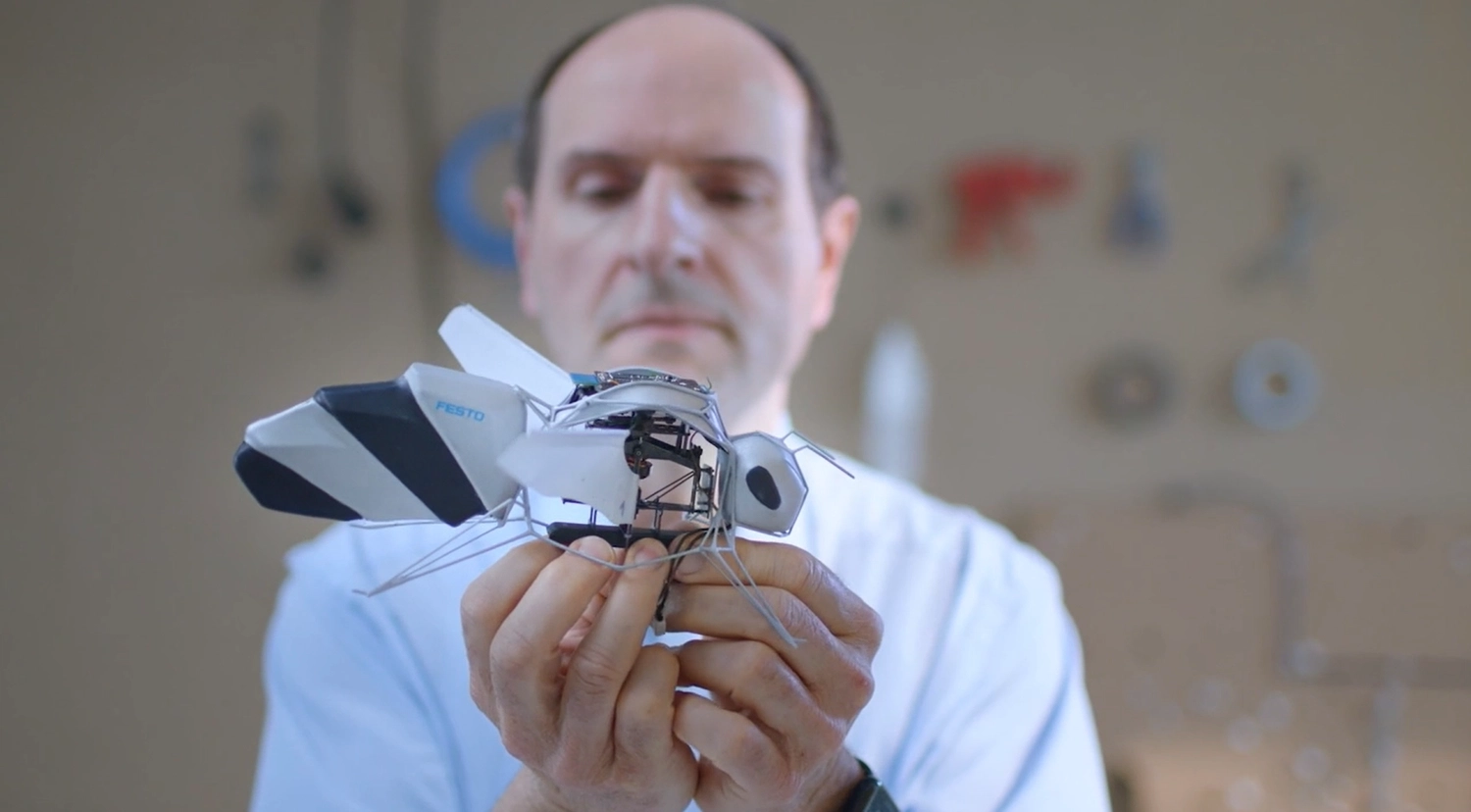
Swarm Robotics Breakthrough
Specialized robotics faces challenges in mimicking nature's efficient multi-agent coordination for tasks like search patterns or environmental monitoring. Festo built the BionicBee, a 34-gram flapping-wing robot measuring 22 cm long with a 24 cm wingspan, demonstrating autonomous swarm flight in controlled indoor environments using ultra-wideband localization. Launched in 2024, it enables collision-free formation flying among multiple units, advancing research into biomimetic aerial systems.
Niche Capabilities Shine
The BionicBee stands out with its purpose-built flapping-wing design at 15-20 Hz, purpose-built for precise geometry adjustments via three servo motors, and full swarm coordination without payloads. Its automatic calibration compensates for hand-assembled variations, ensuring uniform behavior, while centralized path planning accounts for air turbulence effects. BionicBee prioritizes swarm uniformity over individual versatility.
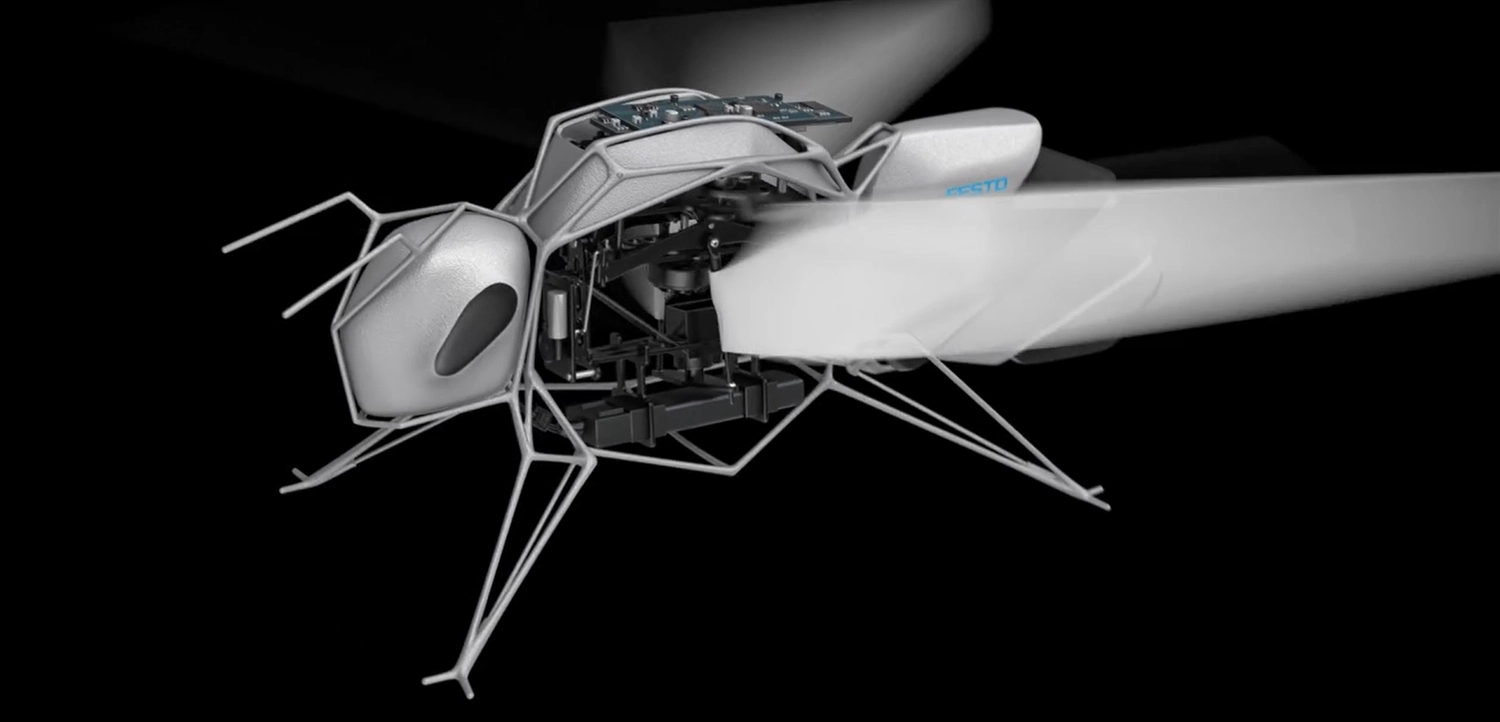
Sensing to Swarm Motion
UWB receivers and IMUs provide sensor input on position and orientation, feeding into proprietary algorithms for specialized processing that calculate autonomous locations via time-of-flight from eight anchors. A central computer then outputs collision-free paths, executed by the brushless motor and servos for targeted wing adjustments. This flow supports reliable indoor multi-agent maneuvers.
Specs Enable Precision
At 34 grams with 22 cm length, 24 cm wingspan, and 3 cm body depth, the design allows agile 2-3 m/s flight for close formations. UWB-based navigation with IMU integration delivers centimeter-level indoor positioning, while safety features like turbulence-aware planning prevent collisions in swarms. These attributes make it viable for research-grade coordination.

Filling Research Gaps
In the broader robotics landscape, BionicBee carves a unique niche as a lightweight, non-modular platform for swarm robotics research and biomimetic studies, distinct from payload-focused drones or ground robots. It targets multi-agent development and distributed control testing, with no external capacity emphasizing pure locomotion research over commercial applications. This positions it as an enabler for academic and lab explorations into nature-inspired flight.
Related Articles

Limitbit's Doly Robot Evolves as Open-Source Companion Four Years Post-Kickstarter

Yukai Engineering's BOCCO emo Bridges Family Gaps with Emotional Robotics

Aisoy Robotics Unveils KiK Robot for Scratch-Based AI Coding

LivingAI's EMO Robot Brings Autonomous Desktop Companionship to Homes
Learn More About This Robot
Discover detailed specifications, reviews, and comparisons for BionicBee.
View Robot Details →