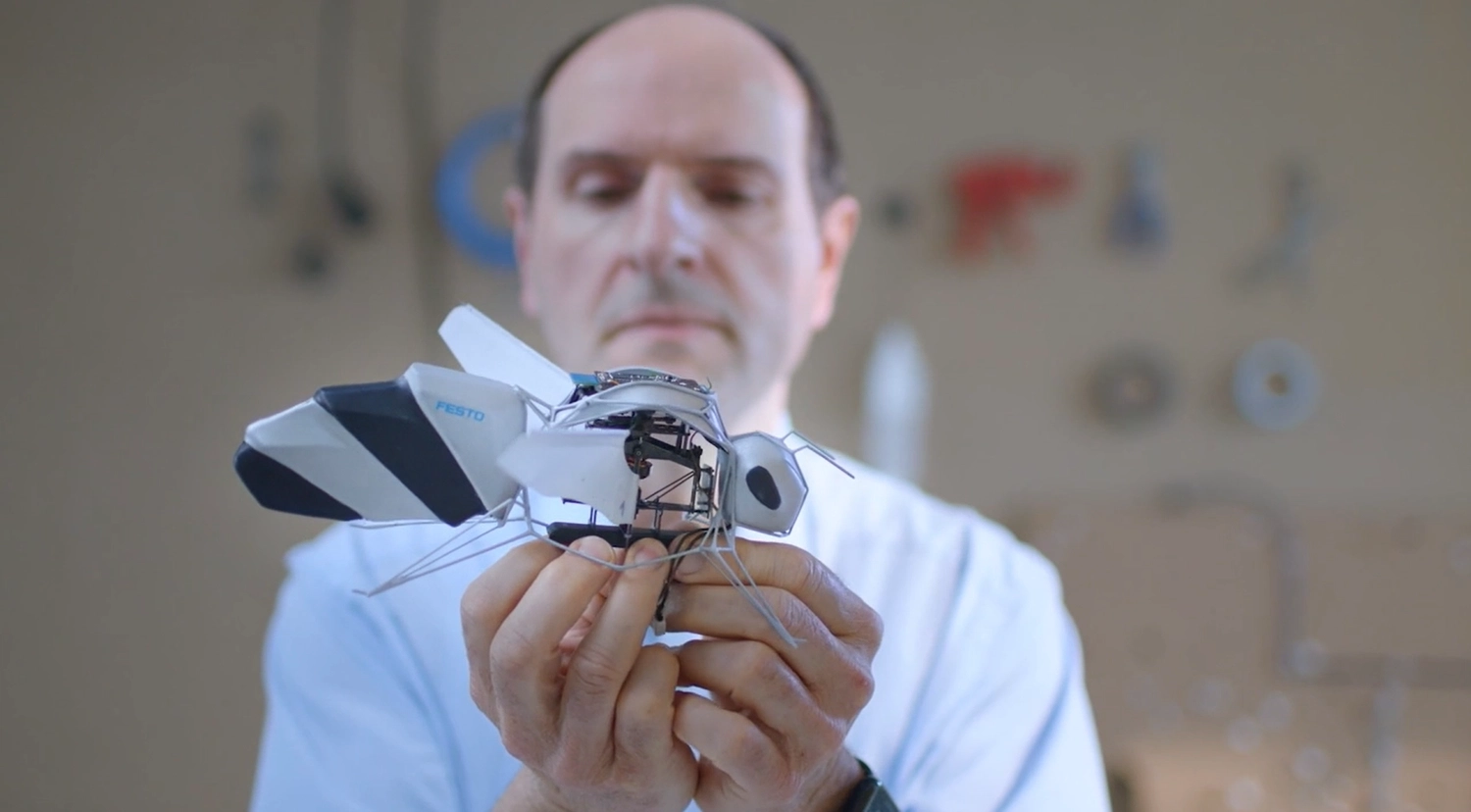
BionicBee
AI ChatLast updated:
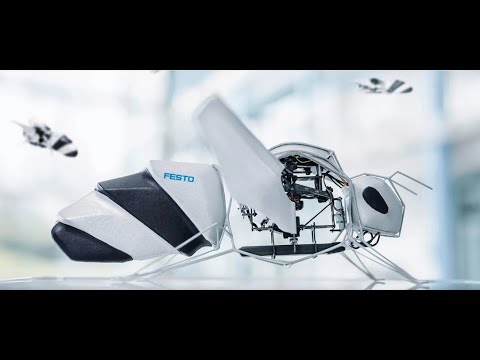
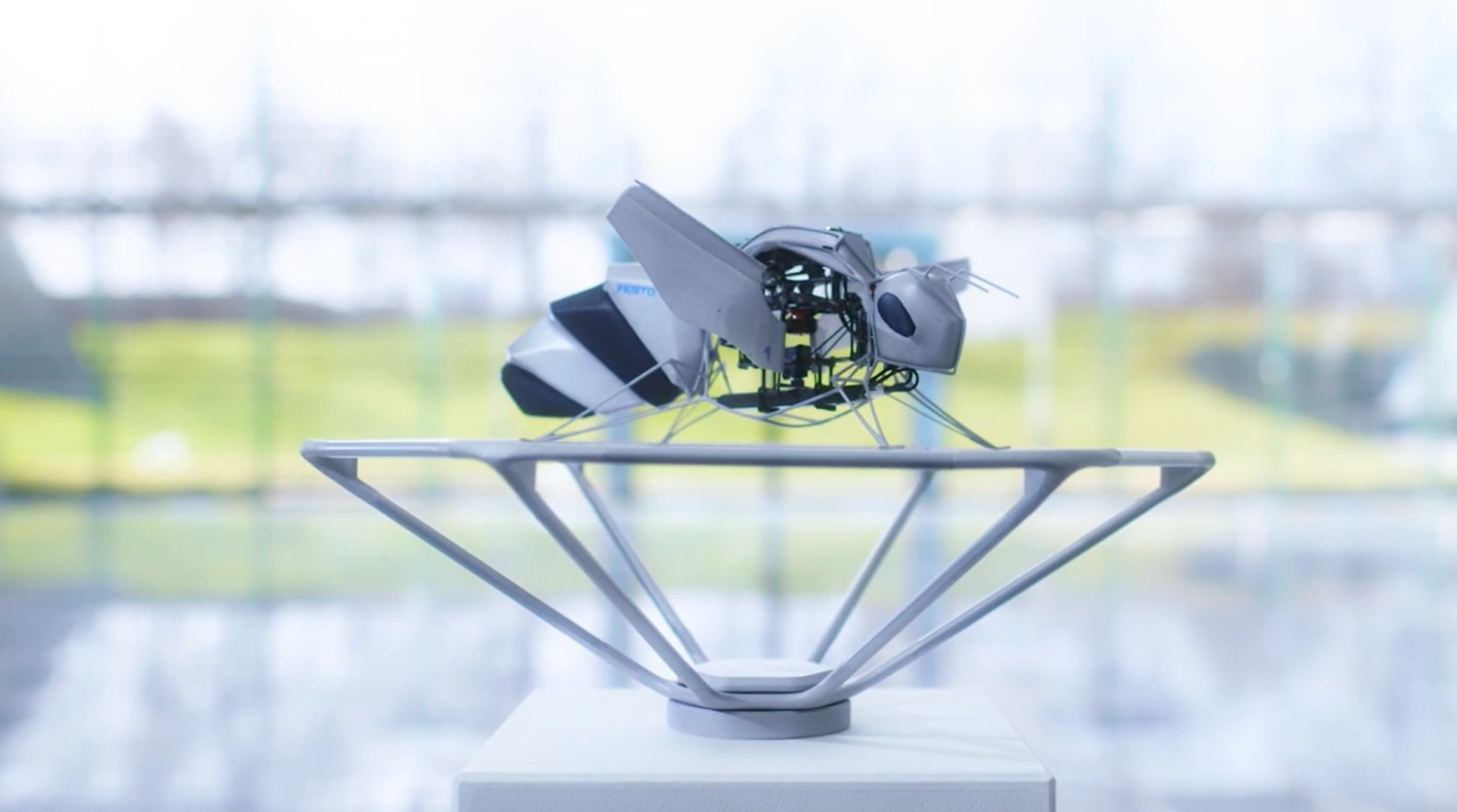
The BionicBee is a biomimetic flying robot designed for autonomous swarm flight and research into nature-inspired aerial locomotion. Weighing only 34 grams with a 22 cm length and 24 cm wingspan, it represents Festo's smallest flying object to date. The robot uses flapping-wing flight mechanics (15–20 Hz wingbeat frequency) rather than rotors, achieving precise maneuverability through a brushless motor and three servo motors that adjust wing geometry. Primary use cases include swarm robotics research, autonomous flight coordination studies, and demonstration of distributed control systems. The BionicBee operates via an indoor ultra-wideband localization system enabling collision-free formation flight, making it valuable for research in multi-agent systems, biomimetics, and advanced control algorithms.
Quick Overview & Key Facts
BionicBee is a robot made by Festo in Germany, launched in 2024 and built for swarm robotics research, autonomous flight coordination studies, and multi-agent system development. Featured in “Festo Unveils BionicBee for Autonomous Indoor Swarm Flight”.
- Dimensions
- 22 cm length × 24 cm wingspan × 3 cm body depth
- Weight
- 34 grams
- Mobility
- Aerial (flapping-wing)
- Top speed
- 2–3 m/s
- Battery runtime
- Approximately 4 minutes per charge
- Sensors
- Ultra-wideband (UWB) receiver for indoor localization, inertial measurement unit (IMU), wireless communication receiver (2.4 GHz)
- Operating environment
- Indoor environments with UWB infrastructure
Image Gallery
Below images are from Festo's official sources


Review Videos
Watch expert reviews and demonstrations of this robot

Robot Specifications
Values without a Confirmed badge are compiled from public sources and may not be manufacturer-verified.
Not yet published by Festo: warranty terms, safety certifications, EMC compliance, noise level, expected lifespan, maintenance schedule, firmware version, update method and 2 more.
Latest News About BionicBee
Stay updated with the latest articles and developments
More Robots from Festo
Explore other robots from this manufacturer


More Robots
Discover more robots in the same category


Robots From Other Categories
Discover complementary robots from different categories that work well together

Frequently Asked Questions
Get answers to common questions about this robot
Q1. What is BionicBee and what specific problem or task is it designed to solve?
BionicBee is an ultra-lightweight flapping-wing flying robot developed by Festo's Bionic Learning Network. According to Festo, it addresses the challenge of enabling multiple flying objects to operate completely autonomously in a swarm, mimicking bee flight for coordinated group maneuvers.
Q2. What are the core capabilities and standout features of BionicBee?
BionicBee weighs 34 grams, measures 220 mm in length with a 240 mm wingspan, and flaps wings at 15-20 Hz using a brushless motor and three servo motors for geometry adjustments. According to Festo, it features generative design for lightweight carbon fiber and 3D-printed structures, enabling precise control, a 4-minute flight time, and automatic calibration for swarm uniformity.
Q3. Who uses BionicBee, and which industries or sectors benefit from it?
BionicBee is developed by Festo's Bionic Learning Network for research into bio-inspired flight. According to Festo, it supports studies in autonomous swarm robotics, with potential applications in areas requiring coordinated micro-aerial operations such as indoor inspection or environmental monitoring.
Q4. Is BionicBee a commercially available product, or is it still a research prototype?
BionicBee remains a research prototype from Festo's Bionic Learning Network. No information indicates commercial availability; it demonstrates technologies like swarm autonomy rather than serving as a market product.
Q5. How does BionicBee operate autonomously, and what level of human oversight is required?
BionicBee achieves swarm autonomy via an indoor ultra-wideband localization system and intelligent algorithms that calibrate individual hardware differences. According to Festo, the swarm flies completely autonomously after initial setup, with external control treating all units as identical, though human oversight is needed for deployment and monitoring.
Q6. What sensors, AI, and navigation technology does BionicBee use?
BionicBee employs an ultra-wideband indoor localization system for positioning. According to Festo, it uses intelligent algorithms for automatic calibration and flight control, compensating for manufacturing variances, with no specific onboard sensors detailed beyond servo feedback for wing geometry.
Q7. How does BionicBee compare to similar robots or competing solutions in its category?
BionicBee is Festo's smallest flying object at 34 grams, using flapping wings and generative design for swarm autonomy, unlike propeller-based micro-drones. According to Festo, its bio-inspired mechanics enable precise maneuvers in groups, distinguishing it from rigid-wing or multi-rotor prototypes in lightweight swarm research.
Q8. What are the known limitations, trade-offs, or challenges of using BionicBee?
BionicBee has a flight time of about 4 minutes due to its 300 mAh battery. According to Festo, handmade construction introduces variances requiring calibration, and operations are limited to indoor environments with ultra-wideband localization, restricting outdoor or extended use.
Q9. What does it cost to acquire or deploy BionicBee, and what is the expected ROI?
No public pricing or acquisition details exist for BionicBee, as it is a research prototype. Deployment costs would involve multiple units, calibration infrastructure, and indoor localization systems, with ROI dependent on research outcomes rather than commercial metrics.
Q10. What is the future roadmap or planned improvements for BionicBee?
Festo provides no specific roadmap for BionicBee beyond its role in the Bionic Learning Network. Developments may focus on extending flight time, enhancing outdoor navigation, or scaling swarm size, building on 15 years of bio-inspired flight research.
Rating and Reviews
Share your experience and help others decide!
Loading...
User Reviews
No user reviews. Be the first one to review!
User Comments (No Login needed)
Share your thoughts, experiences, or questions about this robot.
Comments appear after moderator review.