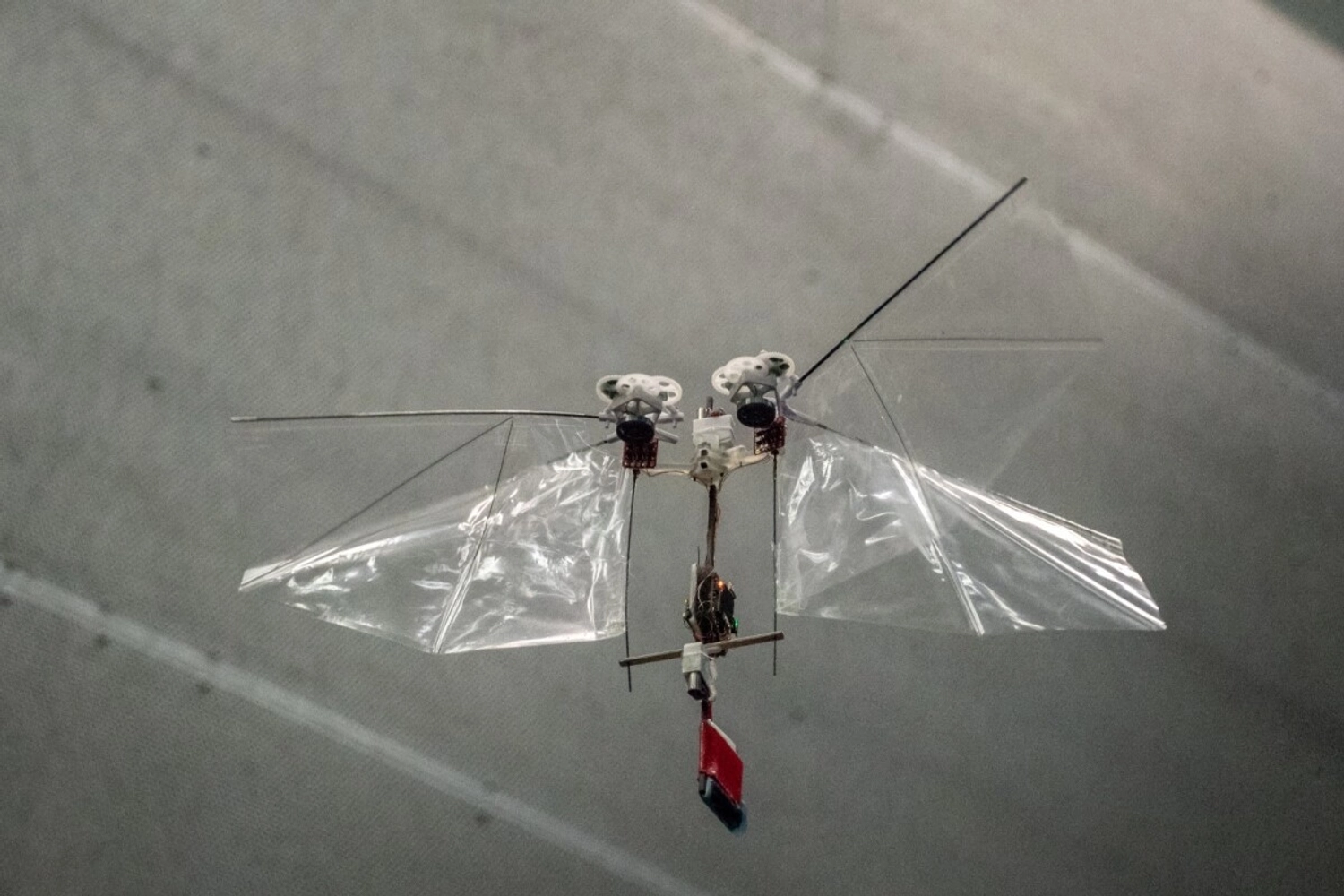
DelFly Nimble
AI ChatLast updated:
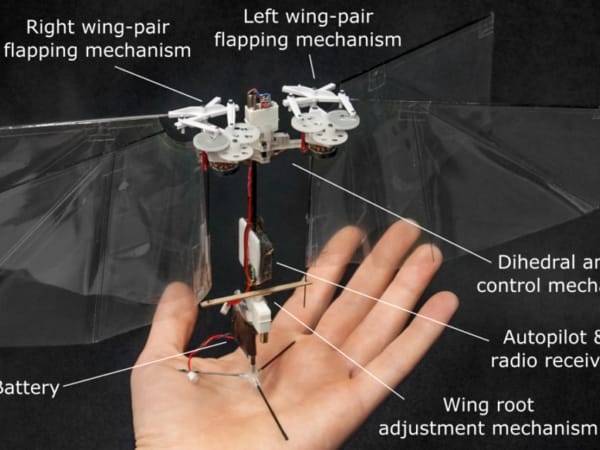
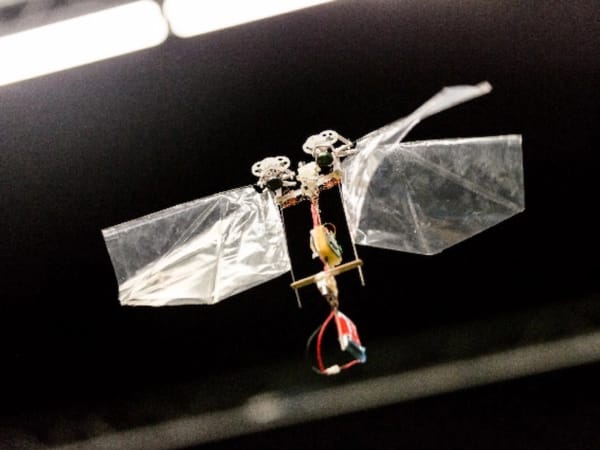
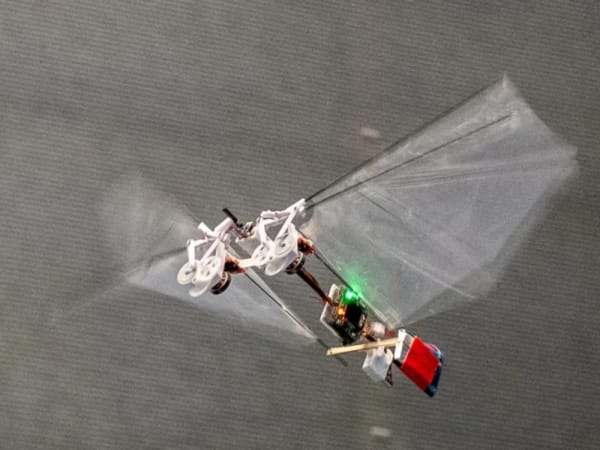
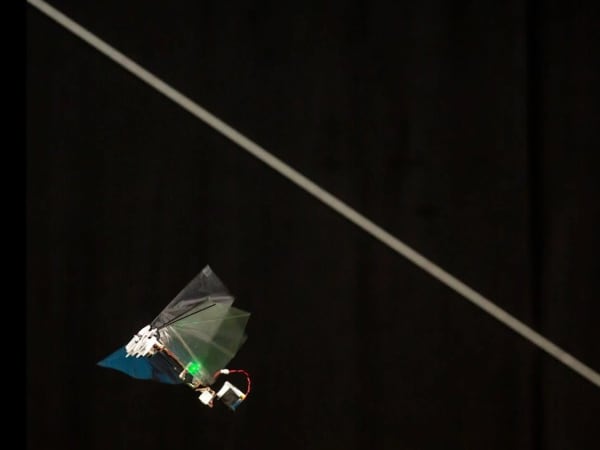
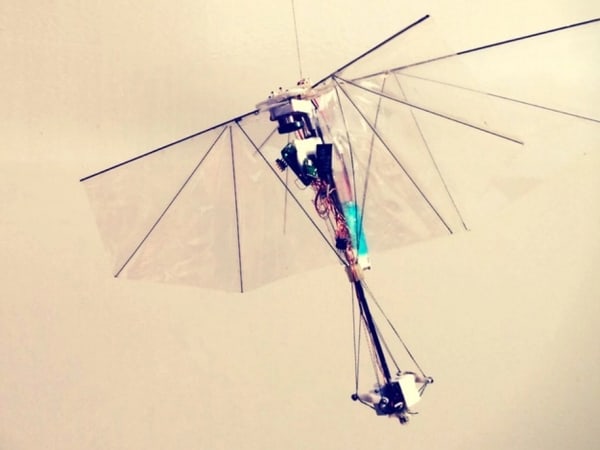
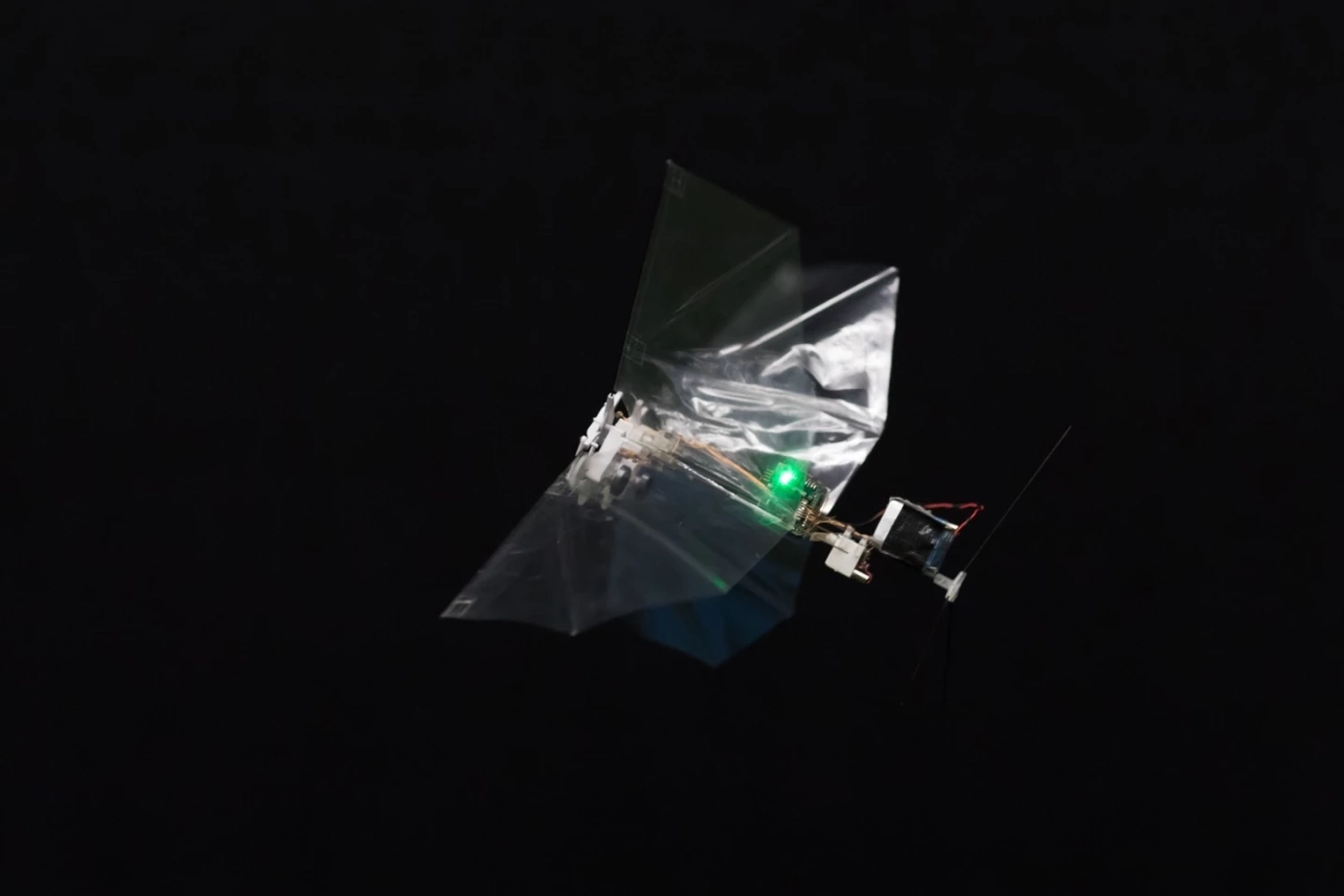
The DelFly Nimble is a bio-inspired flapping-wing micro air vehicle (MAV) developed for insect-flight research, mimicking the agility of fruit flies. With a 33 cm wingspan and 29 g weight, it flaps four wings at 17 Hz for hover, forward/sideways flight up to 7 m/s, and rapid maneuvers like 360° flips, banked turns, and escape responses. Actively stabilized by an onboard computer adjusting wing motion for roll, pitch, and yaw control, it hovers over 5 minutes or flies >1 km on a single charge. It carries 4 g payloads like cameras or sensors, enabling applications in aerial robotics research, bio-mimicry studies, and agile flight experimentation in controlled environments.
Quick Overview & Key Facts
DelFly Nimble is a robot made by MAVLab in Netherlands, launched in 2018 and built for insect flight research, agile aerial maneuvers, and bio-mimicry escape studies. Featured in “DelFly Nimble Achieves 90% Maneuver Accuracy in 2026 Flight Tests”.
- Dimensions
- 33 cm wingspan x 15 cm body length x ~10 cm height
- Weight
- 0.029 kg
- Mobility
- aerial (flapping-wing)
- Top speed
- 7 m/s (25 km/h max)
- Payload capacity
- 4 g (camera system, additional sensors)
- Battery runtime
- 5+ minutes hover, >1 km range
- Charging time
- 1 hour
- Sensors
- IMU, onboard computer for stabilization, optional camera
- Operating environment
- indoor aerial, controlled lab environments
Image Gallery
Below images are from MAVLab's official sources
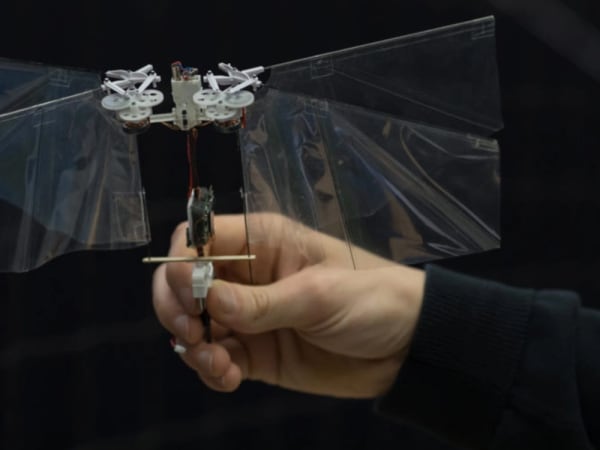
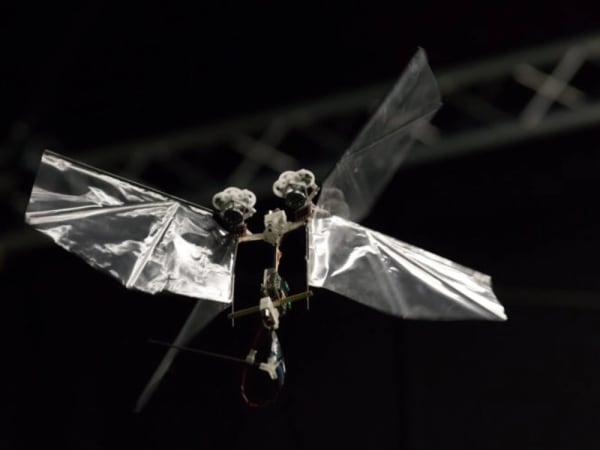
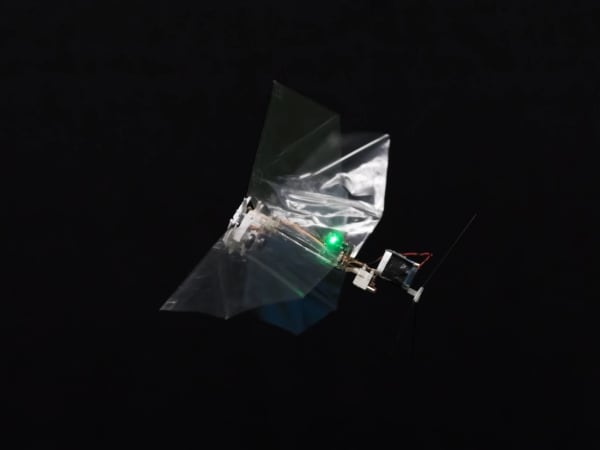
Review Videos
Watch expert reviews and demonstrations of this robot


Robot Specifications
Values without a Confirmed badge are compiled from public sources and may not be manufacturer-verified.
Not yet published by MAVLab: EMC compliance, firmware version and pet safety.
Latest News About DelFly Nimble
Stay updated with the latest articles and developments
More Robots
Discover more robots in the same category


Robots From Other Categories
Discover complementary robots from different categories that work well together

Frequently Asked Questions
Get answers to common questions about this robot
Q1. What is DelFly Nimble, and what problem is it designed to solve?
DelFly Nimble is a flapping-wing micro air vehicle developed by the Micro Air Vehicle Laboratory at Delft University of Technology. It was designed to advance understanding of insect flight mechanics and demonstrate autonomous flight control using bio-inspired wing actuation rather than conventional rotors or fixed-wing designs.
Q2. What are the main capabilities and key features of DelFly Nimble?
The robot features four independently controlled flapping wings that beat 17 times per second during hover. It can perform rapid banked turns, 360-degree flips, and aerial maneuvers similar to fruit flies. The system includes onboard computation for active stabilization and can carry small payloads such as cameras or sensors.
Q3. Who is DelFly Nimble built for, and which industries can benefit from it?
DelFly Nimble serves research institutions studying insect flight biomechanics and aerodynamics. Potential applications include environmental monitoring, search and rescue operations in confined spaces, and scientific research requiring minimal environmental disturbance. The platform is also used for validating hypotheses about animal flight control.
Q4. Is DelFly Nimble a commercial product or still a research prototype?
DelFly Nimble remains primarily a research platform developed within an academic laboratory setting. While it demonstrates functional autonomous flight, it has not transitioned to mass-market commercial production. The system is available for collaborative research partnerships with academic and institutional partners.
Q5. Is DelFly Nimble currently available for purchase, and when is it expected to ship?
DelFly Nimble is not available as a commercial off-the-shelf product. Access is limited to research collaborations with MAVLab at Delft University of Technology. No public commercial availability or shipping timeline has been announced.
Q6. How does DelFly Nimble actually work in real-world environments?
The robot operates through differential wing-flapping frequencies to control roll, pitch adjustments via servo-actuated wing mechanisms to control pitch, and wing-axis rotation to control yaw. Active onboard stabilization continuously adjusts wing motion based on sensor feedback. Battery operation provides approximately five minutes of hovering or over one kilometer of forward flight range per charge.
Q7. When was DelFly Nimble announced or officially launched?
DelFly Nimble was unveiled in September 2018, with research findings published in the journal Science. The robot represented a significant advancement over previous DelFly iterations by eliminating tail surfaces and achieving fully autonomous flapping-wing flight without traditional control surfaces.
Q8. How is DelFly Nimble different from other robots in the same category?
Unlike earlier flapping-wing designs that required tail surfaces or augmented control mechanisms, DelFly Nimble achieves three-axis control through wing actuation alone. It demonstrated a previously unknown passive aerodynamic coupling mechanism that assists in rapid directional changes, providing insights applicable to understanding natural insect flight.
Q9. Does DelFly Nimble require additional development or customization after purchase?
As a research platform rather than a finished commercial product, DelFly Nimble typically requires integration into specific research workflows. Customization depends on the research application, sensor payload requirements, and experimental protocols. Technical support is provided through MAVLab collaborations.
Q10. What is the future roadmap or planned upgrades for DelFly Nimble?
MAVLab has not publicly announced specific upgrade timelines or next-generation variants. The current focus remains on using DelFly Nimble as a platform for studying insect flight aerodynamics and control mechanisms. Future development directions would likely depend on emerging research questions and funding availability.
Rating and Reviews
Share your experience and help others decide!
Loading...
User Reviews
No user reviews. Be the first one to review!
User Comments (No Login needed)
Share your thoughts, experiences, or questions about this robot.
Comments appear after moderator review.