BionicMobileAssistant
AI ChatLast updated:
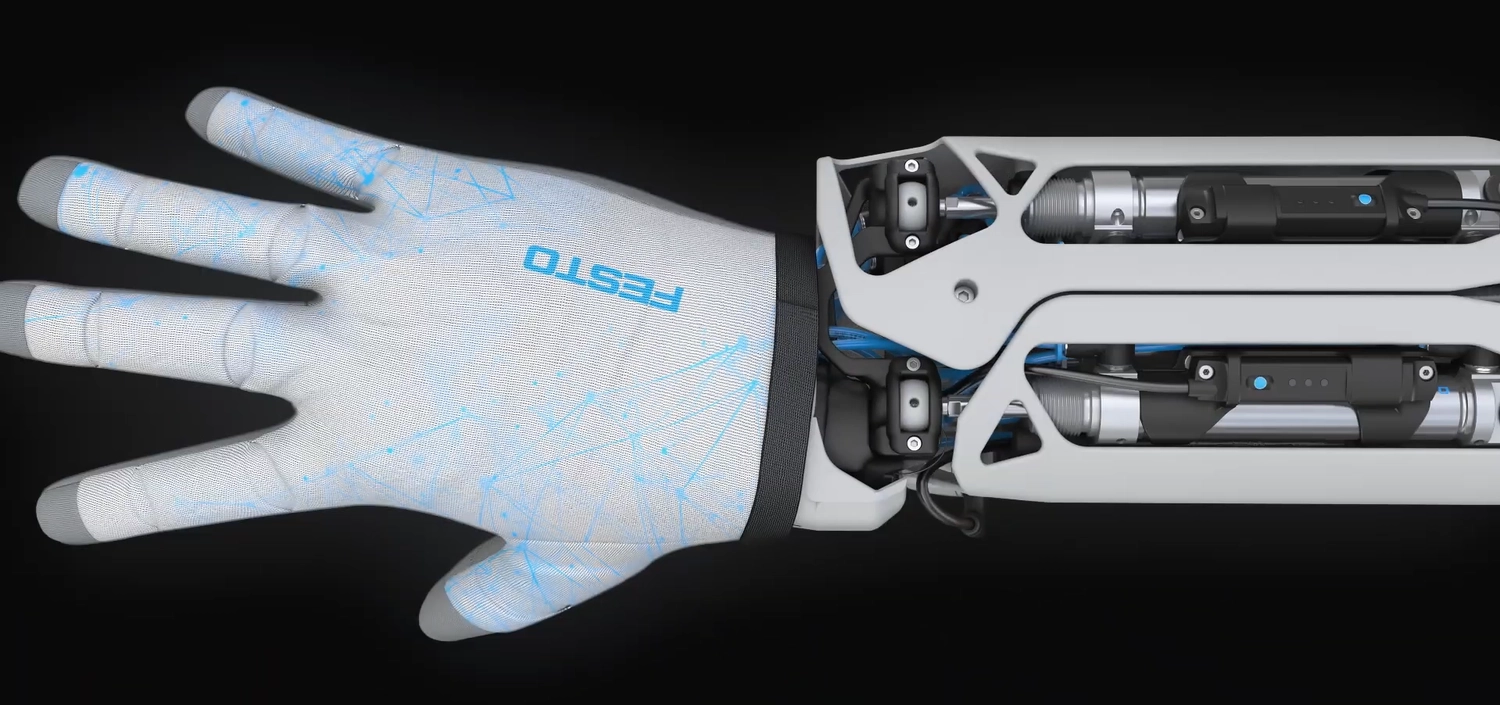
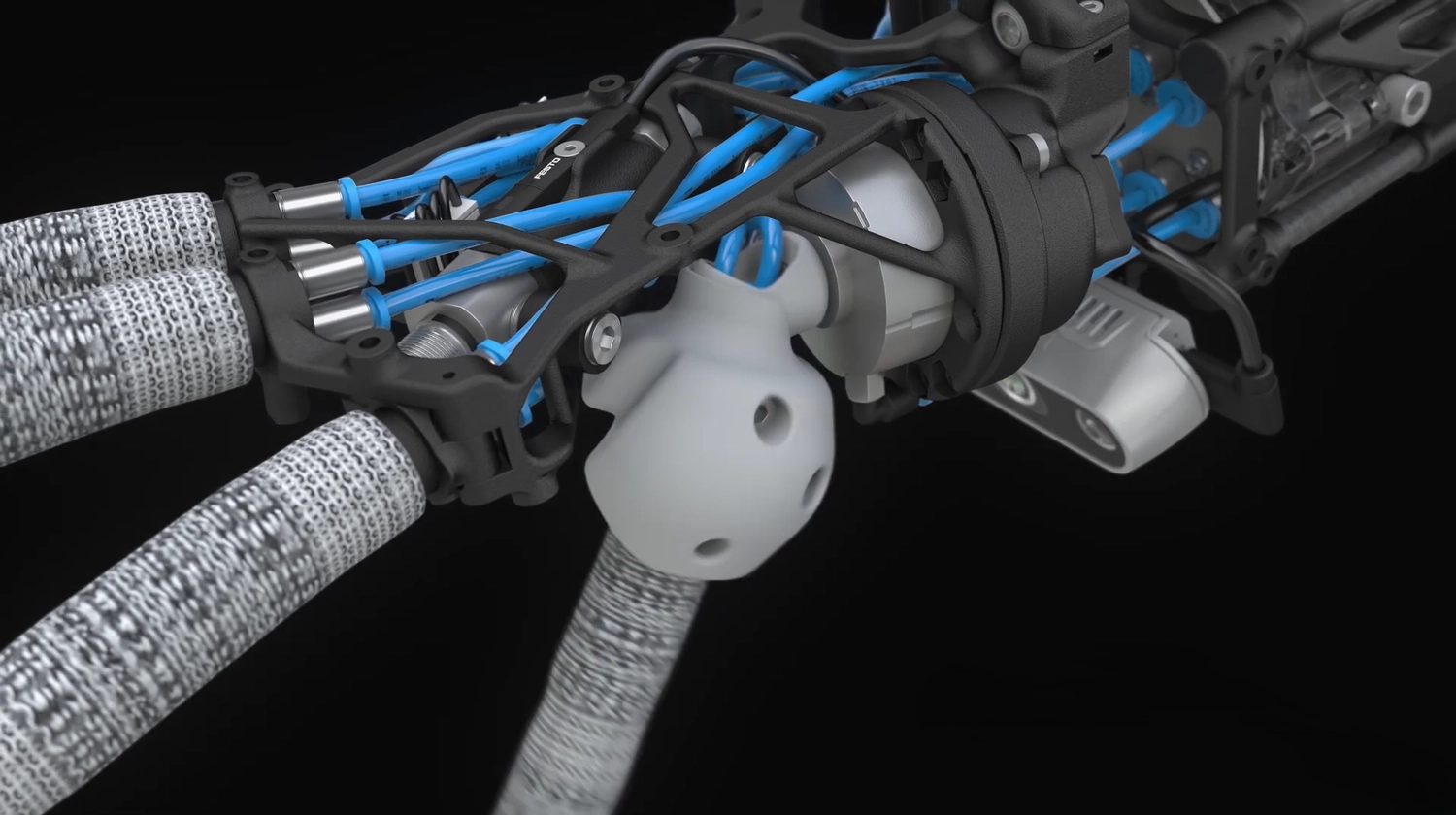
The BionicMobileAssistant is a modular prototype mobile assistance robot designed for human-robot collaboration in industrial production lines, assembly tasks, maintenance, inspections, and service roles. It features a ballbot base for omnidirectional 360° mobility, a lightweight DynaArm electric robotic arm, and the BionicSoftHand 2.0 pneumatic gripper mimicking human hand dexterity with opposable thumb, flexible bellows fingers, tactile sensors, and a 3D-printed 2DOF wrist. Powered by neural networks and AI, it autonomously navigates using two cameras for 3D orientation, recognizes and adaptively grasps objects, and performs ergonomically strenuous or monotonous tasks like quality checks, part handling, or support in infection-risk areas. Developed with ETH Zurich as part of Festo's Bionic Learning Network, it emphasizes safe cobot interaction in manufacturing environments.
Quick Overview & Key Facts
BionicMobileAssistant is a robot made by Festo in Germany, launched in 2020 and built for assembly line part handling, quality inspection (good/bad product differentiation), and ergonomic task assistance. Featured in “Festo's BionicMobileAssistant Debuts as Modular Assistant Robot”.
- Dimensions
- 120 x 60 x 60 (cm)
- Weight
- 21.9 kg
- Mobility
- Ballbot (omnidirectional spherical drive with three wheels)
- Top speed
- 1.5 m/s
- Payload capacity
- Small parts, tools, assemblies (up to 1kg gripper capacity)
- Battery runtime
- 4-6 hours
- Charging time
- 3 hours
- Sensors
- Two 3D cameras, tactile force sensors on fingertips/palm, wrist camera, IMU for balance
- Operating environment
- Indoor production lines, assembly halls, warehouses
Image Gallery
Below images are from Festo's official sources


Review Videos
Watch expert reviews and demonstrations of this robot
Robot Specifications
Values without a Confirmed badge are compiled from public sources and may not be manufacturer-verified.
Not yet published by Festo: pet safety.
Latest News About BionicMobileAssistant
Stay updated with the latest articles and developments
More Robots from Festo
Explore other robots from this manufacturer


More Robots
Discover more robots in the same category


Robots From Other Categories
Discover complementary robots from different categories that work well together
Frequently Asked Questions
Get answers to common questions about this robot
Q1. What is BionicMobileAssistant and what specific problem or task is it designed to solve?
BionicMobileAssistant is a prototype mobile robot system developed by Festo within its Bionic Learning Network. It addresses tasks in assembly and intralogistics by moving autonomously, recognizing objects via neural networks, and collaborating with humans through adaptive gripping.
Q2. What are the core capabilities and standout features of BionicMobileAssistant?
The system comprises three subsystems
Q3. Who uses BionicMobileAssistant, and which industries or sectors benefit from it?
BionicMobileAssistant serves as a research prototype from Festo's Bionic Learning Network, developed with partners like ETH Zurich. It targets production lines, assembly, and intralogistics sectors where human-robot collaboration on monotonous or hazardous tasks is needed.
Q4. Is BionicMobileAssistant a commercially available product, or is it still a research prototype?
BionicMobileAssistant is a research prototype, not commercially available. According to Festo, it emerges from the Bionic Learning Network, focusing on advancing biomimetic technologies for future automation.
Q5. How does BionicMobileAssistant operate autonomously, and what level of human oversight is required?
It navigates autonomously in 3D space using two cameras and neural networks for object recognition and grasping. Human oversight is minimal for collaborative tasks, as it adapts gripping force via tactile sensors and works alongside people on production lines.
Q6. What sensors, AI, and navigation technology does BionicMobileAssistant use?
The system employs a neural network for independent object recognition, two cameras for 3D orientation, a depth camera in the gripper wrist, bending sensors in fingers, and tactile force sensors in a glove. Navigation relies on a ballbot driven by omnidirectional wheels for omnidirectional movement.
Q7. How does BionicMobileAssistant compare to similar robots or competing solutions in its category?
Unlike fixed-base cobots, BionicMobileAssistant adds ballbot mobility for free directional movement, combining pneumatic gripping with electric arms. Its modular design allows the BionicSoftHand 2.0 to mount on other Festo systems like Bionic Cobot, emphasizing biomimetic adaptability over rigid industrial arms.
Q8. What are the known limitations, trade-offs, or challenges of using BionicMobileAssistant?
As a prototype, it faces challenges in scaling for industrial reliability and payload beyond lightweight tasks. Onboard energy limits operation time, and ballbot stability requires sophisticated balancing, potentially restricting use in uneven environments or heavy-duty applications.
Q9. What does it cost to acquire or deploy BionicMobileAssistant, and what is the expected ROI?
No public pricing information exists for BionicMobileAssistant, as it remains a non-commercial prototype. Deployment costs and ROI are not disclosed by Festo, with focus on research rather than market availability.
Q10. What is the future roadmap or planned improvements for BionicMobileAssistant?
Festo's Bionic Learning Network continues developing biomimetic systems, with the modular BionicSoftHand 2.0 adaptable to other arms. Specific roadmap details for BionicMobileAssistant are not publicly outlined beyond advancing safe human-robot collaboration.
Rating and Reviews
Share your experience and help others decide!
Loading...
User Reviews
No user reviews. Be the first one to review!
User Comments (No Login needed)
Share your thoughts, experiences, or questions about this robot.
Comments appear after moderator review.