Festo's BionicTurtleWalker Demonstrates Pneumatic Logic Without Electronics or Batteries
Robot Details
BionicTurtleWalker • FestoPublished
May 5, 2026
Reading Time
4 min read
Author
Origin Of Bots Editorial Team
Pneumatics Replace Electronics in Walking Robot
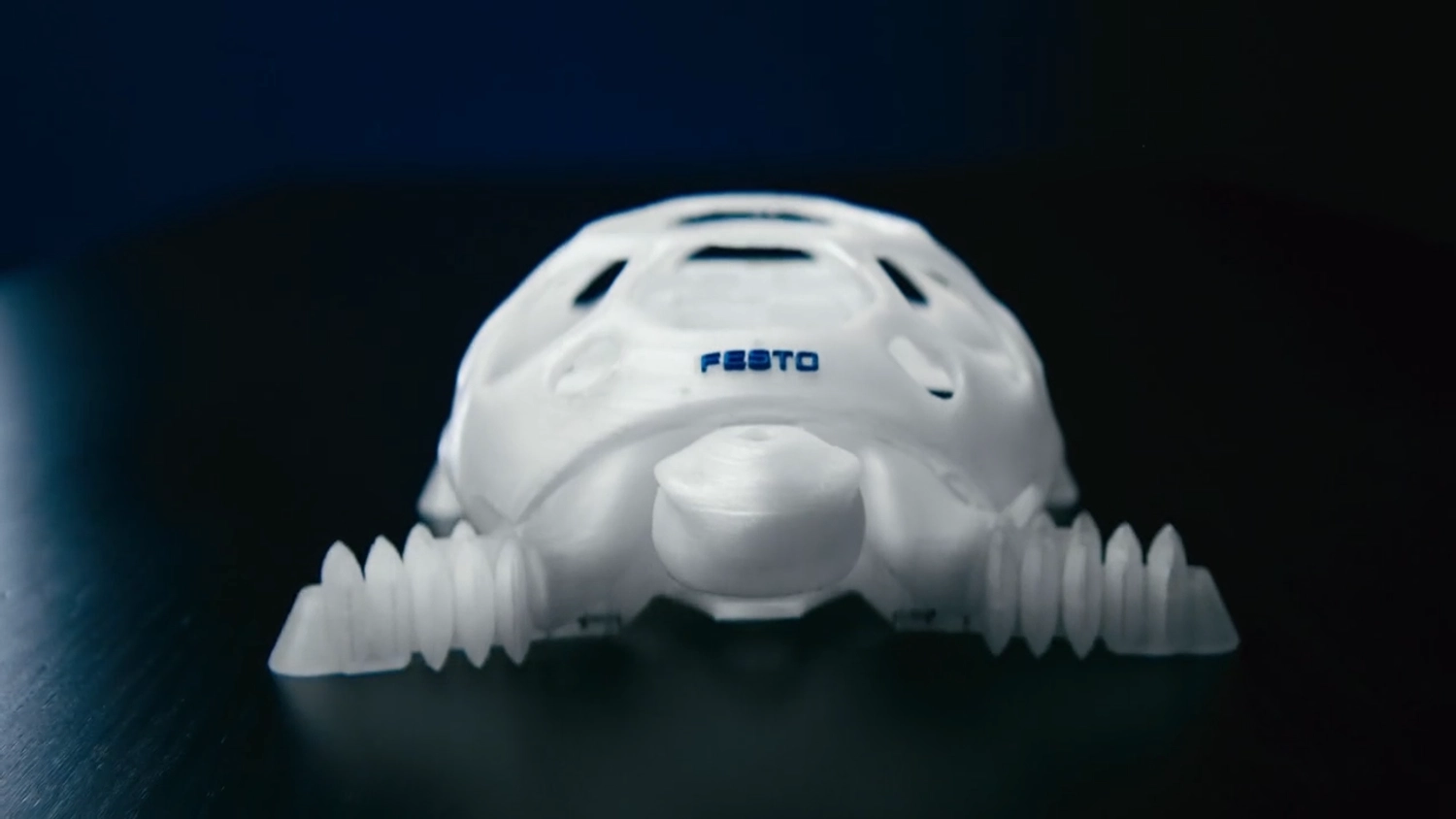
Soft robotics researchers face a persistent challenge: how to build autonomous systems that operate reliably without complex electronics, power management, or traditional control systems. Festo, the German automation specialist, has demonstrated a potential answer with the BionicTurtleWalker, a 3D-printed walking robot that uses a pneumatic logic module to coordinate leg movement without batteries, microcontrollers, or electrical components. The robot, developed in collaboration with the Plant Biomechanics Group at the University of Freiburg, represents a shift toward material-based computation in bioinspired robotics, where the robot's physical structure itself performs the logic required for coordinated movement.
Why Pneumatic Logic Matters Here
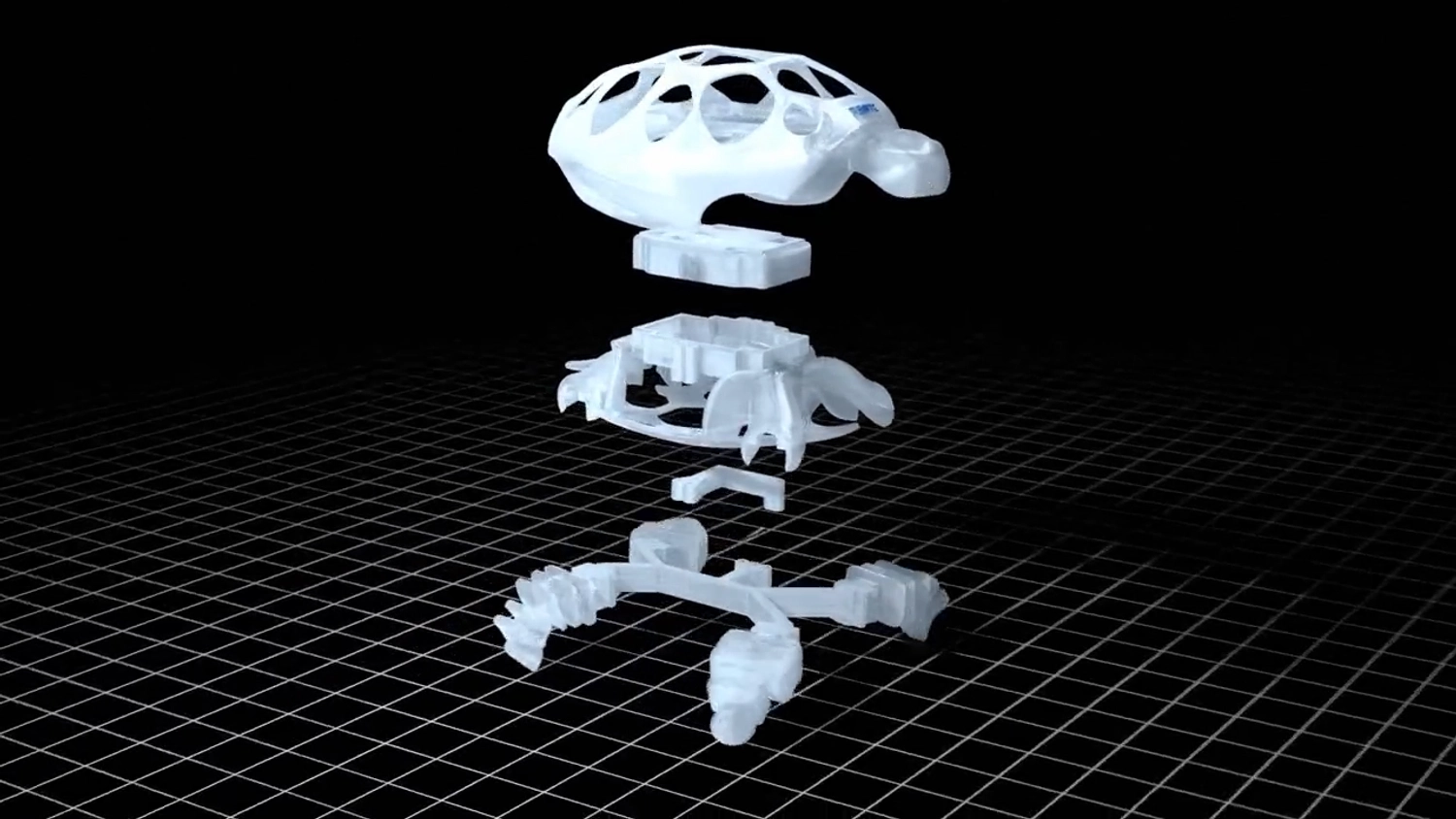
The BionicTurtleWalker's core innovation lies not in speed or payload capacity, but in its elimination of conventional control infrastructure. The robot's pneumatic logic module—a polyurethane structure containing two valve chambers capable of performing Boolean operations—replaces the role of electrical valves and control boards found in standard pneumatic systems. This approach reduces manufacturing complexity, lowers operating costs, and enables the entire robot, from shell to legs, to be produced in a single 3D printing process using thermoplastic polyurethane. The design demonstrates that soft robots can achieve coordinated behavior through passive pneumatic computation rather than active electronic control. The real breakthrough here is proving that sophisticated movement doesn't require a processor.
How Pneumatic Logic Executes Movement
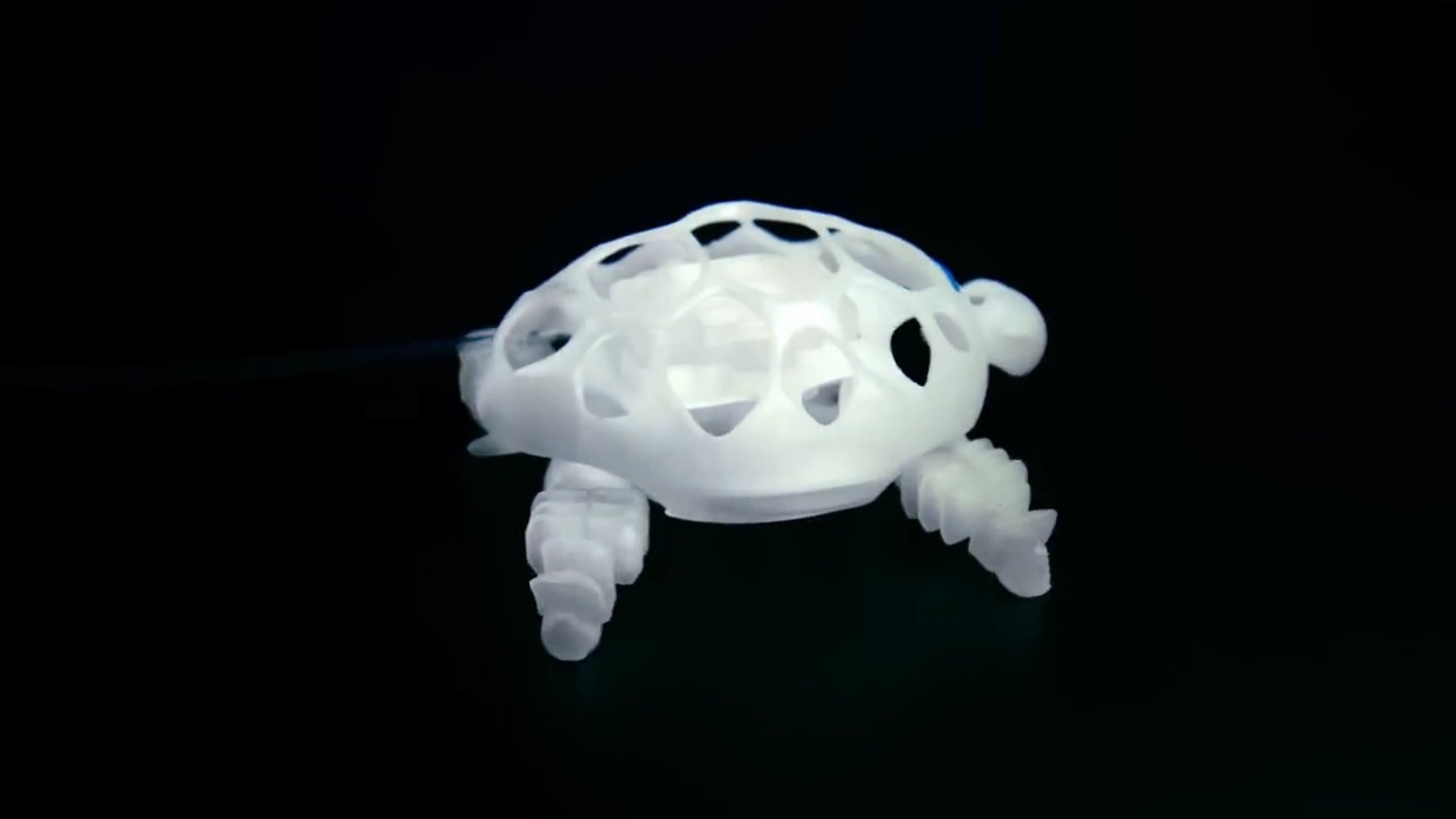
The system operates through a simple input-processing-output chain: compressed air enters through a single tubing connection, flows into the pneumatic logic module where valve chambers direct pressure to specific leg pairs, and the resulting pressure differential causes the robot's four legs to move in an alternating diagonal pattern. This mimics natural turtle locomotion, where opposite legs push downward simultaneously. The logic module switches movements precisely without any external signal processing, relying instead on the physical geometry of its internal chambers to route pneumatic flow. The robot can move forward, backward, and rotate by varying the wave pattern of leg actuation, all determined by the structure of the logic module itself.
Educational Demonstration and Biomechanics Research
The most immediate application for the BionicTurtleWalker is in university research labs and educational environments, where it serves as a tangible demonstration of how biological principles can translate into mechanical systems. Students and researchers can study how a simple pneumatic logic module replicates the neural coordination that biological tortoises use for walking, without needing to understand electrical control systems or write code. The robot's robustness—the logic module can withstand up to 900 kg of surface load despite being 3D-printed—makes it suitable for repeated classroom use and trade show demonstrations. This positions the BionicTurtleWalker as a bridge between abstract biomimicry concepts and hands-on mechanical understanding.
Specifications and Operational Constraints
The BionicTurtleWalker is reported to operate on low pneumatic pressure, a design choice that significantly reduces energy consumption and system complexity compared to conventional pneumatic robots. The entire robot, including its shell and logic module, is manufactured from thermoplastic polyurethane, a material that combines durability with flexibility. The robot requires only a single external tubing connection for compressed air supply, simplifying deployment in constrained environments. Movement speed is deliberately modest—designed more for demonstrating coordinated gait patterns than rapid locomotion—making it ideal for controlled laboratory settings and educational demonstrations rather than high-performance industrial tasks.
Positioning Within Soft Robotics Landscape
The BionicTurtleWalker occupies a specialized niche within the broader soft robotics market: it is purpose-built for biomimicry research and educational demonstration, not for commercial automation or industrial deployment. While most commercial soft robots target manipulation tasks or collaborative human-robot work, the BionicTurtleWalker addresses a narrower but intellectually significant challenge—proving that coordinated locomotion can emerge from passive pneumatic structures without active electronic control. This positions it alongside other Festo bionic platforms like the BionicKangaroo and BionicMotionRobot, which similarly prioritize biomimetic principles and materials science innovation over traditional robotics performance metrics. The robot fills a gap where research institutions, educational programs, and technology museums need low-cost, low-complexity demonstrations of how nature solves engineering problems through material properties rather than computational power.
What This Signals for Specialized Robotics
The BionicTurtleWalker's success suggests a growing market signal: specialized robotics is expanding into domains where traditional control systems are either unnecessary or counterproductive. Rather than racing toward greater computational sophistication, segments of the robotics industry are exploring how to embed intelligence directly into materials and mechanical structures. This approach appeals to research institutions seeking cost-effective platforms, educational markets demanding accessible demonstrations, and niche applications where eliminating electronics reduces environmental impact and maintenance burden. As 3D printing of flexible materials becomes more accessible, we should expect to see more robots in this category—purpose-built for specific research questions or educational outcomes rather than broad commercial deployment. The BionicTurtleWalker indicates that the future of specialized robotics includes not just smarter robots, but simpler ones designed to solve specific problems through elegance rather than complexity.
Sources
Related Articles
Piaggio Fast Forward Unveils Compact Gita Mini Cargo Robot

Toyota's Kirobo Mini Pioneered Palm-Sized Emotional Companionship
HUROTICS Launches H-Medi Pro, First Garment-Type Wearable Rehab Suit with AI-Driven Gait Correction
Acemate Launches AI Tennis Robot for Solo Rally Training
Learn More About This Robot
Discover detailed specifications, reviews, and comparisons for BionicTurtleWalker.
View Robot Details →