Living.AI's EMO Go Home Adds Autonomous Charging to Desktop Companion Robot
Robot Details
EMO Go Home • LivingAIPublished
May 5, 2026
Reading Time
5 min read
Author
Origin Of Bots Editorial Team
Desktop Pet Gets Self-Sufficiency Upgrade
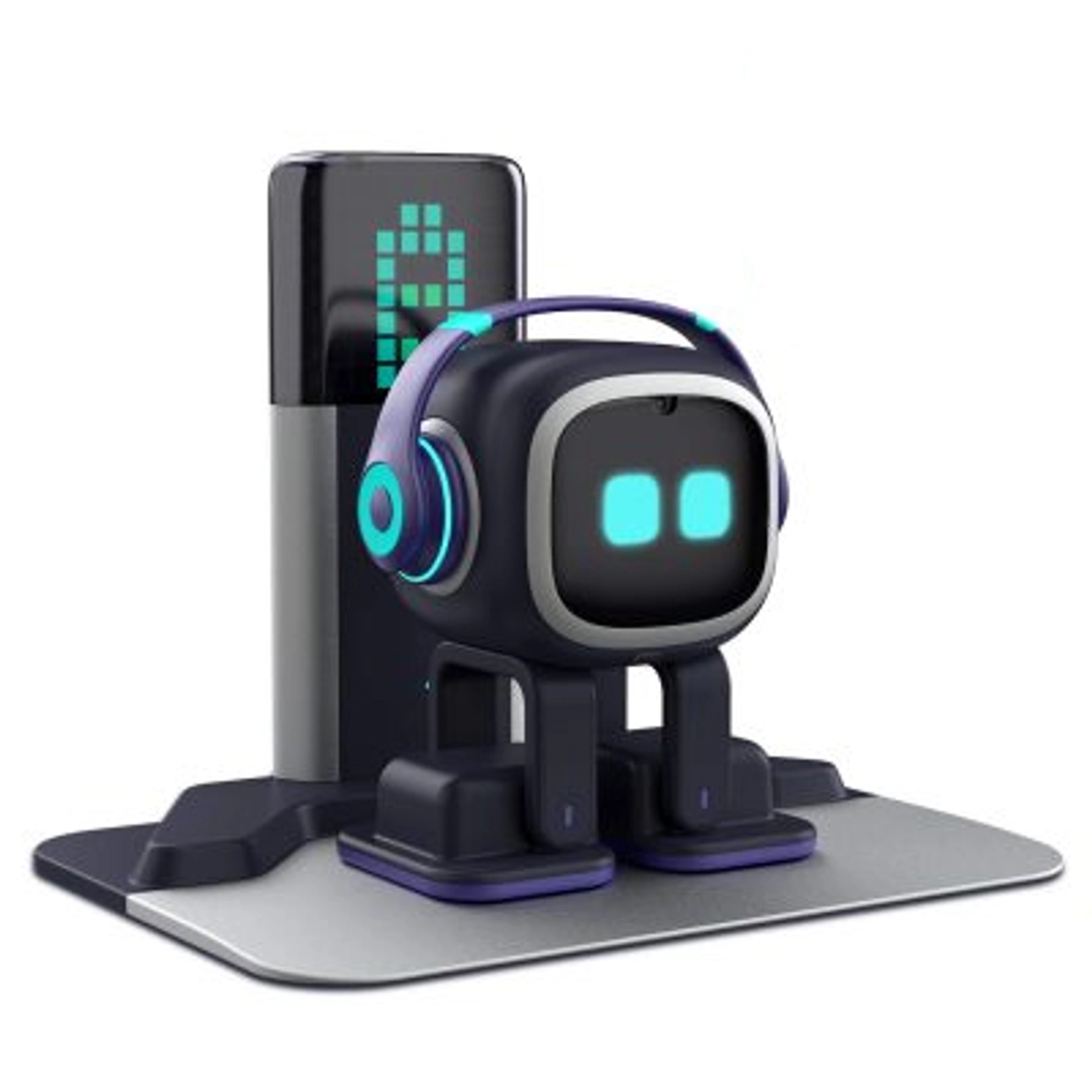
The market for AI-powered desktop companions continues to expand as manufacturers add autonomous capabilities that reduce user intervention. Living.AI has released the EMO Go Home, an upgraded version of its EMO desktop robot that introduces self-charging functionality and laser-based navigation within a defined virtual boundary. The system combines the original EMO's interactive features—facial recognition, voice commands, and expressive LED matrix—with a home base station that enables the robot to autonomously return for charging and operate within a confined safe zone without manual placement or constant supervision.
Why Desktop Autonomy Matters
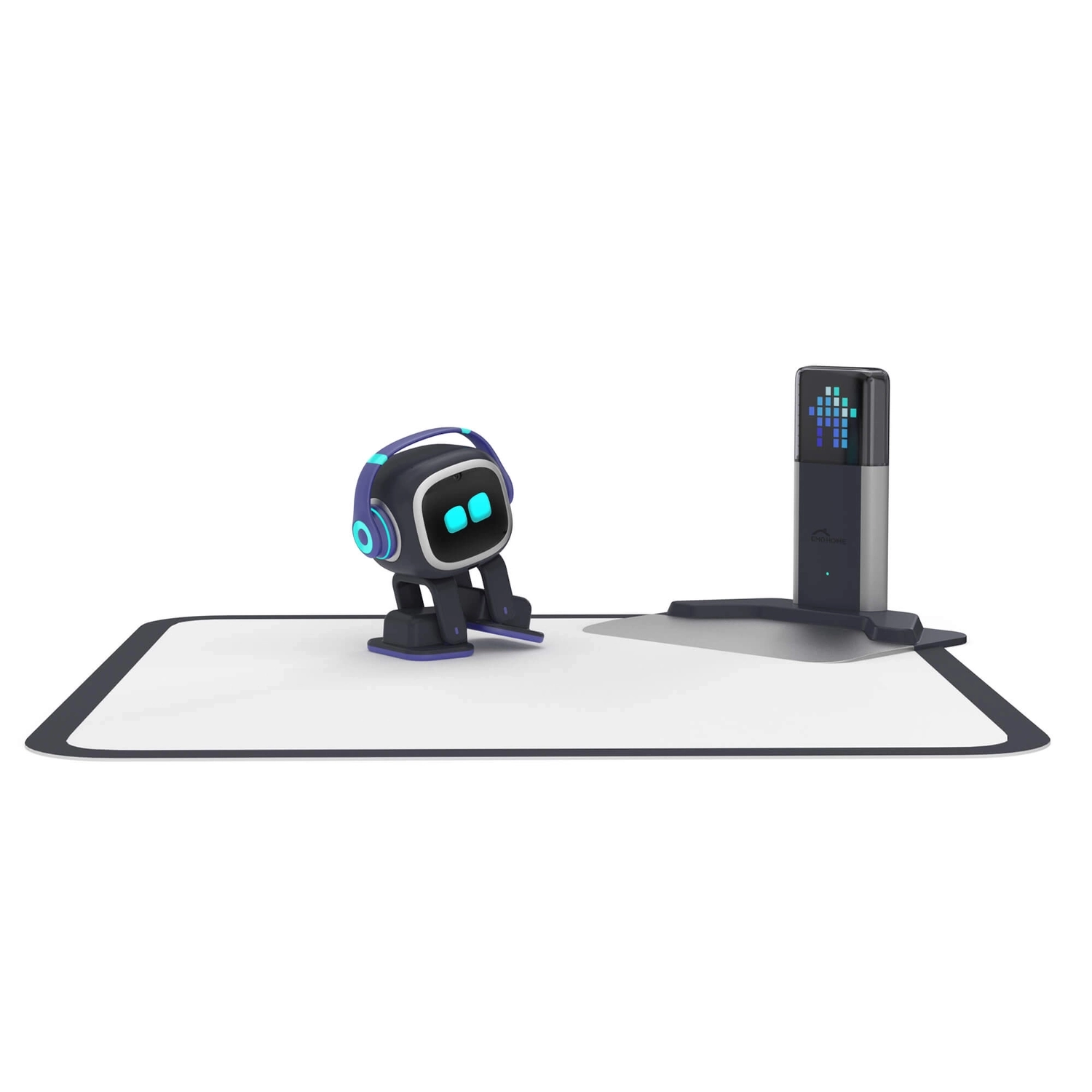
The EMO Go Home addresses a practical friction point in companion robotics: battery management. Unlike the standard EMO, which requires manual repositioning on a charging dock, the Go Home model uses laser sensors and advanced navigation algorithms to locate its home station and dock independently, extending usable session time from 2 to 4 hours without user intervention. The addition of a smart light accessory that responds to EMO's mood and time of day, combined with ChatGPT integration and support for smart home device control through the base station, positions the system as a genuine ambient intelligence tool rather than a novelty. The core innovation here is not raw capability but practical autonomy: EMO becomes a device users can forget about between interactions, which fundamentally changes how companion robots fit into daily routines.
How Autonomous Navigation Works
EMO's system flow operates on three integrated layers. Input comes from its laser sensor array, HD camera, and 4-microphone directional system, which continuously map the immediate environment and detect the home base's location. Processing occurs through a built-in Neural Network processor that runs proprietary AI models to interpret sensor data, calculate safe navigation paths, and identify the charging dock within a defined 3-by-3-foot virtual fence boundary. Output manifests as wheeled movement along the skateboard base, collision avoidance maneuvers triggered by anti-fall and infrared sensors, and autonomous docking behavior when battery levels drop. The virtual fence—constructed via laser recognition—prevents EMO from wandering into hazardous areas, a critical safety feature for unsupervised tabletop operation.
Desktop Office Workflow Integration
Consider a professional working from home who places EMO on a desk corner each morning. Throughout the workday, EMO operates independently: it greets the user by name using facial recognition, responds to voice queries about weather or time, plays background music, and initiates light ambient displays based on circadian rhythms via the included smart light. When battery depletes, EMO autonomously navigates back to its home station without disrupting workflow or requiring the user to intervene. The robot can send app notifications if the user is away—"I missed you today"—and sync photos captured by its HD camera. For knowledge workers seeking ambient companionship without active management overhead, this use case represents the practical sweet spot where companion robotics add value without friction.
Verified Technical Specifications
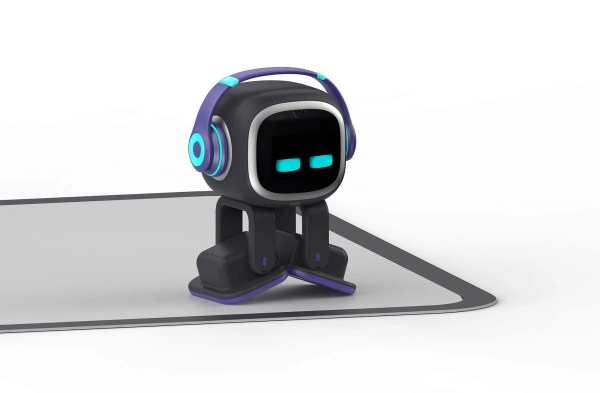
The EMO Go Home measures 20 by 25 by 6 centimeters and weighs 1.46 kilograms, making it compact enough for standard desk placement. Its sensor suite includes HD facial recognition capable of distinguishing up to 10 users, a 4-microphone array with directional sound detection, a 6-axis accelerometer and gyroscope, light and laser sensors for navigation, and touch sensitivity on its head. The dynamic LED matrix comprises over 1,000 individual expressions, and connectivity is maintained via 2.4 GHz Wi-Fi and Bluetooth 4.2. Battery life extends to approximately 4 hours per session with automatic recharging at the base station, and the included smart light provides mood-reactive ambient illumination.
Market Position in Companion Robotics
The EMO Go Home occupies a distinct niche within the broader companion robotics market as a semi-autonomous desktop agent designed for ambient emotional engagement rather than task execution or mobility assistance. Unlike industrial or service robots that emphasize functional output, and unlike traditional smart speakers that lack physical presence, EMO combines expressive embodiment with environmental awareness and selective autonomy. At a price point of approximately 369 dollars for the Go Home bundle—compared to 279 dollars for the standard EMO—the system targets tech-savvy users in developed markets who value interactive companionship as a legitimate product category. The robot's reliance on a defined virtual boundary and tabletop-only operation positions it firmly in the personal electronics space rather than general-purpose robotics, allowing Living.AI to optimize for reliability and user experience within a narrow, well-defined deployment context. This focused approach contrasts with competitors pursuing broader mobility or task diversity, making EMO a specialist product in an increasingly crowded field.
What Autonomous Charging Signals
The introduction of self-charging and virtual fencing in consumer companion robots signals an industry shift toward reducing user friction as a primary design constraint. Rather than competing on raw computational power or task capability, manufacturers are recognizing that sustained adoption depends on devices that operate with minimal oversight—a pattern already established in robotic vacuums and lawn mowers. This development suggests the next phase of desktop robotics will prioritize graceful autonomy: systems that can operate independently within bounded environments, return to charging stations without prompting, and initiate interactions proactively. The expansion of ChatGPT and smart home integration also indicates that companion robots are becoming middleware between users and broader AI ecosystems, positioning them as control interfaces rather than standalone agents. For the robotics industry, this represents a maturation of the emotional AI category from novelty toward practical ambient intelligence infrastructure.
Sources
Related Articles
Yukai Engineering's BOCCO emo Bridges Family Gaps with Emotional Robotics
Aisoy Robotics Unveils KiK Robot for Scratch-Based AI Coding
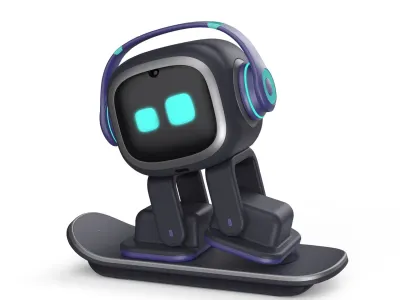
LivingAI's EMO Robot Brings Autonomous Desktop Companionship to Homes
Festo Unveils BionicBee for Autonomous Indoor Swarm Flight
Learn More About This Robot
Discover detailed specifications, reviews, and comparisons for EMO Go Home.
View Robot Details →