Miro U Revolutionizes Robotics with Six-Armed Precision

Midea’s Bold Robotics Debut
Midea has launched the Miro U, an industrial humanoid robot that pushes the boundaries of factory automation with its unprecedented six-arm, wheel-legged design. Revealed at a high-profile event in Guangzhou, this next-generation machine is engineered to elevate manufacturing efficiency by performing complex multitasking with remarkable speed and precision. Priced competitively for industrial deployment, Miro U is set to join Midea’s washing machine factory in Wuxi by the end of 2025, promising to transform production workflows and redefine the role of robots in smart factories.
Six Arms, Infinite Possibilities
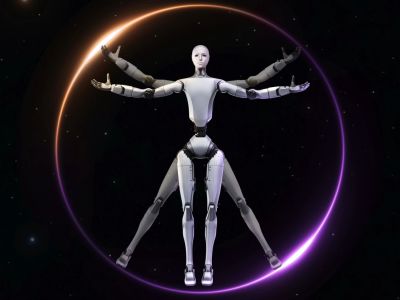
Miro U’s standout feature is its six bionic mechanical arms, each capable of high-precision control and rapid tool switching. This multi-arm configuration allows simultaneous handling of diverse tasks, from assembly to quality inspection. Its wheel-based mobility combined with 360-degree rotation grants unmatched maneuverability in tight factory spaces. By integrating full-stack technology built in-house, Midea ensures seamless coordination between hardware and software, empowering Miro U to operate with agility and adaptability that few industrial robots can match.

Cutting-Edge Tech Backbone
Behind Miro U’s dexterity lies a suite of advanced technologies, including proprietary RGB and stereo cameras, inertial measurement units, and ultrasonic sensors that feed into its indoor SLAM navigation system using visual and LiDAR mapping. The robot’s force sensors and gyroscope enable nuanced interaction with delicate components, while its proprietary OS integrates ROS2 with C++ and Python APIs, offering a flexible programming environment. Vertical lifting and 360-degree in-place rotation further showcase engineering breakthroughs that enhance its operational range in industrial settings.
Industry Transformation in Action
Miro U is designed for real-world factory challenges, particularly in high-end washing machine assembly where precision and speed are critical. It excels in multi-task industrial automation, adjusting production lines dynamically, conducting thorough quality inspections, and handling a variety of materials and tools. By automating these labor-intensive processes, Miro U not only boosts production efficiency but also reduces human exposure to repetitive or hazardous tasks, marking a significant leap toward safer, smarter factories.

Specs That Speak Volumes
Standing approximately 170 cm tall with a shoulder width of 70 cm and a depth of 60 cm, Miro U weighs around 120 kg, balancing stability and mobility. It cruises at up to 3 km/h, ideal for indoor factory environments, and runs on a rechargeable battery with an expected lifespan of four years. Its sensor array includes RGB and stereo cameras, IMUs, gyroscopes, force sensors on each arm, ultrasonic detectors, and temperature sensors. The indoor SLAM system uses visual and LiDAR data to navigate precisely. Safety is paramount with features like force limiting, collision detection, emergency stop, and collaborative modes ensuring secure human-robot interaction.
How Miro U Measures Up
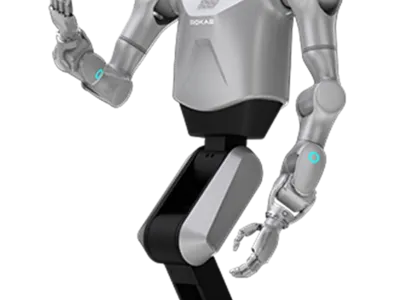
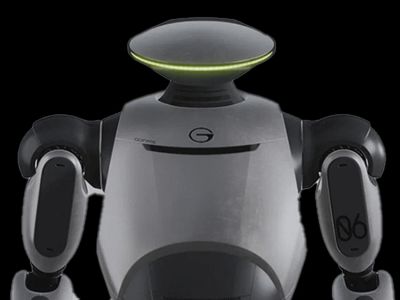
Compared to competitors such as GoMate, Digit, AEON, and Daimon One, Miro U stands out with its six-arm dexterity and wheel-leg hybrid mobility, enabling complex multitasking in constrained spaces. Unlike Digit’s bipedal design focused on mobility, Miro U emphasizes simultaneous manipulation with multiple arms. While AEON and Daimon One excel in specialized tasks, Miro U’s full-stack proprietary integration and modular end-effectors provide greater flexibility. However, its wheeled base may limit terrain adaptability compared to legged robots. Overall, Miro U offers a compelling balance of precision, speed, and safety for industrial automation, carving a distinctive niche in the humanoid robotics market.
Shaping Robotics’ Future
Midea’s Miro U signals a new chapter in robotics by blending advanced mechanical design with AI-driven autonomy tailored to industrial environments. As factories worldwide embrace automation, Miro U’s deployment represents a shift toward versatile, multi-tasking humanoids capable of adapting to complex workflows. Its success could accelerate humanoid adoption beyond niche applications, inspiring innovations that merge human-like dexterity with the efficiency of machines. Miro U not only advances Midea’s robotics ambitions but also sets a benchmark for the future landscape of collaborative factory automation.
Explore Humanoids
Sources
Related Articles
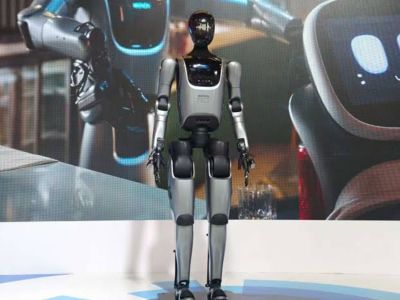
XMAN-F1 Partners Johnnie Walker, M104 for AI Bartending Breakthrough
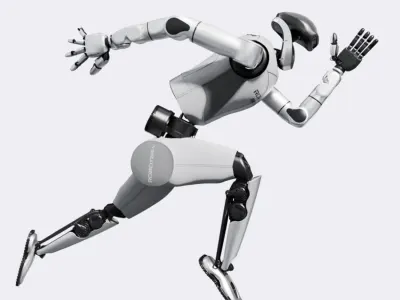
RobotEra L7 Runs at 14.4 km/h as the Humanoid Targets Warehouse Picking

Clone’s Protoclone V1 Mirrors Human Muscles with 1,000 Myofibers, 500 Sensors
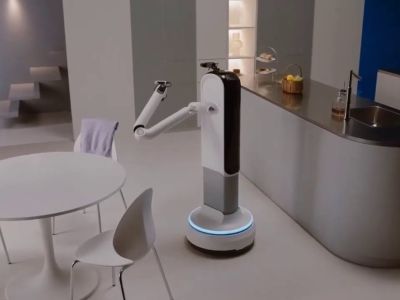
Samsung Bot Handy 2 Integrates Google Gemini, Boosts Dexterity with 3kg Dual-Arm Grip
Related Comparisons
Compare Miro U with similar robots
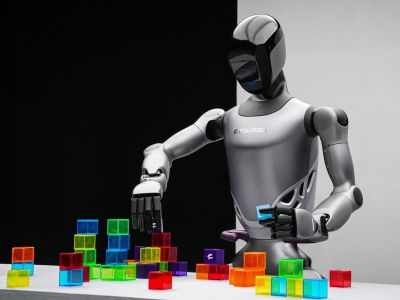
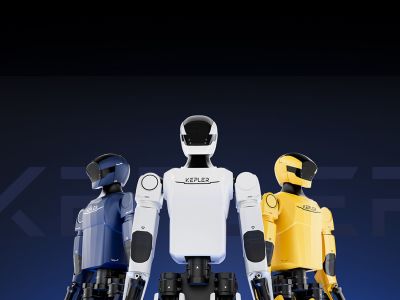
GR-2 vs Forerunner K2
Fourier GR-2 vs Kepler Forerunner K2: payload, battery life, hands and software compared, with a clear pick for labs and for factories.
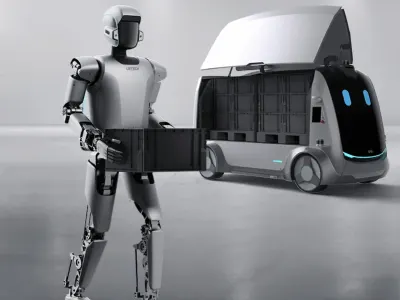
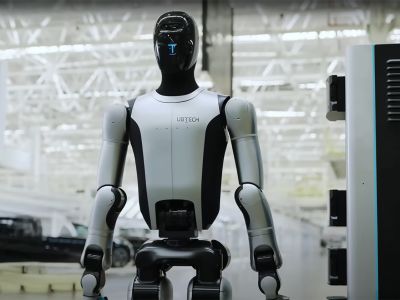
Walker S1 vs Walker S2
Walker S1 vs Walker S2 from UBTECH: speed, battery swap, sensors and software compared, with a clear pick for each factory need.
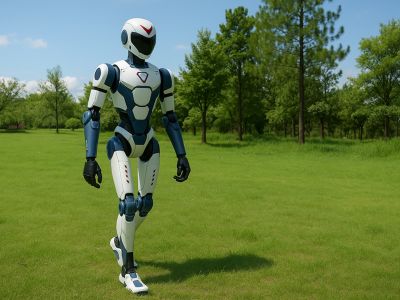
Unitree R1 vs Unitree H2
Unitree R1 vs Unitree H2: height, battery, joints, arms and software compared, with a clear pick by budget, space and project.
Figure 03 vs Atlas (Electric 2025)
Figure 03 from Figure AI vs Atlas from Boston Dynamics: runtime, charging, lifting, hands and safety compared, with a clear pick by job.
Learn More About This Robot
Discover detailed specifications, reviews, and comparisons for Miro U.
View Robot Details →