NEURA Robotics Teams Up With E.ON to Train Humanoid Robots for Power Grid Inspections
Company
NEURA RoboticsPublished
November 5, 2026
Reading Time
5 min read
Author
Origin Of Bots Editorial Team

Robots for the Power Grid
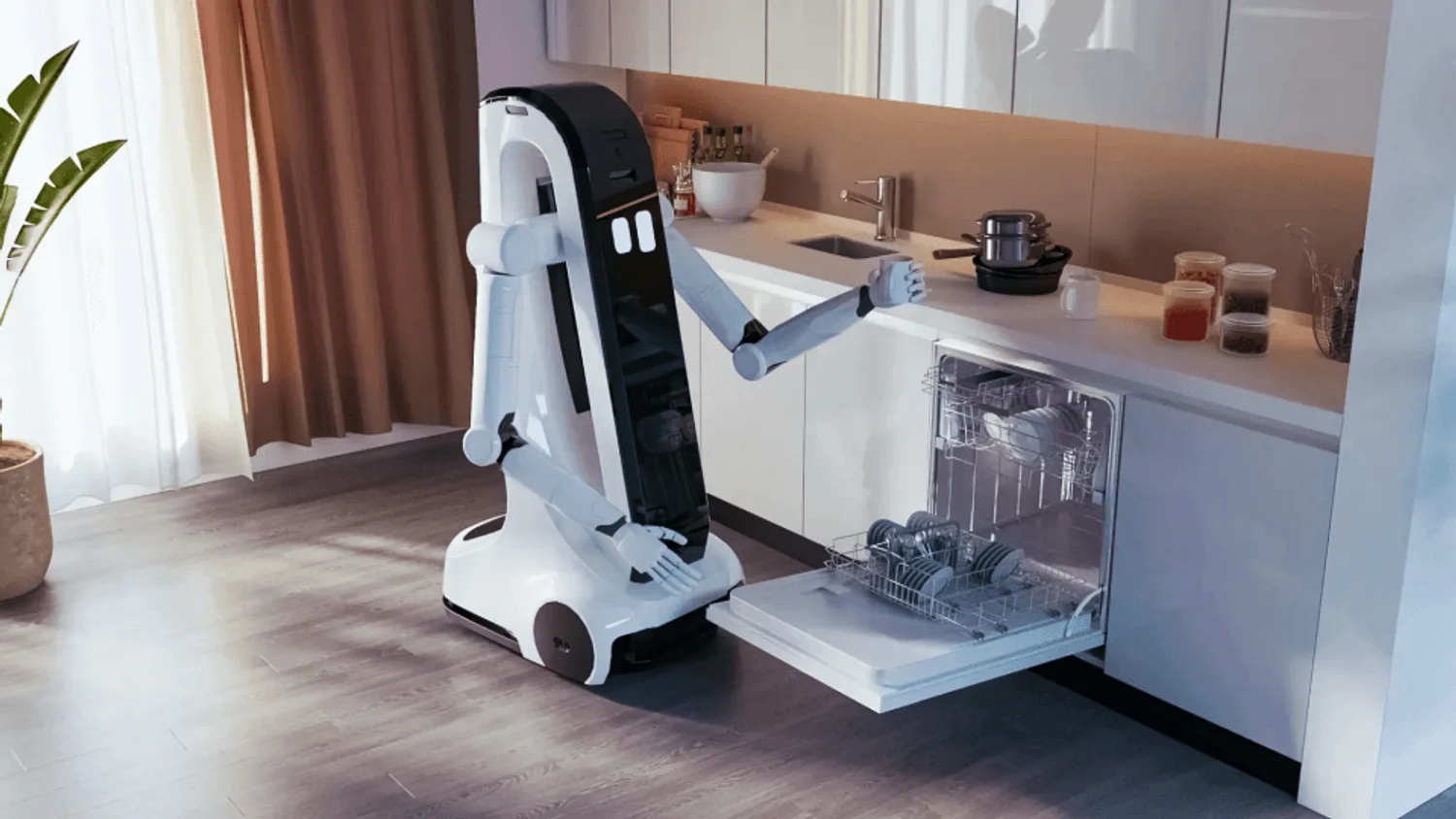
German robot maker NEURA Robotics is joining energy giant E.ON and regional supplier enviaM to teach humanoid robots, machines built with a humanlike body, to help look after the electricity grid. Announced on November 5, 2026, the partnership targets a problem that touches every household: keeping power flowing while skilled workers grow scarce.
The partners want robots to inspect equipment, watch over critical sites such as substations, the fenced yards where high-voltage power is stepped down for homes and businesses, and help with physically demanding or hazardous jobs. They expect the first hands-on experience in real grid operations during 2027, so for now this is a plan, not a working system.
Why a Human Shape Makes Sense Here
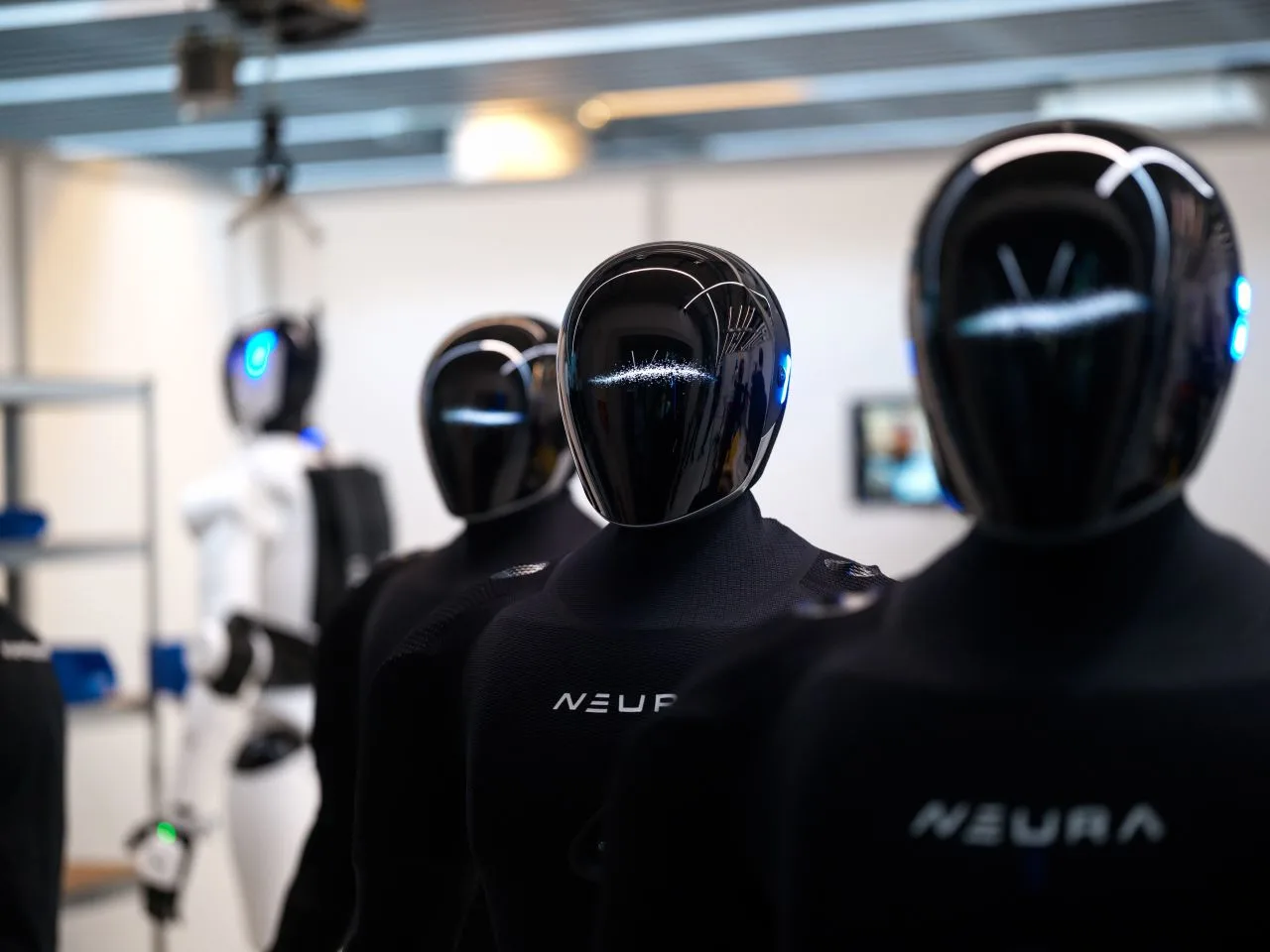
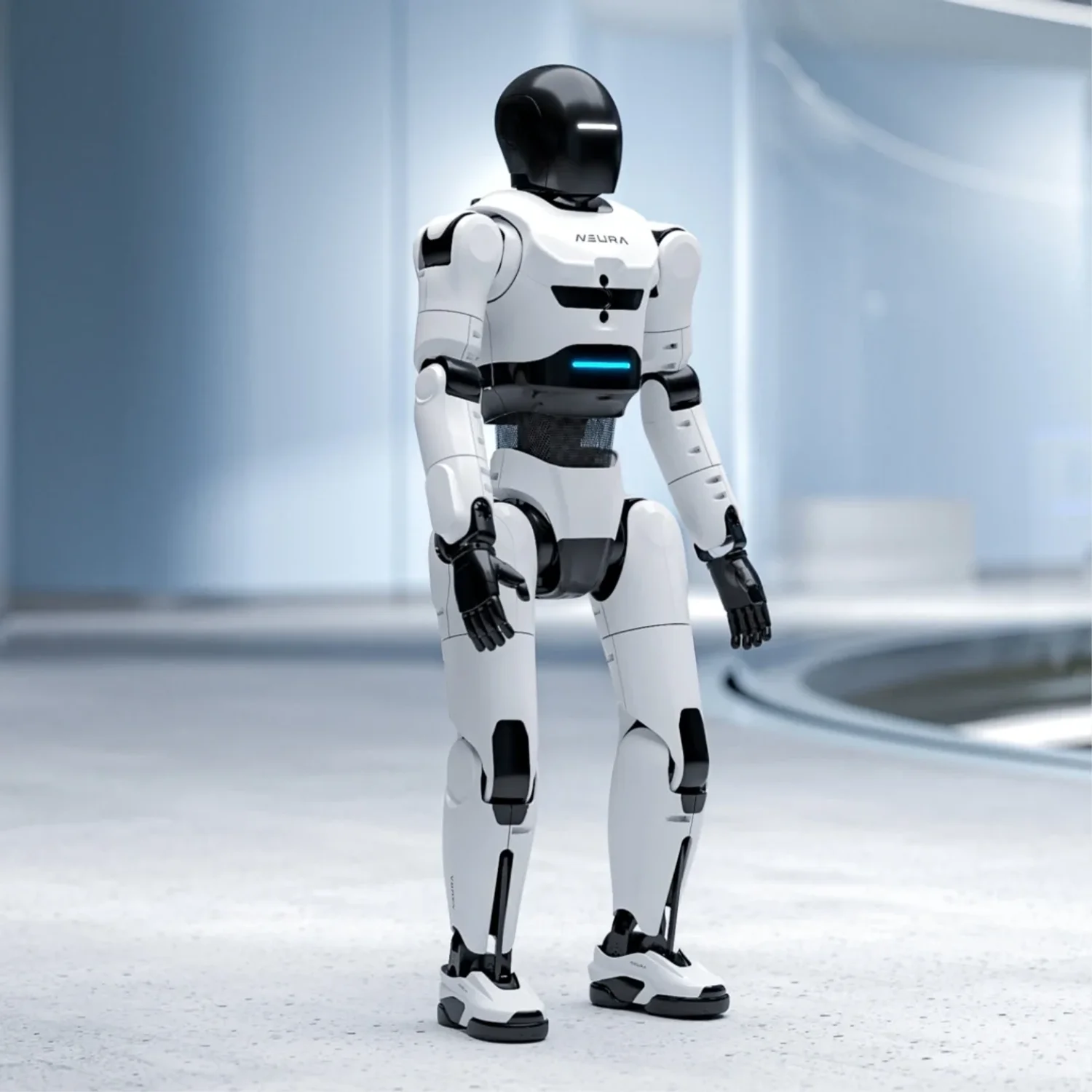
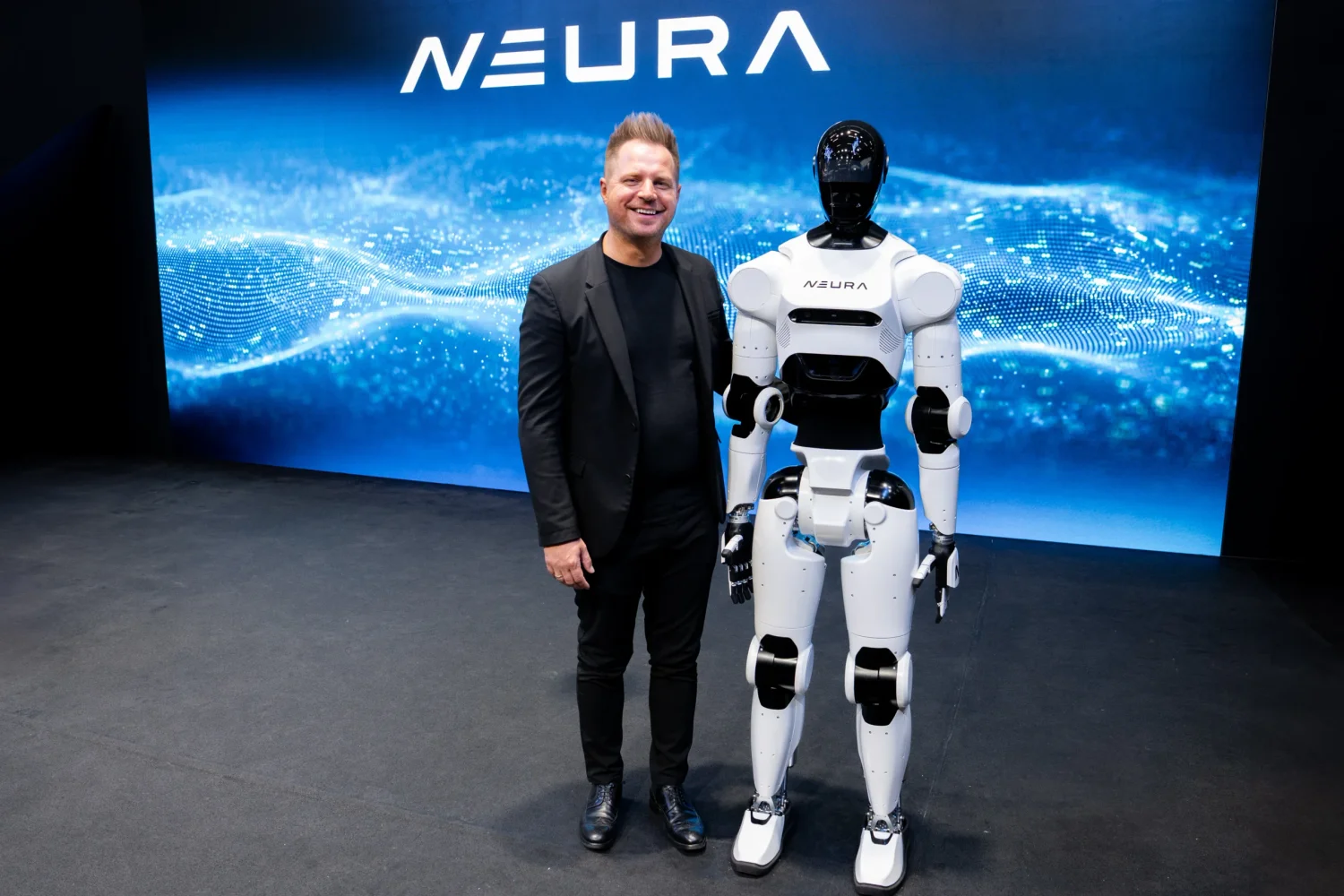
Electricity networks are full of places designed around people, with stairs, doors, control cabinets and tools sized for human hands. NEURA and its partners argue that a robot with a humanlike body, such as the company's 4NE1 model, could move through those spaces without anyone having to rebuild the facilities around it.
That argument has real appeal, since many grid sites were built long ago and redesigning them for machines would be costly. A wheeled inspection robot may struggle with a staircase or a stiff cabinet door, while a two-legged one could in principle handle both. Whether it can do so reliably, day after day, is what the trials must show.
A Gym Where Robots Learn the Job
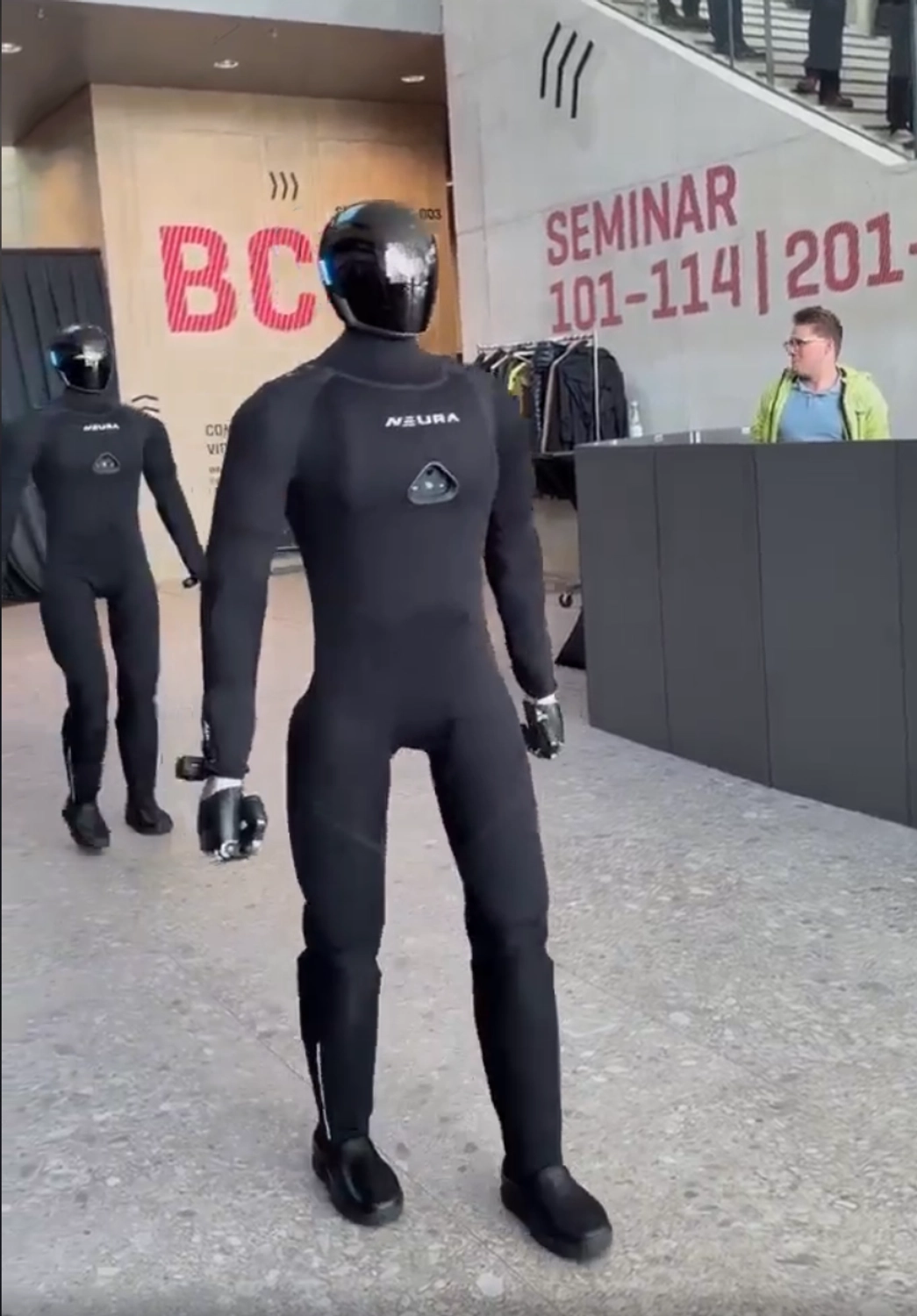
Training begins far from any live equipment, at TUM RoboGym, a facility linked to the Technical University of Munich that opened in October at the LabCampus by Munich Airport. It covers more than 2,300 square meters, roughly a third of a soccer field, and E.ON is joining it as part of the deal.
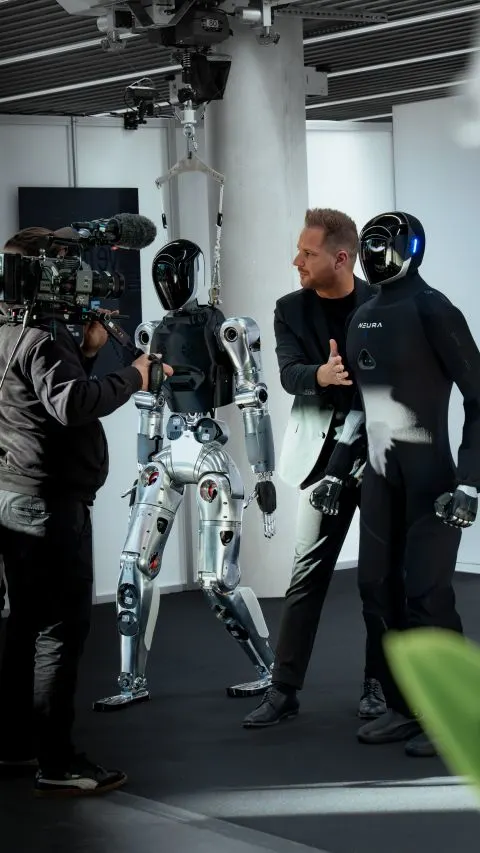
Grid specialists will demonstrate their workflows there, capturing what experienced staff know from years on site. Their movements are recorded through sensor-equipped suits, motion tracking and remote operation of the robots, then combined with data from the robots' own attempts and with computer simulation, which adds variations that would be slow or risky to stage.
Listening to a Substation
The software meant to make sense of all this is Neuron AI, NEURA's robot brain. The company says it combines three-dimensional vision, touch, sound, the robot's awareness of its own body, language and memory, so that a machine is not relying on cameras alone when it decides what it is looking at.
For inspection work, that could let a robot notice something a photograph would miss, such as an unusual sound or a component that feels wrong when touched. NEURA's Neuraverse platform would then manage the learned skills, with the longer-term aim of reusing a routine trained for one site at others using compatible robots.
Three Companies, Three Roles
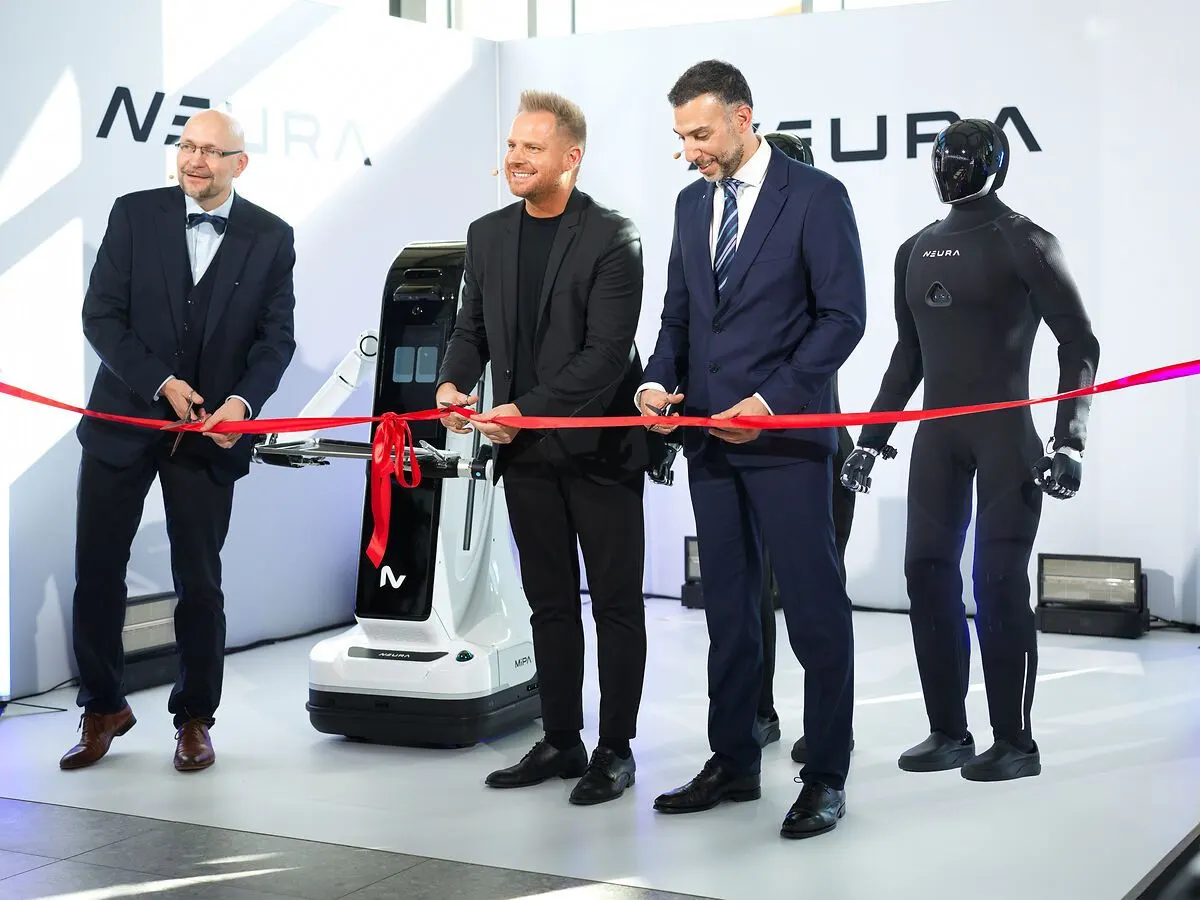
NEURA, based in Metzingen in southern Germany, supplies the robot and the training setup. E.ON and enviaM bring the knowledge of how grids actually run, and enviaM's network subsidiary, MITNETZ STROM, is the partner that plans to test the resulting applications in live operations once they have proven themselves in the gym.
Data ownership is spelled out too. According to the partners, E.ON and enviaM keep control of their data and of the skills trained on it, including whether to share them. For operators of critical infrastructure, where information about facilities and weak points is sensitive, that is likely to be a basic condition of taking part.
A Workforce Problem Looking for Help
The companies present the robots as support for staff, not replacements. EnviaM chief executive Stephan Lowis said humanoids can take over physically demanding tasks so that skilled workers can concentrate on the work that needs their expertise, while NEURA chief executive David Reger stressed pairing new technology with the experience of people already on the job.
The pressure on grid operators is real. Keeping networks reliable takes a steady supply of trained technicians, and German coverage of the deal framed it around exactly that shortage. Rather than promising a robot workforce, the partners describe autonomous grid work as an ability they hope to build gradually over the coming years.
What Has Not Been Shown
Plenty remains unknown. The partners have not disclosed how many robots will be involved, which sites will host trials, what the project costs, how much it might save or what performance would count as success. The announcement video shows demonstrations inside NEURA's own facilities, not at a substation or anywhere else on the grid.
Grid sites are also unforgiving places for an experimental machine, with live high-voltage equipment and strict safety rules. A misplaced step or a fumbled tool carries different consequences there than in a training hall, which helps explain why the partners plan to validate skills on physical robots before taking them anywhere near live operations.
The Road to 2027
The next stage is practical: picking suitable workflows, training the skills under controlled conditions and then moving to real grid operations with MITNETZ STROM during 2027. E.ON innovation managing director Lioudmila Simon has said she expects humanoid robots eventually to become part of the company's automated, digital way of running its network.
NEURA comes to the project with fresh resources, having announced a funding round of up to $1.4 billion in June led by Tether. If the trials go well, power networks could become one of the first public services where humanoids do routine work. If they stall, the grid will keep relying on people, as it does today.
Sources
Related Articles
South Korea's ETRI Unveils Its Own Humanoid Robot Brain at a Physical AI Showcase
AgiBot G2 Robots Finish a 24-Hour Shift in a Shanghai Convenience Store, and Four of Six Pass
Swiss Startup Embodied AI Unveils AIR, a Humanoid That Learns Factory Jobs on the Shift