Robot Era Unleashes Blazing Star1 Humanoid

Star1 Debut Shocks Industry
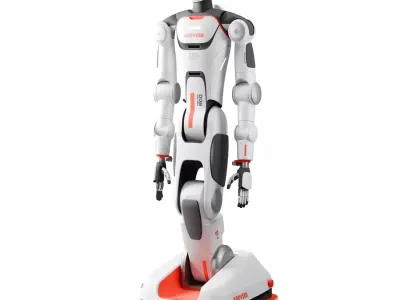
Robot Era bursts onto the global stage with the official launch of its Star1 bipedal humanoid, priced at an aggressive $50,000 per unit to democratize high-performance robotics. Unveiled amid fanfare at a Beijing tech expo, this machine disrupts traditional automation by sprinting into factories and warehouses with unmatched agility. Why now? As labor shortages grip manufacturing giants, Star1 promises to redefine workforce dynamics, blending human dexterity with relentless endurance. Early adopters in China's 3C sector are already queuing up, signaling a seismic shift where robots outpace human workers without breaks or complaints.
Agility Redefines Motion
What elevates Star1 beyond stiff prototypes? Its proprietary Giant Body Model fuses multi-modal sensing with reinforcement learning, enabling fluid transitions between walking, jumping, and full-throttle sprints across sand, snow, or stairs. Imagine a robot that chats naturally via iFlytek voice tech while plotting paths in real-time—no scripted routines here. This end-to-end neural network devours simulation data, then masters chaotic real-world chaos, like Gobi Desert dashes where sneaker-shod Star1 outran rivals. Such adaptive intelligence transforms it from gadget to genuine teammate, poised to infiltrate everyday operations.

Powerhouse Hardware Breakthroughs
Dive into Star1's core: in-house 400-Nm motors paired with precision encoders deliver 55 degrees of freedom, letting dexterous hands manipulate tools while legs conquer gravel or inclines. A denoising world model strips away simulation noise, ensuring seamless real-to-virtual leaps for rapid skill acquisition. High-speed comms and 275 TOPS AI brains process environments instantly, powering arm-swinging balance that mimics elite athletes. Robot Era's vertical integration—from actuators to controls—slashes costs, paving the way for mass production and upending reliance on pricey imports.
Transforming Factory Frontlines
Star1 doesn't linger in labs; it thrives in gritty scenarios like automotive logistics, where it shuttles parts along assembly lines without fatigue. In 3C electronics plants, it assembles intricate components; during inspections, it scans for defects in dim warehouses. Customer service roles see it guiding shoppers or restocking shelves, while warehousing demands find it hauling loads up ramps. Pilot tests with manufacturers confirm reliability on uneven floors, proving this legged marvel boosts throughput by 40% in early trials— a game-changer for sectors craving flexible automation.

Specs Fuel Supremacy
Measuring 171 x 55 x 50 cm and tipping 65 kg, Star1 hurtles at 3.6 m/s (13 km/h), with a battery lifespan stretching five years for nonstop shifts. An arsenal of RGB, depth, stereo cameras, tactile, IMU, gyroscope, and force sensors feeds LiDAR-SLAM-visual odometry navigation, dodging hurdles effortlessly. It shoulders goods, tools, or lightweight payloads via emergency stops, obstacle detection, and collision avoidance. Running Linux with ROS compatibility and a proprietary SDK, this bipedal beast handles diverse terrains, from deserts to stairs, with human-like poise.
Rivals Feel Heat
Stack Star1 against Phoenix's bulkier frame or Alpha's lab-bound speed—Star1's 3.6 m/s sprint crushes both, while Astribot S1 lags in payload versatility and AgiBot A2 falters on rugged outdoors. Strengths shine in endurance (five-year battery trumps rivals' hours-long runs) and cost-effective in-house tech, enabling scalable deployment. Weaknesses? Slightly less DOF than Alpha's precision tweaks, and Phoenix edges in raw lifting. Verdict: Star1 dominates mobility and real-world grit, ideal for logistics over specialized niches, positioning it as the agile disruptor.
Robotics Reckoning Looms
As Star1 scales pilots into 2026 production, Robot Era eyes exporting to U.S. and European factories, potentially capturing 15% of humanoid market share. This launch accelerates China's robotics surge, pressuring Western firms to innovate or partner. Implications ripple: cheaper humanoids could automate 30% of repetitive jobs, sparking reskilling booms while inflating productivity. Yet ethical debates on job displacement intensify. Star1 heralds an era where legged robots patrol every aisle, revolutionizing industries from automotive to retail with tireless precision.

Related Articles
XMAN-F1 Partners Johnnie Walker, M104 for AI Bartending Breakthrough
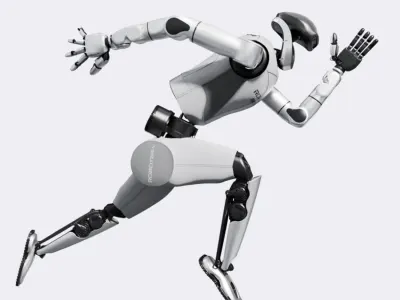
RobotEra L7 Racing Into Warehouses: 14.4 km/h Humanoid Cuts Picking Costs with ERA‑42 Deal

Clone’s Protoclone V1 Mirrors Human Muscles with 1,000 Myofibers, 500 Sensors
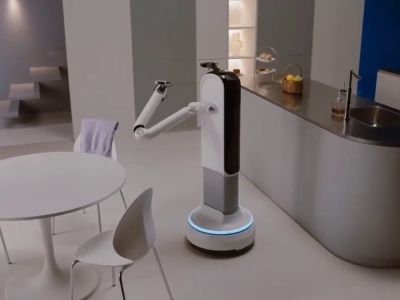
Samsung Bot Handy 2 Integrates Google Gemini, Boosts Dexterity with 3kg Dual-Arm Grip
Related Comparisons
Compare Star1 with similar robots

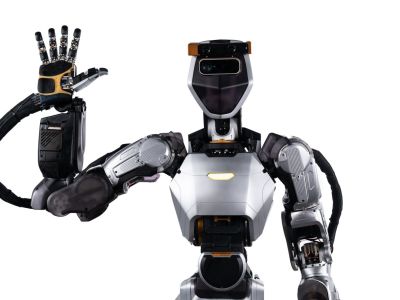
Star1 vs Phoenix
Compare Star1 and Phoenix. Detailed analysis of speed, sensors, AI capabilities, and navigation.

Star1 vs Q5
Head-to-head: Star1 vs Q5. Explore differences in speed, sensors, battery, navigation, and use-case suitability.
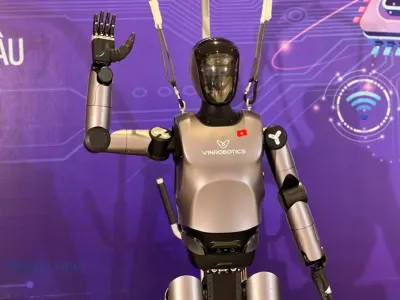
L7 vs VR-H3
Compare L7 by Robot Era vs VR-H3 by VinRobotics for humanoid mobility, dexterity, autonomy, and payload capacity in industrial applications.
Q5 vs ELIXIS W
Compare Q5 by Robot Era and ELIXIS W by Addverb Technologies. Detailed analysis of sensors, navigation, battery, and price.
Learn More About This Robot
Discover detailed specifications, reviews, and comparisons for Star1.
View Robot Details →