Xiaomi Debuts CyberOne, Redefining Humanoid Robot Capabilities
Robot Details
CyberOne • Xiaomi Robotics LabPublished
December 5, 2025
Reading Time
4 min read
Author
Origin Of Bots
Beijing's Bold Entry Into Bipedal Robotics
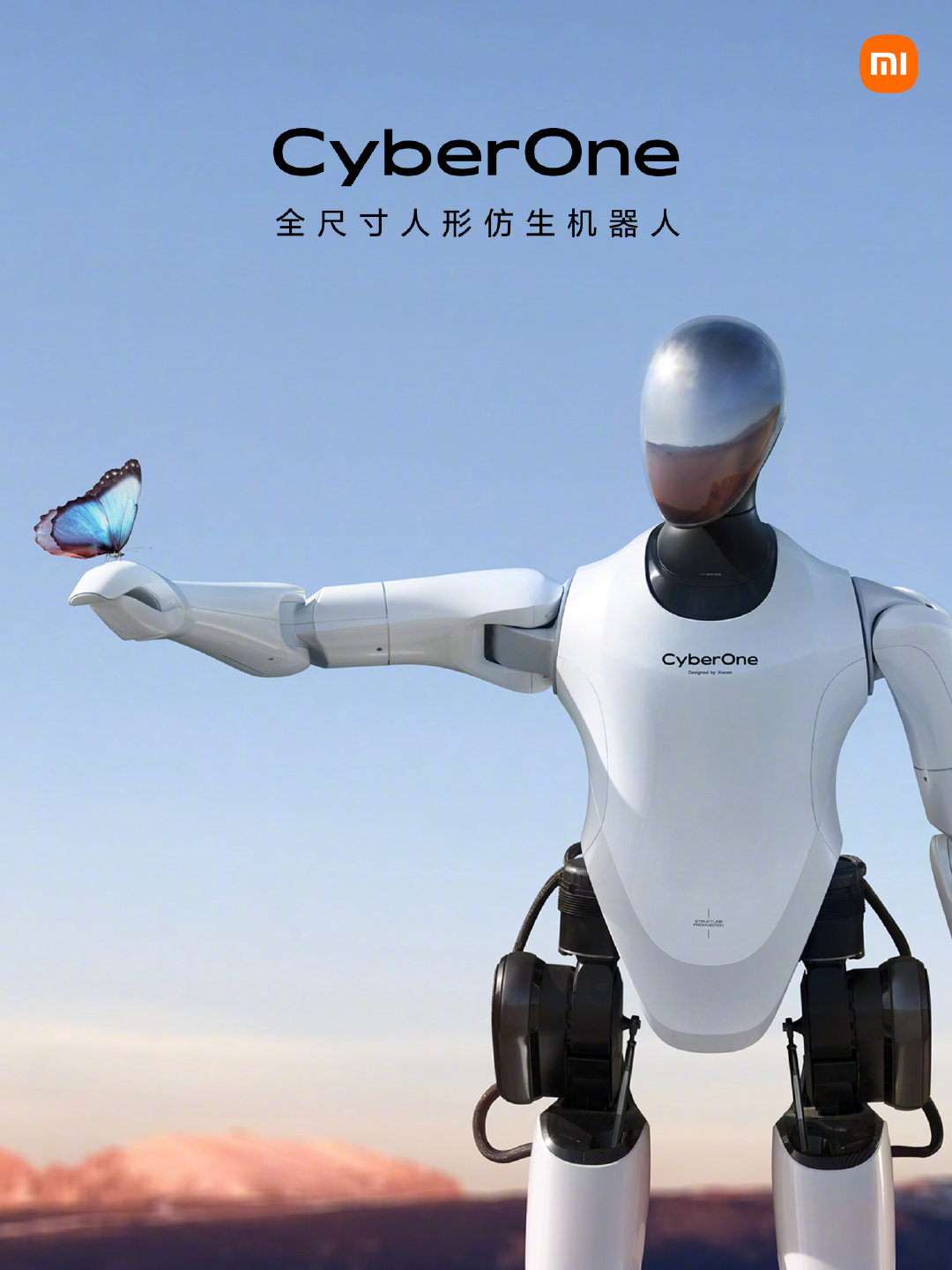
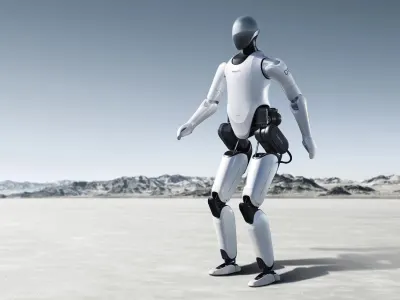
Xiaomi Robotics Lab unveiled CyberOne in August 2022, marking the company's ambitious entry into humanoid robotics following its successful quadruped CyberDog. This 177-centimeter tall, 52-kilogram machine represents a significant technological leap, with Xiaomi positioning it as a research and development platform rather than an immediate consumer product. The company announced a projected price range of $90,000 to $100,000 USD, positioning CyberOne among the most sophisticated—and expensive—bipedal robots currently in development. This launch signals Xiaomi's commitment to expanding beyond smartphones into advanced robotics, challenging established players in an increasingly competitive landscape.
Emotional Intelligence Meets Mechanical Precision
CyberOne distinguishes itself through sophisticated emotional recognition capabilities that transcend typical robotic interactions. The machine identifies 45 distinct human emotion classifications through advanced vocal analysis and can recognize 85 different environmental sounds, enabling contextual responses to its surroundings. Its curved OLED facial display serves as both a processing hub and an expressive interface, communicating real-time information and emotional states back to humans. Combined with gesture and facial recognition systems, CyberOne creates a bridge between human-robot interaction that feels intuitive rather than mechanical, fundamentally changing how people perceive machine intelligence.

Engineering Breakthroughs in Motor Technology
The robot's mechanical foundation relies on proprietary high-efficiency motors weighing merely 500 grams each, delivering up to 30 Nm of torque in the upper limbs while hip joints achieve instantaneous peak torque of 300 Nm. These custom actuators represent a breakthrough in power density, enabling complex movements without increasing component size. Supporting 21 degrees of freedom across 13 joints with 0.5-millisecond response times per degree, CyberOne achieves near-instantaneous movement coordination. The self-developed humanoid bipedal control algorithm produces natural, stable walking patterns that function across varied indoor environments, establishing new performance benchmarks for legged locomotion.
Practical Applications Beyond Research
While positioned as a research platform, CyberOne demonstrates tangible applications in exhibition settings, light indoor service tasks, and controlled research environments. Its 1.5-kilogram per-hand carrying capacity enables object manipulation for inventory assessment, sample collection, and interactive demonstrations. Museums and technology centers envision deploying CyberOne as an engaging educational interface, while research institutions explore its potential for studying human-robot collaboration. The robot's ability to navigate human environments safely positions it for hospitality applications, customer service demonstrations, and specialized inspection tasks in constrained spaces where bipedal mobility offers advantages over wheeled alternatives.
Technical Specifications Define Performance Envelope
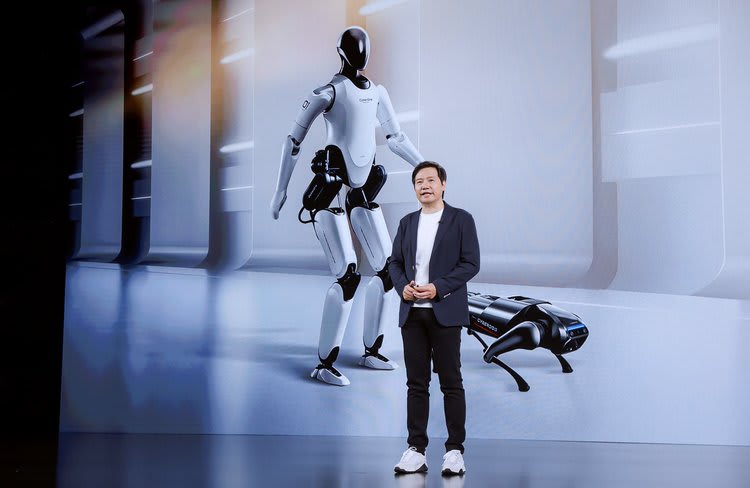
CyberOne measures 177 centimeters in height with a 52-kilogram mass and 168-centimeter arm span, creating a form factor closely matching human proportions. The robot achieves walking speeds of 3.6 kilometers per hour with a 1.65 kWh lithium-ion battery enabling approximately 2.5 hours of runtime on a 1.5-hour charge cycle. Its sensory array includes stereo RGB-D cameras, force and torque sensors throughout the joints, and tactile sensors enabling safe human interaction. Vision-based SLAM with stereo cameras and inertial measurement units provides autonomous navigation capabilities, while emergency stop protocols and collision detection systems ensure operational safety in shared spaces.
Competitive Positioning and Trade-offs
Against competitors like Unitree G1, NAVAI Navigator 2, and the ALICE series, CyberOne excels in emotional recognition sophistication and custom motor engineering but faces constraints in commercial availability and deployment flexibility. The Unitree G1 offers comparable or superior degrees of freedom at significantly lower price points with actual market availability, while ALICE variants provide different architectural approaches to humanoid locomotion. CyberOne's strength lies in its proprietary AI infrastructure and emotion-detection capabilities, areas competitors haven't prioritized equally. However, its lack of commercial release timeline and premium pricing position it primarily as a research investment rather than a near-term market disruptor, limiting immediate competitive impact against more accessible alternatives.
Reshaping Robotics Investment Landscape
CyberOne's unveiling signals intensifying competition among technology giants pursuing humanoid robotics dominance, with implications extending beyond hardware specifications to AI integration and emotional computing. Xiaomi's substantial research investment demonstrates confidence in bipedal robotics' long-term viability despite current cost barriers and technical challenges. As the robotics sector matures, CyberOne establishes new performance standards for joint responsiveness and emotional interaction that competitors must address. The robot's development trajectory suggests future iterations will address current limitations in battery life and commercial deployment, potentially disrupting service robotics markets within five years as production scales and costs decline.
Explore Humanoids

Related Articles
XMAN-F1 Partners Johnnie Walker, M104 for AI Bartending Breakthrough
RobotEra L7 Racing Into Warehouses: 14.4 km/h Humanoid Cuts Picking Costs with ERA‑42 Deal

Clone’s Protoclone V1 Mirrors Human Muscles with 1,000 Myofibers, 500 Sensors
Samsung Bot Handy 2 Integrates Google Gemini, Boosts Dexterity with 3kg Dual-Arm Grip
Related Comparisons
Compare CyberOne with similar robots

Titan 01 vs CyberOne 2026 Version
Which humanoid robot is better? Titan 01 vs CyberOne 2026 Version compared for dexterity, AI capabilities, and price.
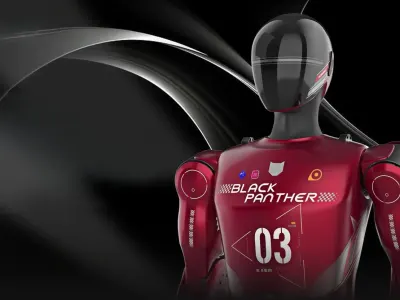
Bolt vs CyberOne 2026 Version
Bolt by MirrorMe Technology or CyberOne 2026 Version by Xiaomi Robotics Lab? See which humanoid robot performs better for manufacturing, logistics, and research.

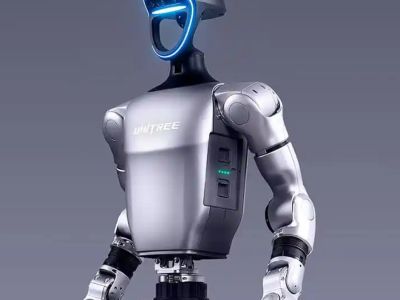
Optimus vs Unitree G1
Compare Optimus vs Unitree G1 for humanoid mobility, dexterity, autonomy, and payload capacity.
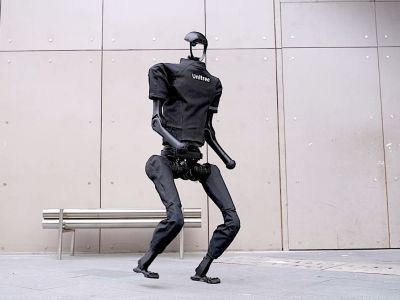
Unitree G1 vs Unitree H1
Head-to-head: Unitree G1 vs Unitree H1 compared on bipedal balance, AI learning, and real-world deployment.
Learn More About This Robot
Discover detailed specifications, reviews, and comparisons for CyberOne.
View Robot Details →