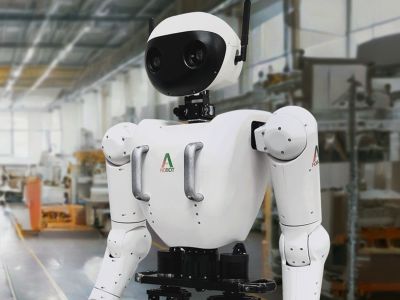
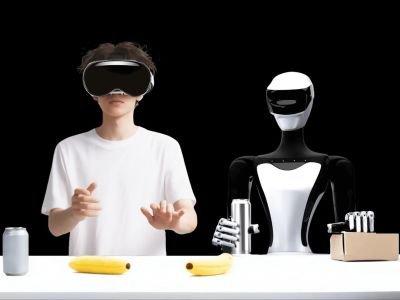
ALICE 4 by AEI Robot targets research, pick-and-place workflows, and service applications with an estimated price of $50,000 - $100,000. Its lighter 45 kg weight and compact 160 x 50 x 30 dimensions enhance portability compared to Q5. Key differentiators include additional depth cameras and force sensors (FSR) for precise manipulation and VR teleoperation support.
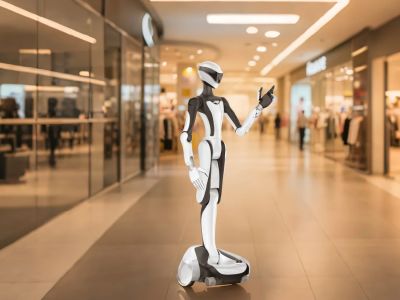
Q5 by Robot Era positions for elder care, child interaction, retail service, logistics, and hospitality at $100,000 - $150,000 estimated price. It offers higher speed of 1.5 m/s and a sturdier 70 kg build with 165 x 50 x 52 dimensions. Differentiators encompass broader use cases like hospitality alongside a 4-year battery life.
Detailed Analysis
Design & Build Quality
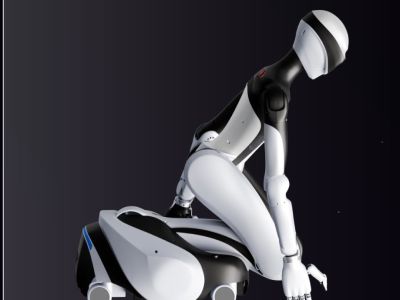
ALICE 4 measures 160 x 50 x 30 with 45 kg weight, providing a lighter and more compact humanoid form than Q5's 165 x 50 x 52 and 70 kg. The reduced weight of ALICE 4 supports easier handling in research settings. Q5's increased dimensions and mass suggest greater stability for service tasks.
Mobility & Navigation
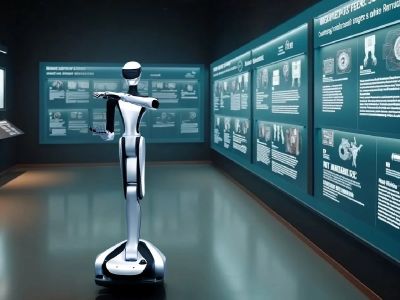
Both robots utilize indoor SLAM, visual SLAM, and LiDAR mapping for navigation. ALICE 4 reaches 0.8 m/s speed, while Q5 achieves 1.5 m/s for faster movement. Q5's higher speed suits dynamic environments like retail and logistics.
Sensors & Perception
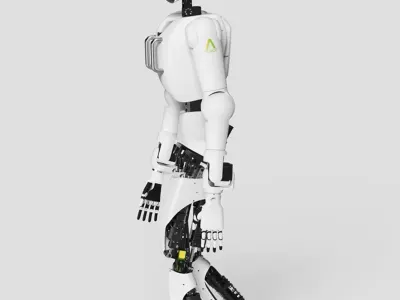
ALICE 4 includes RGB cameras, depth cameras, stereo cameras, LiDAR, ultrasonic sensors, IMU, gyroscope, force sensors (FSR), and temperature sensors. Q5 features RGB cameras, stereo cameras, LiDAR, ultrasonic sensors, IMU, gyroscope, force sensors, and temperature sensors, lacking depth cameras and FSR. ALICE 4's extra sensors enable enhanced depth perception and force feedback.

AI Capabilities
Control methods match with teleoperation, autonomous operation, and learned behaviors on both robots. ALICE 4 supports imitation learning and VR teleoperation for skill acquisition. Q5 aligns in AI-driven behaviors suitable for interaction-focused applications.

Battery & Power Efficiency
ALICE 4 provides a 3-year battery life, compared to Q5's 4-year duration. Both offer long-term power without specified runtime differences here. Q5's extended battery supports prolonged deployments in hospitality and care.

Use-Case Suitability
ALICE 4 excels in pick-and-place workflows, research, service applications, VR teleoperation, and imitation learning. Q5 covers elder care, child interaction, retail service, research labs, logistics, and hospitality. Q5 provides wider versatility for human-centric services.
Pricing & Value
ALICE 4's $50,000 - $100,000 range is lower than Q5's $100,000 - $150,000. Lower cost positions ALICE 4 for budget-conscious research users. Q5 justifies higher price with speed and use-case breadth.
Safety Features
Both include force limiting, collision detection, emergency stop, and collaborative mode. Identical safety protocols ensure human-robot interaction compliance. No differences noted in safety implementations.
Analysis Score Summary
Total Score
9
ALICE 4
VS
Based on Detailed Analysis
Total Score
7
Q5
📊 Win: 2 points | Trade-off: 1 point each
Scores are summed across every insight: a clear winner earns 2 points, while balanced trade-offs give each robot 1 point. The total reflects how often each robot outperforms the other (or shares the spotlight) throughout the detailed analysis sections.
Capabilities & Operational Tasks
Head-to-head comparison of what ALICE 4 and Q5 can do, their applications, and capabilities.
What Can ALICE 4 & Q5 Do?
11Core operational tasks, activities, and physical manipulation duties evaluated side-by-side.
| Task & Description | Model AALICE 49 supported | Model BQ59 supported |
|---|---|---|
| Assembly | High | — |
| Autonomous task execution | High | High |
| Carrying and transport | High | High |
| Collaborative work | High | High |
| Greeting and guiding visitors | — | Moderate |
| Human interaction | High | High |
| Move objects | High | High |
| Navigation | High | High |
| Obstacle traversal | — | High |
| Pick and place | High | High |
| Tool use | High | — |
Technical Specifications
Head-to-head performance data and metrics
| Specification | Model AALICE 4 | Model BQ5 |
|---|---|---|
Functional Utility & Use Cases4 Comparative Metrics | ||
Control Method | Teleoperation, autonomous, learned behaviors | Teleoperation, autonomous, learned behaviors |
Use Cases | Pick-and-place workflows, research, service applications, VR teleoperation, imitation learning | Customer greeting, guided tours, healthcare assistance, object delivery, research demos |
Multi Robot Coord | Yes | No | (Inferred · Medium confidence · Not specified for service focus) |
Pet Friendly | Yes, with safety protocols | Yes, with safety protocols |
Manipulation & Load Capacity4 Comparative Metrics | ||
Carrying Capacity | 5 kg | 10 kg per arm |
Deadlift Capacity | 10 kg | 10 kg | (Inferred · High confidence · Based on Robot Era's Q5 hand payload specs) |
Payload Type | Tools, packages, precision instruments, people interaction | Tools, packages, precision instruments, people interaction |
Modular Attachments | Tool changers, end-effector options | Tool changers, end-effector options |
Kinematic Architecture & Dexterity4 Comparative Metrics | ||
Degrees of Freedom | 24 | 44 |
Material | Aluminum, composite, soft materials | Aluminum frame, composite, soft skin elements | (Inferred · Medium confidence · Typical for dexterous service humanoids) |
Mobility Type | Wheeled-based | Wheeled |
Hardware Interface | USB, GPIO, CAN bus, serial | USB, GPIO, CAN bus, serial |
Functional Utility & Use Cases
4 Comparative Metrics
Manipulation & Load Capacity
4 Comparative Metrics
Kinematic Architecture & Dexterity
4 Comparative Metrics
Related Comparisons
Discover similar robot matchups to expand your knowledge and find the perfect solution
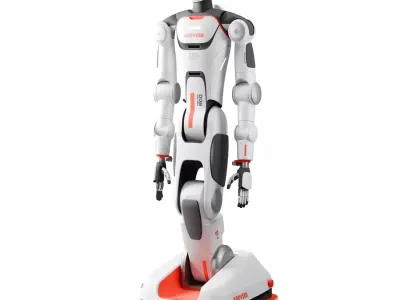
Q5 vs ELIXIS W
Compare Q5 by Robot Era and ELIXIS W by Addverb Technologies. Detailed analysis of sensors, navigation, battery, and price.
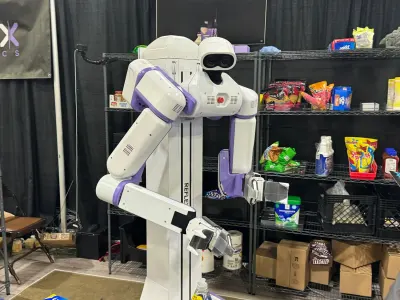
Q5 vs Reflex Humanoid
Which robot wins? Q5 vs Reflex Humanoid compared across sensors, navigation, battery, speed, and price.
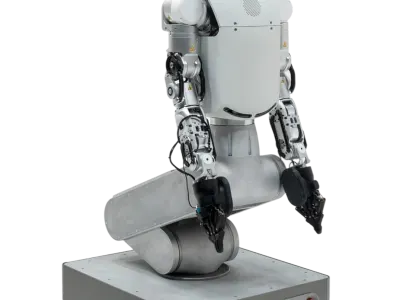
Q5 vs HMND 01 Alpha Wheeled
Q5 or HMND 01 Alpha Wheeled? Compare specs, speed, sensors, navigation, and battery for service vs industrial performance.
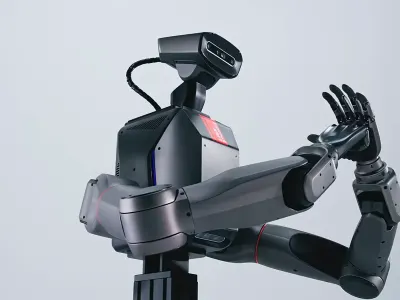
Q5 vs Tron 2
Compare Q5 and Tron 2. Detailed analysis of mobility, sensors, and battery life.
Disclaimer
All content, comparisons, and verdicts on this website are based on our research, testing, and opinion. While we strive for accuracy, we do not guarantee the completeness, reliability, or suitability of any information. Performance, specifications, and results may vary depending on usage and conditions. This website and its authors are not responsible for any decisions, actions, or outcomes based on the information provided. Always verify product details with the manufacturer before making purchase or operational decisions.