AlphaBot 2 vs Cruzr S2 at a glance
AlphaBot 2 is the taller of the two at 240 cm, against 176 cm for Cruzr S2. Cruzr S2 has more degrees of freedom (44 against 34 for AlphaBot 2), which allows finer movement.
Which one fits your use?
Based on the uses each robot is built and marketed for. Open a use to see the specs that matter for it.
| Comparing for… | AlphaBot 2 | Cruzr S2 |
|---|---|---|
| Suited | Suited | |
| Suited | Suited | |
| Suited | Not listed | |
| Suited | Not listed | |
| Suited | Suited |
- Pick AlphaBot 2 for research labs and home help and elder care.
- Both suit warehouse and logistics work, factory and manufacturing work and hospitality, retail and public-facing roles, so compare the specs for that use.
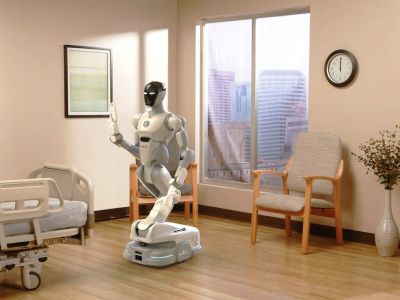
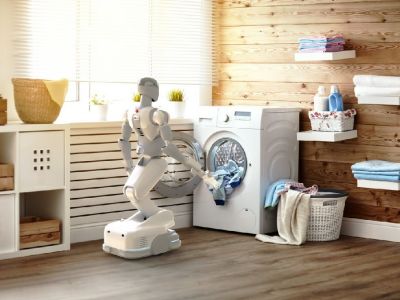
AI² Robotics of Shenzhen unveiled AlphaBot 2 in April 2025 as a general-purpose humanoid. Its AlphaBrain platform and GOVLA vision-language-action model drive a body that can reach from 0 to 240 cm, and it can work for more than six hours at a stretch.
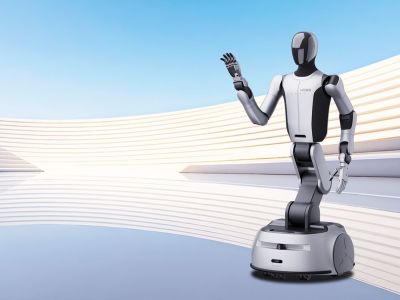
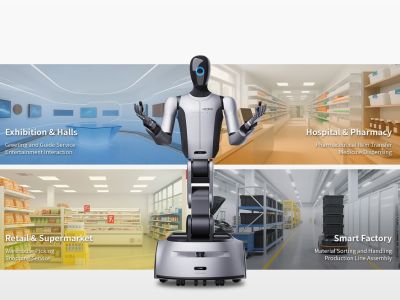
Cruzr S2 is UBTECH Robotics' full-size wheeled humanoid, introduced in August 2025. It stands 176 cm tall, has 44 degrees of freedom, moves at 2 m/s and uses Gen-4 industrial dexterous hands to sort and assemble components.
Detailed Analysis
AlphaBot 2
Design & Build Quality
AlphaBot 2 and Cruzr S2 are both wheeled humanoids built to reach high and low. AlphaBot 2 has more than 34 degrees of freedom and a waist-and-leg lift that gives a vertical working range of 0 to 240 cm, with 700 mm of reach per arm. Cruzr S2 stands 176 cm, has 44 degrees of freedom, 22 of them in its two 11-joint hands, and a waist that rotates ±170°, bends from +90° to -35° and lifts 40 cm to reach from the floor to 1.8 m. AlphaBot 2 reaches about 60 cm higher, while Cruzr S2 has the more detailed published hand design.
Cruzr S2
Mobility & Navigation
Both move on wheeled bases. Cruzr S2 rolls at 2 m/s, turns around in a 0.8 m passage and steers with stereo vision plus radars at the front and rear of its base. AlphaBot 2 uses what AI² Robotics calls 360° × 360° full-space perception to get around, but its speed has not been published. Cruzr S2's tight turning circle makes it the safer bet for narrow aisles.
AlphaBot 2
Sensors & Perception
Both makers list rich sensor sets. AlphaBot 2 combines a 360° ring of cameras with stereo cameras, force feedback sensors, a microphone array and proximity sensors. Cruzr S2 uses two fisheye and two RGB cameras with RGB-D cameras in its chest and base, adds radars at the front and rear of its base, and has six-axis force sensors in its wrists and tactile arrays in its hands. Cruzr S2's tactile hands give it a finer sense of touch for small parts.
Cruzr S2
AI Capabilities
AlphaBot 2's GOVLA model pairs a slow System 2 that reasons and breaks tasks into steps with a fast System 1 that controls whole-body movement, with DeepSeek technology integrated. Cruzr S2's work is planned by UBTECH's Co-Agent, billed by UBTECH as the first industrial agent for humanoid robots, and it holds conversations through a large language model. AI² Robotics also says AlphaBot 2 learns on site from real industrial data. Cruzr S2 adds voice interaction, which suits roles that involve customers.
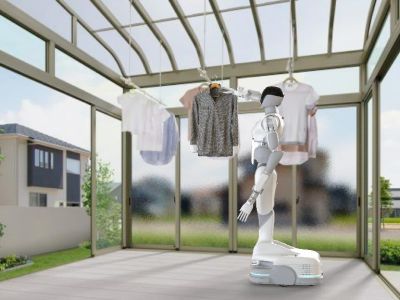
AlphaBot 2
Battery & Power Efficiency
AlphaBot 2 works for more than six hours continuously, according to AI² Robotics. Cruzr S2's battery capacity and runtime are unpublished; UBTECH says only that it charges through a fast-charging port in its base. AlphaBot 2 is the more predictable option for long shifts on current figures. Cruzr S2's runtime under your own workload is a question to put to UBTECH.
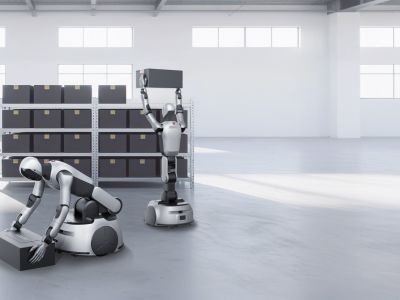
Cruzr S2
Use-Case Suitability
AlphaBot 2 targets automotive, semiconductor and biotech manufacturing, with airports and residential communities planned, and has been shown cooking, doing sterile filling, packing and inspecting. Cruzr S2's target jobs are sorting, component assembly, general enterprise work and serving customers. Both handle detailed factory work, but Cruzr S2 also covers front-of-house roles. Choose AlphaBot 2 for multi-step lab and factory tasks over long shifts, or Cruzr S2 for sorting, assembly and customer service on wheels.

AlphaBot 2
Software Ecosystem
AlphaBot 2 runs on AI² Robotics' AlphaBrain embodied-AI platform and receives over-the-air updates. Cruzr S2's software is UBTECH's Co-Agent industrial agent with learning-based motion control, and it connects over Gigabit Ethernet and USB 3.0. Both are vendor-managed systems. AlphaBot 2 emphasises continuous model improvement, while Cruzr S2 emphasises ready-made enterprise behaviour.

Cruzr S2
Safety Features
Cruzr S2's safety features are an emergency stop button, front and rear base radars and force sensing in its wrists. AI² Robotics has not published AlphaBot 2's safety features or certifications. Cruzr S2 is therefore the easier robot to assess for work near people. Neither maker has published safety certifications.
Capabilities & Operational Tasks
Head-to-head comparison of what AlphaBot 2 and Cruzr S2 can do, their applications, and capabilities.
What Can AlphaBot 2 & Cruzr S2 Do?
189 tasks listed for both, 5 only for AlphaBot 2, 4 only for Cruzr S2.
Technical Specifications
AlphaBot 2 and Cruzr S2 differ on 29 of the 52 specifications listed for both.
Functional Utility & Use Cases
4 Comparative Metrics
Manipulation & Load Capacity
4 Comparative Metrics
Kinematic Architecture & Dexterity
4 Comparative Metrics
Related Comparisons
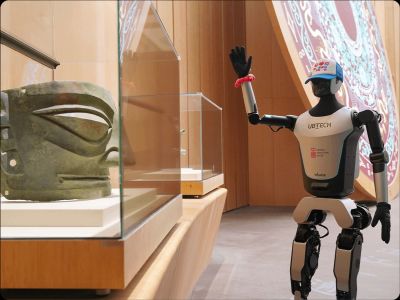
Walker C vs Cruzr S2
Walker C vs Cruzr S2: UBTECH's walking reception humanoid against its wheeled assembly and service humanoid, compared on build, hands and uses.
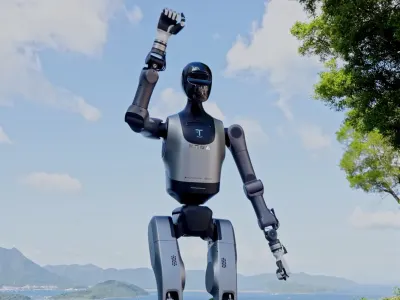
AlphaBot 2 vs Walker Tienkung
AlphaBot 2 vs Walker Tienkung: AI² Robotics' wheeled VLA humanoid against UBTECH's full-size research humanoid, compared on specs and uses.
Cruzr S2 vs Walker Tienkung
Cruzr S2 vs Walker Tienkung: UBTECH's wheeled assembly and service humanoid against UBTECH's full-size research humanoid, compared on specs and uses.

Cruzr S2 vs AgiBot A2 Lite
Cruzr S2 vs AgiBot A2 Lite: UBTECH's wheeled assembly and service humanoid against AgiBot's performance humanoid, compared on specs and uses.
Verdicts reflect our research and opinion. Confirm specifications with the manufacturer before buying.