AlphaBot 2 by AI² Robotics is presented as a general-purpose humanoid aimed at manufacturing, research and remote operations, making it relevant for comparison where adaptable humanoid platforms are sought; it is positioned with a broad price band and support for ROS 2 and Python SDK for integration. AlphaBot 2 differentiates itself with balance-assisted walking, a combination of visual SLAM and LiDAR mapping, and a wide sensor suite including depth camera and force/torque sensors that emphasize manipulation and stability. The platform lists teleoperation plus autonomous and learned behaviors, targeting users who need both remote control and on-device learning capabilities.
Walker Tienkung by UBTECH Robotics is framed for scientific research, scenario innovation and rescue/logistics roles, placing it in the same comparative segment of research-grade humanoids with an emphasis on indoor and mission-driven deployments. Walker Tienkung distinguishes itself with a slightly taller/stouter build, a listed top speed given as 7 km/h, stereo camera arrays plus ultrasonic sensing, and software support that includes ROS2 alongside proprietary toolchains and C++/Python interfaces. The robot emphasizes autonomous and learned behaviors for scenario-based tasks and industrial/rescue applicability.
Detailed Analysis
Design & Build Quality
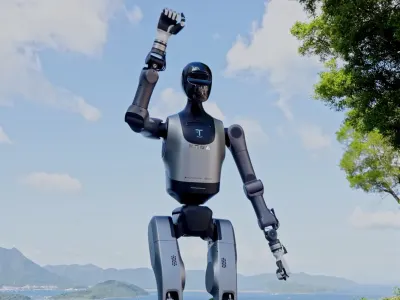
AlphaBot 2 lists dimensions of 170cm x 55cm x 38cm and a variable weight range of 50–80 kg, indicating configurable payload or modularity options and a narrower footprint for aisle-based work. Walker Tienkung is slightly larger at 172 x 60 x 40 cm with a fixed weight of 73 kg, reflecting a heavier, more robust chassis for payload or stability in dynamic tasks. Both are humanoid in form factor and intended for industrial/research contexts, but AlphaBot 2’s weight range suggests multiple configurations while Walker Tienkung’s single weight implies a single production configuration.
Mobility & Navigation
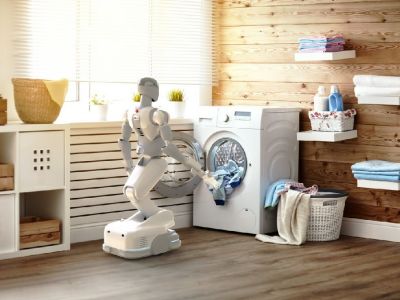
AlphaBot 2 specifies walking speed between 1.5–3 m/s and uses visual SLAM, LiDAR mapping and balance-assisted walking for locomotion and stability, supporting both teleoperated and autonomous motion. Walker Tienkung reports a speed of 7 km/h (≈1.94 m/s) and lists indoor SLAM, visual SLAM and LiDAR mapping for navigation, focusing on indoor and mission scenarios without teleoperation listed. Both platforms rely on SLAM and LiDAR for mapping and autonomy, with AlphaBot 2 explicitly including balance assistance and teleoperation as mobility features.
Sensors & Perception
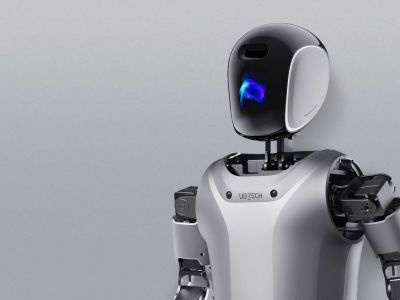
AlphaBot 2 carries RGB cameras, a depth camera, LiDAR, IMU, force/torque sensors, gyroscope, accelerometer and joint encoders, supporting whole-body perception and force-aware manipulation. Walker Tienkung includes RGB and stereo cameras, LiDAR, ultrasonic sensors, IMU, gyroscope, force sensors and temperature sensing, adding ultrasonic coverage and stereo vision for depth redundancy. Both use LiDAR and IMU for mapping and inertial stabilization, while AlphaBot 2 emphasizes depth-camera and force/torque arrays for manipulation and Walker Tienkung emphasizes stereo and ultrasonic for redundancy in close-range sensing.

AI Capabilities
AlphaBot 2 supports autonomous and learned behaviors plus teleoperation and is distributed with a Linux-based OS, ROS 2 support and a Python SDK to enable on-device models and integration into research pipelines. Walker Tienkung supports autonomous and learned behaviors but does not list teleoperation; its software stack includes ROS2, proprietary components and both Python and C++ interfaces to support optimized onboard and external algorithms. Both platforms target learned-autonomy workflows and ROS2 interoperability, with AlphaBot 2 providing an explicit teleoperation interface and Python SDK for higher-level experimentation.
Battery & Power Efficiency
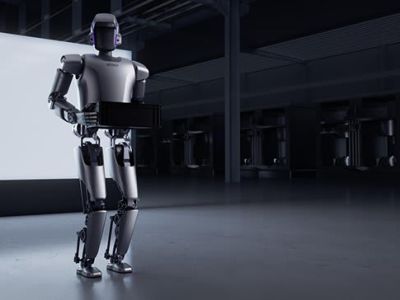
Both robots list battery lifetimes of 3–5 years for the battery pack; AlphaBot 2’s runtime is given as 3–5 hours with a 3–5 kWh, 48V LiPo pack and a 2–4 hour charge time in related specs. Walker Tienkung lists a 3–5 year battery life but provides no explicit runtime in the provided data; both are designed for multi-shift or mission deployments with serviceable battery packs. Comparable battery lifetimes indicate similar lifecycle maintenance expectations, while AlphaBot 2 supplies more explicit runtime and pack-capacity figures for operational planning.
Use-Case Suitability
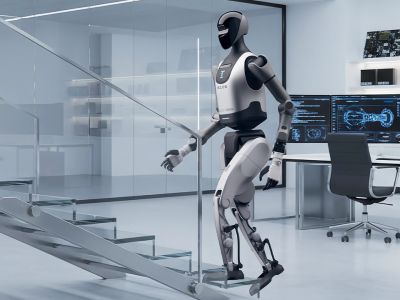
AlphaBot 2 lists manufacturing, research, logistics, infrastructure inspection and remote operations as target use cases, aligning with its sensor set and teleoperation capability for inspection and manipulation tasks. Walker Tienkung lists scientific research, scenario innovation, logistics, rescue missions and industrial automation, reflecting its stereo/ultrasonic sensing and speed specification aimed at scenario-driven and rescue tasks. Both are applicable to logistics and research, with AlphaBot 2 leaning toward precision inspection and manipulation and Walker Tienkung toward scenario-driven missions and rescue/innovation deployments.
Software Ecosystem
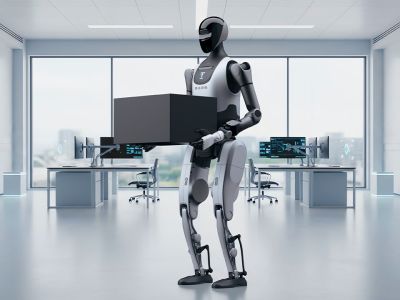
AlphaBot 2 runs a Linux-based OS, supports ROS 2 and provides a Python SDK, suggesting an open integration pathway for research and development teams. Walker Tienkung supports ROS2 and provides proprietary software with Python and C++ options, indicating a mixed ecosystem where optimized proprietary modules coexist with open ROS tooling. Both platforms offer ROS2 interoperability, but Walker Tienkung’s proprietary components and C++ interfaces may target performance-critical integrations while AlphaBot 2 emphasizes Python accessibility and teleoperation tools.
Safety Features
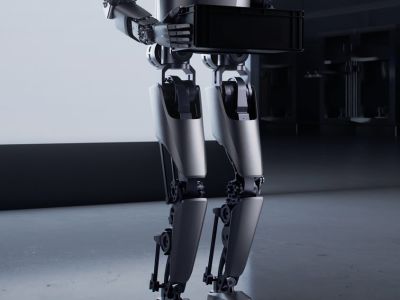
AlphaBot 2 lists force limiting, collision detection, emergency stop and redundant sensors as safety measures to protect people and hardware during manipulation and teleoperation. Walker Tienkung lists force limiting, collision detection, emergency stop and a collaborative mode for safe human-robot interaction in shared workspaces. Both platforms include core safety features (force limiting, collision detection, E-stop); Walker Tienkung explicitly includes a collaborative mode while AlphaBot 2 highlights sensor redundancy for safety.
Pricing & Value
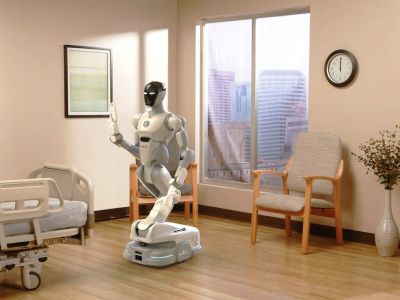
AlphaBot 2 is quoted with a price range of $50,000–$150,000, providing a broad band that suggests multiple configurations or tiers for different capabilities. Walker Tienkung is quoted at $65,000–$115,000, a narrower band that overlaps AlphaBot 2’s mid-range and implies a more consistent configuration cost. Both price ranges place them in the research/industrial humanoid segment, with AlphaBot 2 allowing lower-entry and higher-end configurations and Walker Tienkung positioned within a mid-to-high bracket.
Analysis Score Summary
Total Score
10
AlphaBot 2
VS
Based on Detailed Analysis
Total Score
8
Walker Tienkung
📊 Win: 2 points | Trade-off: 1 point each
Scores are summed across every insight: a clear winner earns 2 points, while balanced trade-offs give each robot 1 point. The total reflects how often each robot outperforms the other (or shares the spotlight) throughout the detailed analysis sections.
Capabilities & Operational Tasks
Head-to-head comparison of what AlphaBot 2 and Walker Tienkung can do, their applications, and capabilities.
What Can AlphaBot 2 & Walker Tienkung Do?
15Core operational tasks, activities, and physical manipulation duties evaluated side-by-side.
| Task & Description | Model AAlphaBot 213 supported | Model BWalker Tienkung5 supported |
|---|---|---|
| Autonomous task execution | High | High |
| Carrying and transport | High | — |
| Cleaning | High | — |
| Collaborative work | — | High |
| Human interaction | High | High |
| Machine operation | High | — |
| Material handling | High | — |
| Move objects | High | — |
| Navigation | High | High |
| Obstacle traversal | — | High |
| Packaging | High | — |
| Pick and place | High | — |
| Repetitive physical tasks | High | — |
| Sorting | High | — |
| Tool use | High | — |
Technical Specifications
Head-to-head performance data and metrics
| Specification | Model AAlphaBot 2 | Model BWalker Tienkung |
|---|---|---|
Functional Utility & Use Cases4 Comparative Metrics | ||
Control Method | Teleoperation, autonomous, learned behaviors | Autonomous, learned behaviors |
Use Cases | Autonomous cooking, sterile filling operations, unpacking and packaging, quality inspection, automotive manufacturing assembly, biotech laboratory tasks, multi-step complex workflows, extended uninterrupted operations in manufacturing environments | Scientific research, scenario innovation, logistics, rescue missions, industrial automation |
Multi Robot Coord | Not specified | (Inferred · Low confidence · Potential for multi-robot coordination in manufacturing) | Yes |
Pet Friendly | Yes, with safety protocols | Yes, with safety protocols |
Manipulation & Load Capacity4 Comparative Metrics | ||
Carrying Capacity | 15-25 kg per arm | 1.5 kg |
Deadlift Capacity | 30-50 kg | (Inferred · Medium confidence · Typical for humanoid robots with 15-25 kg per-arm capacity) | 3 kg |
Payload Type | Tools, sensors, industrial equipment | Tools, packages, precision instruments, people interaction |
Modular Attachments | Tool changers, gripper interfaces, sensor mounts | Tool changers, end-effector options |
Kinematic Architecture & Dexterity4 Comparative Metrics | ||
Degrees of Freedom | 34-40+ DOF (including head, arms with 5-finger hands, legs, torso, waist) | - |
Material | Aluminum frame, composite materials, soft materials for safety | (Inferred · Medium confidence) | High-strength aluminum alloy, titanium alloy, engineering plastic |
Mobility Type | Wheeled | Legged (bipedal walking) |
Hardware Interface | USB-C, Ethernet, GPIO, CAN bus | USB, GPIO, CAN bus, serial |
Functional Utility & Use Cases
4 Comparative Metrics
Manipulation & Load Capacity
4 Comparative Metrics
Kinematic Architecture & Dexterity
4 Comparative Metrics
Related Comparisons
Discover similar robot matchups to expand your knowledge and find the perfect solution
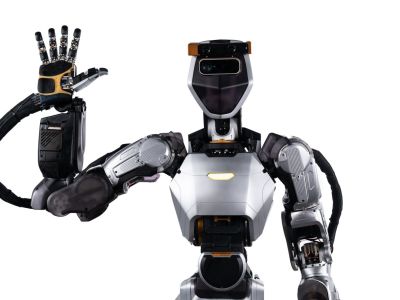
Phoenix vs Walker Tienkung
Compare Phoenix and Walker Tienkung. Detailed analysis of navigation, sensors, and speed.
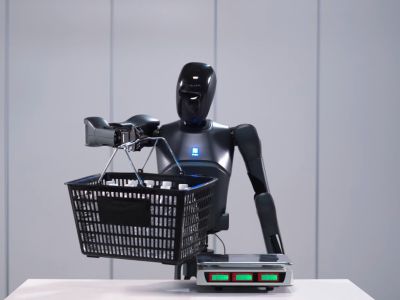
D7 vs Walker Tienkung
Compare D7 and Walker Tienkung. Detailed analysis of sensors, navigation, mobility, and battery life.
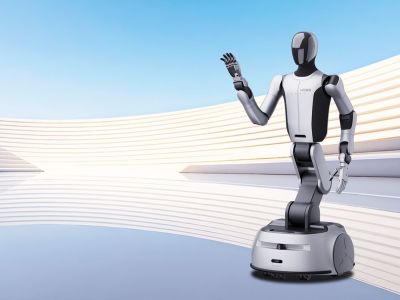
Cruzr S2 vs Walker Tienkung
Which robot wins? Cruzr S2 vs Walker Tienkung compared across navigation, sensors, speed, and software.
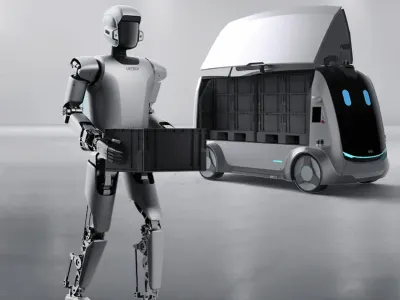
Walker S1 vs Walker Tienkung
Walker S1 or Walker Tienkung? Compare specs, navigation, sensors, and mobility performance.
Disclaimer
All content, comparisons, and verdicts on this website are based on our research, testing, and opinion. While we strive for accuracy, we do not guarantee the completeness, reliability, or suitability of any information. Performance, specifications, and results may vary depending on usage and conditions. This website and its authors are not responsible for any decisions, actions, or outcomes based on the information provided. Always verify product details with the manufacturer before making purchase or operational decisions.