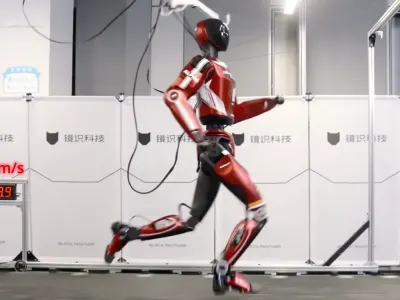
Bolt by MirrorMe Technology positions itself as a high-performance humanoid robot in the competitive bipedal robotics market, emphasizing athletic capabilities for dynamic applications. Its key differentiators include a top speed of 36 km/h (10 m/s), superior payload capacities of 20 kg dynamic and 40 kg static, and over 40 degrees of freedom for advanced motion. This makes Bolt suitable for sports training, high-speed logistics, and human-robot collaboration in unstructured environments, setting it apart from slower, less agile competitors.
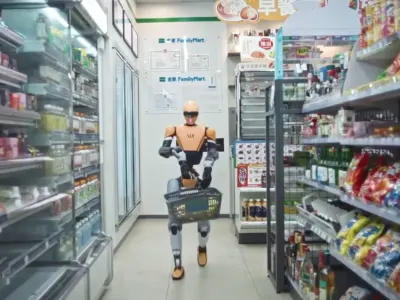
Titan 01 by WestLake Robotics targets educational and service-oriented markets as a versatile humanoid with 29 self-developed joints. It differentiates through its compute unit featuring CPU, GPU, and NPU, supporting semi-autonomous operations for demonstrations and inspections. Use cases span retail service, security patrols, and firefighting assistance, prioritizing precision in controlled settings over extreme mobility.
Detailed Analysis
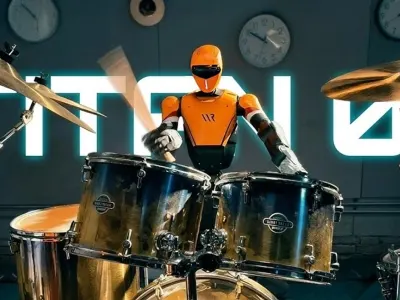
How do Bolt and Titan 01 compare in bipedal mobility and balance?
Bolt achieves a top speed of 36 km/h (10 m/s), far surpassing Titan 01's 2.5 km/h (0.7 m/s), enabling superior dynamic balance for high-speed locomotion. Titan 01 focuses on stable, slower movement suitable for indoor patrols and demonstrations. Bolt's over 40 DoF support agile maneuvers, while Titan 01's 29 DoF prioritize controlled precision. Both maintain balance via IMU and gyroscope, but Bolt excels in unstructured environments. For applications requiring rapid traversal, Bolt demonstrates clear advantages in real-world testing.
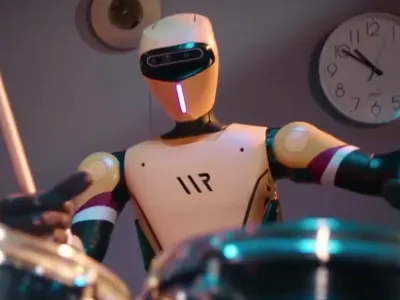
What differences exist in dexterity and manipulation capabilities?
Bolt's over 40 DoF enable complex arm and hand manipulations, supporting 20 kg dynamic carrying and 80 kg deadlift. Titan 01, with 29 DoF from self-developed joints, manages 5 kg per arm carrying and 15 kg deadlift, suited for lighter tasks like retail handling. Force sensors on both aid precise gripping, but Bolt's higher DoF allow greater versatility in dynamic scenarios. Titan 01's design emphasizes integrated joint reliability for repetitive motions. Bolt offers superior dexterity for manipulation-intensive roles.
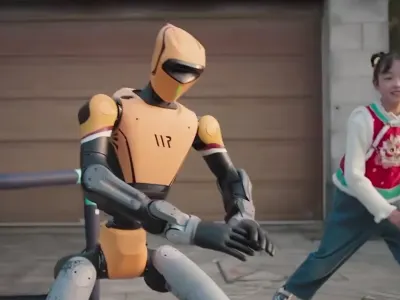
How do AI, autonomy, and learning capabilities differ?
Bolt operates fully autonomously with teleoperation overrides, leveraging ROS2 and proprietary APIs for advanced decision-making in unstructured settings. Titan 01 is semi-autonomous and primarily teleoperated, supported by its proprietary GAE Avatar System, ROS2 compatibility, and CPU/GPU/NPU compute unit. Bolt's autonomy suits independent high-speed tasks, while Titan 01 relies on human input for precision. No explicit learning details are provided, but compute presence in Titan 01 suggests potential for AI training. Bolt provides higher baseline autonomy.
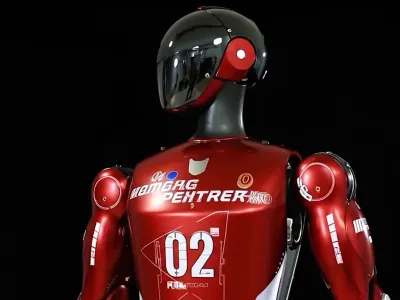
Which robot excels in payload and lifting capacity?
Bolt handles 20 kg dynamic and 40 kg static carrying, with 80 kg deadlift capacity, ideal for logistics. Titan 01 offers 5 kg per arm carrying and 15 kg deadlift, limited to lighter loads. Both use force sensors for safe handling, but Bolt's capacities support industrial demands. Titan 01 suits demonstration-scale tasks. For heavy payloads, Bolt is markedly superior.

What are the differences in battery runtime and power efficiency?
Both Bolt and Titan 01 feature batteries rated for 3-5 years, indicating comparable longevity in power systems. No specific runtime per charge is detailed, but Bolt's high-speed operations imply optimized efficiency for dynamic use. Titan 01's slower profile may extend per-session endurance in stationary tasks. Shared temperature sensors monitor thermal performance. Power efficiency appears equivalent based on available data.

How do real-world use cases compare for industrial vs general purpose?
Bolt targets dynamic motion research, sports training, high-speed logistics, and collaboration in unstructured environments, aligning with industrial agility needs. Titan 01 serves education, retail, performances, security, firefighting, and mining inspection, fitting general-purpose service roles. Bolt excels in high-mobility industrial settings, while Titan 01 prioritizes versatile, semi-supervised deployments. Overlap exists in human collaboration, but applications diverge significantly. Selection depends on mobility versus multi-domain utility.
Which humanoid robot is better for high-speed logistics applications?
Bolt outperforms Titan 01 in high-speed logistics due to its 36 km/h speed, 20 kg dynamic carrying, and full autonomy for unstructured navigation. Titan 01's 2.5 km/h speed and 5 kg per arm limit it to low-speed, teleoperated tasks. Bolt's specs align directly with rapid transport needs. For industrial logistics, Bolt is the recommended choice.
Which robot offers better capabilities for complex manipulation tasks?
Bolt provides superior manipulation via over 40 DoF, 80 kg deadlift, and 20 kg dynamic capacity, enabling complex tasks in dynamic settings. Titan 01's 29 DoF and 15 kg deadlift suit simpler, precise operations under teleoperation. Bolt handles heavier, multi-joint demands effectively. For complex manipulation, Bolt is recommended.
Analysis Score Summary
Total Score
8
Bolt
VS
Based on Detailed Analysis
Total Score
8
Titan 01
📊 Win: 2 points | Trade-off: 1 point each
Scores are summed across every insight: a clear winner earns 2 points, while balanced trade-offs give each robot 1 point. The total reflects how often each robot outperforms the other (or shares the spotlight) throughout the detailed analysis sections.
Capabilities & Operational Tasks
Head-to-head comparison of what Bolt and Titan 01 can do, their applications, and capabilities.
What Can Bolt & Titan 01 Do?
9Core operational tasks, activities, and physical manipulation duties evaluated side-by-side.
| Task & Description | Model ABolt8 supported | Model BTitan 016 supported |
|---|---|---|
| Autonomous task execution | High | High |
| Carrying and transport | High | High |
| Collaborative work | High | High |
| Fighting and boxing | Moderate | — |
| Navigation | High | High |
| Obstacle traversal | High | High |
| Patrolling | — | Moderate |
| Repetitive physical tasks | High | — |
| Sports and games | Moderate | — |
Technical Specifications
Head-to-head performance data and metrics
| Specification | Model ABolt | Model BTitan 01 |
|---|---|---|
Functional Utility & Use Cases4 Comparative Metrics | ||
Control Method | Autonomous, teleoperation, learned behaviors | Teleoperation, autonomous, learned behaviors |
Use Cases | Sports training partner, dynamic motion research, high-speed logistics, human-robot collaboration in unstructured environments | Education demonstrations, retail service, performance shows, security patrols, firefighting assistance, mining inspection |
Multi Robot Coord | Yes, swarm capabilities | Yes, swarm capabilities |
Pet Friendly | Yes, with safety protocols | Yes, with safety protocols |
Manipulation & Load Capacity4 Comparative Metrics | ||
Carrying Capacity | 20 kg (Dynamic); 40 kg (Static) | 5 kg per arm |
Deadlift Capacity | 80 Kg | 15 kg |
Payload Type | Tools, packages, precision instruments, people interaction | Tools, packages, precision instruments, people interaction |
Modular Attachments | Tool changers, end-effector options | Tool changers, end-effector options |
Kinematic Architecture & Dexterity4 Comparative Metrics | ||
Degrees of Freedom | Over 40 Degrees of Freedom (DOF) | 29 DoF (Featuring 29 self-developed integrated joints). |
Material | Aluminum frame, composite, soft skin materials | Aluminum frame, composite, soft skin materials |
Mobility Type | Legged (bipedal walking) | Legged (bipedal walking) |
Hardware Interface | USB, GPIO, CAN bus, Ethernet | USB, CAN bus, Ethernet |
Functional Utility & Use Cases
4 Comparative Metrics
Manipulation & Load Capacity
4 Comparative Metrics
Kinematic Architecture & Dexterity
4 Comparative Metrics
Frequently Asked Questions
What is the deadlift capacity of Bolt by MirrorMe Technology versus Titan 01 by WestLake Robotics?
Bolt by MirrorMe Technology deadlifts 80 kg, while Titan 01 by WestLake Robotics deadlifts 15 kg.
How does the autonomy level of Bolt compare to Titan 01 for teleoperation needs?
Bolt is fully autonomous with teleoperation overrides; Titan 01 is semi-autonomous and primarily teleoperated.
Which robot has higher walking speed and locomotion stability, Bolt or Titan 01?
Bolt reaches 36 km/h (10 m/s) for superior locomotion; Titan 01 maxes at 2.5 km/h (0.7 m/s) for stable, slow movement.
What are the dexterity and hand manipulation capabilities of these humanoid robots?
Bolt offers over 40 DoF for advanced dexterity; Titan 01 has 29 DoF with self-developed joints for precise tasks.
Is Bolt by MirrorMe Technology ready for sports training and dynamic research deployments?
Yes, Bolt supports sports training partner and dynamic motion research use cases with high speed and autonomy.
Can Titan 01 by WestLake Robotics handle security patrols and mining inspections effectively?
Yes, Titan 01 is designed for security patrols, mining inspection, and similar semi-autonomous service applications.
Related Comparisons
Discover similar robot matchups to expand your knowledge and find the perfect solution
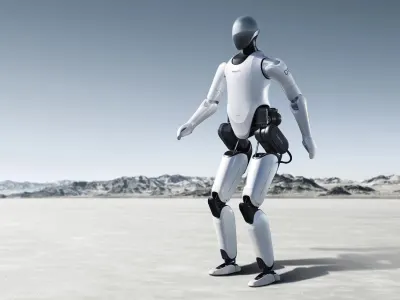
Titan 01 vs CyberOne 2026 Version
Which humanoid robot is better? Titan 01 vs CyberOne 2026 Version compared for dexterity, AI capabilities, and price.
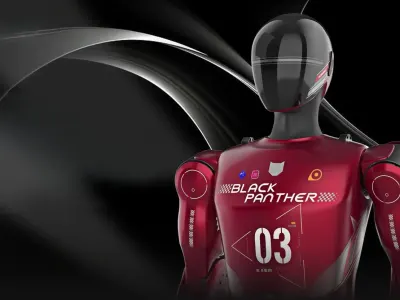
Bolt vs CyberOne 2026 Version
Bolt by MirrorMe Technology or CyberOne 2026 Version by Xiaomi Robotics Lab? See which humanoid robot performs better for manufacturing, logistics, and research.

Next‑Gen IRON vs Bolt
Compare Next-Gen IRON vs Bolt for humanoid mobility, dexterity, autonomy, and payload capacity in industrial and dynamic use cases.

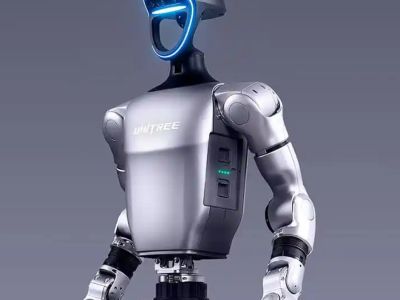
Optimus vs Unitree G1
Compare Optimus vs Unitree G1 for humanoid mobility, dexterity, autonomy, and payload capacity.
Disclaimer
All content, comparisons, and verdicts on this website are based on our research, testing, and opinion. While we strive for accuracy, we do not guarantee the completeness, reliability, or suitability of any information. Performance, specifications, and results may vary depending on usage and conditions. This website and its authors are not responsible for any decisions, actions, or outcomes based on the information provided. Always verify product details with the manufacturer before making purchase or operational decisions.