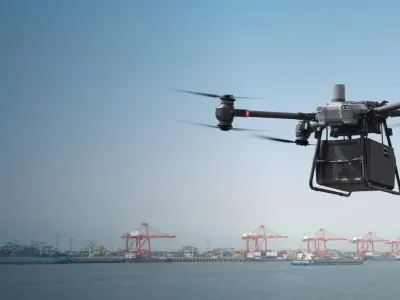
The DJI FlyCart 30 is a heavy-lift drone designed primarily for industrial logistics and emergency supply delivery with a focus on precise cargo handling and robust safety features. Positioned at a higher price range of $25,000 to $35,000, it differentiates itself through advanced dual radar and binocular vision sensors, a high-resolution FPV camera, and autonomous flight modes tailored for demanding environments.
The DJI FlyCart 100 targets heavy cargo delivery and industrial use cases with an emphasis on advanced sensing technologies like LiDAR and millimeter-wave radar. Priced more affordably between $12,500 and $18,800, it offers a larger estimated physical footprint and specialized payload handling systems such as lifting and winch options, making it suitable for heavier and more complex delivery missions.
Detailed Analysis
Design & Build Quality
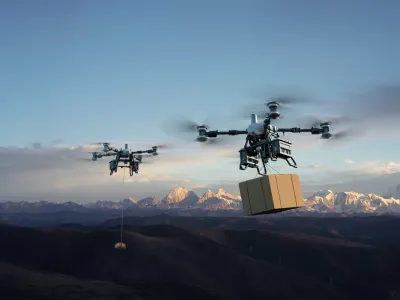
The DJI FlyCart 30 has a compact design with dimensions of 159 x 190 x 95 cm and weighs 42.5 kg without batteries, extending to 65 kg with two batteries, featuring foldable arms and propellers. In contrast, the FlyCart 100 is larger at approximately 200 x 200 x 90 cm and heavier, with weights of 55.2 kg or 60.2 kg depending on the payload system. Both drones are built to endure industrial environments, but the FlyCart 30's IP55 rating adds corrosion and dust resistance.
Mobility & Navigation
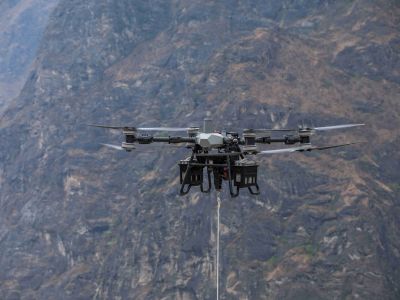
FlyCart 30 achieves a maximum speed of 20 m/s (72 km/h) with advanced navigation using GNSS, visual odometry, SLAM obstacle avoidance, and dual operator capability. FlyCart 100 has a lower estimated top speed of 15 m/s, leveraging integrated LiDAR, radar-based obstacle detection, and GPS navigation. Both drones support autonomous flight with remote control interfaces, but FlyCart 30’s SLAM fusion and cruise control offer enhanced flight stability.
Sensors & Perception
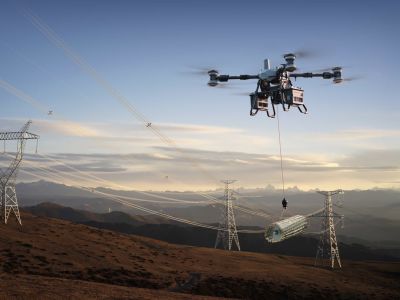
FlyCart 30 features dual active phased array radars and a binocular vision system providing intelligent obstacle sensing and real-time terrain awareness. It incorporates a high-resolution FPV gimbal camera for precise visual feedback. Conversely, FlyCart 100 employs a LiDAR system delivering 300,000 points per second, millimeter-wave radar, and a quad-vision setup with five fisheye cameras, enabling robust environmental perception suited for complex terrain and payload management.
AI Capabilities
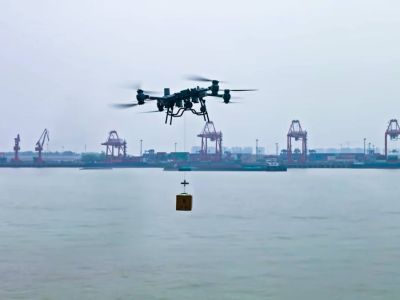
FlyCart 30 integrates SLAM-based obstacle avoidance with radar and binocular vision fusion, enabling precise terrain sensing and automatic cargo stabilization during flight. It supports intelligent cargo handling with automatic payload release and swing control. FlyCart 100, while also autonomous, relies on LiDAR and radar data fusion for obstacle avoidance and flight safety but does not specify advanced cargo stabilization AI.
Battery & Power Efficiency
Both drones have a typical battery lifespan of 2-3 years and support dual batteries for extended operation. FlyCart 30’s total weight with two DB2000 batteries is 65 kg, enabling longer flight distances up to 28 km without payload and 16 km with full payload. FlyCart 100’s battery weight ranges from 55.2 to 60.2 kg depending on payload systems, but estimated maximum flight distances are not specified, indicating potential shorter endurance compared to FlyCart 30.
Use-Case Suitability
FlyCart 30 is optimized for precision logistics tasks including construction materials transport, emergency supply delivery, and disaster relief, benefiting from its advanced sensing and dual-operator mode. FlyCart 100 addresses heavy cargo delivery in industrial and remote areas, emphasizing lifting and winch systems suitable for bulkier payloads and operational flexibility, albeit with reduced max speed and potentially less precise cargo control.
Functional Tools & Payload
FlyCart 30 supports both cargo and winch modes with automatic payload release, cable heating and cutting for emergency scenarios, and can handle payloads up to 30-40 kg depending on battery configuration. FlyCart 100 offers distinct lifting and winch systems, with weights of 55.2 and 60.2 kg respectively, tailored for heavy cargo but with less detailed automation features described.
Software Ecosystem
FlyCart 30 runs DJI Pilot 2 OS integrated with DJI FlightHub for fleet management and supports dual operator mode and real-time terrain visualization. FlyCart 100 operates on DJI’s proprietary OS with firmware and app ecosystem supporting autonomous flight, but without explicit mention of fleet management or dual-operator support.
Safety Features
FlyCart 30 includes intelligent obstacle sensing via combined radar and binocular vision, an integrated parachute, cargo center-of-gravity detection, and emergency cable cutting for winch mode. FlyCart 100 offers parachute deployment above 80 m, LiDAR and radar-based obstacle avoidance, and an anti-collision system, reflecting a strong emphasis on operational safety though with somewhat different sensor modalities.
Pricing & Value
DJI FlyCart 30 is positioned at a premium price range of $25,000 to $35,000 reflecting its advanced sensor fusion, precision handling, and extensive software support. Meanwhile, FlyCart 100 is offered at $12,500 to $18,800, making it a more cost-effective solution for heavy-lift needs with robust LiDAR-enabled perception but fewer advanced autonomous cargo features.
Analysis Score Summary
Total Score
10
DJI FlyCart 30
VS
Based on Detailed Analysis
Total Score
10
DJI FlyCart 100
📊 Win: 2 points | Trade-off: 1 point each
Scores are summed across every insight: a clear winner earns 2 points, while balanced trade-offs give each robot 1 point. The total reflects how often each robot outperforms the other (or shares the spotlight) throughout the detailed analysis sections.
Technical Specifications
Head-to-head performance data and metrics
| Specification | Model ADJI FlyCart 30 | Model BDJI FlyCart 100 |
|---|---|---|
Functional Utility & Use Cases4 Comparative Metrics | ||
Control Method | Remote controller, DJI Pilot 2 app, dual operator mode, autonomous flight modes | Autonomous flight with remote control and app interface |
Use Cases | Industrial logistics, emergency supply delivery, construction site material transport, remote area cargo delivery, disaster relief operations | Heavy cargo delivery, industrial logistics, emergency supply transport, remote area deliveries |
Multi Robot Coord | Supports multi-operator and multi-drone coordination via DJI FlightHub | Supports multi-drone coordination for complex delivery operations |
Pet Friendly | Not specifically designed for pet hair handling (not applicable) | Not specifically designed for pet hair handling (industrial drone) |
Manipulation & Load Capacity2 Comparative Metrics | ||
Payload Type | Cargo (up to 30 kg dual battery, 40 kg single battery), winch-delivered payloads, 70 L volume capacity | Cargo payload (up to 100 kg), winch-delivered or hook-attached |
Modular Attachments | Optional winch system, spotlight attachment (JZ T60 Spotlight with 8,000 lumens) | Payload winch, electric hook, optional sensor modules (Estimated) |
Kinematic Architecture & Dexterity3 Comparative Metrics | ||
Material | EPP foam case with aluminum alloy frame, corrosion-resistant materials | Carbon fiber propellers, high-strength composite frame and metal components |
Mobility Type | Multirotor drone with six rotors, no brush roll or suction (not a cleaning robot) | Coaxial four-axis, eight-blade rotor system |
Hardware Interface | USB-C port for data and charging, charging contacts for battery packs | USB-C for data and charging contacts for battery charging |
Functional Utility & Use Cases
4 Comparative Metrics
Manipulation & Load Capacity
2 Comparative Metrics
Kinematic Architecture & Dexterity
3 Comparative Metrics
Related Comparisons
Discover similar robot matchups to expand your knowledge and find the perfect solution
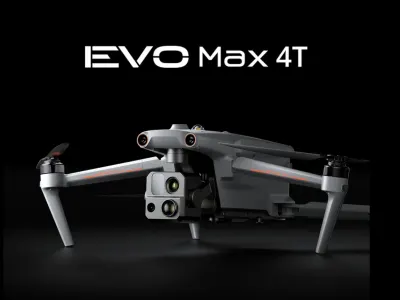
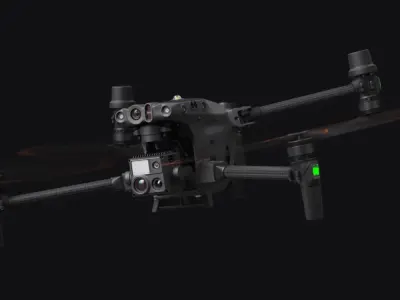
EVO Max 4T vs DJI Matrice 30 series
Which camera drone is better? EVO Max 4T vs DJI Matrice 30 series compared for image quality, battery life, and value.
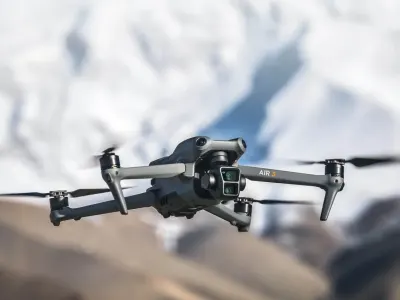
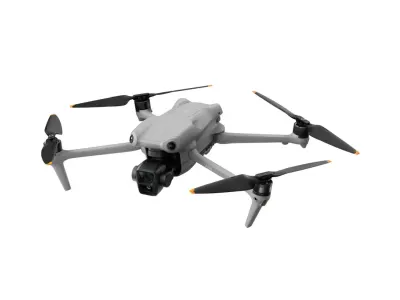
DJI Air 3 vs DJI Air 3S
Compare DJI Air 3 vs DJI Air 3S for camera quality, low-light sensors, obstacle avoidance, battery life, and pro videography outcomes.

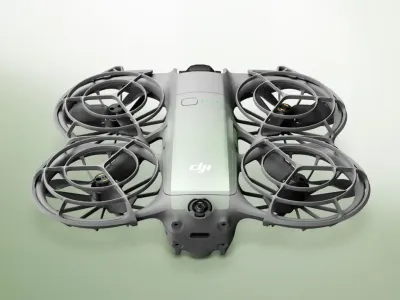
DJI Avata 3 vs DJI Neo 2
Which camera drone is better? DJI Avata 3 vs DJI Neo 2 compared for image quality, battery life, range, safety, and pro vs beginner use.

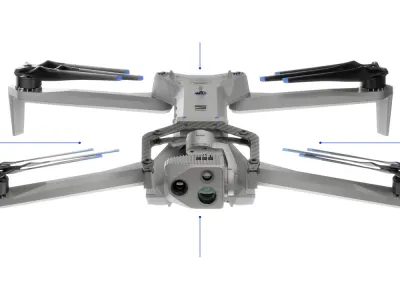
Skydio X2D vs Skydio X10
Compare Skydio X2D vs Skydio X10 for camera quality, flight time, range, and cinematic capabilities in defense and inspection.
Disclaimer
All content, comparisons, and verdicts on this website are based on our research, testing, and opinion. While we strive for accuracy, we do not guarantee the completeness, reliability, or suitability of any information. Performance, specifications, and results may vary depending on usage and conditions. This website and its authors are not responsible for any decisions, actions, or outcomes based on the information provided. Always verify product details with the manufacturer before making purchase or operational decisions.