KUAVO 4PRO (KUAVO-MY) vs Cruzr S2 at a glance
Cruzr S2 is quicker, with a top speed of 2 m/s versus 0.4 m/s for KUAVO 4PRO (KUAVO-MY). Cruzr S2 has more degrees of freedom (44 against 22 for KUAVO 4PRO (KUAVO-MY)), which allows finer movement. KUAVO 4PRO (KUAVO-MY) is priced at $50,000–$150,000 and Cruzr S2 at $80,000, so their price ranges overlap.
Which one fits your use?
Based on the uses each robot is built and marketed for. Open a use to see the specs that matter for it.
| Comparing for… | KUAVO 4PRO (KUAVO-MY) | Cruzr S2 |
|---|---|---|
| Suited | Suited | |
| Suited | Suited | |
| Suited | Not listed | |
| Suited | Not listed | |
| Suited | Suited |
- Pick KUAVO 4PRO (KUAVO-MY) for research labs and education and training.
- Both suit warehouse and logistics work, factory and manufacturing work and hospitality, retail and public-facing roles, so compare the specs for that use.
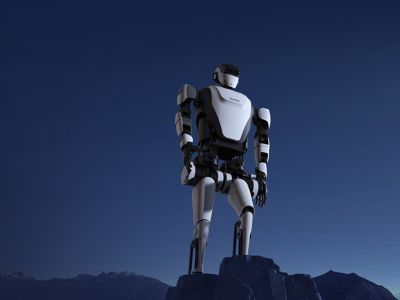
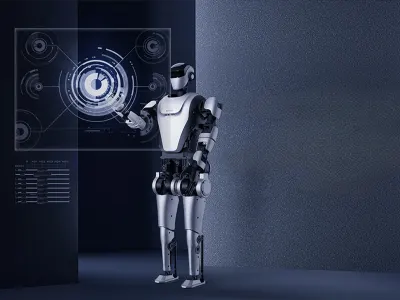
Leju Robotics' KUAVO-MY, also sold as KUAVO 4Pro, is a 166 cm, 55 kg biped for labs, guided tours and industrial trials. It walks at 0.4 m/s, can break into a 5 km/h run, and splits its computing between an Intel Core i9 for motion and an NVIDIA Jetson Orin NX for AI.
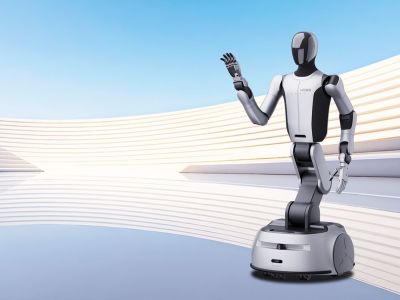
Cruzr S2 is UBTECH Robotics' full-size wheeled humanoid, introduced in August 2025. It stands 176 cm tall, has 44 degrees of freedom, moves at 2 m/s and uses Gen-4 industrial dexterous hands to sort and assemble components.
Detailed Analysis
KUAVO 4PRO (KUAVO-MY)
Design & Build Quality
KUAVO-MY is a 166 cm, 55 kg biped with 22 degrees of freedom, or 28 on the exhibition version with a moving head and dexterous hands. Cruzr S2 is a 176 cm wheeled humanoid with 44 degrees of freedom, 22 of them in its two 11-joint hands, and a flexible waist that rotates ±170°, bends from +90° to -35° and lifts 40 cm. That waist lets Cruzr S2 reach anywhere from the floor to 1.8 m without legs. KUAVO-MY spends its joints on walking, while Cruzr S2 spends them on hands and reach.
Cruzr S2
Mobility & Navigation
KUAVO-MY walks at 0.4 m/s, can run at up to 5 km/h and maps its surroundings with a 3D LiDAR and a depth camera. Cruzr S2 rolls at 2 m/s, five times KUAVO-MY's walking pace, turns around in a 0.8 m passage and steers with stereo vision plus front and rear radars. Cruzr S2 covers ground faster in shops, offices and factories with flat floors. KUAVO-MY's walking gait is the attraction for research and demonstrations.
KUAVO 4PRO (KUAVO-MY)
Sensors & Perception
KUAVO-MY carries an Orbbec Gemini 335L depth camera, a Livox Mid-360 3D LiDAR, an IMU, a six-microphone array that locates sounds in 360° and temperature sensors in its joints. Cruzr S2 sees through two fisheye and two RGB cameras plus RGB-D cameras in its chest and base, with radars at both ends of its base, six-axis force sensors in its wrists and tactile arrays in its hands. Cruzr S2's touch and force sensing make it better equipped for handling. KUAVO-MY's LiDAR and 360° sound localisation suit mapping and guiding visitors.
Cruzr S2
AI Capabilities
KUAVO-MY learns tasks by imitation from recorded demonstrations and answers questions through a large-model Q&A system on an NVIDIA Jetson Orin NX. Cruzr S2 plans work with UBTECH's Co-Agent, which UBTECH calls the first industrial agent for humanoid robots, and talks with people through a large language model. Both can hold a conversation. KUAVO-MY is aimed at teams that teach it new skills, while Cruzr S2 arrives set up for enterprise tasks.
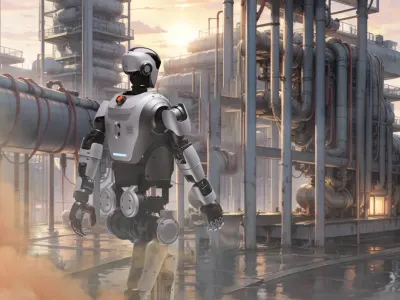
KUAVO 4PRO (KUAVO-MY)
Battery & Power Efficiency
KUAVO-MY's 60 V, 6 Ah battery gives about an hour of walking and recharges in 1.5 hours or less. UBTECH has not published Cruzr S2's battery capacity or runtime; it charges through a fast-charging port in its base. KUAVO-MY's hour is fine for demonstrations but short for a working day. Ask UBTECH for Cruzr S2's runtime under your workload.
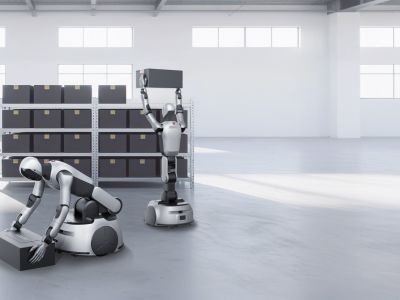
Cruzr S2
Use-Case Suitability
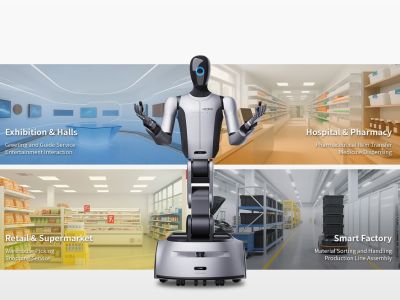
Leju aims KUAVO-MY at research labs, exhibition and shopping guidance, education and industrial trials. UBTECH pitches Cruzr S2 at sorting and component assembly, enterprise operations and customer-facing service. Both can guide and talk to visitors, but only Cruzr S2 is built for assembly-style handling. Choose KUAVO-MY for research, demonstrations and guided tours, or Cruzr S2 for sorting, assembly and customer service on wheels.
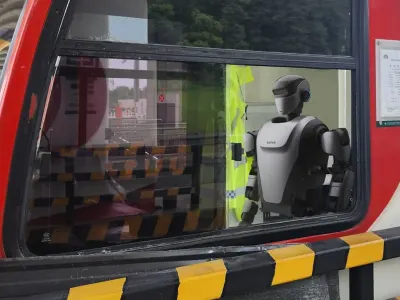
KUAVO 4PRO (KUAVO-MY)
Software Ecosystem
KUAVO-MY uses Leju's open ROS-based kuavo-ros-control stack for secondary development, and the KUAVO-MY edition runs the OpenHarmony-based KaihongOS. Cruzr S2 runs UBTECH's Co-Agent industrial agent with learning-based motion control and offers Gigabit Ethernet and USB 3.0 for wired integration. KUAVO-MY is the more open platform for developers. Cruzr S2 is built for businesses that want working behaviour out of the box.

Cruzr S2
Safety Features
KUAVO-MY has an emergency stop on its body, a low-battery alarm and temperature monitoring in its joints. Cruzr S2 has an emergency stop button, radars at the front and rear of its base and force sensing in its wrists. Cruzr S2's radars and wrist sensing give it more ways to detect people and contact around it. Neither company lists safety certifications for its robot.
Capabilities & Operational Tasks
Head-to-head comparison of what KUAVO 4PRO (KUAVO-MY) and Cruzr S2 can do, their applications, and capabilities.
What Can KUAVO 4PRO (KUAVO-MY) & Cruzr S2 Do?
148 tasks listed for both, 1 only for KUAVO 4PRO (KUAVO-MY), 5 only for Cruzr S2.
Technical Specifications
KUAVO 4PRO (KUAVO-MY) and Cruzr S2 differ on 32 of the 52 specifications listed for both.
Functional Utility & Use Cases
4 Comparative Metrics
Manipulation & Load Capacity
4 Comparative Metrics
Kinematic Architecture & Dexterity
4 Comparative Metrics
Related Comparisons
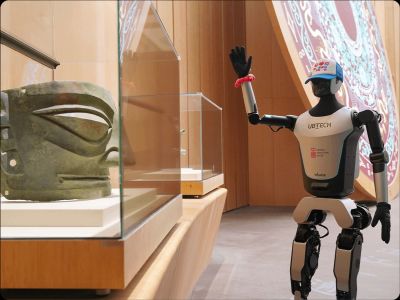
Walker C vs Cruzr S2
Walker C vs Cruzr S2: UBTECH's walking reception humanoid against its wheeled assembly and service humanoid, compared on build, hands and uses.
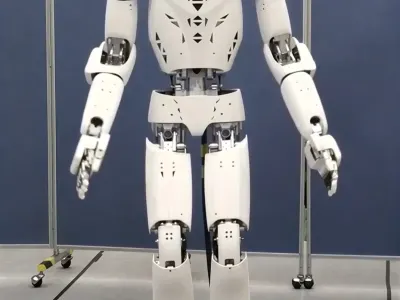
KUAVO 4PRO (KUAVO-MY) vs Kaleido 8.0
KUAVO-MY vs Kaleido 8.0: Leju's research and service humanoid against Kawasaki's robust bipedal humanoid, compared on size, mobility, sensors, AI and best uses.
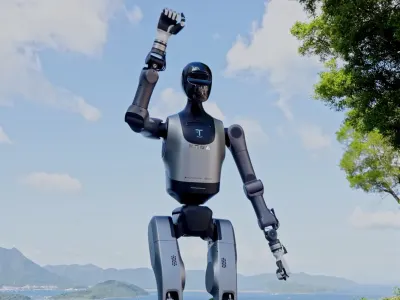
Cruzr S2 vs Walker Tienkung
Cruzr S2 vs Walker Tienkung: UBTECH's wheeled assembly and service humanoid against UBTECH's full-size research humanoid, compared on specs and uses.
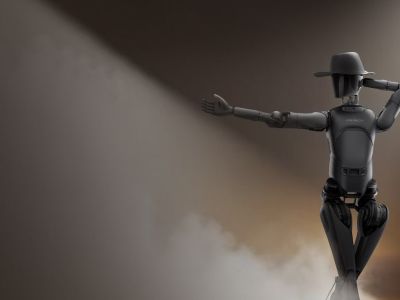
Cruzr S2 vs AgiBot A2 Lite
Cruzr S2 vs AgiBot A2 Lite: UBTECH's wheeled assembly and service humanoid against AgiBot's performance humanoid, compared on specs and uses.
Verdicts reflect our research and opinion. Confirm specifications with the manufacturer before buying.