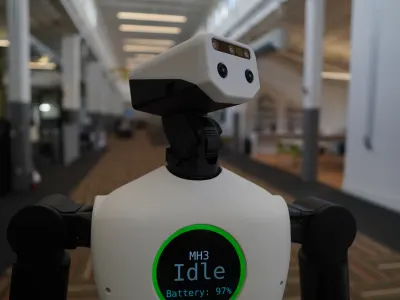
MH3 by Mirsee Robotics is positioned as a high-end humanoid for skilled labor augmentation and hazardous remote operation, designed to deliver human-like dexterity and precision in manufacturing and service tasks; its emphasis is on immersive teleoperation with haptic feedback and comprehensive sensing for precision tool handling. MH3 differentiates itself with larger stature (170 cm), heavier build (75 kg), LiDAR-first mapping and a ROS2-based OS with C++/Python APIs, targeting deployments that require collaboration with humans and safe proximity operation. The platform’s combination of force sensors in the arms, extensive sensor fusion (RGB, stereo, LiDAR, ultrasonic, IMU) and proprietary teleoperation software frames it for tasks where remote precision and skill transfer matter.
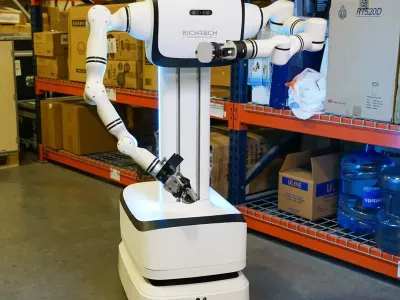
Dex by Richtech Robotics is presented as a more compact, lighter humanoid aimed at industrial automation, logistics, customer service, healthcare assistance and R&D, emphasizing flexible control modes including autonomous operation and reinforcement-learned behaviors. Dex differentiates itself with a shorter stature (137 cm), lower mass (55 kg), slightly higher top walking speed and depth-sensor-first perception (multiple depth and arm-mounted cameras) while retaining ROS2 compatibility and proprietary AI modules. Its positioning targets mixed-use commercial settings where mobility, depth sensing and modular autonomy are valued alongside cost-sensitive procurement.
Detailed Analysis
Design & Build Quality
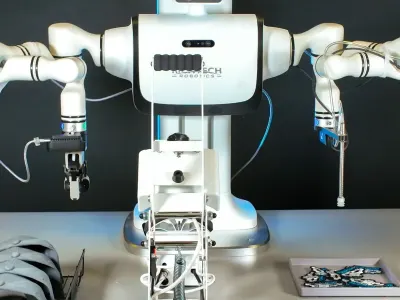
MH3 is taller (170 x 50 x 40 cm) and heavier (75 kg), indicating a larger structural footprint and a build optimized for stability and human-like reach, with force sensors integrated in the arms for precision tasks. Dex is more compact (137 x 50 x 45 cm) and lighter (55 kg), prioritizing a smaller footprint and easier deployment in constrained environments. MH3’s dimensions suggest suitability for heavy-duty manipulation and tool handling, while Dex’s reduced mass supports faster installations and lower floor loading. Both platforms present humanoid form factors but trade off size and payload capacity against deployability.
Mobility & Navigation
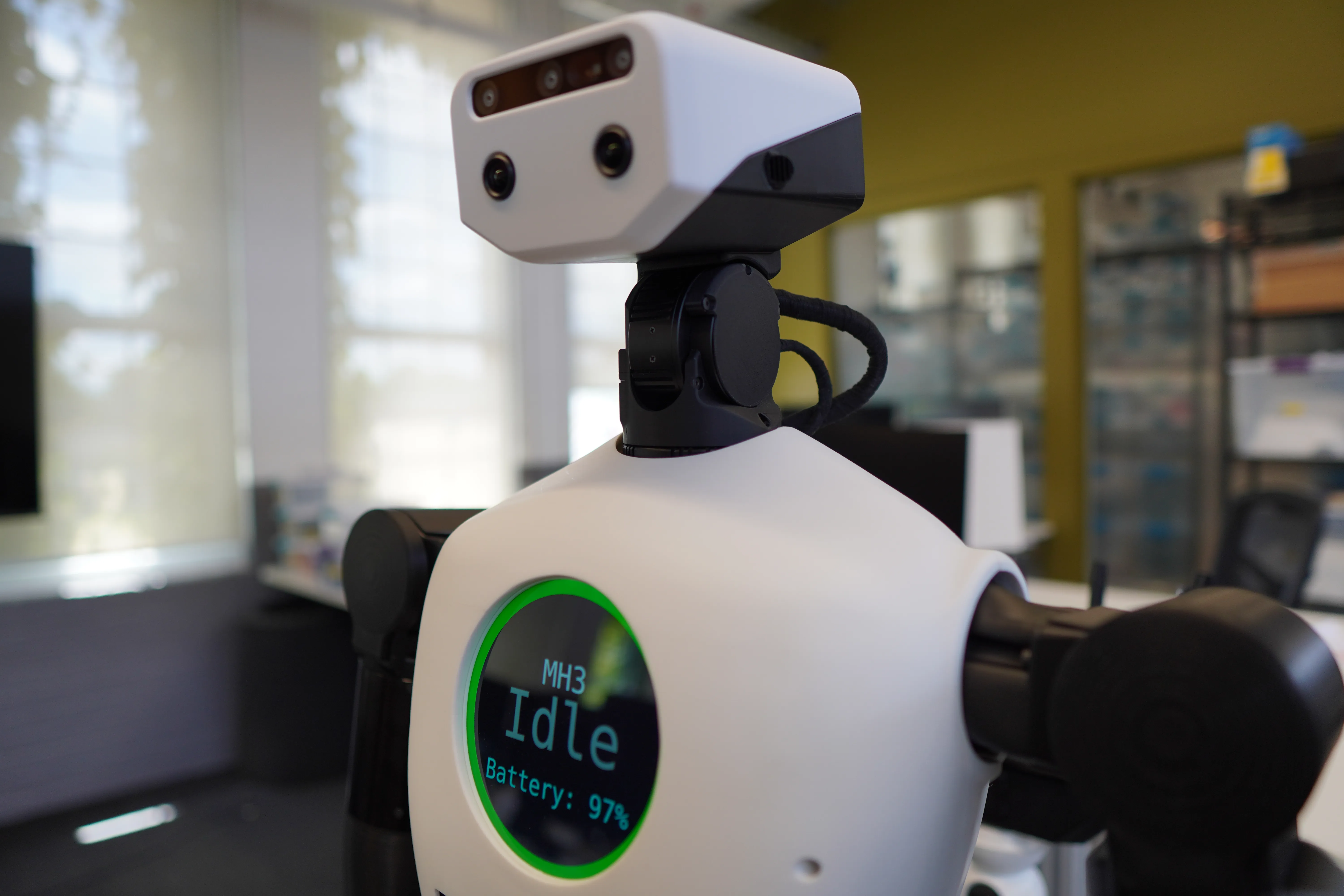
MH3 specifies a maximum walking speed of 3.5 km/h (0.97 m/s) and supports indoor SLAM, visual SLAM and LiDAR mapping for navigation, indicating multi-modal localization and mapping capability. Dex lists a marginally higher max walking speed of 3.6 km/h (1 m/s) and uses visual SLAM with depth sensing plus indoor SLAM, with LiDAR mapping as optional, showing a perception stack oriented toward depth-assisted visual navigation. MH3’s LiDAR-first mapping as standard implies stronger out-of-the-box performance in structured indoor mapping, whereas Dex’s optional LiDAR keeps weight and cost down while providing depth-assisted autonomy. Both offer teleoperation and autonomous modes, enabling mixed manual/autonomous deployments.
Sensors & Perception
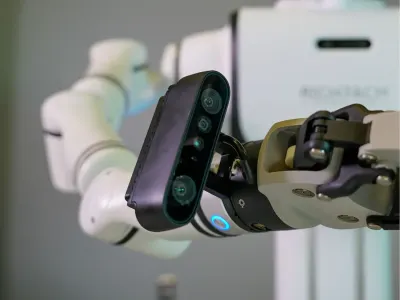
MH3 includes RGB cameras, stereo cameras, LiDAR, ultrasonic sensors, IMU, gyroscope, arm force sensors and temperature sensors, forming a broad sensor fusion suite for precise perception and manipulation. Dex provides front RGB cameras (2), depth cameras (2), two arm-mounted cameras, IMU, gyroscope, force/torque arm sensors, ultrasonic obstacle detection and temperature sensors, emphasizing depth sensing and localized arm views. MH3’s stereo + LiDAR combination supports dense 3D mapping and long-range sensing, while Dex’s multiple depth cameras and arm-mounted views focus on workspace perception and manipulation context. Both platforms include force sensing in the arms for safe contact tasks and manipulation feedback.
AI Capabilities
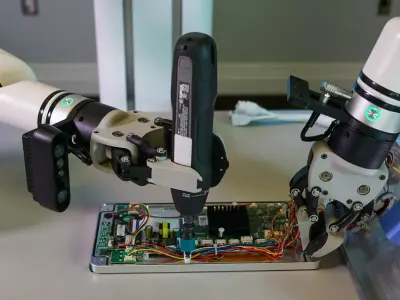
MH3 supports autonomous task programming and learned behaviors alongside immersive teleoperation with proprietary teleoperation software, running on a ROS2-based OS with C++ and Python APIs for custom autonomy stacks. Dex offers autonomous operation, teleoperation and learned behaviors via reinforcement learning, plus proprietary AI modules layered on a ROS2-based OS with Python and C++ APIs, indicating a stronger emphasis on on-board learning workflows. MH3’s control suite highlights VR-based operator-in-the-loop control for precision tasks, while Dex emphasizes reinforcement-learned behaviors for adaptive autonomy in varied environments. Both provide developer-accessible APIs for integration with external AI and control systems.
Battery & Power Efficiency
Both MH3 and Dex list a battery usable life of 4 years, indicating similar expected battery lifecycle before replacement or refurbishment. No runtime-per-charge figures are provided for either platform, so direct comparisons of operational hours or energy consumption cannot be made from the provided data. MH3’s heavier mass (75 kg) and LiDAR as standard may increase power draw relative to Dex’s lighter 55 kg platform with optional LiDAR. Battery lifecycle parity suggests manufacturers expect similar maintenance cadences even if run-time profiles differ by payload and sensor usage.
Use-Case Suitability
MH3 targets skilled labor augmentation in manufacturing assembly, remote operation in hazardous sites, precision tool handling and service tasks requiring human-like dexterity, aligning with its larger size, force-sensing arms and immersive teleoperation capabilities. Dex targets industrial automation, warehouse logistics, customer service, healthcare assistance and R&D, matching its lighter frame, depth-sensing emphasis and reinforcement-learning support for varied task sets. MH3 fits deployments where remote operator control and heavy-duty precision matter, while Dex fits multi-purpose commercial settings that prioritize mobility, depth perception and lower mass. Both platforms support collaborative modes and are suitable for human-shared workspaces with appropriate safety integration.
Software Ecosystem
Both robots run a ROS2-based operating system and expose C++ and Python APIs, facilitating integration with standard robotics toolchains and custom development. MH3 includes proprietary teleoperation software focused on immersive VR and haptics, providing specialized tooling for operator-in-the-loop workflows and precision remote control. Dex includes proprietary AI modules and explicit reinforcement learning support, indicating built-in ML tooling for behavior learning and adaptation. The shared ROS2 base eases portability of algorithms between platforms, but proprietary modules mean vendor-specific integration work will differ per deployment.
Pricing & Value
MH3 is priced at $250,000 - $350,000, reflecting a higher-cost, larger platform with integrated LiDAR and immersive teleoperation features. Dex is priced at $150,000 - $250,000, offering a lower entry price and a lighter, more compact form factor with depth-focused sensing and optional LiDAR. The price ranges overlap, allowing procurement decisions to weigh required features—precision teleoperation and full LiDAR on MH3 versus Dex’s lower mass, depth cameras and reinforcement-learning focus—against budget constraints. Total cost of ownership will also depend on optional sensors, software licenses and deployment-specific integration effort.
Safety Features
Both MH3 and Dex list force limiting, collision detection and emergency stop functionality as core safety provisions, and both support collaborative modes with proximity or compliant sensors for shared human workspaces. MH3 emphasizes collaborative mode with safe proximity sensors alongside arm force sensors, suitable for close-proximity skilled tasks. Dex specifies force-limiting joints and collision detection sensors and notes compliance with safety standards for collaborative operation. Shared safety feature sets indicate both platforms are engineered for human-adjacent deployments, with differences likely in sensor placement and certification details not provided here.
Analysis Score Summary
Total Score
9
MH3
VS
Based on Detailed Analysis
Total Score
9
Dex
📊 Win: 2 points | Trade-off: 1 point each
Scores are summed across every insight: a clear winner earns 2 points, while balanced trade-offs give each robot 1 point. The total reflects how often each robot outperforms the other (or shares the spotlight) throughout the detailed analysis sections.
Capabilities & Operational Tasks
Head-to-head comparison of what MH3 and Dex can do, their applications, and capabilities.
What Can MH3 & Dex Do?
17Core operational tasks, activities, and physical manipulation duties evaluated side-by-side.
| Task & Description | Model AMH315 supported | Model BDex12 supported |
|---|---|---|
| Assembly | High | High |
| Autonomous task execution | High | High |
| Carrying and transport | High | — |
| Collaborative work | High | — |
| Inspection | High | — |
| Loading and unloading | High | — |
| Machine operation | High | High |
| Machine tending | High | High |
| Material handling | High | High |
| Move objects | High | High |
| Navigation | High | High |
| Packaging | — | High |
| Pick and place | High | High |
| Quality control | High | — |
| Repetitive physical tasks | High | High |
| Sorting | — | High |
| Tool use | High | High |
Technical Specifications
Head-to-head performance data and metrics
| Specification | Model AMH3 | Model BDex |
|---|---|---|
Functional Utility & Use Cases4 Comparative Metrics | ||
Control Method | Teleoperation via immersive VR with haptic feedback, autonomous task programming, learned behaviors | Autonomous, teleoperation, learned behaviors via reinforcement learning |
Use Cases | Skilled labor augmentation in manufacturing assembly, remote operation in hazardous sites, precision tool handling, service tasks requiring human-like dexterity | Industrial automation, warehouse logistics, customer service, healthcare assistance, research and development |
Multi Robot Coord | Supports multi-robot coordination for collaborative tasks | Supports multi-robot coordination and swarm behaviors |
Pet Friendly | Yes, with safety protocols | Yes, with safety protocols |
Manipulation & Load Capacity4 Comparative Metrics | ||
Carrying Capacity | 13.5 kg per arm | 5 kg per arm |
Deadlift Capacity | 27 kg maximum combined (both arms) | 15 kg maximum |
Payload Type | Tools, packages, precision instruments, human interaction tasks | Tools, packages, precision instruments, human interaction tasks |
Modular Attachments | Tool changers, interchangeable end-effectors for specialized tasks | Quick-change tool changers, interchangeable end-effectors |
Kinematic Architecture & Dexterity3 Comparative Metrics | ||
Material | Aluminum frame, composite panels, soft-touch plastics on exterior | Aluminum frame with composite and plastic coverings |
Mobility Type | Legged (bipedal walking) | Wheeled (autonomous mobile robot base) |
Hardware Interface | USB 3.0, GPIO, CAN bus, serial ports | USB 3.0, GPIO, CAN bus, serial ports |
Functional Utility & Use Cases
4 Comparative Metrics
Manipulation & Load Capacity
4 Comparative Metrics
Kinematic Architecture & Dexterity
3 Comparative Metrics
Related Comparisons
Discover similar robot matchups to expand your knowledge and find the perfect solution
MH3 vs MH2
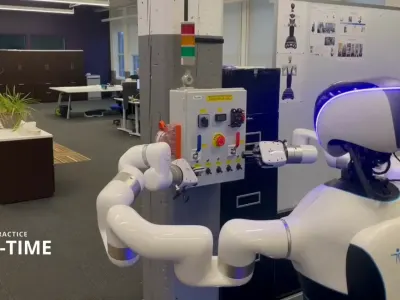
MH3 or MH2? Compare specs, navigation, sensors, and AI capabilities for humanoid robotics performance.

Optimus vs Unitree G1
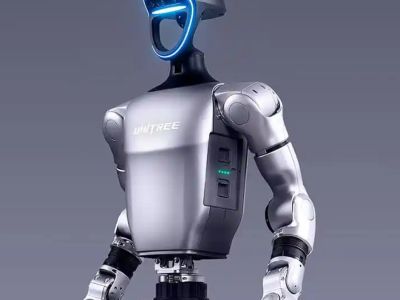
Compare Optimus vs Unitree G1 for humanoid mobility, dexterity, autonomy, and payload capacity.
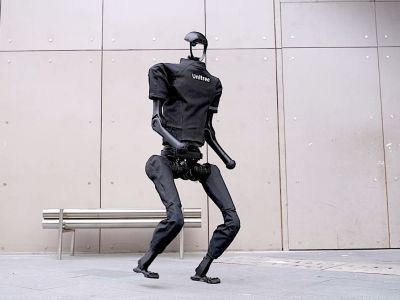
Unitree G1 vs Unitree H1
Head-to-head: Unitree G1 vs Unitree H1 compared on bipedal balance, AI learning, and real-world deployment.
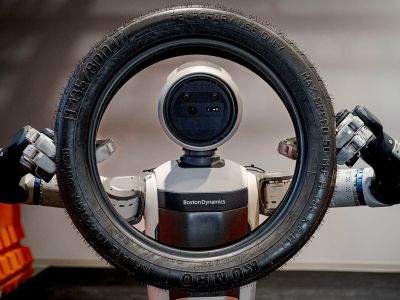
Optimus vs Atlas (Electric Atlas, 2025)
In-depth comparison of Optimus and Atlas (Electric Atlas, 2025), covering hardware capabilities, teleoperation, and enterprise readiness.
Disclaimer
All content, comparisons, and verdicts on this website are based on our research, testing, and opinion. While we strive for accuracy, we do not guarantee the completeness, reliability, or suitability of any information. Performance, specifications, and results may vary depending on usage and conditions. This website and its authors are not responsible for any decisions, actions, or outcomes based on the information provided. Always verify product details with the manufacturer before making purchase or operational decisions.