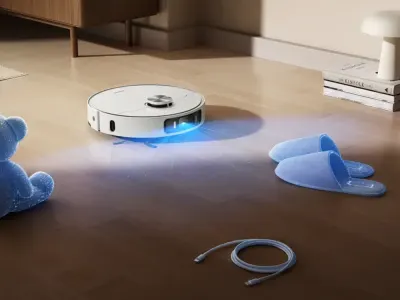
The Qrevo S by Roborock is presented here as a higher-weight, LiDAR‑navigated home vacuum positioned for residential and small office use; this comparison highlights its physical build, LiDAR navigation focus, and obstacle detection capabilities to show why it is compared to Dreame’s model (price bracket $700–$900). The Qrevo S differentiates itself with a heavier chassis (11.56 kg), structured light in its sensor suite, and a proprietary OS with app integration intended for AI automation and remote control in domestic settings.
The Dreame L40s Ultra AE by Dreame is compared because it occupies the same mid‑to‑high price bracket ($700–$900) and targets similar home cleaning scenarios while emphasizing AI‑enhanced SLAM, multi‑sensor perception, and a lighter form factor. The Dreame L40s Ultra AE is notable for combining LiDAR with an RGB camera and 3D structured light for AI navigation, firmware updates via Dreame OS, and autonomous operation intended for consumer environments.
Detailed Analysis
Design & Build Quality
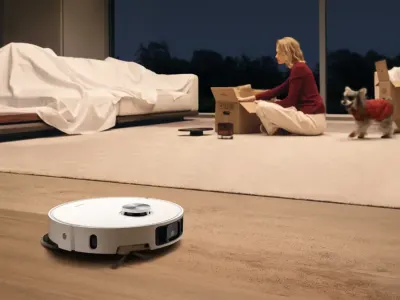
Qrevo S has a compact round footprint (35.0 x 35.3 x 9.6 cm) and a substantially heavier build at 11.56 kg, indicating a robust chassis and integrated payload or hardware mass typical of Roborock’s higher-end units. Dreame L40s Ultra AE is nearly identical in footprint (35 x 35 x 9.7 cm) but is much lighter at 4.1 kg, reflecting a design tradeoff toward reduced mass and possibly different internal hardware layouts. Both devices have low-profile heights under 10 mm for under-furniture access, with the Qrevo S weight suggesting greater structural reinforcement or heavier dock components. The dimension parity supports similar clearance and fitting in standard home environments.
Mobility & Navigation
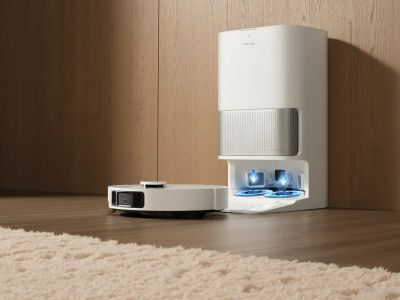
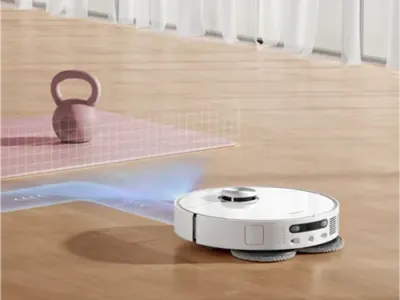
Qrevo S uses LiDAR navigation as its primary localization method and reports a nominal speed of 0.3 m/s, suitable for systematic mapping and coverage in homes and small offices. Dreame L40s Ultra AE uses AI‑enhanced SLAM combining LiDAR with an RGB camera and 3D structured light while matching the same nominal speed of 0.3 m/s, enabling visual‑informed path planning and obstacle avoidance. The addition of camera and 3D structured light on the Dreame model supports richer scene understanding for dynamic obstacle handling compared with LiDAR‑only navigation. Both robots are designed for autonomous operation with app and voice control integration.
Sensors & Perception
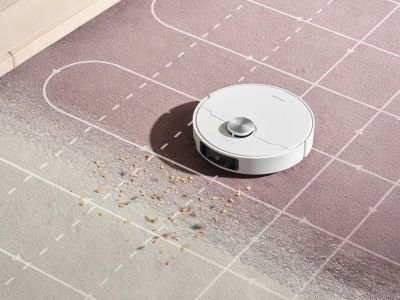
Qrevo S lists LiDAR, structured light, cliff, bump, wheel encoders, and a dust sensor, giving it a multimodal sensing stack focused on distance mapping and cabin integrity. Dreame L40s Ultra AE expands that stack with LiDAR, an RGB camera, 3D structured light, cliff sensor, and bump sensor, adding visual color data and depth imaging for improved obstacle differentiation. The presence of wheel encoders and a dust sensor on Qrevo S supports odometry and particulate awareness, while Dreame’s RGB + 3D sensors enable object recognition and AI‑driven avoidance routines. Safety‑relevant sensors overlap (cliff and bump) but Dreame’s vision hardware provides additional perception channels.
AI Capabilities
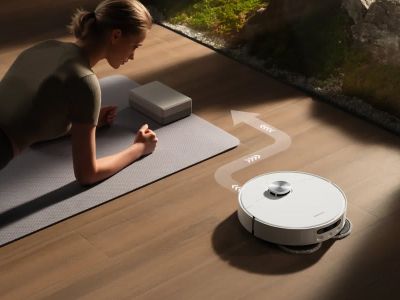
Qrevo S advertises AI automation via its proprietary OS and app integration, implying onboard or cloud‑assisted automation workflows tied to Roborock’s software stack. Dreame L40s Ultra AE explicitly references AI‑enhanced SLAM combined with firmware updates via Dreame OS and uses RGB + 3D structured light to support AI navigation, indicating model‑based perception and real‑time scene interpretation. Both platforms support autonomous behaviors and voice/app control, but Dreame’s sensor set is positioned to provide richer inputs for AI models focused on obstacle avoidance and semantic mapping. Firmware/update mechanisms differ by vendor OS (proprietary Roborock OS vs Dreame OS).
Battery & Power Efficiency
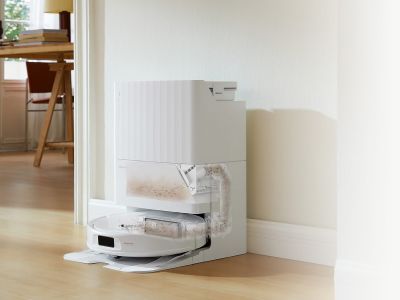
Qrevo S lists a battery lifetime estimate of 3–5 years depending on usage but does not provide explicit runtime or capacity in the supplied data, making direct runtime comparison limited. Dreame L40s Ultra AE lists a battery lifespan of 2–3 years in the provided specs, indicating a shorter estimated service life under typical conditions. Both units report the same nominal movement speed (0.3 m/s), so operational runtime depends on battery capacity and power management strategies not specified here. Power efficiency implications should be inferred cautiously due to missing runtime and capacity figures for Qrevo S.
Use-Case Suitability
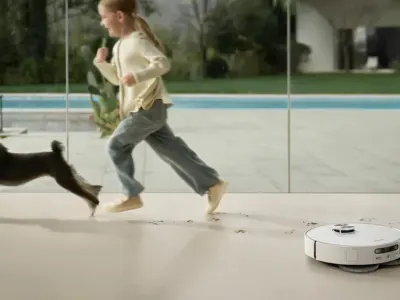
Qrevo S is explicitly targeted for residential and small office environments, aligning with its heavier build and sensor set for varied indoor scenarios. Dreame L40s Ultra AE has unspecified use-case listings in the provided data but its lighter weight and AI‑enhanced SLAM signal a consumer‑oriented deployment in homes where vision‑aided navigation is valuable. Both robots fit within the same price range ($700–$900) and are appropriate for household cleaning, with the Qrevo S positioned toward users valuing Roborock’s OS and perceived robustness and Dreame aimed at users prioritizing camera‑assisted navigation and lighter hardware.
Software Ecosystem
Qrevo S runs a proprietary OS with app integration and supports remote control via app plus voice control through Alexa and Google Home, indicating integration with mainstream smart home assistants. Dreame L40s Ultra AE uses Dreame OS with AI navigation and supports smartphone app control, voice control, and firmware updates via the app, indicating a comparable software feature set but with explicit update delivery. Both ecosystems support autonomous operation and app/voice control; the main distinction in the provided data is Dreame’s explicit mention of firmware updates and AI‑enhanced SLAM as part of its OS capabilities.
Safety Features
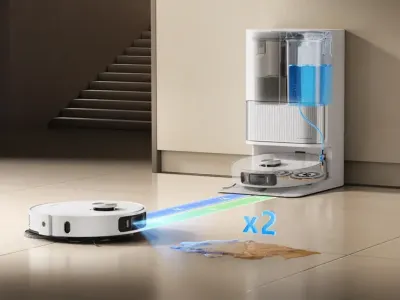
Qrevo S lists obstacle detection and collision avoidance along with cliff and bump sensors as part of its safety suite, supporting basic protective behaviors in domestic spaces. Dreame L40s Ultra AE includes cliff detection, anti‑collision sensors, and a child lock in its safety listing, with camera and 3D structured light enhancing avoidance and hazard recognition. Both robots provide core fall and bump protections; Dreame’s additional child lock and vision sensors expand safety control and situational awareness in households with children or complex obstacles. Each vendor combines hardware and software measures to reduce collision and fall risk.
Pricing & Value
Both the Qrevo S by Roborock and Dreame L40s Ultra AE are placed in the same stated retail bracket of $700–$900, enabling direct price‑range comparisons for buyers evaluating mid‑to‑high tier home vacuums. Given similar price bands, differences in weight, sensor suites, and stated battery life are primary value differentiators rather than list price. Purchasers should weigh Qrevo S’s heavier construction and longer stated battery lifetime against Dreame’s lighter weight and richer visual sensing when assessing value for specific household needs. Warranty, service, and included docking/consumable packages (not provided) will also affect net value.
Analysis Score Summary
Total Score
4
Qrevo S
VS
Based on Detailed Analysis
Total Score
14
Dreame L40s Ultra AE
📊 Win: 2 points | Trade-off: 1 point each
Scores are summed across every insight: a clear winner earns 2 points, while balanced trade-offs give each robot 1 point. The total reflects how often each robot outperforms the other (or shares the spotlight) throughout the detailed analysis sections.
Technical Specifications
Head-to-head performance data and metrics
| Specification | Model AQrevo S | Model BDreame L40s Ultra AE |
|---|---|---|
Functional Utility & Use Cases4 Comparative Metrics | ||
Control Method | Remote control via app, voice control through Alexa and Google Home, AI automation | Smartphone app, voice control, autonomous operation |
Use Cases | Residential, small offices | Residential homes, pet owners, families, mixed floor environments |
Multi Robot Coord | No | No multi-robot coordination |
Pet Friendly | Yes | Yes, designed with hair-cutting brush and anti-tangle features for pet hair |
Manipulation & Load Capacity2 Comparative Metrics | ||
Payload Type | Not applicable | Dust, debris, and liquid mopping solution |
Modular Attachments | No | - |
Kinematic Architecture & Dexterity3 Comparative Metrics | ||
Material | ABS plastic, rubber, aluminum accents | ABS plastic, rubber, metal accents |
Mobility Type | Wheeled | Wheeled with brush roll and suction |
Hardware Interface | Not specified | Charging contacts, no USB port |
Functional Utility & Use Cases
4 Comparative Metrics
Manipulation & Load Capacity
2 Comparative Metrics
Kinematic Architecture & Dexterity
3 Comparative Metrics
Related Comparisons
Discover similar robot matchups to expand your knowledge and find the perfect solution
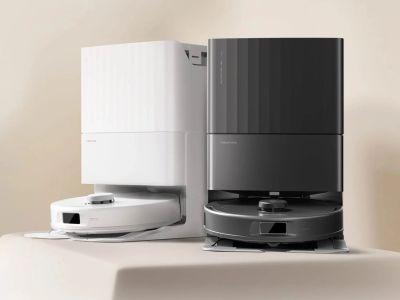
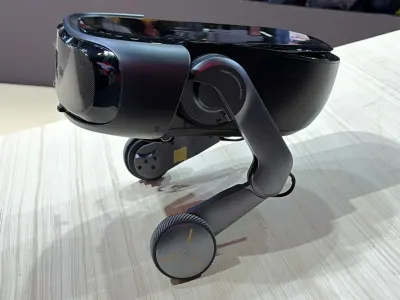
Qrevo S vs Saros Rover
Compare Qrevo S vs Saros Rover for navigation, battery runtime, app experience, and home suitability.
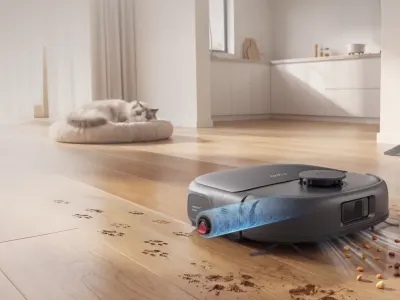
Dreame L40s Ultra AE vs Eufy C28
In-depth comparison of Dreame L40s Ultra AE and Eufy C28, covering cleaning results, app experience, and ownership costs.
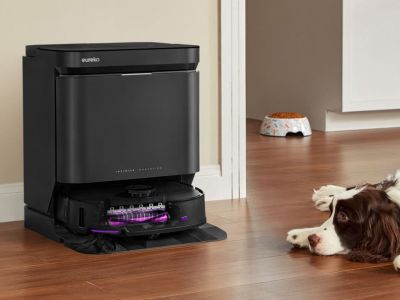
Qrevo S vs Eureka J15 Max Ultra
Qrevo S or Eureka J15 Max Ultra? Compare for pet hair handling, navigation accuracy, battery runtime, and home suitability to find your best clean.
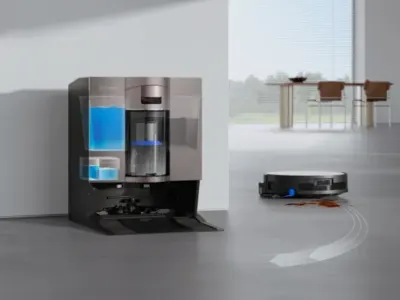
Dreame L40s Ultra AE vs DEEBOT X11 OmniCyclone
Dreame L40s Ultra AE or DEEBOT X11 OmniCyclone? Compare for pet hair handling, navigation in large homes, battery runtime, and maintenance ease.
Disclaimer
All content, comparisons, and verdicts on this website are based on our research, testing, and opinion. While we strive for accuracy, we do not guarantee the completeness, reliability, or suitability of any information. Performance, specifications, and results may vary depending on usage and conditions. This website and its authors are not responsible for any decisions, actions, or outcomes based on the information provided. Always verify product details with the manufacturer before making purchase or operational decisions.