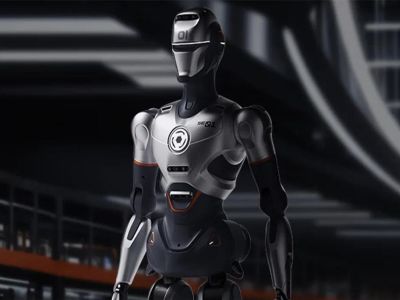
The SE01 by EngineAI Robotics is a humanoid robot positioned for industrial labor and precision tasks, with dimensions of 170 x 52 x 27 cm and a weight of 55 kg. It stands out with its 7.2 km/h speed, advanced sensor suite including 360-degree LiDAR and multiple HD cameras, and LiDAR-depth SLAM navigation suited for factory environments. Priced at an estimated $20,000–$30,000, it offers ROS-compatible software and safety features like collision avoidance, making it ideal for research and assembly applications.
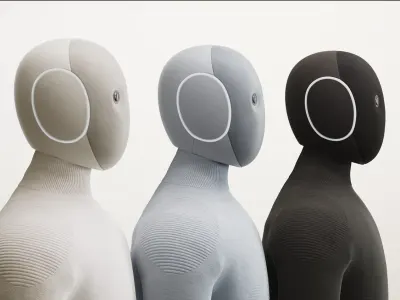
The NEO Gamma by 1X Technologies targets home and assistance roles, measuring 165 cm x 50 cm x 30 cm and weighing 30 kg. It differentiates through a lighter build, 5 km/h walking speed, and a 5-year battery lifespan, with visual SLAM navigation and controls via a companion app. At $20,000–$30,000, its proprietary OS supports Python/C++ SDK for tasks like elderly care and object manipulation.
Detailed Analysis

Design & Build Quality
SE01 features larger dimensions at 170 x 52 x 27 cm and 55 kg weight, using harmonic force control joints for industrial durability and human-like movements like running. NEO Gamma is more compact at 165 cm x 50 cm x 30 cm and lighter at 30 kg, with soft exterior covers and passive joint compliance suited for home environments. SE01 prioritizes rigidity for heavy lifting, while NEO Gamma emphasizes lightweight agility.
Mobility & Navigation
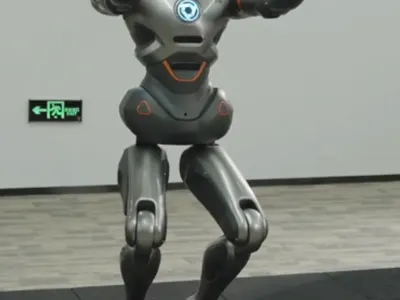
SE01 achieves 7.2 km/h speed with LiDAR and depth-camera SLAM-based 3D obstacle avoidance for dynamic industrial navigation. NEO Gamma offers 5 km/h walking and up to 6.2 km/h running using visual SLAM fused with depth sensing, optimized for indoor home settings. SE01 supports faster bipedal motion on varied terrain, contrasting NEO Gamma's focus on stable household mobility.
Sensors & Perception
SE01 includes high-precision stereo RGB cameras, Intel RealSense D435, 360-degree LiDAR, 6 HD cameras, IMU, gyroscope, and force/temperature sensors for comprehensive 3D perception. NEO Gamma uses RGB cameras, IMU, gyroscope, force sensors in hands/joints, four microphones, three speakers, and possibly ultrasonic/tactile sensors. SE01 provides superior spatial mapping, while NEO Gamma adds audio for social interaction.

AI Capabilities
SE01 employs AI autonomous control with proprietary Engine Sense stack, deep reinforcement learning, and ROS-compatible API for teleoperation in industrial tasks. NEO Gamma relies on autonomous AI with remote override via app, using proprietary real-time OS and custom embedded models. Both support developer SDKs, but SE01 emphasizes precision assembly AI, and NEO Gamma focuses on home manipulation.

Battery & Power Efficiency
SE01 offers approximately 2 hours per charge with a 10+ year lifespan design using swappable batteries. NEO Gamma provides a 5-year battery duration, prioritizing longevity for continuous home use. SE01 suits short intensive sessions, while NEO Gamma targets extended low-demand operation.
Use-Case Suitability
SE01 excels in industrial labor, precision assembly, logistics, research, and customer service with robust sensors and speed. NEO Gamma is designed for elderly assistance, home cleaning, object manipulation, companionship, and monitoring in domestic settings. SE01 fits factory environments, whereas NEO Gamma aligns with residential applications.
Software Ecosystem
SE01 runs proprietary Engine Sense on Linux with ROS-compatible API and SDK for industrial integration. NEO Gamma uses proprietary real-time OS with Python/C++ SDK for custom AI models in home scenarios. Both enable developer access, but SE01 supports broader robotics frameworks.

Safety Features
SE01 includes emergency stop button, power disconnect interlocks, and collision avoidance via LiDAR SLAM. NEO Gamma features soft exterior covers, passive joint compliance, obstacle detection, and emergency stop. SE01 emphasizes industrial safeguards, while NEO Gamma prioritizes gentle home interactions.
Analysis Score Summary
Total Score
8
SE01
VS
Based on Detailed Analysis
Total Score
8
NEO Home Robot
📊 Win: 2 points | Trade-off: 1 point each
Scores are summed across every insight: a clear winner earns 2 points, while balanced trade-offs give each robot 1 point. The total reflects how often each robot outperforms the other (or shares the spotlight) throughout the detailed analysis sections.
Capabilities & Operational Tasks
Head-to-head comparison of what SE01 and NEO Home Robot can do, their applications, and capabilities.
What Can SE01 & NEO Home Robot Do?
13Core operational tasks, activities, and physical manipulation duties evaluated side-by-side.
| Task & Description | Model ASE019 supported | Model BNEO Home Robot12 supported |
|---|---|---|
| Autonomous task execution | High | High |
| Carrying and transport | High | High |
| Cleaning | — | High |
| Collaborative work | High | High |
| Human interaction | High | High |
| Maintenance | — | High |
| Material handling | High | — |
| Move objects | High | High |
| Navigation | High | High |
| Obstacle traversal | — | High |
| Pick and place | High | High |
| Repetitive physical tasks | High | High |
| Sorting | — | High |
Technical Specifications
Head-to-head performance data and metrics
| Specification | Model ASE01 | Model BNEO Home Robot |
|---|---|---|
Functional Utility & Use Cases4 Comparative Metrics | ||
Control Method | AI autonomous control, remote teleoperation via API, manual emergency stop | Autonomous AI control with remote override via companion app |
Use Cases | Straight-knee bipedal walking, industrial parts transport, machine tending, collaborative material handling, tool operation | Household chores, object retrieval, delivery inside homes, elder assistance, telepresence, robotics research |
Multi Robot Coord | Supports multi-robot coordination and swarm capabilities | Yes, fleet coordination and remote operator scheduling | (Inferred · Medium confidence · Common for service-robot platforms) |
Pet Friendly | Not Applicable / No | Yes, low-force joints and safe motion profiles around pets |
Manipulation & Load Capacity4 Comparative Metrics | ||
Carrying Capacity | 15 kg total manipulation payload | 8 kg per arm |
Deadlift Capacity | 15 kg | 68 kg |
Payload Type | Up to 15 kg total manipulation payload across arms (industrial parts handling & machine tending) | Household items up to 5 kg |
Modular Attachments | Swappable end-effectors and sensor expansion bays | Magnetic wrist tool mounts for brushes, grippers, and vacuums |
Kinematic Architecture & Dexterity4 Comparative Metrics | ||
Degrees of Freedom | 32 DoF (12 in hands, 8 in arms, 12 in legs/waist) | 75 |
Material | Aerospace-grade aluminum alloy, composite plastics for covers | Aluminum, composite polymer, soft-touch covers | (Inferred · Medium confidence · Typical lightweight humanoid construction) |
Mobility Type | Legged (Bipedal locomotion with natural straight-knee gait) | Bipedal legged |
Hardware Interface | 1 USB 3.0 port, 1 Gigabit Ethernet port, power switch, status LEDs | USB-C service port, hidden GPIO header |
Functional Utility & Use Cases
4 Comparative Metrics
Manipulation & Load Capacity
4 Comparative Metrics
Kinematic Architecture & Dexterity
4 Comparative Metrics
Related Comparisons
Discover similar robot matchups to expand your knowledge and find the perfect solution

NEO Home Robot vs ELIXIS
NEO Home Robot or ELIXIS? See which humanoid robot performs better for manufacturing, logistics, and research.
NEO Home Robot vs 4NE-1 Mini
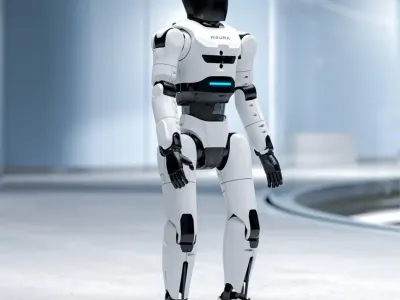
Head-to-head: NEO Gamma vs 4NE-1 Mini compared on bipedal balance, AI learning, payload capacity, and real-world deployment for research and home use.

Optimus vs SE01
Head-to-head: Optimus vs SE01. Explore differences in sensors, battery, navigation, speed, and AI capabilities.

NEO Home Robot vs T800
In-depth comparison of NEO Gamma by 1X Technologies and T800 by EngineAI. Analyze navigation, sensors, and battery performance.
Disclaimer
All content, comparisons, and verdicts on this website are based on our research, testing, and opinion. While we strive for accuracy, we do not guarantee the completeness, reliability, or suitability of any information. Performance, specifications, and results may vary depending on usage and conditions. This website and its authors are not responsible for any decisions, actions, or outcomes based on the information provided. Always verify product details with the manufacturer before making purchase or operational decisions.