Skydio R10 vs Skydio F10 at a glance
Skydio R10 is lighter at 785 g, compared with 4.9 kg for Skydio F10. Skydio F10 lasts longer on a charge, about 90 minutes against 20 minutes for Skydio R10. Skydio F10 is quicker, with a top speed of 35.8 m/s versus 10 m/s for Skydio R10.
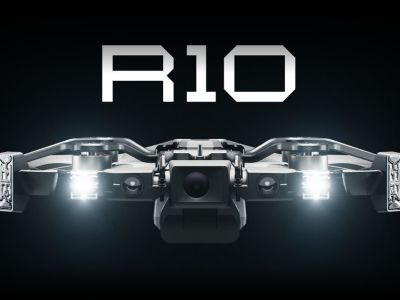
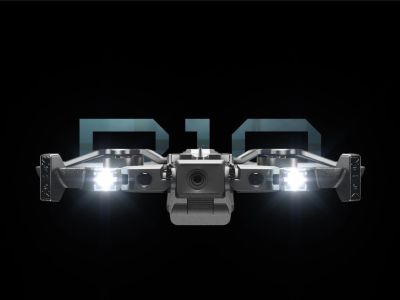
The Skydio R10 is positioned as a compact indoor drone for public safety applications like reconnaissance in confined spaces and law enforcement scenarios. It differentiates with enclosed propellers, Turtle Mode for self-righting, two-way audio, and a 1-inch CMOS sensor for 4K low-light video. These features enable safe operation in tight, dark environments without risking personnel.
The Skydio F10 targets outdoor missions such as surveillance, infrastructure inspection, and rapid response with its larger frame and high-speed capabilities. Key differentiators include over 80 mph speed, up to 90+ minutes flight time, Robotic Takeoff and Landing, and fully autonomous operations. It suits extended overwatch and environmental monitoring where speed and endurance are critical.
Detailed Analysis
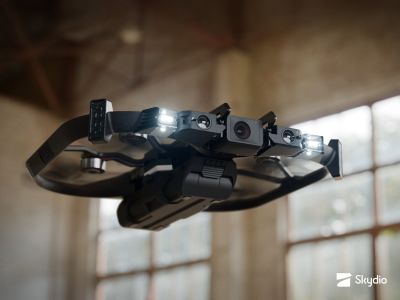
Skydio R10
Camera Quality & Sensor Performance
Skydio R10 features a 1-inch 12.5MP CMOS sensor optimized for low-light with 4K UHD video at 30 fps, 93° FOV, f/1.95 aperture, and NightSense for zero-light imaging. Skydio F10 uses a 1/2.3-inch CMOS sensor for 4K UHD video with 84° FOV but lacks specified low-light optimizations or gimbal stabilization. R10's larger sensor and gimbal provide superior detail and stability for indoor evidence capture. F10's camera suits general surveillance but may underperform in challenging lighting.
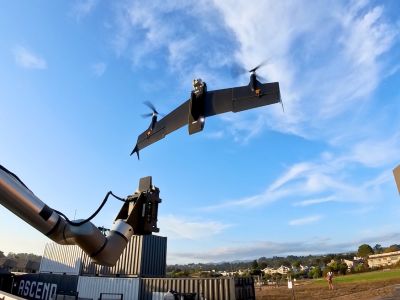
Skydio F10
Flight Time & Battery Efficiency
Skydio R10 offers up to 20 minutes flight per battery with Perch Mode for 3 hours stationary streaming, using a 6000 mAh lithium-ion pack. Skydio F10 achieves 90+ minutes per flight on a single battery, supporting prolonged missions. R10 prioritizes short bursts with extended perch surveillance indoors. F10 excels in endurance for outdoor operations like search and rescue.
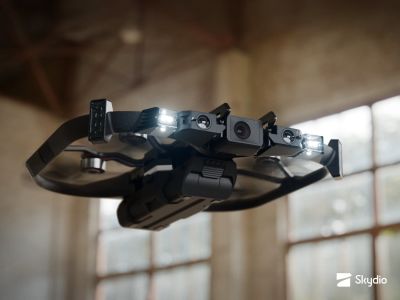
Skydio R10
Range & Transmission Technology
Both drones share a 7-mile maximum range with options for WiFi6 or cellular LTE/5G connectivity. Skydio R10 includes dual SIM slots for network flexibility in urban areas. Skydio F10 leverages similar transmission for remote overwatch. Performance depends on environment, with cellular ensuring reliable streams beyond line-of-sight.

Skydio F10
Obstacle Avoidance & Safety Features
Skydio R10 provides full 360° obstacle avoidance with 180° forward-facing stereo cameras, NightSense, enclosed props, Turtle Mode, and child lock for indoor confidence. Skydio F10 offers automated avoidance, geofencing, return-to-home, and collision sensors suited for outdoor autonomy. R10's features enable tight-space navigation in zero light. F10 emphasizes fail-safe landings in open areas.
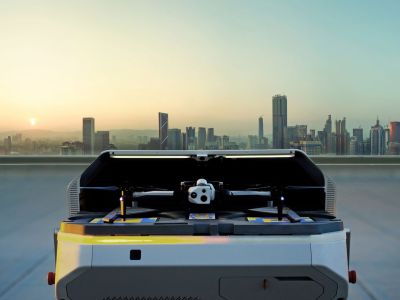
Skydio R10
Intelligent Flight Modes & Tracking
Skydio R10 uses Skydio OS with NightSense for autonomous indoor tracking and Perch Mode streaming. Skydio F10 employs Autonomy Engine for fully autonomous operations including RTOL and rapid response tracking. Both integrate with Remote Ops and DFR Command for mission planning. R10 focuses on confined precision; F10 on high-speed pursuits.

Skydio F10
Portability & Build Quality
Skydio R10 measures 10.4 x 10.3 x 2.4 inches at 1.73 lbs (785 g), ideal for handheld deployment in tight spaces. Skydio F10 spans 120 x 120 x 30 cm at 4.9 kg (10.8 lbs), requiring more transport space. R10's compact design suits indoor carry; F10's robust build fits vehicle-based outdoor use.
Skydio R10
Controller & App Experience?
Both utilize Skydio Remote Ops, DFR Command, and Autonomy Engine with iOS/Android apps for live streaming and planning. Skydio R10 adds two-way audio control for negotiations. Skydio F10 supports extended autonomous missions. User experience is similar, with R10 favoring tactical inputs.

Skydio F10
Which drone is better for indoor public safety operations?
Skydio R10 excels in indoor reconnaissance with compact size, NightSense, Turtle Mode, and Perch Mode for confined, low-light scenarios versus F10's outdoor focus. F10 suits rapid outdoor response but lacks indoor-specific ruggedness. For indoor public safety, Skydio R10 is the better choice.
Skydio R10
Which drone is better for extended outdoor surveillance missions?
Skydio F10 provides 90+ minute flights and 80+ mph speed for overwatch, outpacing R10's 20-minute limit and 36 km/h top speed. R10 prioritizes short indoor tasks. For extended outdoor surveillance, Skydio F10 is recommended.
Technical Specifications
Skydio R10 and Skydio F10 differ on 47 of the 61 specifications listed for both.
Functional Utility & Use Cases
4 Comparative Metrics
Manipulation & Load Capacity
2 Comparative Metrics
Kinematic Architecture & Dexterity
3 Comparative Metrics
Frequently Asked Questions
How does Skydio R10 perform in low-light indoor environments?
Skydio R10 uses a 1-inch sensor, NightSense, and LED floodlights for 4K video in zero-light conditions with 180° obstacle avoidance.
What is the maximum transmission range of Skydio F10?
Skydio F10 achieves a 7-mile max range using WiFi6 or cellular LTE/5G for reliable outdoor signal.
How portable is the Skydio R10 for quick indoor deployment?
Skydio R10 weighs 1.73 lbs (785 g) at 10.4 x 10.3 x 2.4 inches, enabling under-30-second startup and handheld carry.
Can Skydio R10 track subjects autonomously in action scenarios?
Skydio R10 offers full autonomous tracking with 180° forward avoidance and NightSense for indoor action reconnaissance.
Is Skydio F10 suitable for cinematic outdoor video shots?
Skydio F10 provides 4K UHD at 84° FOV with 90+ minute flights for stable outdoor cinematic surveillance.
Related Comparisons

Skydio F10 vs Skydio X2D
Compare Skydio F10 vs Skydio X2D for camera quality, flight range, obstacle avoidance, and professional surveillance performance.
Skydio F10 vs Skydio X10
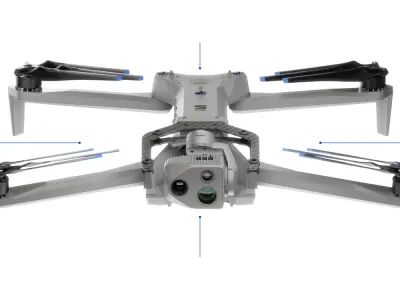
Skydio F10 or Skydio X10? Compare for surveillance endurance, high-res cameras, thermal imaging, range, and professional inspection reliability.
Skydio R10 vs Skydio X2D
Compare Skydio R10 vs Skydio X2D for low-light camera quality, indoor autonomy, range, and safety in public safety vs enterprise inspection.
Skydio R10 vs Skydio X10
Head-to-head: Skydio R10 vs Skydio X10 compared on sensor size, obstacle avoidance, low-light performance, and real-world indoor vs outdoor flight reliability.
Verdicts reflect our research and opinion. Confirm specifications with the manufacturer before buying.