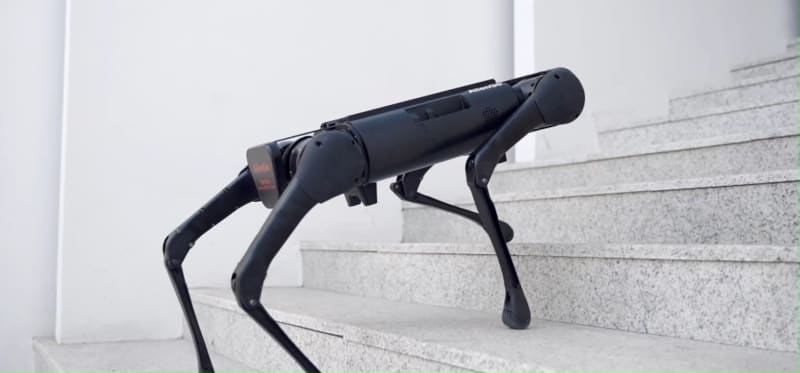
Aliengo
by Unitree Robotics
ChinaReleased: 2019
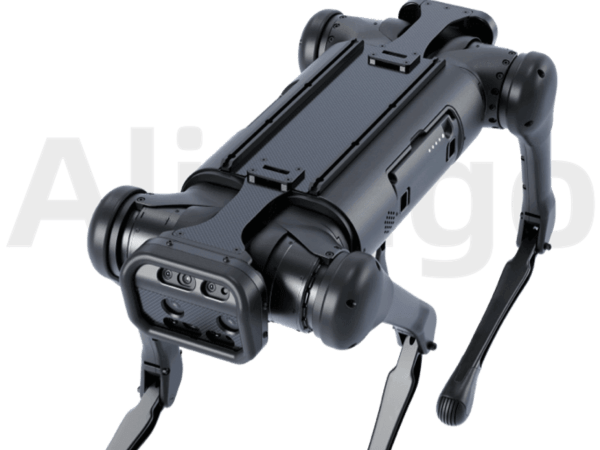
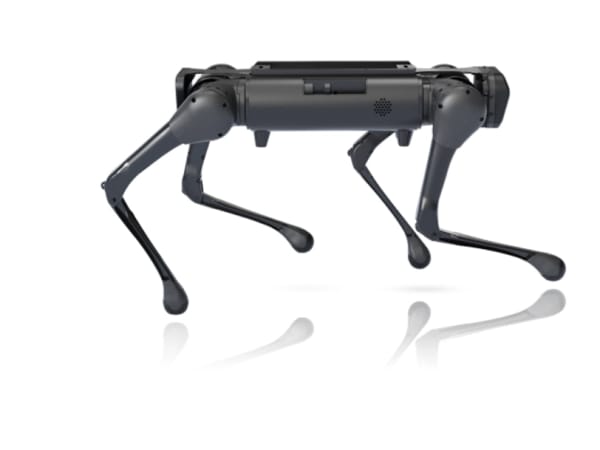
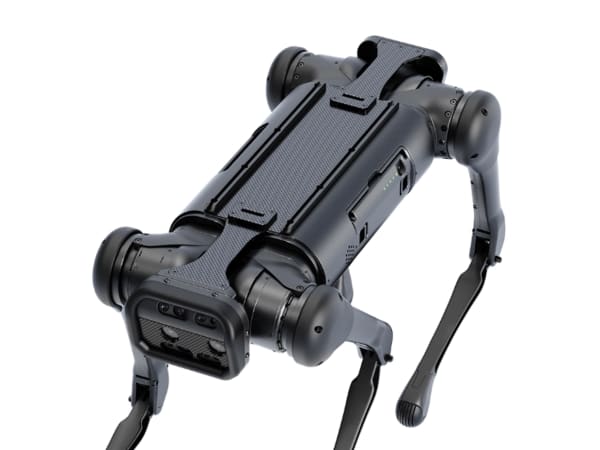
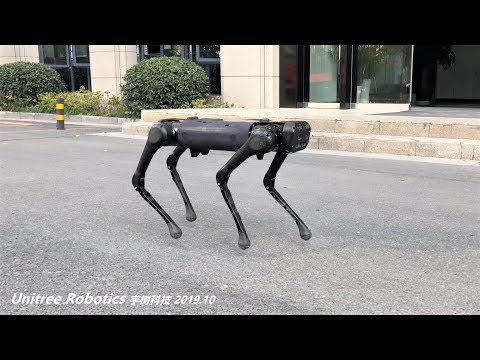
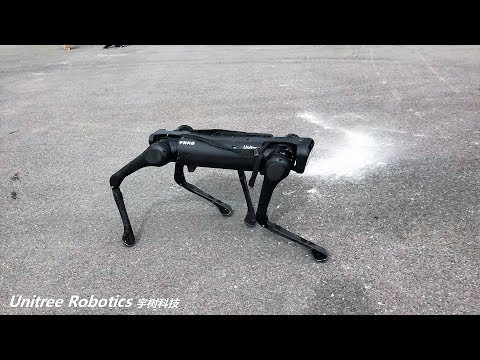
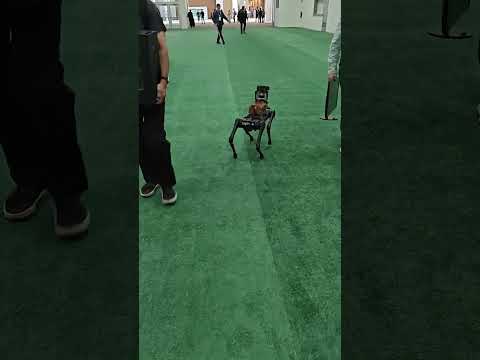
The Unitree Aliengo is an industrial-grade bionic quadruped robot dog designed for high-performance applications in research, education, and early industrial sectors such as all-terrain inspections in electric power, petrochemical, coal, substation inspections, and construction surveying. It features exceptional stability on rough terrain, achieving a maximum speed of 1.5 m/s while supporting advanced gaits including fast running, backward running, side shifting, turning in place, creeping, rolling over, jumping, obstacle crossing, avoidance, and climbing slopes or steps. With 12 degrees of freedom powered by high-torque servo motors (up to 40 Nm), it offers a payload capacity of up to 13 kg, enabling integration of payloads like LiDAR, robotic arms, or GPS. The robot employs force control for three-axis posture and position adaptation, machine vision with dual Intel RealSense D435 depth cameras and a visual odometer for 3D mapping, Visual SLAM (V-SLAM with <1% loop offset), human posture recognition, gesture tracking, and object following. Constructed from polymer plastic, carbon fiber, and aviation aluminum for impact resistance, it provides 2.5-4.6 hours of operation, real-time HD video transmission, and abundant interfaces for secondary development.
What Can Aliengo Do?
Core operational tasks and activities demonstrated or performed by Aliengo.
Real-World Applications of Aliengo
Industries, working environments, and deployment suitability for Aliengo.
Aliengo Capabilities
Inherent physical, perceptual, and cognitive abilities built into Aliengo.
Image Gallery
Below images are from Unitree Robotics's official sources
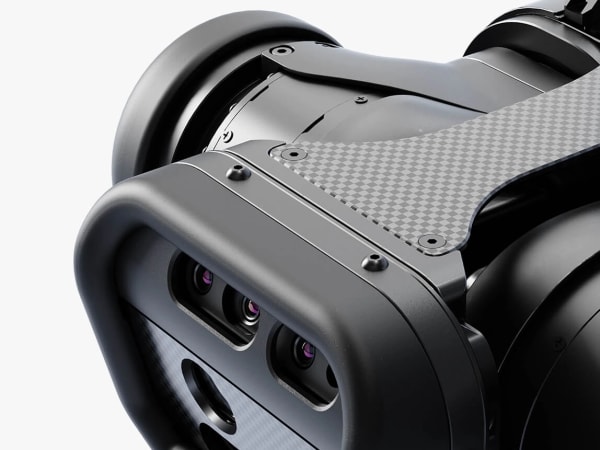
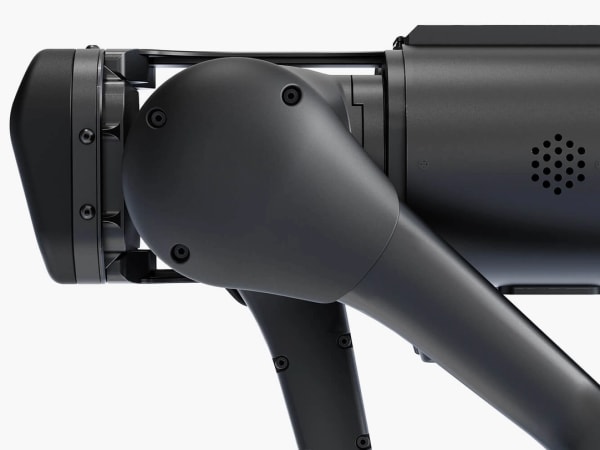
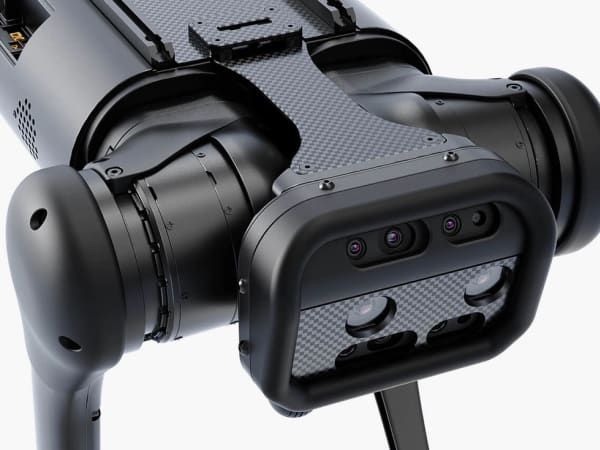
Review Videos
Watch expert reviews and demonstrations of this robot dog

Full Specifications
Other Notable Features
HD video real-time transmission, human posture and gesture recognition, 3D environment mapping, loop detection, power outputs (5V,12V,19V,BAT 24-30V)
More Robots from Unitree Robotics
Explore other robots and developments from this manufacturer
Superman
By: Unitree Robotics
Launched: 2026
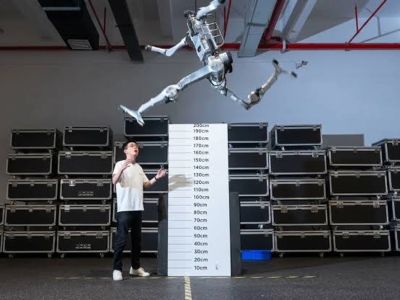
Unitree Superman is a high-performance bipedal humanoid prototype focused on extreme locomotion rather than general-purpose service work. It was introduced as a compact, fast-moving humanoid with a reported 0.85 m leg length, a standing vertical jump of about 2 meters, and a top running speed of 12.66 m/s, emphasizing dynamic balance and leg power over payload-heavy manipulation. Its design strongly suggests a research-oriented platform for motion-control benchmarking, athletic mobility demonstrations, and advanced humanoid development. Like Unitree’s other humanoids, it likely uses a lightweight frame, high-torque electric joints, and onboard sensing for balance and navigation. The robot appears aimed at pushing locomotion limits first, with manipulation and interaction capabilities secondary to its mobility performance.

Unitree H2 Plus
By: Unitree Robotics
Launched: 2026
Unitree H2 Plus is a full-size bipedal humanoid designed for industrial-grade motion, human-like interaction, and developer-oriented research. It combines a 182 cm class standing height, 31 degrees of freedom, and high-torque joints with an expressive bionic head, making it suitable for locomotion, manipulation, and demo-grade social presence. The platform emphasizes dynamic balance, OTA-evolving motion control, and AI computing up to Jetson AGX Thor class performance. With a quick-release battery and around 3 hours of runtime, it is aimed at tasks that require agile walking, upper-body dexterity, and repeatable whole-body motions in controlled environments.
Unitree H1-2
By: Unitree Robotics
Launched: 2024
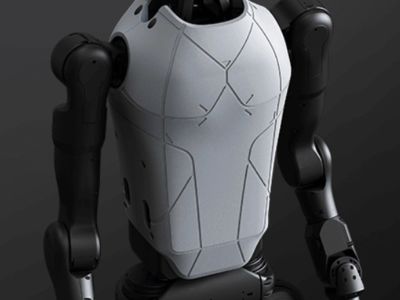
The Unitree H1-2 is a full-size humanoid robot standing 178 cm tall with human-like proportions, optimized for advanced mobility, balance, and whole-body coordination. Featuring 27 degrees of freedom powered by high-torque M107 joint motors, it achieves walking speeds up to 2 m/s and potential mobility over 5 m/s, enabling agile navigation on complex terrains, stairs, and uneven surfaces. Equipped with 360° 3D LiDAR and depth cameras for precise environmental perception, it supports autonomous walking, running, jumping, and manipulation tasks like grasping objects with 5-finger hands. Each 7-DOF arm lifts up to 7 kg, while legs provide robust stability for dynamic motions including dancing and handshakes. Designed for research and development, the H1-2 integrates Intel Core i7 computing, swappable 864 Wh batteries for 2-hour runtime, and ROS-compatible software, making it ideal for AI training, human-robot interaction, and industrial prototyping in indoor-outdoor settings.

Unitree H2
By: Unitree Robotics
Launched: 2025
The Unitree H2 is a full-sized humanoid robot designed for versatility and dexterity. It stands at 180 cm tall and weighs 70 kg. The robot features a 31-DOF architecture, including a 3-DOF waist and 2-DOF neck, allowing for fluid movements like dance and kung-fu. It can carry a payload of 7 kg normally and up to 21 kg briefly. The H2 is equipped with advanced robotic hands for precise object manipulation.
Latest News About Aliengo
Stay updated with the latest articles and developments
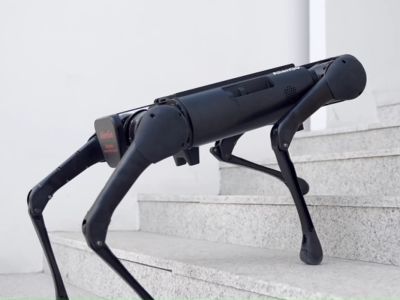
Unitree Robotics Unveils Aliengo Quadruped for Industrial Mobility
Frequently Asked Questions
Get answers to common questions about this robot