
EMO
AI ChatLast updated:
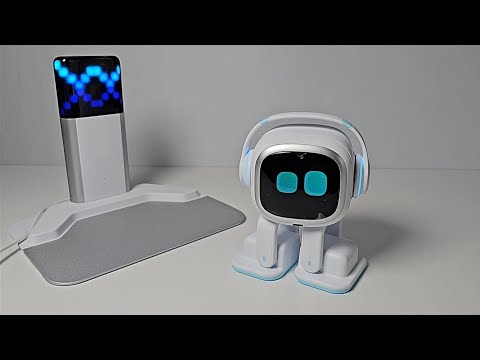
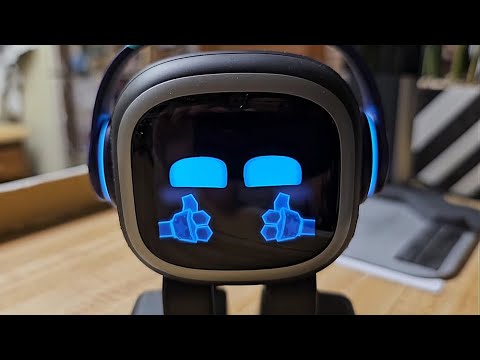
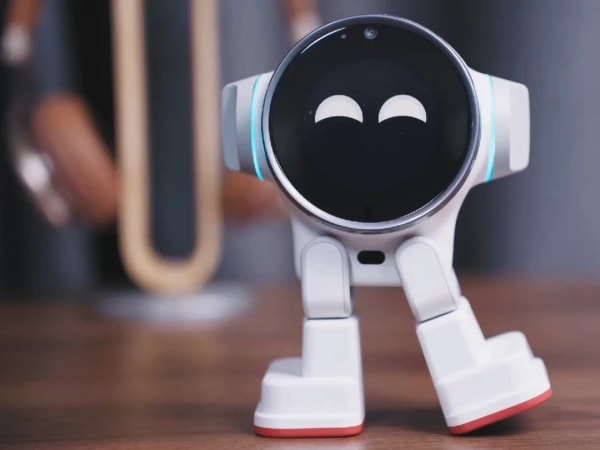
EMO is a companion/social robot designed as an AI desktop pet, providing emotional support and entertainment through expressive interactions. It features over 1,000 facial expressions on an HD LED screen, dynamic reactions to touch, voice, sound, and gestures, and adaptive moods that evolve based on user habits. Key capabilities include face and voice recognition for up to 10 people, games like rock-paper-scissors, weather/time queries, alarms, Bluetooth audio playback, basic smart home control, and self-docking for charging. Use cases focus on desk companionship in homes or offices, reducing loneliness for teens/adults via pet-like behaviors such as dancing, chirping, or feigning boredom.
Quick Overview & Key Facts
EMO is a robot made by LivingAI in Worldwide (US, India, EU via Amazon/official site), launched in 2023 and built for desktop companionship, emotional support, and interactive entertainment. Its estimated price is USD 299-499. Featured in “LivingAI's EMO Robot Brings Autonomous Desktop Companionship to Homes”.
- Dimensions
- 7.6 x 11.4 x 10.2 cm
- Weight
- 0.3 kg
- Mobility
- Wheeled (desktop navigation to dock)
- Top speed
- 0.1 m/s
- Battery runtime
- 4-6 hours
- Charging time
- 2-3 hours
- Sensors
- HD camera, four-microphone array, touch sensor (head), edge detection sensors, IMU
- Operating environment
- Indoor (desktop/office)
Image Gallery
Below images are from LivingAI 's official sources


Review Videos
Watch expert reviews and demonstrations of this robot


Robot Specifications
Values without a Confirmed badge are compiled from public sources and may not be manufacturer-verified.
Not yet published by LivingAI: pet safety.
Latest News About EMO
Stay updated with the latest articles and developments
More Robots from LivingAI
Explore other robots from this manufacturer

More Robots
Discover more robots in the same category


Robots From Other Categories
Discover complementary robots from different categories that work well together



Frequently Asked Questions
Get answers to common questions about this robot
Q1. What is EMO and what specific problem or task is it designed to solve?
EMO is a desktop companion robot developed by LivingAI. It is designed to provide emotional interaction and companionship through expressive animations, serving as a pet-like assistant for home or office desks.
Q2. What are the core capabilities and standout features of EMO?
EMO features over 1000 expressions and movements via an animated LED face, HD camera for face recognition of up to 10 people, 4-microphone array for voice commands, touch sensor, and speaker for music and responses. It includes a neural network processor with AI models for processing images, sound, and sensor data, enabling self-learning and mood-based reactions. According to LivingAI, it supports functions like alarms, weather reports, games, and ChatGPT integration.
Q3. Who uses EMO, and which industries or sectors benefit from it?
EMO is used by individuals in homes, including children aged 6+, adults, and seniors for companionship and assistance. It serves as a desktop assistant for entertainment and reminders, with no specific industrial applications noted.
Q4. Is EMO a commercially available product, or is it still a research prototype?
EMO is a commercially available product sold by LivingAI as a one-time purchase with no subscription required. It receives over-the-air firmware updates for ongoing improvements.
Q5. How does EMO operate autonomously, and what level of human oversight is required?
EMO operates semi-autonomously using onboard AI to process sensor data, recognize faces and voices, and respond to interactions without constant input. Human oversight is minimal, limited to initial app setup, Wi-Fi connection, and occasional commands or profile training.
Q6. What sensors, AI, and navigation technology does EMO use?
EMO uses an HD wide-angle camera, 4-microphone array, touch sensor on its head, and over 10 internal sensors. It employs a neural network processor and three AI processing models for data analysis; no independent navigation technology is included as it is stationary.
Q7. How does EMO compare to similar robots or competing solutions in its category?
EMO differs from larger companion robots by its compact desktop size and focus on emotional expressions via screen animations rather than full mobility. Unlike subscription-based AI devices, it offers all features in a one-time purchase with free updates, though its 2-hour battery life requires a home station for recharging.
Q8. What are the known limitations, trade-offs, or challenges of using EMO?
EMO supports only English voice interaction as of firmware v2.1.0, with potential issues in noisy environments or accents without training. Battery lasts about 2 hours of continuous use, necessitating a charging station, and it remains stationary without mobility.
Q9. What does it cost to acquire or deploy EMO, and what is the expected ROI?
EMO prices range from $279 for the standard edition to $379 for the GO HOME edition with home station. As a one-time purchase with no subscriptions, ROI derives from ongoing free updates and companionship value, though no quantified returns are specified.
Q10. What is the future roadmap or planned improvements for EMO?
LivingAI provides over-the-air firmware updates adding features like new games and improved recognition, as seen in versions up to v2.1.0. Specific future plans are not detailed publicly, but forum discussions indicate ongoing support for English enhancements.
Rating and Reviews
Share your experience and help others decide!
Loading...
User Reviews
No user reviews. Be the first one to review!
User Comments (No Login needed)
Share your thoughts, experiences, or questions about this robot.
Comments appear after moderator review.