
Orca I
AI ChatLast updated:
Orca I is a 1.5 m bipedal humanoid from Cyan Robotics (青心意创) in Shanghai, shown in motion videos in October 2024 and run by the company in the world's first humanoid half-marathon in Beijing in April 2025. Cyan calls it the first straight-knee walking robot: its biomimetic structure and ultra-light, high-density motors let it walk like a person with straight legs, so it handles slopes and impacts with low energy use and a longer run time. A single controller trained on many motions gives it an emotional gait model that expresses joy and anger step by step, and an emotion display screen and a large language model add expressive conversation. It stands 1510 mm tall on a 520 by 280 mm footprint and weighs about 42 kg with its battery, with 28 degrees of freedom: six in each arm, four in each leg, two in each foot, one in the waist and three in the head. Each arm carries about 5 kg, so both together handle 10 kg, and a dexterous hand with an adaptive soft gripper does fine work. A 14-core CPU and an NVIDIA Jetson Orin Nano Super, a 3D LiDAR, a depth camera, an IMU and a six-microphone ring array power its senses, and two quick-release 5000 mAh batteries run it for 2 hours standing or 1 hour walking. Cyan opens all its interfaces, with 500–1000 Hz low-level communication, a small sim-to-real gap, teleoperation interfaces and training and deployment code, so labs, schools and character-based experiences can build on it. The design won a gold prize at the Asia Design Prize.
Quick Overview & Key Facts
Orca I is a humanoid robot made by Cyan Robotics in China, launched in 2024 and built for research and teaching, character performances, and exhibitions and companion or social experiences.
- Dimensions
- 1510 × 520 × 280 mm (59.4 × 20.5 × 11.0 in), standing; arm span 0.66 m; leg length 0.84 m
- Weight
- About 42 kg (93 lb) with battery
- Mobility
- Bipedal (legged) humanoid with straight-knee walking
- Payload capacity
- About 5 kg per arm (10 kg with both arms)
- Battery runtime
- About 2 hours standing; about 1 hour walking
- Sensors
- 3D LiDAR, depth camera, IMU, six-microphone ring array and speaker; dual joint encoders
What Can Orca I Do?
Core operational tasks and activities demonstrated or performed by Orca I.
Real-World Applications of Orca I
Industries, working environments, and deployment suitability for Orca I.
Orca I Capabilities
Inherent physical, perceptual, and cognitive abilities built into Orca I.
Image Gallery
Below images are from Cyan Robotics's official sources


Robot Specifications
Values without a Confirmed badge are compiled from public sources and may not be manufacturer-verified.
Not yet published by Cyan Robotics: warranty terms, safety certifications, EMC compliance, IP rating, noise level, expected lifespan, maintenance schedule, firmware version and 5 more.
Robot Timeline
Key milestones in this robot's development and rollout
Cyan Robotics publishes motion videos of Orca I walking with straight knees, climbing slopes and using both arms.
Source: QbitAI ↗
Orca I runs in the world's first humanoid half-marathon in Beijing after the team cut its weight to save energy.
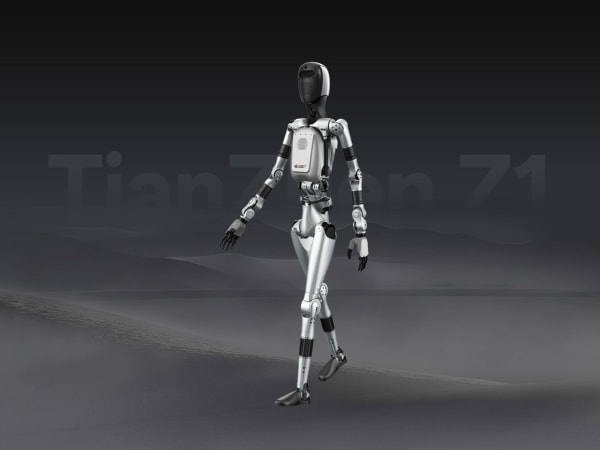
Orca I vs Tianling L3, Tianzhen Z1, RP1 and Adam Lite
Orca I overlaps with these alternatives on Entertainment and events and Education and training; only Orca I is tagged for Household help. Orca I leads this group on payload but trails on weight.
Industries and capabilities are tags, not scores: a tick means the robot is listed for it. Green marks the best figure in a row (highest payload and runtime; lowest weight). Ranges are not ranked.
| Spec | Orca ICyan Robotics | Tianling L3TLIBOT | Tianzhen Z1TLIBOT | RP1RoboParty | Adam LitePNDbotics |
|---|---|---|---|---|---|
| Industries | |||||
| Entertainment and events | Yes | Yes | Yes | Yes | No |
| Household help | Yes | No | No | No | No |
| Education and training | Yes | Yes | Yes | Yes | Yes |
| Research and development | Yes | Yes | Yes | Yes | Yes |
| Capabilities | |||||
| Balance and stability | Yes | No | No | Yes | Yes |
| Human-robot interaction | Yes | No | Yes | No | No |
| Dexterous manipulation | Yes | Yes | Yes | No | No |
| Remote control (teleoperation) | Yes | No | No | Yes | Yes |
| Payload | 5 kg | 4 kg | 3–8 kg | 5 kg | — |
| Runtime | 120 min | — | 120 min | 3 h | — |
| Weight | 42 kg | 38 kg | 45 kg | 39 kg | 60 kg |
| Released | 2024 | 2026 | 2026 | 2026 | 2024 |
Notes such as conditions or alternate figures are left out and values are shown in common units; open each page for the full specs. Browse all Humanoid Robots
More Humanoid Robots
Discover more robots in the same category

Robots From Other Categories
Discover complementary robots from different categories that work well together

Frequently Asked Questions
Get answers to common questions about this robot
Q1. What is Orca I, and what problem is it designed to solve?
Orca I is a human-sized walking humanoid from Cyan Robotics in Shanghai. It is known for walking with straight knees like a person and for showing emotion through its movements and screen.
Q2. What are the main capabilities and key features of Orca I?
It walks upright on two legs, uses both arms with a dexterous hand, talks through a large language model, shows emotions on a display, and opens its software and control interfaces to developers.
Q3. Who is Orca I built for, and which industries can benefit from it?
It is aimed at robotics labs, schools, exhibitions and companies building character-based experiences, and at developers working on humanoid control.
Q4. Is Orca I a commercial product or still a research prototype?
It is a commercial product that Cyan sells to institutions and companies and that has already appeared at public events.
Q5. Is Orca I currently available for purchase, and when is it expected to ship?
Cyan sells it through its purchasing team and online channels and quotes prices on request, so availability and delivery are agreed with the company.
Q6. How does Orca I actually work in real-world environments?
A single learned controller drives many motions, an emotional gait model adds expressive steps, and the robot senses its surroundings with LiDAR, a depth camera and microphones.
Q7. When was Orca I announced or officially launched?
Cyan showed it in motion videos in October 2024 and ran it in the world's first humanoid half-marathon in April 2025.
Q8. How is Orca I different from other robots in the same category?
It is the first humanoid that Cyan describes as walking with straight knees, which saves energy and copes with slopes, and it adds an emotional gait that most robots lack.
Q9. Does Orca I require additional development or customization after purchase?
Yes. Cyan provides open interfaces, example code and a teleoperation interface, so buyers can train their own behaviors and connect their tools.
Q10. What is the future roadmap or planned upgrades for Orca I?
Cyan keeps extending its Dino OS character platform and plans more characters and abilities that share the same embodied-intelligence core.
Rating and Reviews
Share your experience and help others decide!
Loading...
User Reviews
No user reviews. Be the first one to review!
User Comments (No Login needed)
Share your thoughts, experiences, or questions about this robot.
Comments appear after moderator review.