Genesis AI
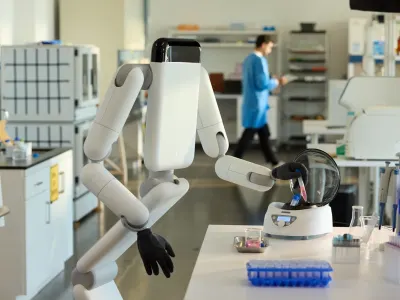
Genesis AI is a full-stack robotics enterprise developing general-purpose humanoid robots with human-level intelligence and physical capability. Its flagship humanoid, Eno (Genesis Gen-1), features a sleek, headless anthropomorphic form factor engineered with high-DoF dexterous hands, custom electric actuators, and the Genesis World 1.0 foundation model. Focused on manufacturing assembly, home assistance, and commercial services, Genesis AI reimagines humanoid robotics through physical foundation models.
💡Notable Achievement: Genesis AI introduced Eno, a novel 'headless' humanoid robot that decouples traditional facial aesthetics to maximize torso-integrated multimodal sensor fusion and compute efficiency, featuring the GENE-26.5 physical foundation model.
What Does Genesis AI Do?
Genesis AI is reimagining the humanoid form factor to create an 'iPhone moment' for general-purpose robotics. Rather than adhering to biomimetic traditions that force delicate vision cameras into a fragile head, Genesis AI's Eno places sensory and computing intelligence securely within the robot's core torso. Powered by the Genesis World 1.0 foundation model and GENE-26.5 physical intelligence core, Eno demonstrates fluid, human-level dual-handed dexterity, handling delicate objects and industrial tools with equal mastery.
“Genesis AI creates headless, highly dexterous general-purpose humanoid robots powered by world foundation models.”
Headless Functional Architecture
Eliminates vulnerable head mechanisms in favor of robust torso-integrated 360-degree vision and compute cooling.
Human-Level 16-DoF Hands
Features high-dexterity anthropomorphic hands capable of delicate tactile manipulation and tool use.
Genesis World AI
Trained on large-scale physical world simulation data to achieve robust zero-shot physical reasoning.
What Can Genesis AI Robots Actually Do?
Cross-portfolio operational capabilities, manipulation tasks, and environmental competencies
Genesis AI provides full-body humanoids, physical foundation AI models, and enterprise manipulation software.
16-DoF Human-Level Hand Dexterity
Anthropomorphic five-finger hands capable of threading needles, manipulating hand tools, and lifting up to 8 kg.
360° Torso-Integrated Perception
Seamless panoramic depth sensing and obstacle detection eliminating traditional neck blind spots.
Physical Foundation Model Reasoning
Autonomous spatial understanding and trajectory generation from natural language task prompts.
Genesis AI Robots
Showing 1 Humanoid Robots of 1 total model
Eno
Manufactured by Genesis AI
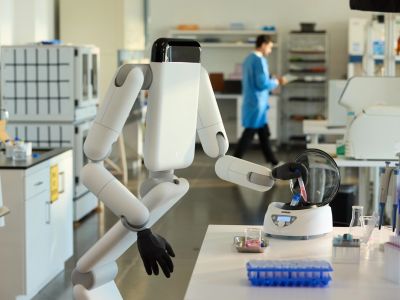
Eno is Genesis AI’s first general-purpose robot, designed as a bi-dexterous mobile manipulator rather than a classic legged humanoid. It combines a wheeled base, an adjustable torso, and highly dexterous arms and hands to perform multi-step tasks in factories, laboratories, logistics sites, and later service environments. Genesis says Eno is built around its GENE robotics foundation model, which is intended to give the robot memory, reasoning, and task adaptation across changing conditions. Public reporting indicates the robot emphasizes practical work over humanoid appearance, with an optional chest display for status and reasoning transparency, and hand hardware focused on manipulation, touch, and safety.
Genesis AISoftware & AI Ecosystem
Developer platforms, fleet management portals, autonomy intelligence, and enterprise integrations
Software Feature
What Makes Genesis AI Different?
Editorial AnalysisOrigin of Bots objective strategic assessment, engineering moats, and commercial hurdles
Key Strengths & Moats
- ✓Innovative headless industrial design optimizing sensor durability and thermal dissipation
- ✓Remarkable 16-DoF hand dexterity matching biological human manipulation capability
- ✓Strong Silicon Valley engineering talent and venture capital backing
Core Strategic Focus
Expanding real-world customer pilot validations and preparing commercial assembly lines for 2027 rollout.
Road Ahead & Challenges
- •Competing against entrenched, heavily-funded peers like Figure AI and Tesla Optimus
- •Proving long-term durability of high-DoF tendon-driven robotic hands
Genesis AI vs Key Competitors
Strategic capability matrix across platform categories, commercial readiness, and target markets
| Strategic Dimension | Eno (Genesis AI) | Figure 02 | Optimus Gen 2 | Phoenix (Sanctuary) |
|---|---|---|---|---|
| Head Form Factor | Headless (Torso Sensors) | Biomimetic Head | Biomimetic Display Head | Headless/Torso |
| Hand Degrees of Freedom | 16 DoF per hand | 16 DoF per hand | 11 DoF per hand | 20 DoF per hand |
| AI Core | Genesis World 1.0 | OpenAI / Custom VLA | Tesla Neural Network | Carbon AI |
| Primary Target | Manufacturing & Home | Automotive & Logistics | Automotive & Consumer | Retail & Manufacturing |
Corporate Ecosystem & Ownership Structure
Parent company relationships, historical acquisitions, and global operating facilities
Articles & Industry News
Showing 1 recent article and news updates about Genesis AI
Frequently Asked Questions
10 AnswersVerified answers, company specifications, and deployment details about Genesis AI
What is the unit purchase price or RaaS lease pricing model for Eno (Genesis Gen-1)?
Genesis AI targets long-term mass consumer and enterprise accessibility, with commercial enterprise pilot units priced around $75,000 to $95,000 USD, accompanied by subscription-based software and foundation model cloud licensing around $2,500 USD per month.
What is the commercial timeline and current availability status of Genesis AI's humanoids?
Genesis AI operated in stealth throughout 2024 and 2025 before publicly unveiling Eno in June 2026. The robot is currently engaged in closed customer pilots across California enterprise facilities, with broader commercial availability slated for early 2027.
Where are Eno robots actively deployed in real-world customer facilities?
Eno is deployed across advanced testing labs and enterprise facilities in San Carlos, Alameda, and Silicon Valley pilot manufacturing lines.
What target industrial and everyday workflows does Eno automate?
Eno is designed for complex parts handling, dual-handed tool usage, delicate component insertion, domestic tidying, and warehouse tote packing.
What mechanical drivetrain and actuator architecture powers Eno?
Eno features a 42-DoF electric humanoid body utilizing custom high-torque-density rotary electric actuators with high-reduction planetary gearing, optimized for quiet domestic and industrial operation.
What end-effector dexterity, hand degrees of freedom (DoF), and tactile sensing does Eno feature?
Eno boasts human-like 5-finger hands with 16 degrees of freedom per hand, driven by tendon cables and embedded with dense tactile arrays across fingertips and palm surfaces.
What is Eno's continuous battery runtime, capacity, and charging mechanism?
Eno is powered by a high-energy-density 1.3 kWh lithium-ion battery system delivering 3.5 to 5 hours of continuous operation, supporting inductive autonomous docking.
What is Eno's operational autonomy level versus remote teleoperation dependency?
Eno operates at Level 4 physical task autonomy under the GENE-26.5 model. It perceives object affordances and executes pick-and-place manipulation autonomously from vision inputs.
What sensory perception suite and foundation AI models govern Eno?
Eno's chest and shoulder mount 360-degree high-resolution RGB-D vision sensors and LiDAR, governed by the Genesis World 1.0 foundation model.
What worker safety mechanisms, force compliance, and physical limits protect human collaborators?
Eno features soft outer aesthetic covers, compliant backdrivable actuators that limit impact forces below 30 N, and continuous real-time proximity safety zones.
Verified Data & Editorial Assurance
Compiled from verified corporate filings, official Genesis AI datasheets, and robotics engineering registries. Information has been verified against official manufacturer documentation. For commercial procurement or proprietary integrations, contact the manufacturer directly.