TUM Geriatronics
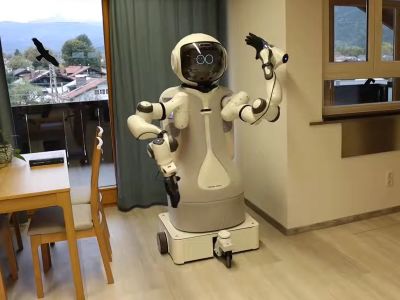
TUM Geriatronics is the Geriatronics research center of the Technical University of Munich (TUM), part of the Munich Institute of Robotics and Machine Intelligence (MIRMI) and based in Garmisch-Partenkirchen, Bavaria. It opened in October 2018 as the TUM User and Research Center for Geriatronics, in a former hotel and catering college, with support from the Bavarian state government and the municipality of Garmisch-Partenkirchen. Robotic assistants are developed and tested there in field studies so that older people can live independently at home for longer. Its main robot is GARMI, a care assistant that in 2024 showed it could combine individual skills, such as bringing water and breakfast to the bedside, booking doctor appointments and setting up telemedical examinations, with the help of a digital twin, artificial intelligence and ChatGPT. GARMI is a research platform, not a commercial product.
💡Notable Achievement: TUM Geriatronics opened in Garmisch-Partenkirchen in 2018, and in 2024 its GARMI robot showed it can combine caregiving skills, such as bringing breakfast and booking doctor appointments, through ChatGPT and a digital twin.
What Does TUM Geriatronics Do?
TUM Geriatronics is the Technical University of Munich's research center for robotic assistants for older people; its robot GARMI is a care assistant for elderly care and telemedicine.
“A university research center's care assistant robot.”
University Research
Part of the Munich Institute of Robotics and Machine Intelligence at TUM.
Telemedical Assistance
Sensors such as ECG and blood-pressure support remote health checks.
Safe Home Interaction
Wheeled base and compliant arms for close human contact.
What Can TUM Geriatronics Robots Actually Do?
Cross-portfolio operational capabilities, manipulation tasks, and environmental competencies
Elderly-care support with telemedicine, rehabilitation and daily-living assistance.
Telemedical Assistance
GARMI carries ECG and blood-pressure sensing for remote clinician support.
Daily-Living Support
Helps with activities of daily living at home.
Teleoperation
Remote operation with semi-autonomous behaviours.
Long Runtime
About 8 hours per charge (inferred).
TUM Geriatronics Robots
Showing 1 Humanoid Robots of 1 total model
GARMI
Manufactured by TUM Geriatronics
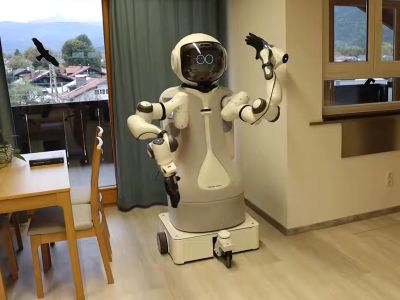
GARMI is a humanoid assistance robot developed at the Technical University of Munich for elderly care, featuring a wheeled mobile base for indoor navigation and an upper-body humanoid design for natural human interaction. It assists with activities of daily living such as housework, correspondence, internet searches, simple pick-up and delivery, and bringing and clearing breakfast dishes, and it can physically support rehabilitation exercises with safe torque-controlled arms. A multimodal head with sensors and a large screen enables intuitive voice commands, and ChatGPT integration provides multilingual communication and internet searches. Equipped with measuring devices such as an ECG, blood pressure monitor and ultrasound, combined with IoT sensors, GARMI can assist a doctor during the first steps of a telemedical visit. Full-body torque control keeps physical human-robot interaction safe: when a human or unknown obstacle approaches, it slows down and stops if necessary. In its test apartment GARMI can assist a person through an entire day, from helping them out of bed to phone calls with relatives and doctors, supplementing audiovisual communication with a haptic channel.
TUM Geriatronics Software & AI Ecosystem
Developer platforms, fleet management portals, autonomy intelligence, and enterprise integrations
ChatGPT and digital twin
Skills on demand
ChatGPT links patients, therapists and doctors with GARMI, and a digital twin checks movements for safety before the robot acts.
TUM Geriatronics Timeline & Milestones
Evolutionary history, landmark prototypes, major acquisitions, and commercial roadmap
DFVLR formed
Several German aeronautics research institutes merge to form the DFVLR, the predecessor of today's DLR.
Source: en.wikipedia.org
Merger with German space agency DARA
DLR merges with the German space agency DARA, becoming both a research centre and Germany's space agency.
Source: en.wikipedia.org
Justin humanoid upper body introduced
DLR's Institute of Robotics and Mechatronics introduces Justin, a two-armed humanoid upper body mounted on a table.
Source: dlr.de
Rollin' Justin presented at Automatica
DLR presents Rollin' Justin, a mobile version of its humanoid, at the Automatica 2008 trade fair in Munich.
Source: dlr.de
Geriatronics User and Research Center opens
TUM opens its User and Research Center for Geriatronics in Garmisch-Partenkirchen to develop and field-test robotic assistants for older people.
Source: tum.de
Anke Kaysser-Pyzalla becomes DLR chair
Anke Kaysser-Pyzalla becomes chair of the DLR executive board.
Source: en.wikipedia.org
GARMI combines skills into an all-day assistant
At ICRA 2024 in Yokohama, TUM shows GARMI carrying out caregiving tasks on demand, using a digital twin, AI and ChatGPT.
Source: tum.de
TUM Geriatronics Competitors by Category
Direct industry rivals grouped by specific robotics domain
What Makes TUM Geriatronics Different?
Editorial AnalysisOrigin of Bots objective strategic assessment, engineering moats, and commercial hurdles
Key Strengths & Moats
- ✓Backed by one of Europe's leading technical universities.
- ✓Telemedical sensors integrated on the robot.
- ✓Human-safe wheeled design for care environments.
Core Strategic Focus
Research and field studies of care robots for older people at home.
Road Ahead & Challenges
- •GARMI is a research platform, not a commercial product.
TUM Geriatronics vs Key Competitors
Strategic capability matrix across platform categories, commercial readiness, and target markets
Category / Focus
- TUM Geriatronics
- Wheeled Assistive Humanoid
- Toyota Toyota T-HR3
- Teleoperated humanoid research
- Pollen Robotics Reachy 2
- Open teleoperable humanoid
- Fourier Intelligence GR-3
- Care-oriented humanoid
- Plim Robotics Plim
- Eldercare teleoperated humanoid
Primary Use
- TUM Geriatronics
- Elderly care, telemedical assistance
- Toyota Toyota T-HR3
- Remote telepresence medical care
- Pollen Robotics Reachy 2
- Academic research
- Fourier Intelligence GR-3
- Elderly care assistance
- Plim Robotics Plim
- Meal preparation
Weight
- TUM Geriatronics
- 50 kg
- Toyota Toyota T-HR3
- 75 kg
- Pollen Robotics Reachy 2
- 50 kg
- Fourier Intelligence GR-3
- 71 kg
- Plim Robotics Plim
- 80 kg
Battery Runtime
- TUM Geriatronics
- 8 h
- Toyota Toyota T-HR3
- 2.5–3.5 h
- Pollen Robotics Reachy 2
- 8 h
- Fourier Intelligence GR-3
- 3 h
- Plim Robotics Plim
- 2 h
| Strategic Dimension | TUM Geriatronics(Current) | Toyota Toyota T-HR3 | Pollen Robotics Reachy 2 | Fourier Intelligence GR-3 | Plim Robotics Plim |
|---|---|---|---|---|---|
| Category / Focus | Wheeled Assistive Humanoid | Teleoperated humanoid research | Open teleoperable humanoid | Care-oriented humanoid | Eldercare teleoperated humanoid |
| Primary Use | Elderly care, telemedical assistance | Remote telepresence medical care | Academic research | Elderly care assistance | Meal preparation |
| Weight | 50 kg | 75 kg | 50 kg | 71 kg | 80 kg |
| Battery Runtime | 8 h | 2.5–3.5 h | 8 h | 3 h | 2 h |
Corporate Ecosystem & Ownership Structure
Parent company relationships, historical acquisitions, and global operating facilities
Global Facilities & Operating Hubs
German Aerospace Center (DLR) Headquarters
HQCologne, Germany
TUM Geriatronics, Garmisch-Partenkirchen
HQGarmisch-Partenkirchen, Germany
Articles & Industry News
Showing 1 recent article and news updates about TUM Geriatronics
Frequently Asked Questions
8 AnswersVerified answers, company specifications, and deployment details about TUM Geriatronics
What is TUM Geriatronics?
TUM Geriatronics is the Geriatronics research center of the Technical University of Munich, part of MIRMI, in Garmisch-Partenkirchen. It develops and tests robotic assistants that help older people live independently.
What is GARMI?
GARMI is the care assistant robot developed at TUM Geriatronics. It supports older people through the day, for example by bringing water and breakfast, helping with rehabilitation exercises and setting up telemedical examinations.
What can GARMI do?
In a 2024 demonstration at ICRA, GARMI brought water and breakfast to the bedside, booked doctor appointments, set up telemedical examinations and helped care recipients get out of bed and do rehabilitation exercises.
How does GARMI understand commands?
GARMI uses ChatGPT to link patients, physiotherapists and doctors with the robot, so skills taught to it over the years can be called on demand. A digital twin checks movements for collisions before the robot acts near people.
Where is TUM Geriatronics based?
It is based in Garmisch-Partenkirchen, Bavaria, in a former hotel and catering college. The center opened in October 2018 and works together with the main MIRMI site in Munich.
Who supports the center?
The Bavarian state government and the municipality of Garmisch-Partenkirchen supported the opening of the TUM Geriatronics User and Research Center in 2018.
Who leads the Geriatronics work?
It is part of MIRMI, whose executive director is Professor Sami Haddadin. In 2024 the Geriatronics project lead was Dr. Abdeldjallil Naceri.
Can I buy GARMI?
GARMI is a research platform that is developed and tested in field studies and a model apartment, not a commercial product.
Verified Data & Editorial Assurance
Compiled from verified corporate filings, official TUM Geriatronics datasheets, and robotics engineering registries. Information has been verified against official manufacturer documentation. For commercial procurement or proprietary integrations, contact the manufacturer directly.