Atlas Masters Factory Tasks with Toyota-LBM Control, Hyundai Scaling Production
Robot Details
Atlas (Electric Atlas, 2025) • Boston DynamicsPublished
December 15, 2025
Reading Time
3 min read
Author
Origin Of Bots
Big Launch, Bold Price
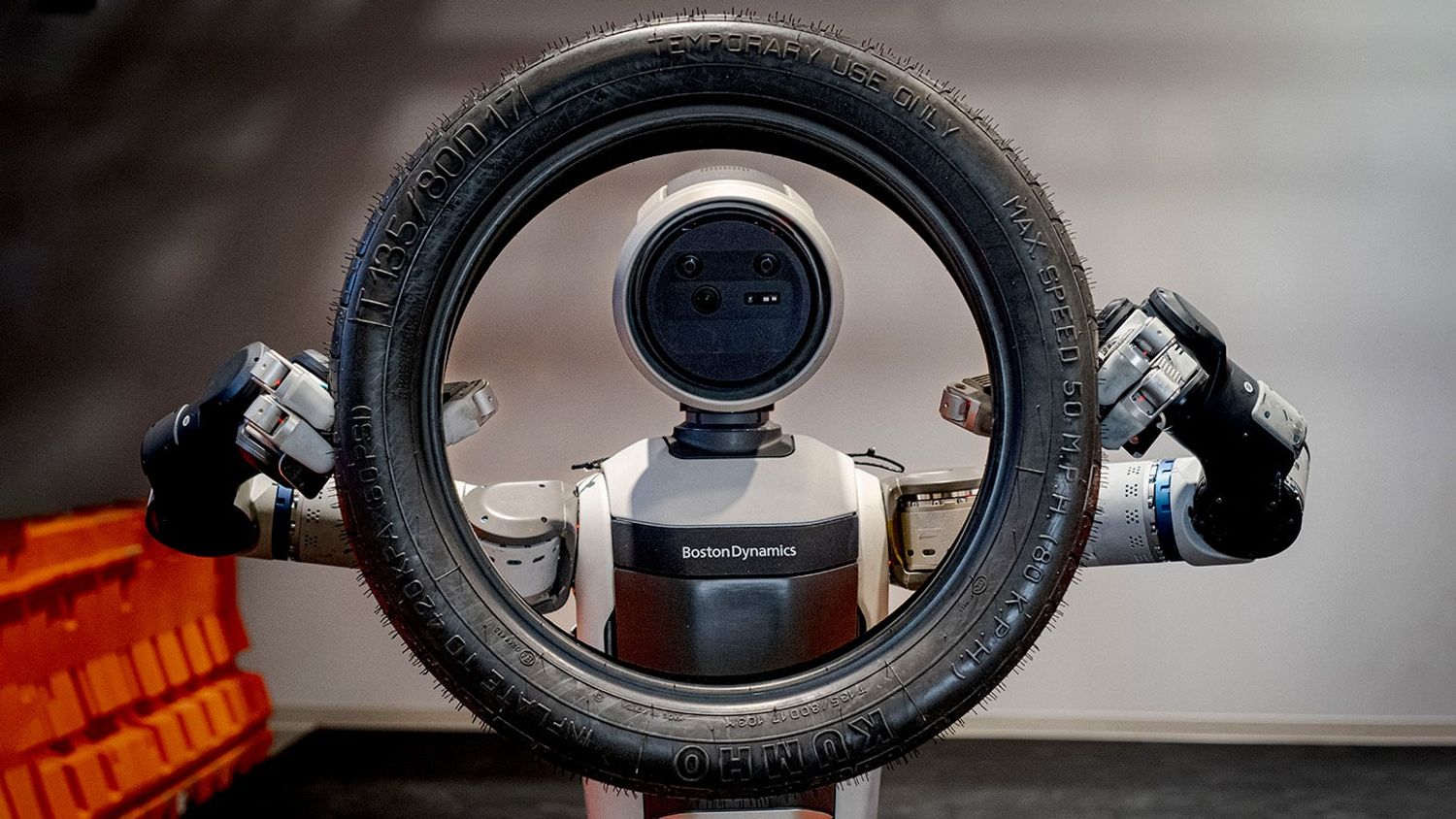
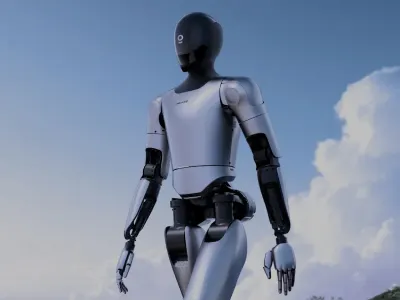
Boston Dynamics today unveils the Electric Atlas (2025) as a commercial-ready humanoid aimed at factory floors and logistics hubs, announcing initial availability with a price tag near $420,000 — positioning Atlas as a premium automation option for enterprises willing to invest in dexterous, mobile robotics. The announcement stresses a partnership with Toyota’s Large Behavior Model (LBM) team for high-level autonomy and Hyundai for scaling manufacturing, signaling a shift from lab demonstrations to volume deployment and making this release one of the most consequential robot launches of the year for industrial operators seeking flexible labor augmentation.
What It Actually Does
Unlike single-purpose robots, Atlas combines whole-body manipulation and bipedal mobility to perform tasks that previously needed humans or dedicated machines — picking, packing, tool use, and navigating complex aisles — all under a single control stack; its LBM integration lets developers teach long sequences of behaviors instead of hand-coding each motion, which dramatically shortens deployment time and broadens application scope for warehouses, assembly lines, and hazardous sites.
Engineering That Matters
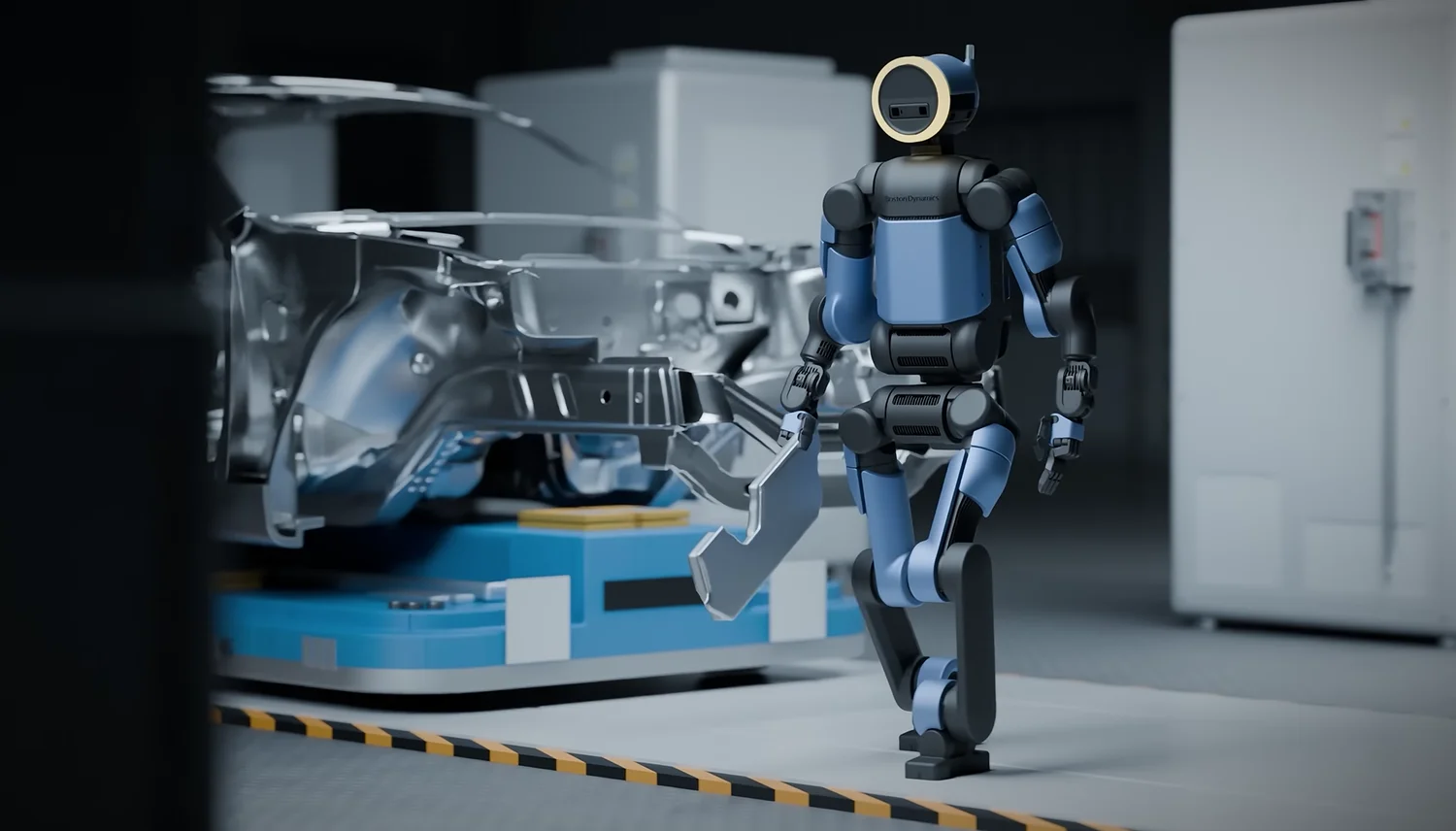
Atlas’s engineering leap comes from fully electric, high-torque actuators and lightweight structural parts that trade hydraulic complexity for cleaner, maintainable architecture while preserving dynamic capability; this platform runs integrated perception and control on a custom Linux-derived OS with ROS compatibility, and the fusion of LiDAR, stereo vision, and inertial sensing enables real-time whole-body planning so Atlas can adapt mid-task rather than abort — a practical breakthrough for unpredictable factory environments.
Hands-On Use Cases
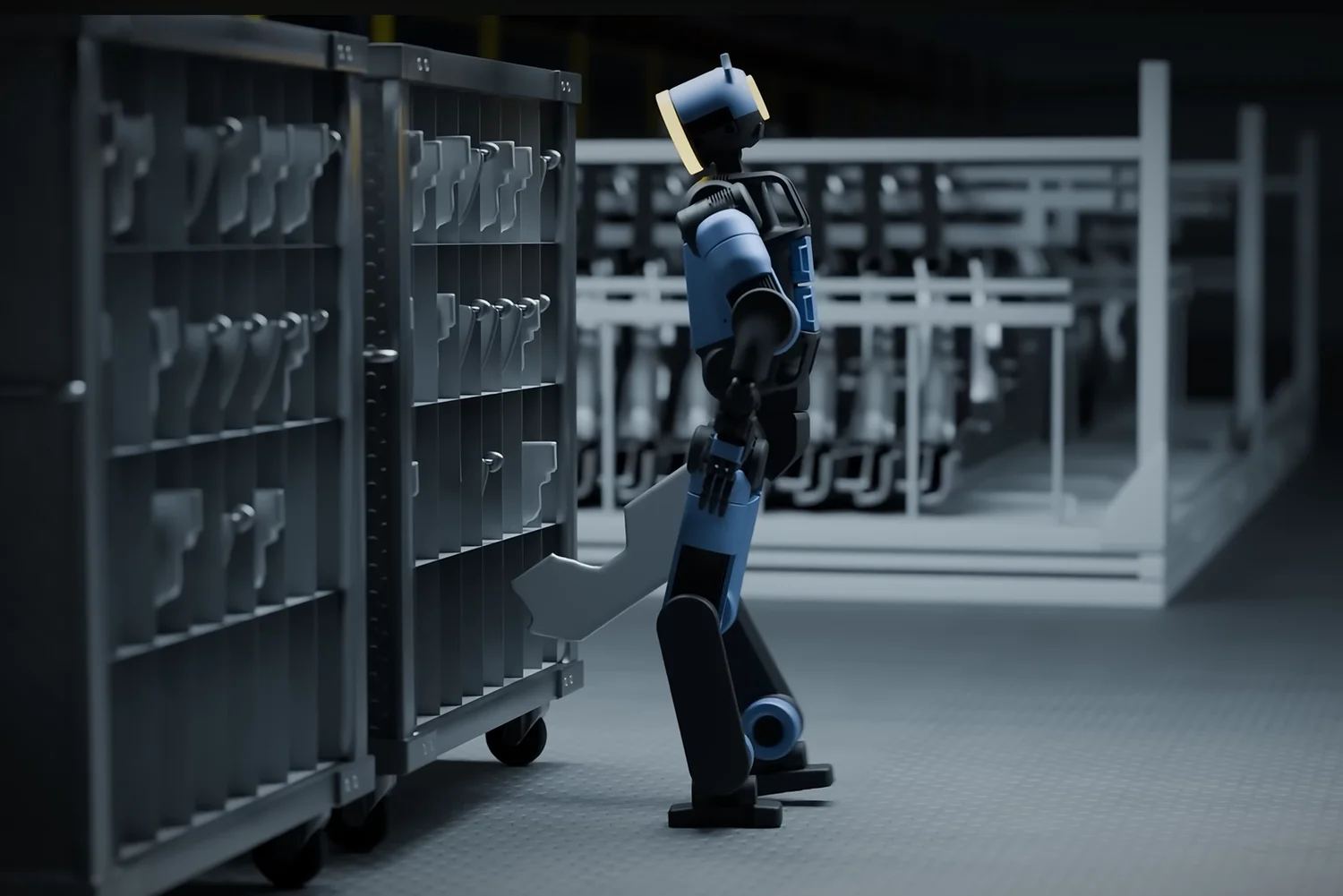
In pilot deployments Atlas has sorted mixed-size packages, handled delicate components on assembly lines, and operated alongside humans during evening shifts to reduce overtime; its ability to don tool-specific grippers means a single unit can alternate between screwing assemblies, transporting small equipment, and performing inspection walks, making it especially useful for facilities with variable task mixes or hazardous locations where human presence should be minimized.
Measured Capabilities
The Electric Atlas measures roughly 150 x 60 x 45 cm, weighs about 89 kg, and walks up to 5.5 km/h while carrying tools, packages, or small equipment — battery systems are designed for industrial lifecycles (estimated 3–5 years typical for lithium-ion pack service life), and sensor suites include RGB and stereo cameras, LiDAR, depth sensors, joint force/torque sensors, IMU and gyroscope, plus temperature monitoring; navigation combines LiDAR, visual odometry, SLAM, and GPS for outdoor work, with safety layers such as emergency stops, obstacle avoidance, compliant actuators, and continuous environment monitoring; the software exposes Python and C++ APIs for integration and fleet orchestration.
How It Compares
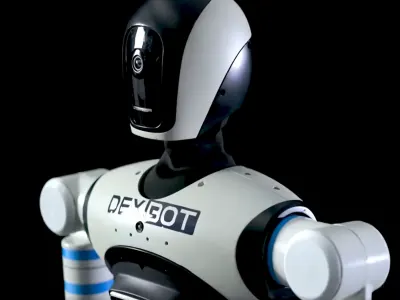
Against rivals like Dex, K2 Bumblebee, LUS2, and AgiBot A2, Atlas stands out for whole-body autonomy and proven dynamic balance thanks to Toyota’s LBM — giving it an edge in complex, sequential manipulation tasks and unstructured spaces; competitors may beat Atlas on focused metrics such as lower price, longer single-charge runtime, or specialized end-effectors, and some are lighter or optimized for simpler pick-and-place workflows, so Atlas’s trade-off is higher cost and complexity for far broader capability and adaptability in mixed-task industrial settings.
Industry Ripple Effects
With Hyundai stepping up manufacturing scale and Toyota’s LBM reducing integration overhead, Atlas’s market entry could accelerate adoption of humanoids across automotive, logistics, and hazardous-works sectors by turning a previously research-only platform into a commercial tool; the immediate effect will be new pilot programs and workforce retraining, while longer term the combination of volume production and behavior-driven software could compress costs and expand use cases, nudging industry toward flexible, mobile automation that complements human teams rather than strictly replacing them.
Explore Humanoids
Related Articles
XMAN-F1 Partners Johnnie Walker, M104 for AI Bartending Breakthrough
RobotEra L7 Racing Into Warehouses: 14.4 km/h Humanoid Cuts Picking Costs with ERA‑42 Deal

Clone’s Protoclone V1 Mirrors Human Muscles with 1,000 Myofibers, 500 Sensors
Samsung Bot Handy 2 Integrates Google Gemini, Boosts Dexterity with 3kg Dual-Arm Grip
Related Comparisons
Compare Atlas (Electric Atlas, 2025) with similar robots

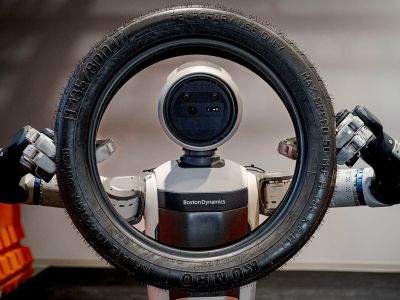
Optimus vs Atlas (Electric Atlas, 2025)
In-depth comparison of Optimus and Atlas (Electric Atlas, 2025), covering hardware capabilities, teleoperation, and enterprise readiness.
Optimus vs Unitree G1
Compare Optimus vs Unitree G1 for humanoid mobility, dexterity, autonomy, and payload capacity.
Unitree G1 vs Unitree H1
Head-to-head: Unitree G1 vs Unitree H1 compared on bipedal balance, AI learning, and real-world deployment.

Ameca vs Moya
Which humanoid robot is better? Ameca vs Moya compared for dexterity, AI capabilities, and price.
Learn More About This Robot
Discover detailed specifications, reviews, and comparisons for Atlas (Electric Atlas, 2025).
View Robot Details →