Berg Insight Forecasts Global Humanoid Robot Shipments to Reach 26 Million Units Annually by 2040
Category
humanoidPublished
September 4, 2026
Reading Time
3 min read
Author
Origin Of Bots Editorial Team
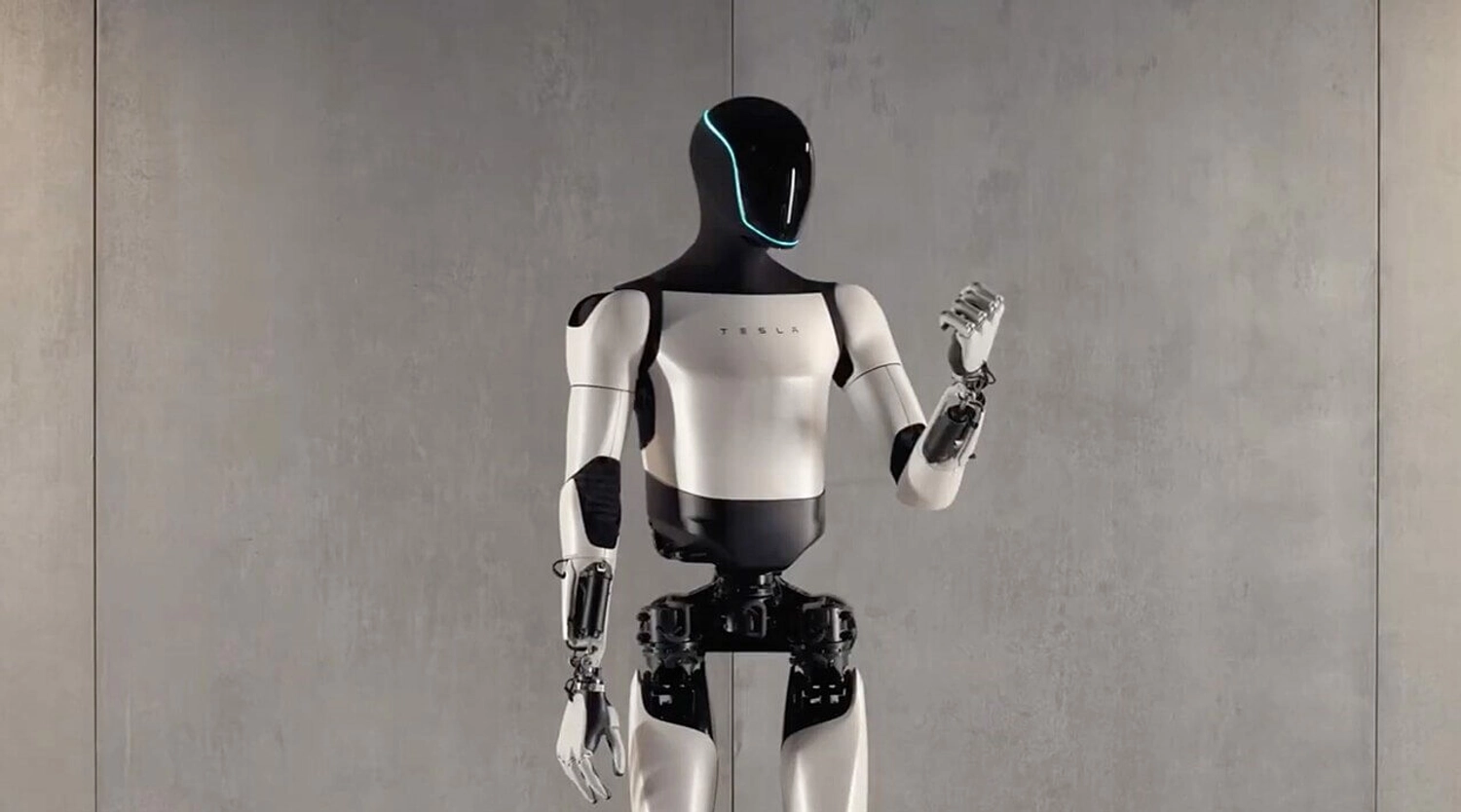
Landmark Global Market Projection for Embodied Automation
Leading IoT and technology research firm Berg Insight released its comprehensive 2026 market study on the commercial trajectory of humanoid robotics. The report forecasts that global annual shipments of humanoid robots will surge from approximately 16,000 units in 2026 to an astounding 26.0 million units by 2040.
This explosive expansion represents a compound annual growth rate of 65.7 percent, marking one of the fastest industrial technology transitions in modern history. Berg Insight analysts attribute this secular boom to compounding labor deficits, aggressive component cost deflation, and breakthroughs in foundational physical intelligence.
Primary Commercial Drivers: Manufacturing and Logistics Automation
According to the study, industrial manufacturing and structured parcel logistics will capture the overwhelming majority of early humanoid deployments through 2030. Automotive assembly plants, semiconductor cleanrooms, and fulfillment warehouses face critical worker shortages that fixed industrial arms cannot resolve.
Humanoid robots provide enterprise operators with flexible, human-compatible automation that slots into existing infrastructure without rebuilding factory floors. Their ability to navigate narrow walkways, push rolling carts, and swap tools makes them ideal drop-in replacements for physically demanding repetitive shifts.
The Long-Term Transition into Healthcare and Domestic Environments
While industrial sectors will establish the initial revenue foundation, the report projects that service and domestic applications will drive exponential volume after 2032. Rapidly aging populations across East Asia and Western Europe are straining eldercare facilities, creating urgent demand for autonomous physical caregivers.
Humanoids equipped with compliant touch sensors will assist elderly individuals with mobility transfers, meal prep, and round-the-clock safety monitoring. Overcoming the social acceptance barrier in domestic settings will unlock consumer mass markets, transforming humanoids into ubiquitous household fixtures.
Rapid Deflation of the Hardware Bill of Materials
A key catalyst accelerating market adoption is the dramatic cost reduction across core humanoid electro-mechanical hardware. Berg Insight projects that the average bill of materials for a production-grade humanoid will plunge from over $80,000 in 2025 to less than $20,000 by 2032.
Standardization of high-torque brushless motors, harmonic gearboxes, and planar lidar sensors—driven by global automotive scale—is eliminating bespoke manufacturing costs. At a $20,000 capital expense, the economic payback period for enterprise buyers shrinks to under six months, triggering widespread commercial adoption.
The Critical Role of Cellular 5G/6G and Cloud Fleet Orchestration
The report highlights that scalable humanoid deployments depend fundamentally on ubiquitous cellular 5G and future 6G connectivity. High-bandwidth, low-latency cellular links allow centralized cloud orchestration platforms to monitor telemetry, push model updates, and manage fleet traffic in real time.
By offloading compute-intensive spatial mapping and long-term memory to cloud edge nodes, robots minimize onboard power consumption while extending battery runtimes. Centralized fleet management enables a single supervisor to oversee hundreds of distributed humanoid workers across multiple geographical sites.
Regional Leadership and Industrial Policy Dynamics
Geographically, East Asia and North America are projected to dominate both humanoid manufacturing output and early enterprise procurement. China’s aggressive national physical AI directives and integrated component ecosystems provide an unmatched hardware manufacturing advantage.
Simultaneously, North American firms maintain a formidable lead in large multimodal foundation models and simulation infrastructure. This geopolitical divergence is fostering intense international competition as nations vie to establish sovereign standards and dominant platform architectures.
The Dawn of the Physical Artificial Intelligence Economy
Berg Insight’s market forecast provides a compelling quantitative blueprint for the emergence of the physical artificial intelligence economy. The transition from software-bound digital agents to embodied machines capable of manipulating the physical world represents a monumental economic paradigm shift.
As millions of humanoid units roll off production lines over the coming decades, the relationship between human labor and automation will be permanently rewritten. The global workforce is embarking on an era where physical capability is no longer constrained by biological limits.
Sources
Related Articles

Unitree Expands Commercial Footprint with G1 Mass Deployments and Shanghai Market Momentum

Figure AI Signs Landmark $3.5B Cloud Compute Partnership with Nscale for 100,000 NVIDIA Vera Rubin GPUs

IFA 2026 Berlin Showcases Next-Gen Commercial Humanoids: AGIBOT A3 and Xiaomi CyberOne Make European Debuts