Defense Analysts Assess Tactical and Dual-Use Applications of Bipedal Humanoid Robots
Category
humanoidPublished
September 8, 2026
Reading Time
3 min read
Author
Origin Of Bots Editorial Team
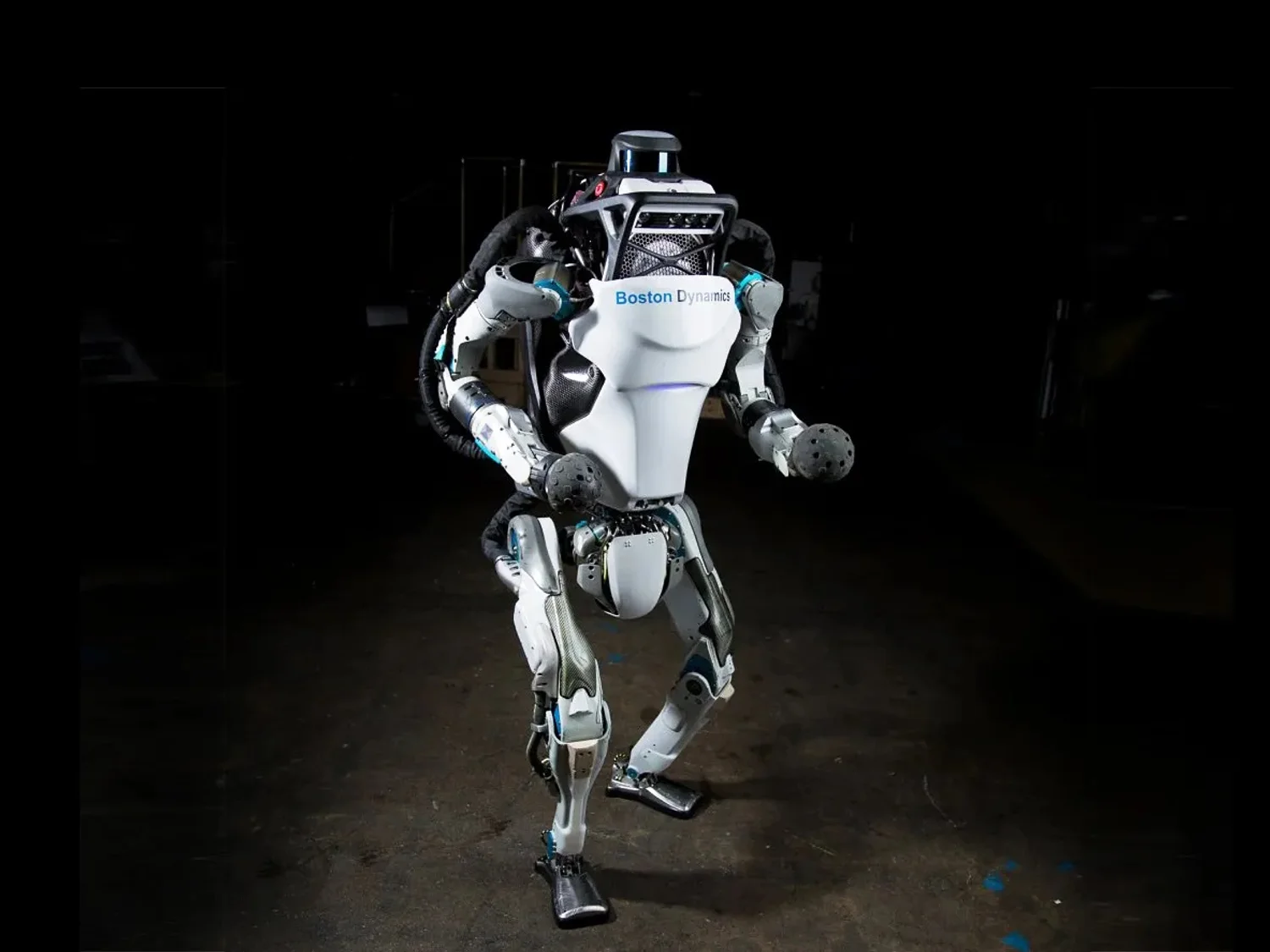
Shifting Scrutiny from Athletic Demonstrations to Strategic Utility
Following the high-energy athletic showcases at the World Humanoid Robot Games in Beijing, global defense and intelligence analysts are turning their focus toward strategic dual-use implications. While public exhibitions highlighted bipedal machines sprinting, boxing, and performing Tai Chi, international observers note that the underlying engineering holds profound tactical military utility.
The rapid acceleration of dynamic bipedal equilibrium, all-terrain balance recovery, and multi-sensor navigation has outpaced civilian consumer market demands. Consequently, defense research establishments worldwide are examining how humanoid mobility can be adapted for hazardous logistical and tactical defense operations.
Overcoming Complex Terrain Bottlenecks in Urban and Rubble Environments
Traditional tracked and wheeled military rovers have consistently struggled to navigate unstructured urban debris, collapsed stairwells, and narrow trenches. In contrast, bipedal humanoid robots possess human-equivalent physical footprints, allowing them to step over rubble, climb ladders, and open standard reinforced doors.
By mimicking biological leg kinematics, modern humanoids can traverse broken concrete and shifting gravel where conventional unmanned vehicles become immobilized. This unique traversal agility makes bipedal platforms prime candidates for high-risk forward reconnaissance and urban building breach operations.
Hazardous Material Handling and Explosive Ordnance Logistics
Beyond combat scenarios, defense institutes are prioritizing humanoid deployment in chemical, biological, and radiological decontamination zones. Equipped with high-dexterity tactile hands, humanoids can manipulate standard human tools, turn industrial valves, and operate chemical sensors without specialized tool adaptors.
In explosive ordnance disposal (EOD), the ability to kneel, reach into vehicle undercarriages, and cut delicate detonation wires removes human technicians from blast envelopes. Deploying resilient robotic proxies in lethal environments offers an immediate operational benefit that reduces battlefield casualties.
Semi-Autonomous Teleoperation and Mixed-Team Command
Military researchers emphasize that near-term tactical deployments will rely on high-fidelity teleoperation rather than fully autonomous lethal decision-making. Using low-latency tactile suits and virtual reality headsets, remote human operators can guide humanoid limbs with intuitive 1-to-1 motion mapping.
Local neural reflexes handle low-level balance stabilization and foot placement automatically, preventing the robot from falling even during communication latency spikes. This division of labor allows human operators to concentrate on tactical decision-making while the robot executes physical legwork.
Supply Chain Dual-Use Concerns and Technological Containment
The convergence between civilian commercial robotics and defense technologies is igniting intense geopolitical debate over export controls and supply chains. Western policymakers are closely monitoring the export of advanced harmonic reducers, high-density batteries, and specialized vision-processing chips to state-backed robotics firms.
Because an actuator developed for a warehouse pallet-carrier can readily power a tactical reconnaissance biped, drawing regulatory boundaries has become exceptionally difficult. These dual-use realities are prompting calls for stricter technological containment and rigorous supply chain auditing among allied defense ministries.
Urgent Calls for International Governance and Kinetic AI Norms
The prospect of weaponized humanoid machines has triggered urgent discussions among international humanitarian law experts and United Nations working groups. Diplomats warn that the proliferation of bipedal machines capable of carrying small arms risks lowering the threshold for armed conflict.
Human rights organizations are advocating for binding international treaties that explicitly prohibit deploying autonomous kinetic force through humanoid form factors. Establishing clear international red lines is deemed vital before lethal physical AI platforms become entrenched within global military arsenals.
Navigating the Double-Edged Horizon of Embodied Technology
The dual-use evolution of humanoid robotics highlights the perennial tension between transformative civilian utility and national security competition. While the primary economic engine of humanoid research remains focused on relieving civilian labor shortages, military applications are advancing in parallel.
As nations invest heavily in physical artificial intelligence, the choices made today regarding regulatory norms and deployment boundaries will shape future conflict. Ensuring that humanoid innovation remains anchored in peaceful industrial and domestic assistance requires vigilant global oversight and ethical governance.
Sources
Related Articles
Unitree Expands Commercial Footprint with G1 Mass Deployments and Shanghai Market Momentum

Figure AI Signs Landmark $3.5B Cloud Compute Partnership with Nscale for 100,000 NVIDIA Vera Rubin GPUs
IFA 2026 Berlin Showcases Next-Gen Commercial Humanoids: AGIBOT A3 and Xiaomi CyberOne Make European Debuts