Misty Robotics’ Sandi points to a teleoperation-first future for service robots
Robot Details
Sandi • Misty RoboticsPublished
June 3, 2026
Reading Time
3 min read
Author
Origin Of Bots Editorial Team
Service gaps persist
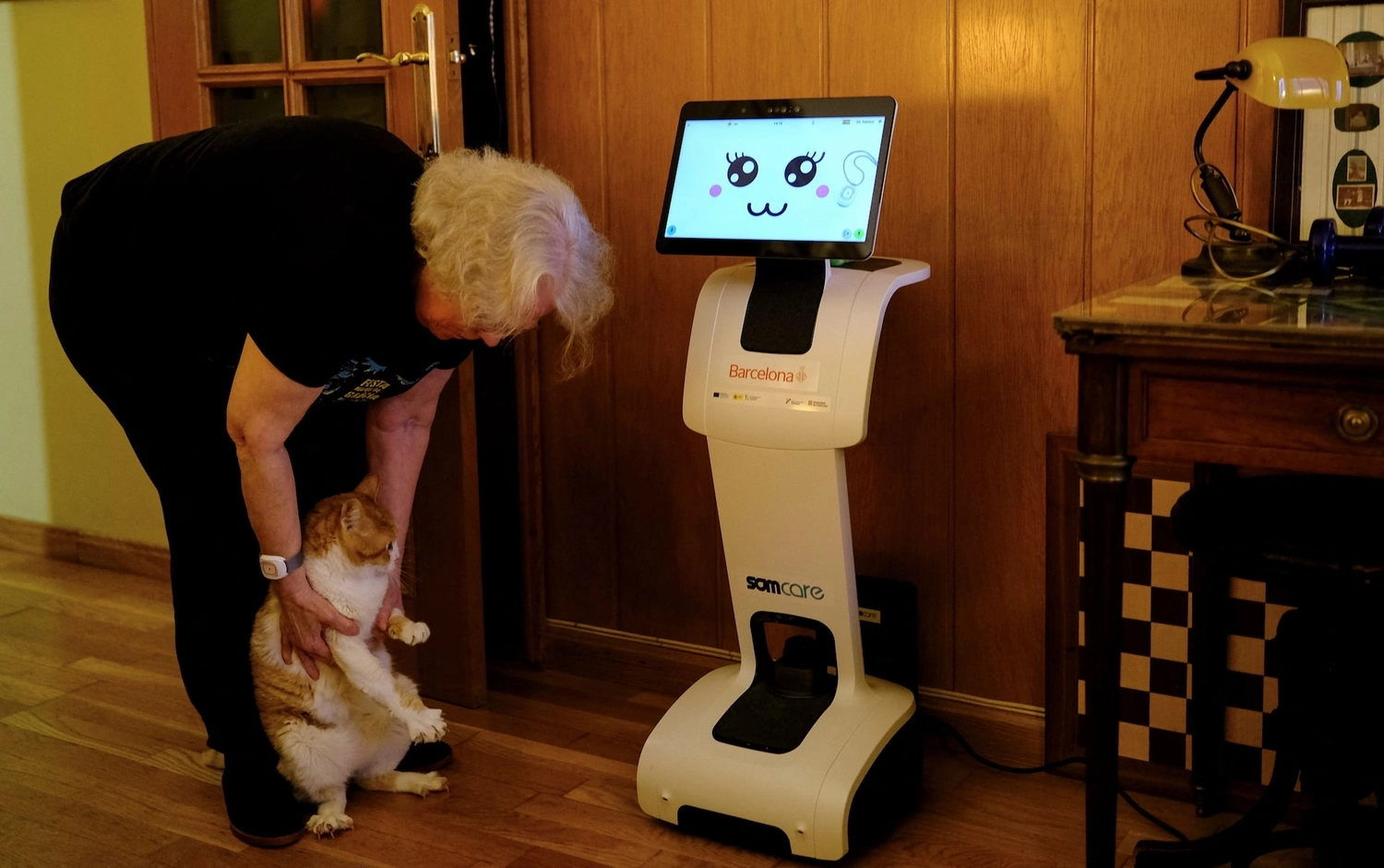
Service robots are increasingly being asked to handle front-of-house work where people still expect responsiveness, eye contact, and safe movement in crowded spaces. Sandi by Misty Robotics is being positioned around that problem set, with the company’s Misty II platform serving as the technical base for customer-facing, reception, concierge, and guiding roles.
Human-like service cues
What matters here is not raw speed or payload, but how the robot can support natural interaction in places like hotels, restaurants, hospitals, airports, retail floors, and elder-care settings. Misty’s platform is built around a visible personality layer, open software access, and a sensor package aimed at close-range interaction, all of which support teleoperation and assisted service rather than fully independent labor. Sandi’s significance is that it frames service robotics as supervised interaction, not unattended autonomy.
Input to motion
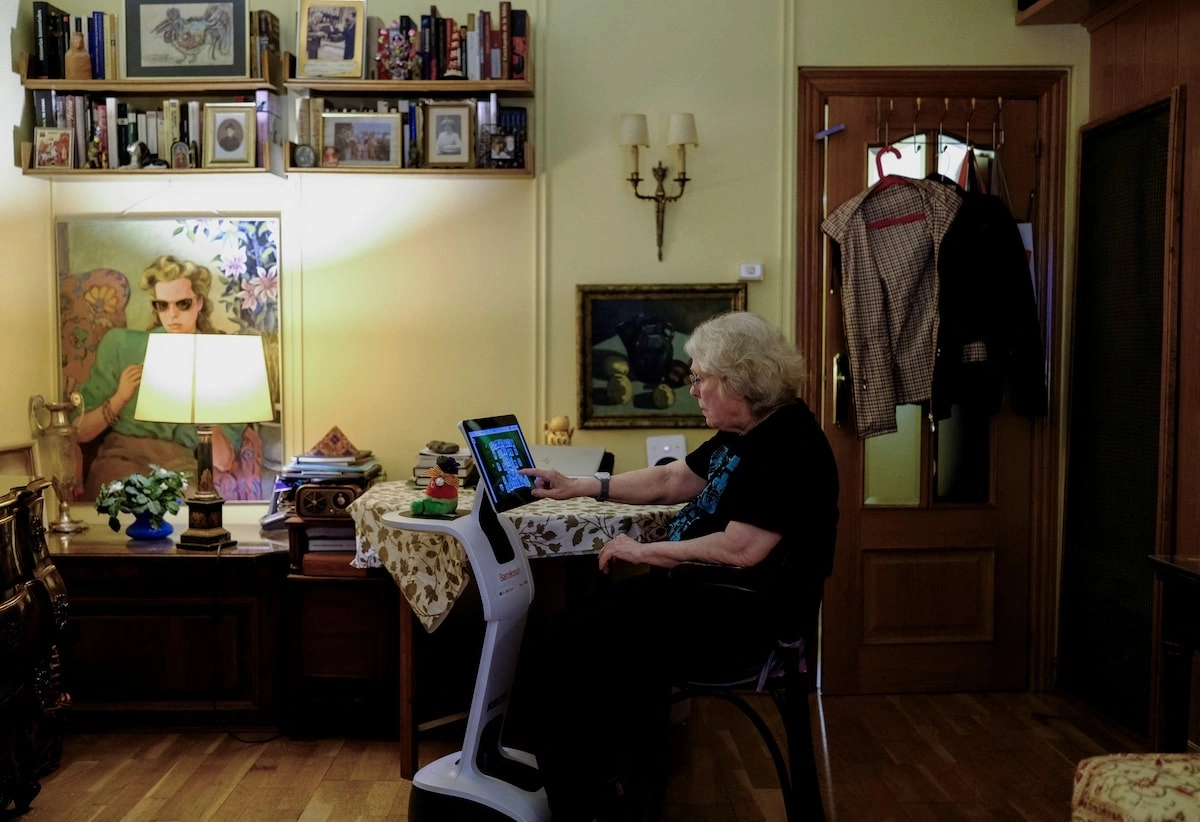
The technical flow is straightforward: human motion input is interpreted by software, the system processes that input through AI and mapping tools, and the robot then turns it into joint actuation with balance correction. Misty’s architecture is built around SLAM, computer vision, and open APIs, which makes it suitable for remote guidance, controlled navigation, and task execution in human-centric environments.
Front desk deployment
A realistic deployment scenario is a hotel lobby, where a teleoperated robot can greet arrivals, point guests toward elevators, and guide them to a service desk when staffing is thin. In that setting, the value is not replacement of staff but continuity of service during busy check-in windows or after-hours coverage, when a remote operator can step in without reprogramming the robot. Misty’s interaction-focused design and safety sensors fit that kind of supervised, indoor workflow.
Built for close contact
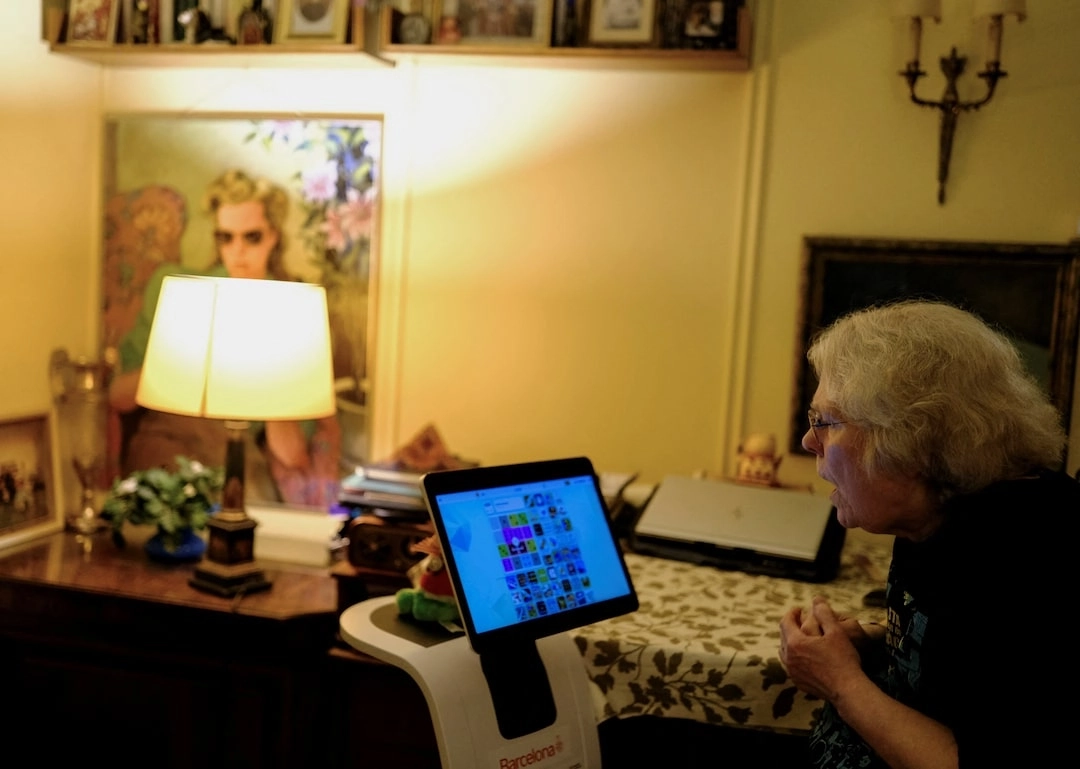
The reported platform dimensions of 43 x 30 x 100 cm and a weight of 12 kg make Sandi compact enough for indoor circulation without occupying much floor space. Its reported sensor suite, including a 4K video sensor, twin infrared global shutter cameras, an infrared projector, microphone array, time-of-flight sensors, bump sensors, IMUs, and an occipital depth sensor, is meant to support perception at short range and obstacle awareness.
Rivals Edge Check
| Robot | Key Advantage | Where Sandi Wins | Target Use |
|---|---|---|---|
| KAGO 5 | Strong food and tray delivery focus | More natural front-of-house interaction and guided concierge behavior | Hospitality floor assistance |
| DINERBOT T11 | Efficient restaurant delivery workflow | Better suited to teleoperated guest engagement and lobby-facing service | Restaurant and hotel service |
| GreetingBot Mini | Compact welcome and reception role | Broader sensing and open programming for richer supervised tasks | Reception and guest greeting |
| AMY A1 | Humanoid presentation for service settings | Smaller footprint and clearer indoor navigation focus | Customer-facing assistance |
Teleoperation gains ground
Misty’s broader direction signals that service robotics is moving toward systems designed first for remote control, assisted autonomy, and operator-in-the-loop workflows. That shift matters because it lowers the burden of full autonomy in places where reliability, crowd awareness, and fast human intervention still decide whether a robot is useful. For the industry, the near-term competition is increasingly about who can make supervised robots feel dependable enough for everyday front-of-house work.
Explore Humanoids
Related Articles
Temi Global’s Robocare Blackjack pushes service robots toward teleoperation-first service and inspection
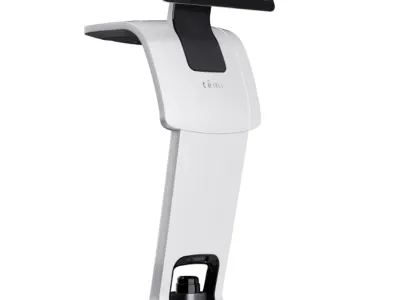
Temi 3 pushes teleoperation-first service robots deeper into hospitality and healthcare
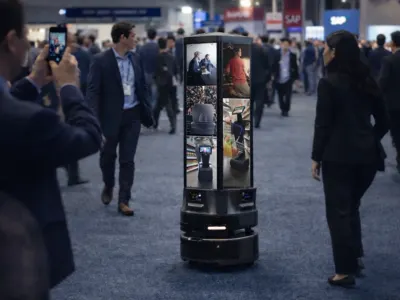
Robocore Fourcast pushes Temi Global’s service robot into mobile advertising and guided reception
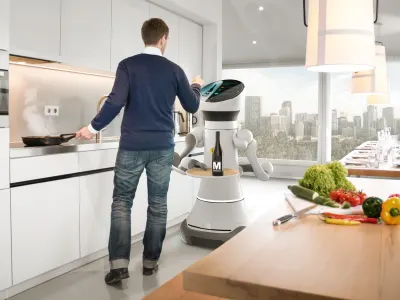
Fraunhofer IPA’s Care-O-bot 4 shows how modular service robots are being built for human-facing tasks
Learn More About This Robot
Discover detailed specifications, reviews, and comparisons for Sandi.
View Robot Details →