Robocore Fourcast pushes Temi Global’s service robot into mobile advertising and guided reception
Robot Details
Robocare Fourcast • Temi GlobalPublished
June 3, 2026
Reading Time
3 min read
Author
Origin Of Bots Editorial Team
From guide to billboard
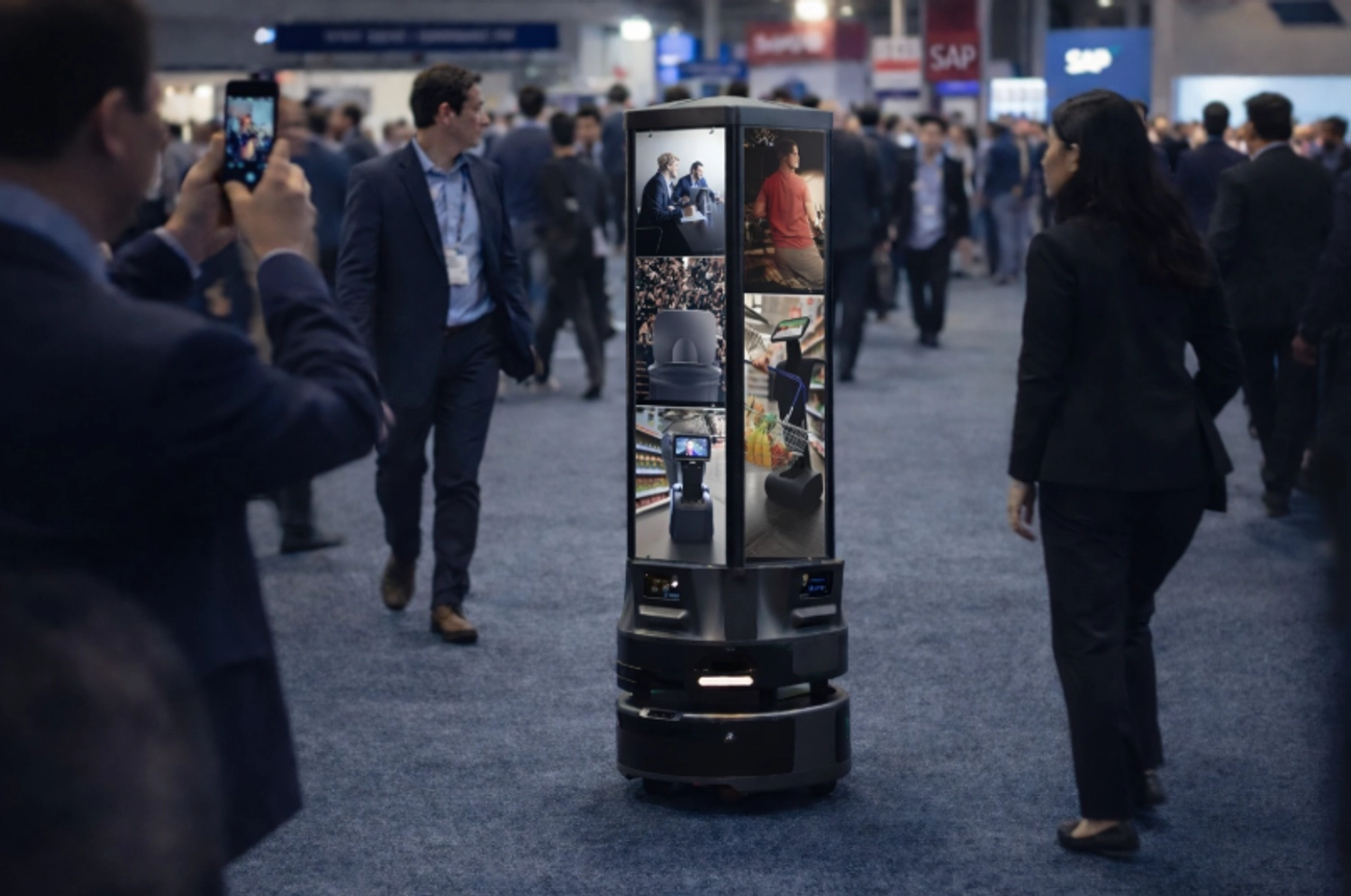
Temi Global’s Robocare Fourcast has been presented as a service robot built for customer-facing, advertising, reception, guiding, and concierge roles, with official product materials and a CES 2026 interview showing a machine aimed at crowded public venues such as malls, airports, and retail floors. The demonstration emphasized four-sided screens, floor projection, and autonomous navigation as the core of its public-facing pitch.
Why it stands out
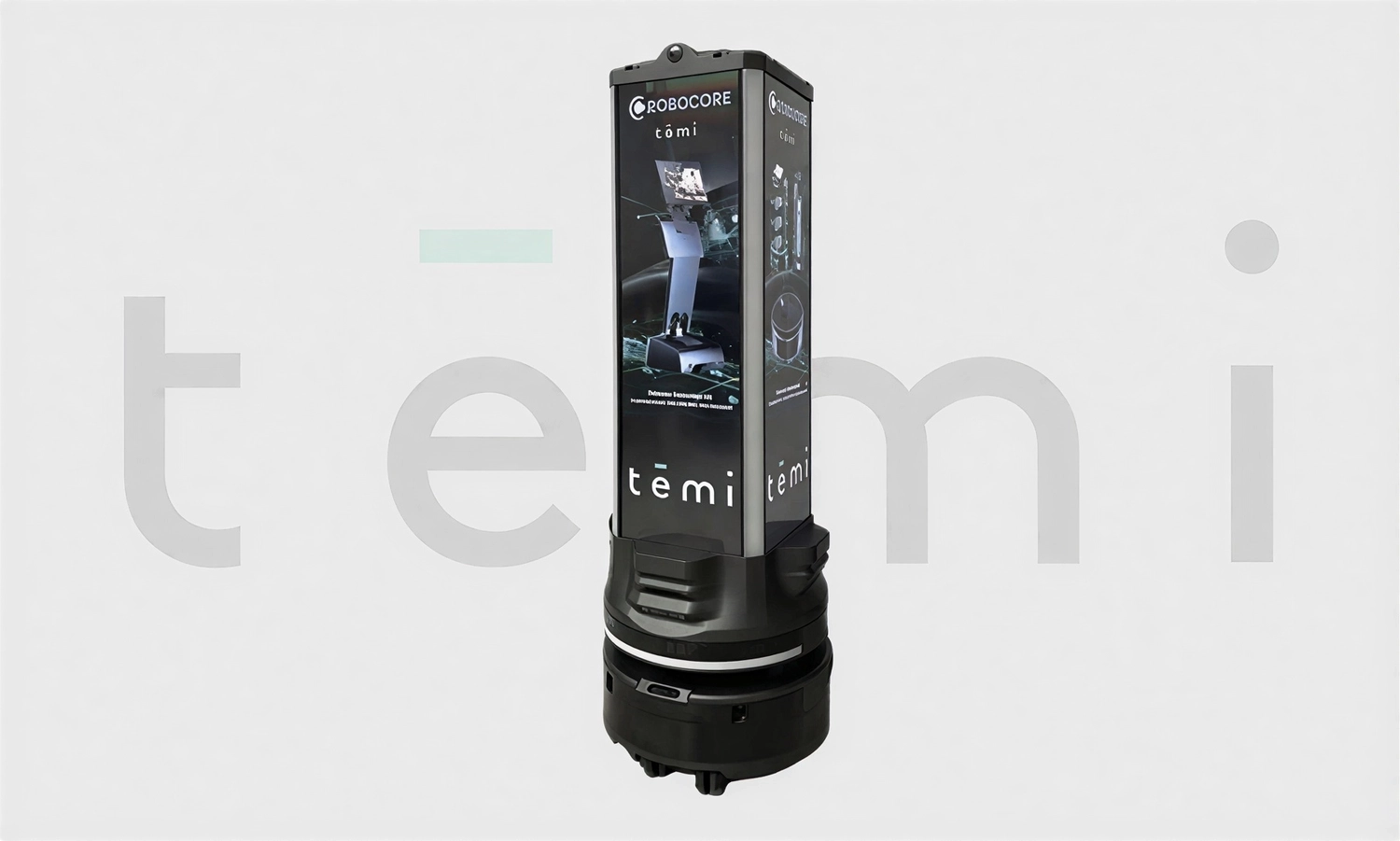
What makes Fourcast notable is not just mobility, but the way it combines attention capture and wayfinding in one platform: four-sided displays, projected ground graphics, LiDAR-based navigation, and obstacle and cliff detection are all aimed at keeping the robot visible, understandable, and safe in dense indoor spaces. That mix matters because hospitality robots often succeed or fail on whether people can notice them, trust them, and interact with them quickly without staff intervention. Fourcast is less a general-purpose robot than a moving interface for crowded venues.
How it works
The system flow is straightforward: input from LiDAR, depth cameras, RGB cameras, obstacle sensors, and cliff sensors feeds into SLAM navigation software, which maps the venue and plans movement in real time; the output is a wheeled robot that can move, stop, avoid hazards, and present information on its screens and projected surfaces. Its Linux-based, ROS-compatible software stack suggests it is designed to fit into integrator workflows rather than remain a closed appliance.
Airport floor guide
A realistic deployment is airport wayfinding, where the robot can serve as a mobile reception point that greets travelers, presents gate or service information, and leads them through a large indoor space. In that setting, the value is not raw speed but repeatable routing, visible messaging, and the ability to operate safely around foot traffic, luggage, and changing crowd patterns.
Specs that enable use
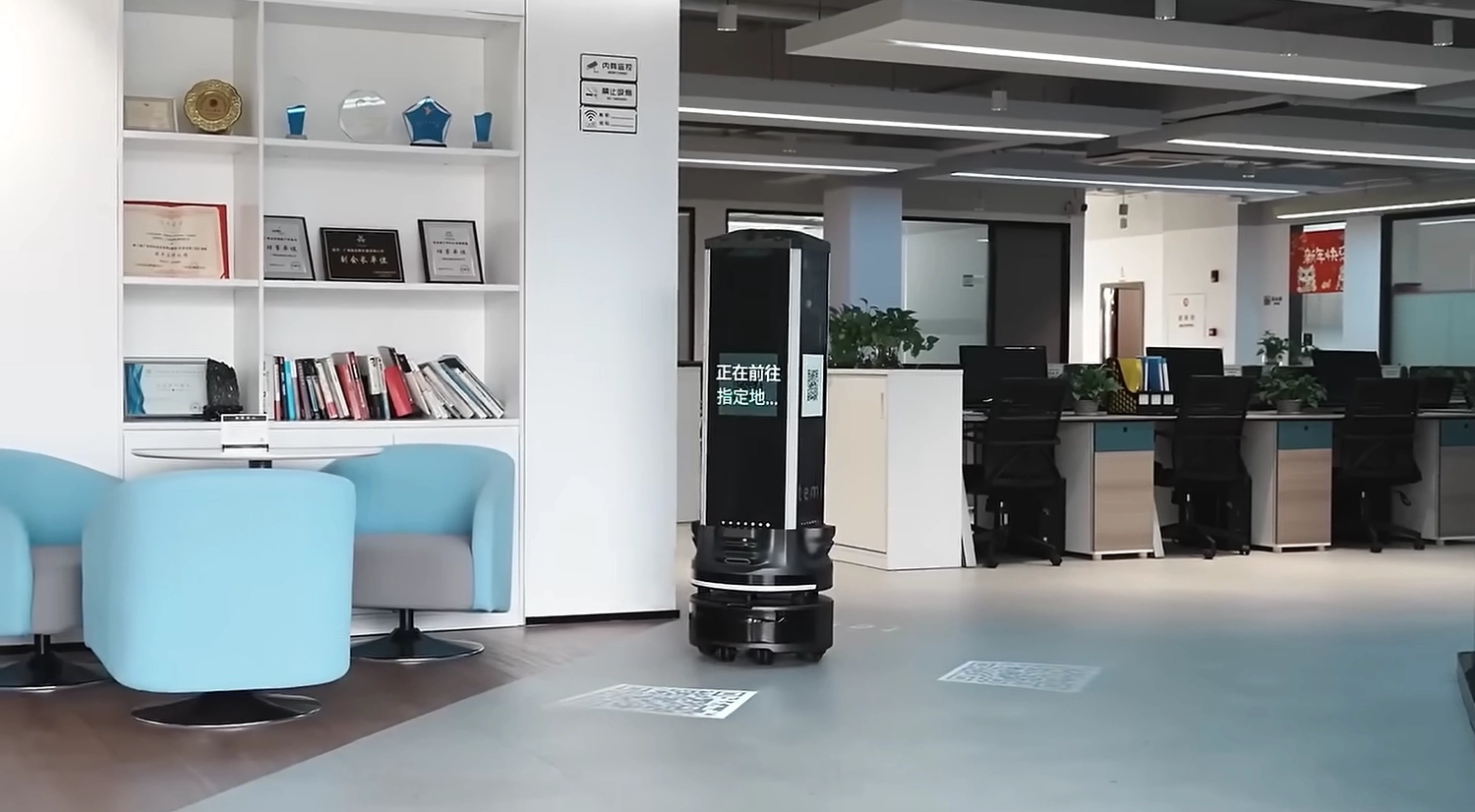
Fourcast is reported with a 50 cm diameter and 148 cm height, a 68 kg build, and a top speed of 1 m/s, which points to a compact platform sized for indoor circulation rather than open-floor sprinting. Its navigation stack is described as supporting LiDAR range up to 35 m, depth cameras, and a maximum mapped area of 20,000 sqm with up to 1,000 locations, while safety features include emergency stop, obstacle detection, cliff detection, and crowd avoidance. The robot is also presented as using a wheeled mobility base with a Linux-based, ROS-compatible SDK and a battery life of 3 to 5 years, an inferred figure that should be treated as a reported target capability rather than a fully verified field result. (Manufacturer claim · Not independently verified)
Rivals Edge Check
| Robot | Key Advantage | Where Robocare Fourcast Wins | Target Use |
|---|---|---|---|
| DINERBOT T10 | Food delivery focus and restaurant workflow support | Fourcast offers broader customer-facing advertising and reception functions beyond table service | Restaurants and hospitality lobbies |
| DINERBOT T3 | Compact service delivery for constrained indoor spaces | Fourcast adds screens, projections, and guided engagement for more visible guest interaction | Small hospitality venues |
| Kompai | Conversational service and interaction-oriented navigation | Fourcast is more built around visual promotion and crowd-facing presentation | Reception and visitor guidance |
| LuckiBot Pro Autodoor | Delivery robot with autonomous door navigation | Fourcast emphasizes public messaging, concierge-style interaction, and venue guidance | Indoor service and mixed-use venues |
Teleoperation turns first
The larger industry signal is that service and hospitality robots are increasingly being judged by how naturally they fit into human spaces, not just by whether they can move autonomously. Fourcast’s emphasis on guided interaction, visual communication, and configurable venue content suggests a market moving toward teleoperation-friendly and assistant-style deployments rather than rigid pre-programmed motion libraries.
Explore Humanoids
Related Articles
Temi Go Pro pushes indoor service robots toward tighter navigation, secure delivery, and teleoperated oversight
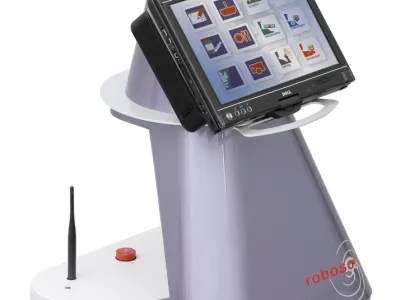
Robosoft’s Kompai keeps healthcare service robots focused on guided assistance, not humanoid spectacle
Temi Global’s Robocare Blackjack pushes service robots toward teleoperation-first service and inspection
Temi 3 pushes teleoperation-first service robots deeper into hospitality and healthcare
Learn More About This Robot
Discover detailed specifications, reviews, and comparisons for Robocare Fourcast.
View Robot Details →