Temi Go Pro pushes indoor service robots toward tighter navigation, secure delivery, and teleoperated oversight
Robot Details
Temi Go Pro • Temi GlobalPublished
June 3, 2026
Reading Time
3 min read
Author
Origin Of Bots Editorial Team
Indoor logistics gets sharper
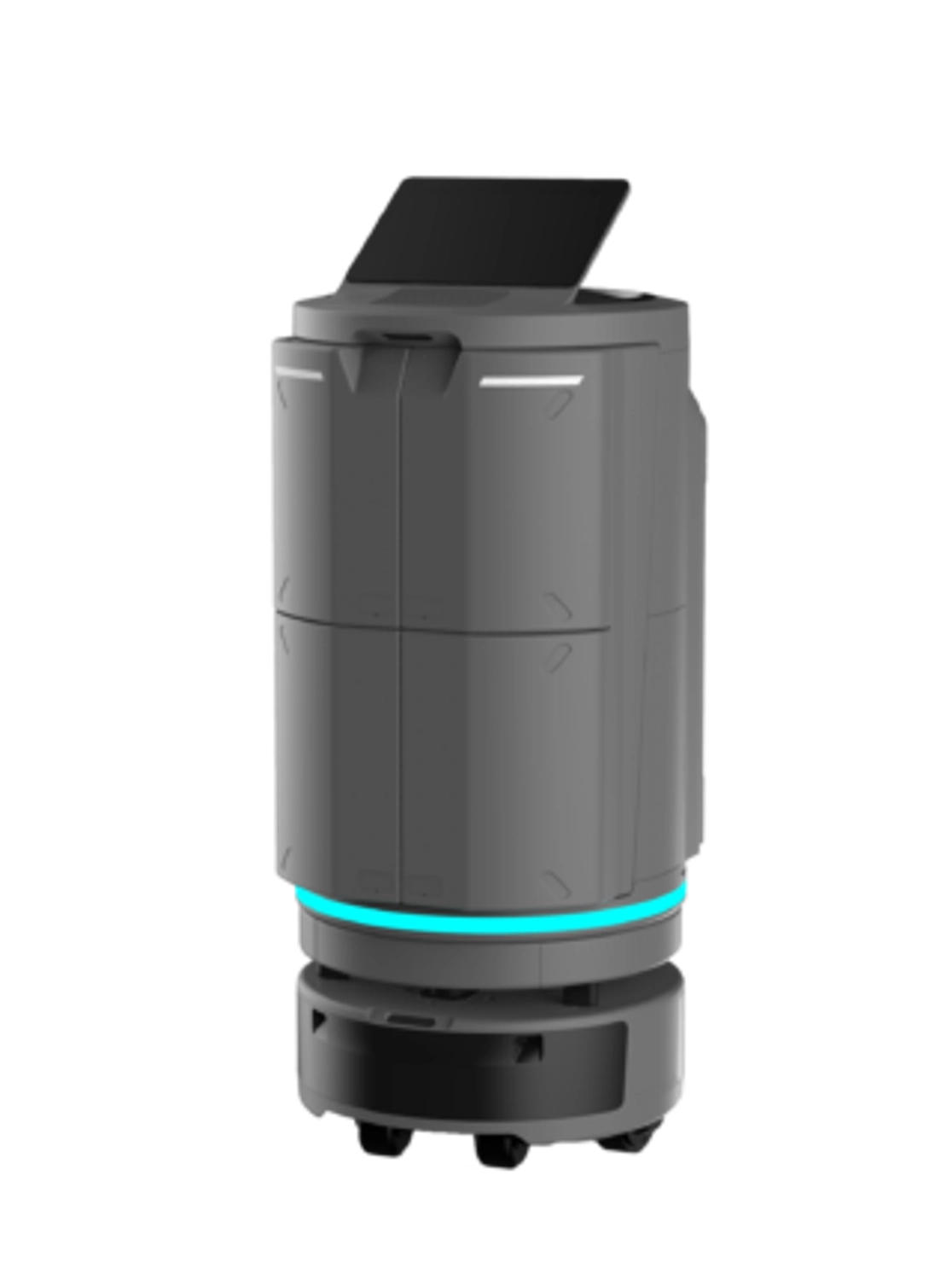
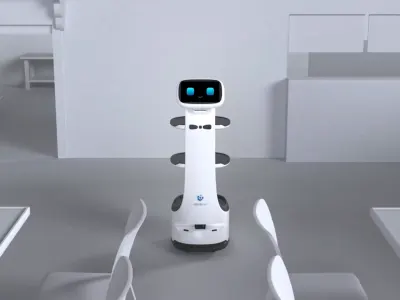
Service robots are being pushed to do more in tighter, busier indoor spaces, where delivery, reception, and guided handoffs must happen around people rather than in empty hallways. Temi Global’s Temi Go Pro has been presented as a quad-door autonomous delivery robot for indoor service settings, with reported capabilities aimed at restaurants, hotels, offices, retail, hospitals, and airports.
Why it stands out
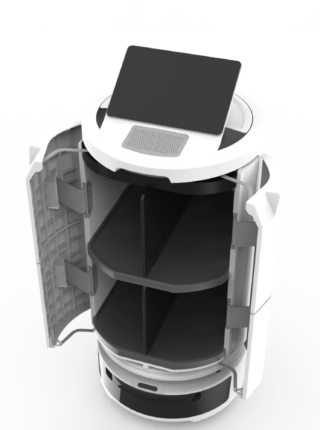
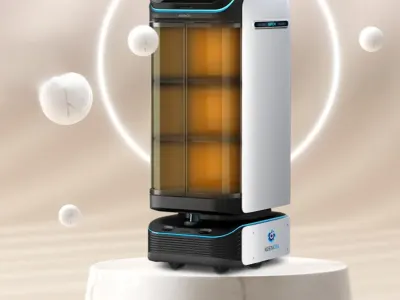
What distinguishes Temi Go Pro is less its footprint than the way it combines secure compartmental delivery with indoor navigation and user-facing control. The robot is reported to support authentication control, automatic doors, crowd avoidance, and an AI SDK on a Linux-based Temi OS, which makes it more of a service platform than a simple carrier. Its reported ability to map large indoor areas and manage many saved locations also points to deployment in properties where repeated routes matter as much as one-off tasks. Temi Go Pro is built for controlled indoor service, not general-purpose autonomy.
How it works
The system flow is straightforward: human input, whether through an on-screen command, voice, or a control platform, feeds into Temi’s software layer, which then uses SLAM-based mapping and sensor input to plan movement and correct its path. Output is an indoor delivery robot that can navigate point to point, avoid obstacles, and stop safely when it detects a hazard or receives an emergency command.
Hotel corridor use
In a hotel, Temi Go Pro’s most practical role is likely repeated room-service runs in corridors, lobbies, and back-of-house areas where staff need a predictable handoff vehicle rather than another cart. Its authentication controls and compartmented storage are especially relevant in that setting because they support secure handoff of meals, amenities, or documents without requiring the robot to be fully trusted as a public-facing open bin. The real value is not raw speed but the ability to keep service moving while reducing staff trips across the property.
Specs that matter
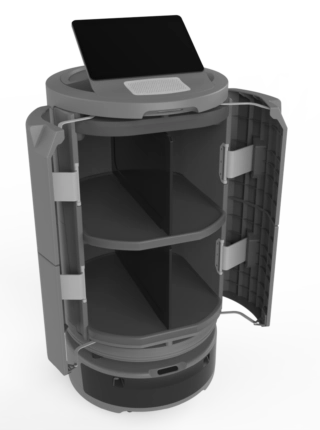
Temi Go Pro is reported to measure 54.8 cm in diameter and 125 cm in height, a size that fits indoor circulation better than larger industrial platforms. Its listed net weight of 55 kg and payload weight of 115 kg suggest a machine designed for stable floor movement with meaningful carrying capacity, while a speed of 1 m/s / 3.2 ft/s supports efficient point-to-point service runs. The sensor package includes LiDAR with a 35 m range, 3D cameras, ultrasonic sensing, and cliff and obstacle detection, all of which are practical enablers for narrow indoor navigation.
Rivals Edge Check
| Robot | Key Advantage | Where Temi Go Pro Wins | Target Use |
|---|---|---|---|
| DINERBOT T9 | Strong restaurant-oriented delivery workflow with food-service emphasis | More explicit secure compartment control and broader service positioning | Restaurant and banquet delivery |
| DINERBOT T8 | Compact delivery design for indoor hospitality routes | Larger mapping scope and authentication-focused handoff | Hotel and office service runs |
| DINERBOT T10 | Higher-capacity multi-stop delivery concept for busy venues | Reported AI SDK and Temi OS for configurable service workflows | Restaurants and mixed indoor service |
| DINERBOT T3 | Smaller-footprint delivery helper for short indoor trips | More advanced obstacle sensing and indoor navigation details | Short-range food and item delivery |
What the market signals
Temi Go Pro reflects a broader shift in service robotics toward teleoperation-first systems that can be supervised, configured, and deployed in human-centric spaces rather than left to improvise on their own. That matters because the hardest problems in this category are still consistency, safe interaction, and route reliability in crowded interiors, not just motion. For buyers, the near-term market signal is clear: the winning robots are the ones that can be managed like infrastructure, not just purchased like hardware.
Explore Humanoids
Related Articles
OrionStar’s LuckiBot Pro highlights the next phase of service robots in crowded indoor spaces
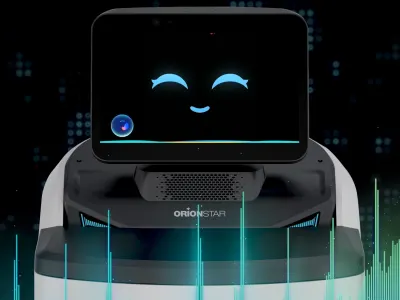
OrionStar’s LuckiBot Pro Autodoor adds sealed delivery and access control to service robotics
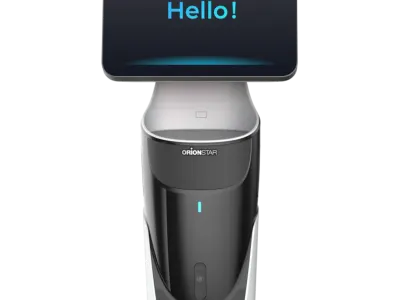
OrionStar’s GreetingBot Mini pushes reception robotics toward compact, guided front-desk service
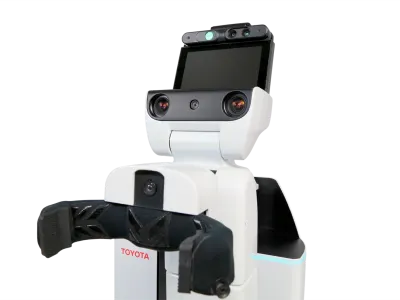
Toyota’s Human Support Robot shows how teleoperation can extend care and home assistance
Learn More About This Robot
Discover detailed specifications, reviews, and comparisons for Temi Go Pro.
View Robot Details →