Robosoft’s Kompai keeps healthcare service robots focused on guided assistance, not humanoid spectacle
Robot Details
Kompai • RobosoftPublished
June 3, 2026
Reading Time
3 min read
Author
Origin Of Bots Editorial Team
Care Comes First
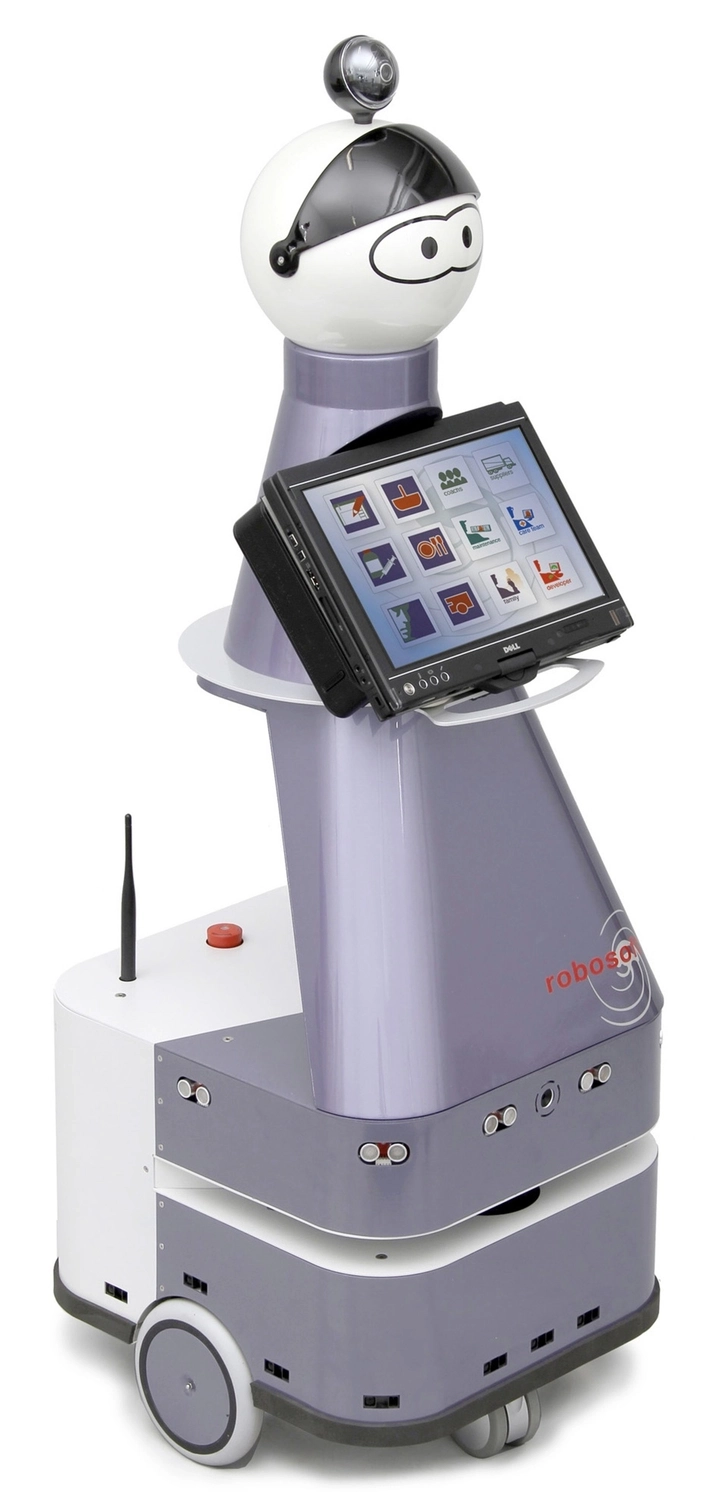
Service robots in hospitals and eldercare are being judged less on novelty than on whether they can reduce routine pressure on staff and keep people moving safely through busy spaces. Robosoft’s Kompai is positioned in that lane: the company has long described it as a companion robot for healthcare and nursing homes, with roles that include guidance, communication, mobility assistance, and light logistics.
What Sets It Apart
Kompai’s value is tied to a practical service stack rather than a single flashy feature: it is built around indoor mobility, speech interaction, modular task support, and a ROS-based software approach that facilities can adapt. Robosoft also presents it as part of a broader family of indoor and outdoor mobile robots, with remote control and fleet supervision tools that matter in real deployments. In that sense, Kompai is less about replacing caregivers than about extending their reach in repetitive, human-facing tasks. Kompai’s real edge is service continuity, not spectacle.
How It Works
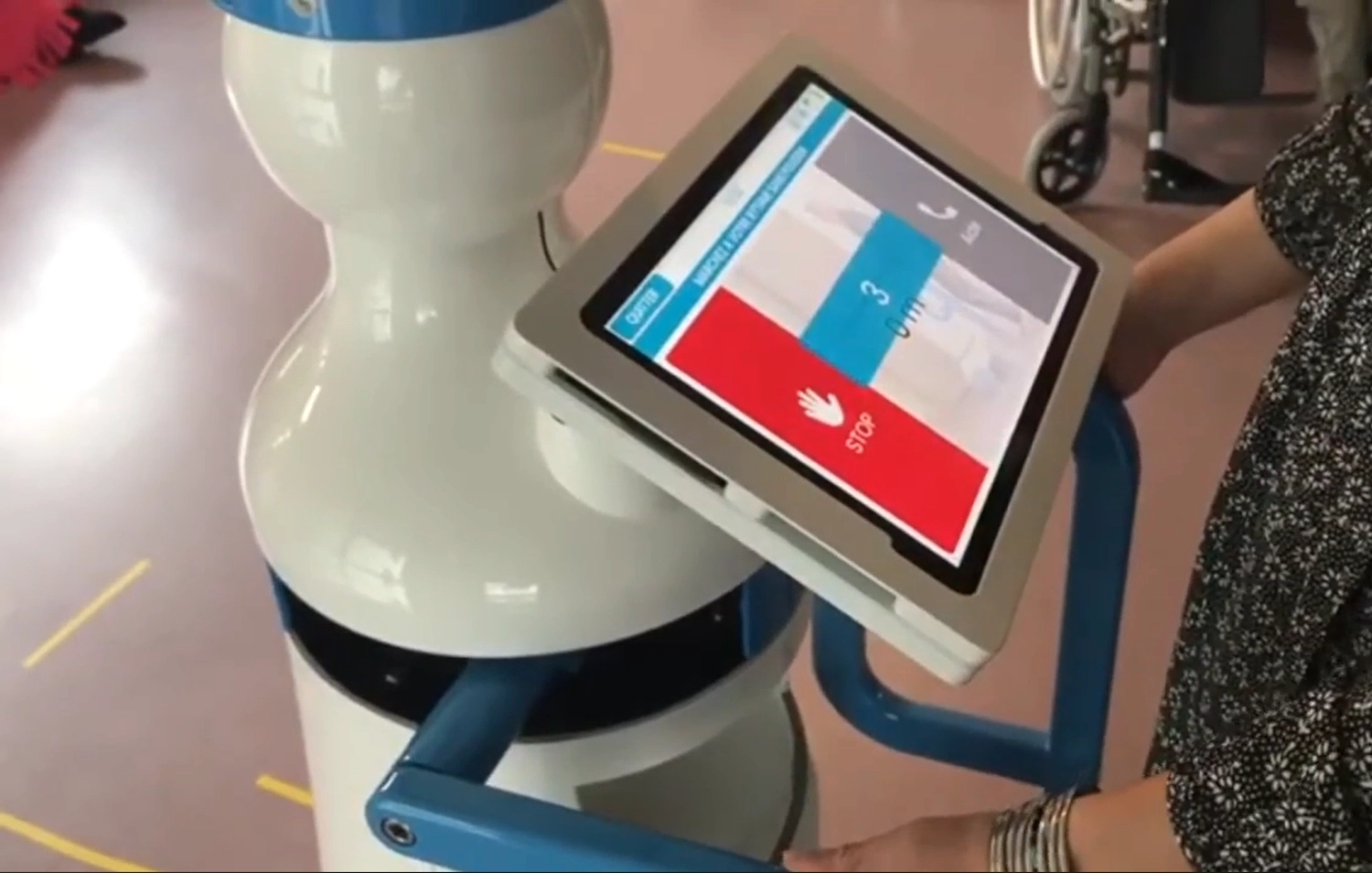
Human motion input → AI model processing → joint actuation and balance correction is the cleanest way to think about the category Robosoft is targeting, even when the robot is used for assistance rather than full-body imitation. In Kompai’s case, the documented flow is closer to input from people and facility systems, processing through onboard software and navigation logic, and output through movement, speech, guidance, and task execution. That makes it a teleoperated or assisted-service platform first, with the emphasis on interaction fidelity and reliable indoor navigation.
Nursing Home Rounds
A concrete deployment scenario is a nursing home corridor during peak staff load, where Kompai can guide residents, share information, and handle small delivery tasks while staff focus on direct care. Earlier demonstrations and reports describe the robot navigating facilities, delivering routine updates, and supporting mobility-related interactions in a controlled indoor setting. That is the kind of use case where a service robot succeeds by staying predictable, visible, and easy to supervise.
Built for Indoors
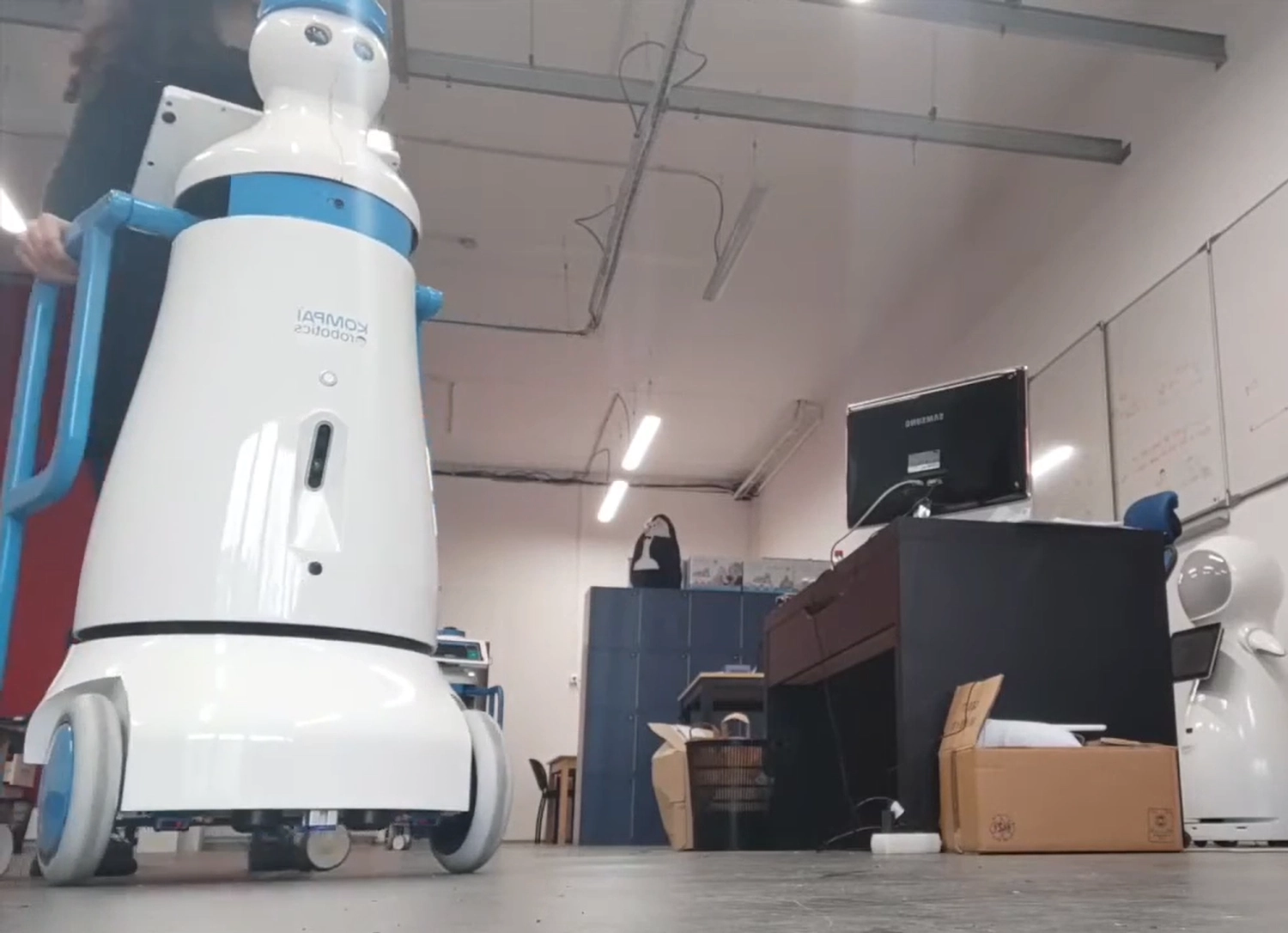
Kompai is reported at about 60 x 50 x 120 cm and 35 kg, a size that fits narrow indoor corridors without demanding a large footprint. Its sensor set is described as LiDAR, cameras, ultrasonic units, and IR cliff sensors, which supports obstacle detection and safer movement around people, while SLAM gives it the mapping backbone for indoor navigation. The listed speed of 0.8 m/s, or about 1.8 mph, points to a careful pace suited to human environments rather than open-floor logistics.
Rivals Edge Check
| Robot | Key Advantage | Where Kompai Wins | Target Use |
|---|---|---|---|
| LuckiBot Pro Autodoor | Door-capable delivery and hospitality workflows | Kompai is more centered on care-facing interaction and assistance in indoor human spaces | Hotels and care facilities |
| Servi Plus | Food and item delivery at scale | Kompai offers a stronger fit for guidance, communication, and mobility support | Restaurants and service venues |
| GreetingBot Nova | Front-of-house reception and welcome tasks | Kompai is broader in healthcare-oriented support and indoor navigation | Reception and visitor flow |
| The K5 ASR | Autonomous navigation and branded customer engagement | Kompai is positioned more around assisted care and modular service tasks | Retail and public venues |
Teleoperation First
The wider signal is that service robotics is drifting toward teleoperation and assisted autonomy in environments where people and machines must share tight spaces. For Kompai, that matters because the strongest opportunities are not in open-ended autonomy, but in supervised indoor service where staff still want control over what the robot does and when. That is consistent with a category that is becoming more operationally conservative, but also more deployable.
Explore Humanoids
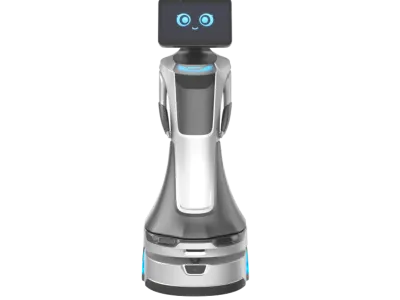
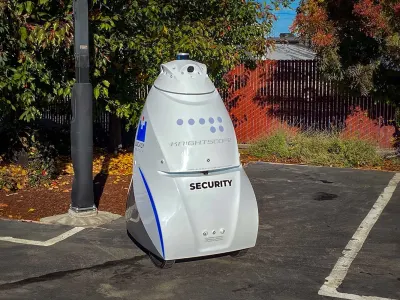
Related Articles
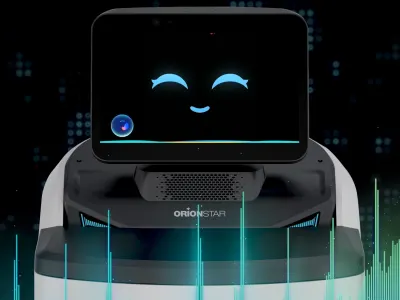
OrionStar’s LuckiBot Pro Autodoor adds sealed delivery and access control to service robotics
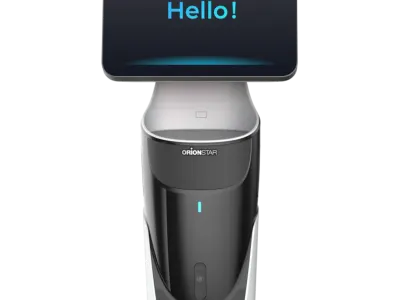
OrionStar’s GreetingBot Mini pushes reception robotics toward compact, guided front-desk service
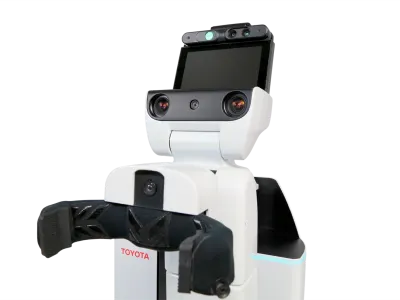
Toyota’s Human Support Robot shows how teleoperation can extend care and home assistance
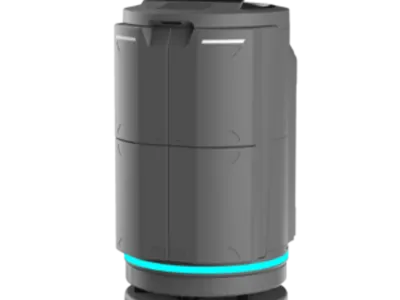
Temi Go Pro pushes indoor service robots toward tighter navigation, secure delivery, and teleoperated oversight
Learn More About This Robot
Discover detailed specifications, reviews, and comparisons for Kompai.
View Robot Details →