Mobile Industrial Robots positions MiR250 as a compact AMR for high-speed internal logistics
Robot Details
MiR250 • Mobile Industrial RobotsPublished
June 7, 2026
Reading Time
3 min read
Author
Origin Of Bots Editorial Team
Compact logistics pressure
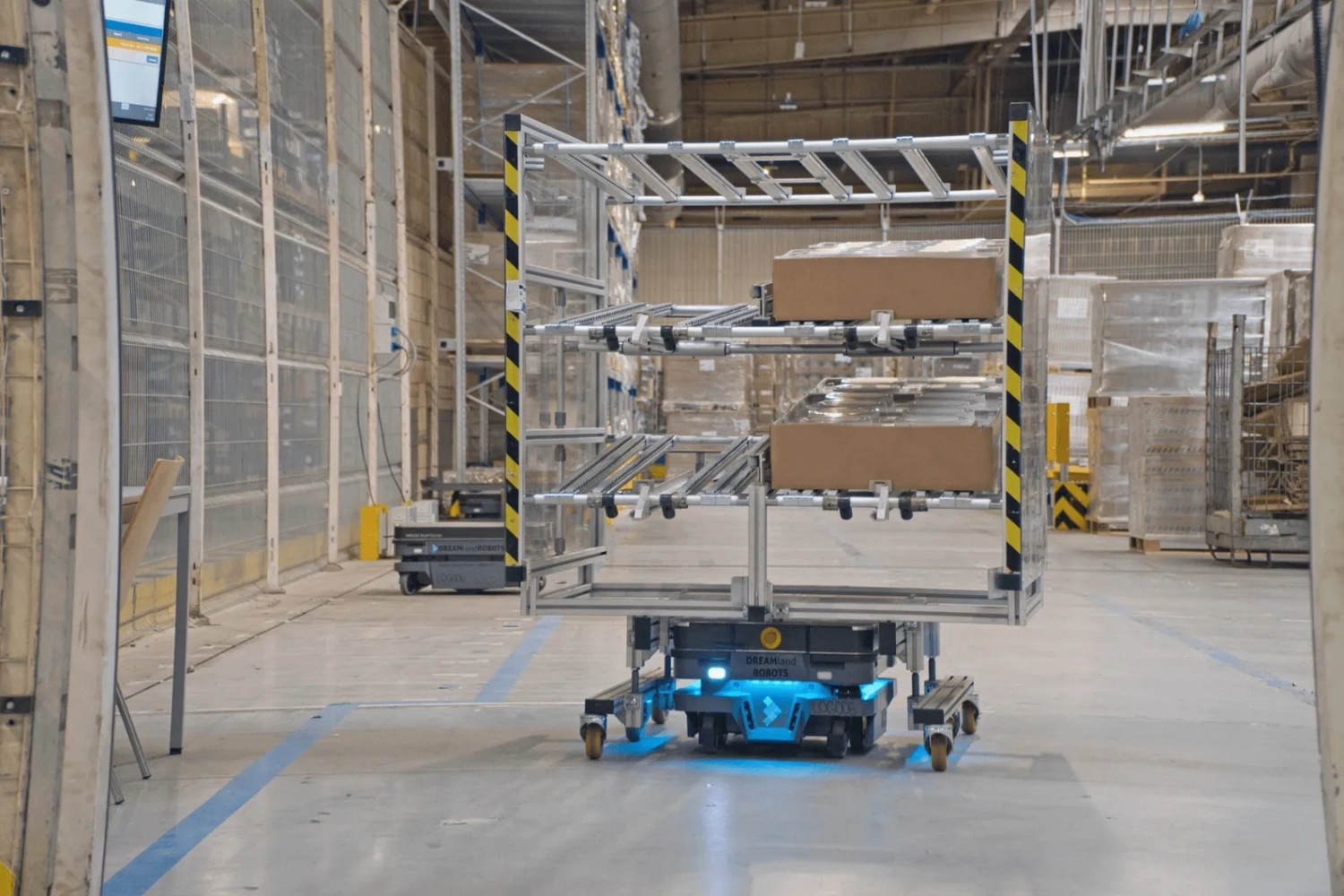
Industrial manufacturers are still looking for mobile robots that can move materials quickly without taking up valuable floor space. Mobile Industrial Robots’ MiR250 is built around that problem, with the company presenting it as a compact autonomous mobile robot for internal logistics and material transport in structured industrial settings. The model is reported to support conveyor integration and a payload profile centered on crates, boxes, custom trolleys, and electronic sub-assemblies.
Why it matters
What sets the MiR250 apart is the combination of a small footprint, 2 m/s speed, and industrial safety features in a platform designed for repeatable material movement rather than open-ended autonomy. Its sensor stack, including dual safety laser scanners, 3D cameras, and proximity sensing, is aimed at predictable navigation in busy factory lanes where reliability and cycle time matter. The software layer, built around MiR Robot OS and MiR Fleet Enterprise, suggests the robot is intended to fit into managed fleet operations instead of single-robot deployments. The result is a machine aimed at throughput, not novelty. MiR250 is designed to make dense factory traffic faster without loosening safety controls.
How it works
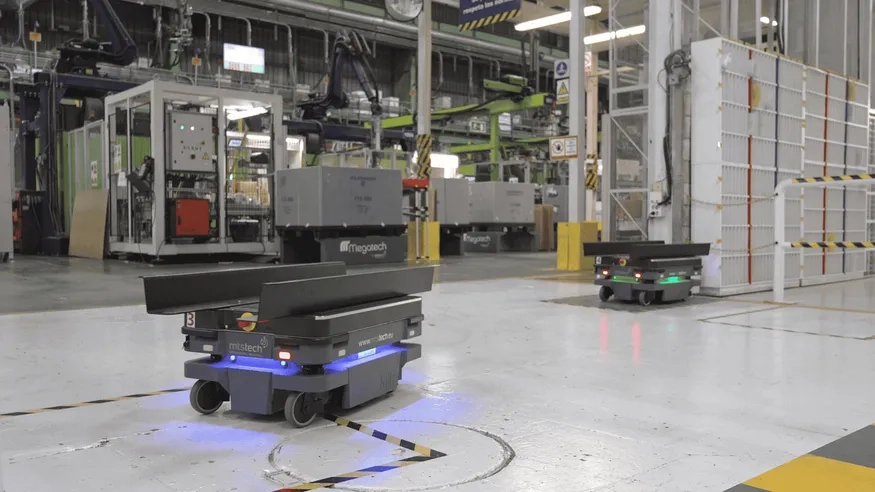
The system flow is straightforward: task program input defines where materials need to go, SLAM-based mapping and motion planning determine the route, high-precision actuation moves the robot through the plant, and feedback from the robot’s sensing stack supports quality validation and obstacle handling. In practical terms, that means the MiR250 is meant to move known loads through known spaces with minimal variation from run to run. For industrial users, the value is not just movement, but repeatable movement that can be scheduled and tracked across a fleet.
Conveyor handoff
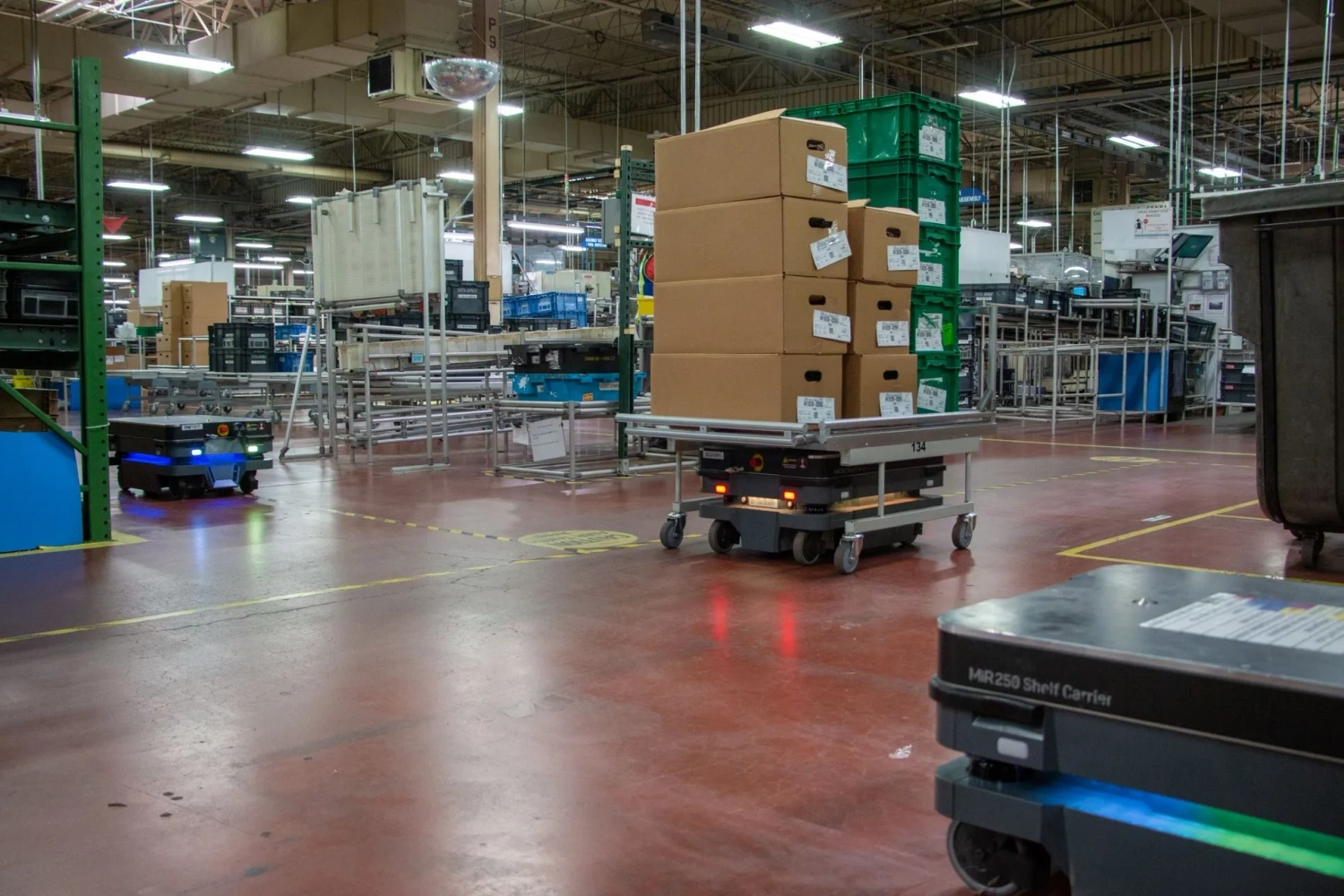
One concrete deployment scenario is conveyor integration, where the robot is used to shuttle industrial crates or boxes between production zones and a conveyor-fed line. In that setting, the compact chassis and differential-drive mobility help the robot fit into tight aisles, while its safety scanners and protective fields are meant to reduce disruption around people and equipment. The use case fits environments where material flow is structured, the route is known, and the job is to keep line feeding consistent rather than improvising around obstacles.
Measured capabilities
The reported dimensions of 800 x 580 x 300 mm make the robot small enough for constrained factory floors, while its 94 kg weight supports a stable industrial platform rather than a lightweight service machine. The stated 2.0 m/s top speed gives it the pacing needed for short internal logistics cycles, and the battery’s minimum 3,000 full charge cycles before dropping below 80% capacity points to long-term fleet use. Its safety package includes two safety laser scanners, 3D cameras with a 114° horizontal field of view and 250 mm ground view, eight proximity sensors, 1,700 mm protective fields, emergency stops, SICK scanners, and ISO 3691-4 compliance.
Rivals Edge Check
| Robot | Key Advantage | Where MiR250 Wins | Target Use |
|---|---|---|---|
| Omron LD-250 | Typically associated with larger industrial autonomy and factory integration | Smaller footprint and higher-speed transport for tighter lanes | Internal material movement |
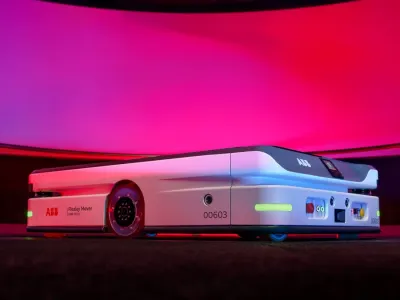
| ABB Flexley Mover P603 | Often positioned for flexible factory transport and line-side logistics | Compact form factor suited to constrained spaces and short-cycle transfers | Assembly-line logistics |
| MiR1350 | Higher payload class for heavier loads | Better fit for lighter crates, boxes, and trolley transport in dense layouts | Material handling |
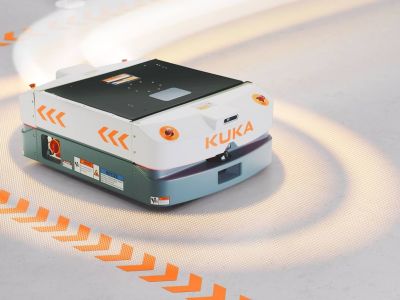
| KUKA KMP 600-S diffDrive | Strong industrial navigation and transport flexibility | Simpler compact transport focus with conveyor-oriented workflows | Manufacturing logistics |
What it signals
The MiR250 underscores how industrial robotics is moving toward tightly defined workflows where the robot’s value comes from repeatability, not general-purpose intelligence. That matters because manufacturers increasingly want systems that can be dropped into existing material flows, supervised through fleet software, and scaled without redesigning the whole plant. It also reflects a wider cobot-era trend: the boundary between human labor and automation is shrinking, but in industrial settings that boundary is being managed through safety systems, not removed.
Explore Humanoids
Sources
Related Articles
Seegrid’s Lift CR1 AMR pushes vertical material handling higher in manufacturing
Seegrid’s Lift RS1 AMR targets the repetitive middle of manufacturing material flow
Seegrid’s Tow Tractor S7 AMR targets heavy horizontal material moves in manufacturing

OTTO 1500 targets heavy-duty manufacturing with infrastructure-free autonomy and layered safety
Related Comparisons
Compare MiR250 with similar robots
Learn More About This Robot
Discover detailed specifications, reviews, and comparisons for MiR250.
View Robot Details →