NEURA Robotics Opens Munich RoboGym and Launches 4NE1 Gen 4, a Lighter Humanoid for Series Production
Company
NEURA RoboticsPublished
October 22, 2026
Reading Time
5 min read
Author
Origin Of Bots Editorial Team
A Training Ground and a New Robot, Unveiled Together
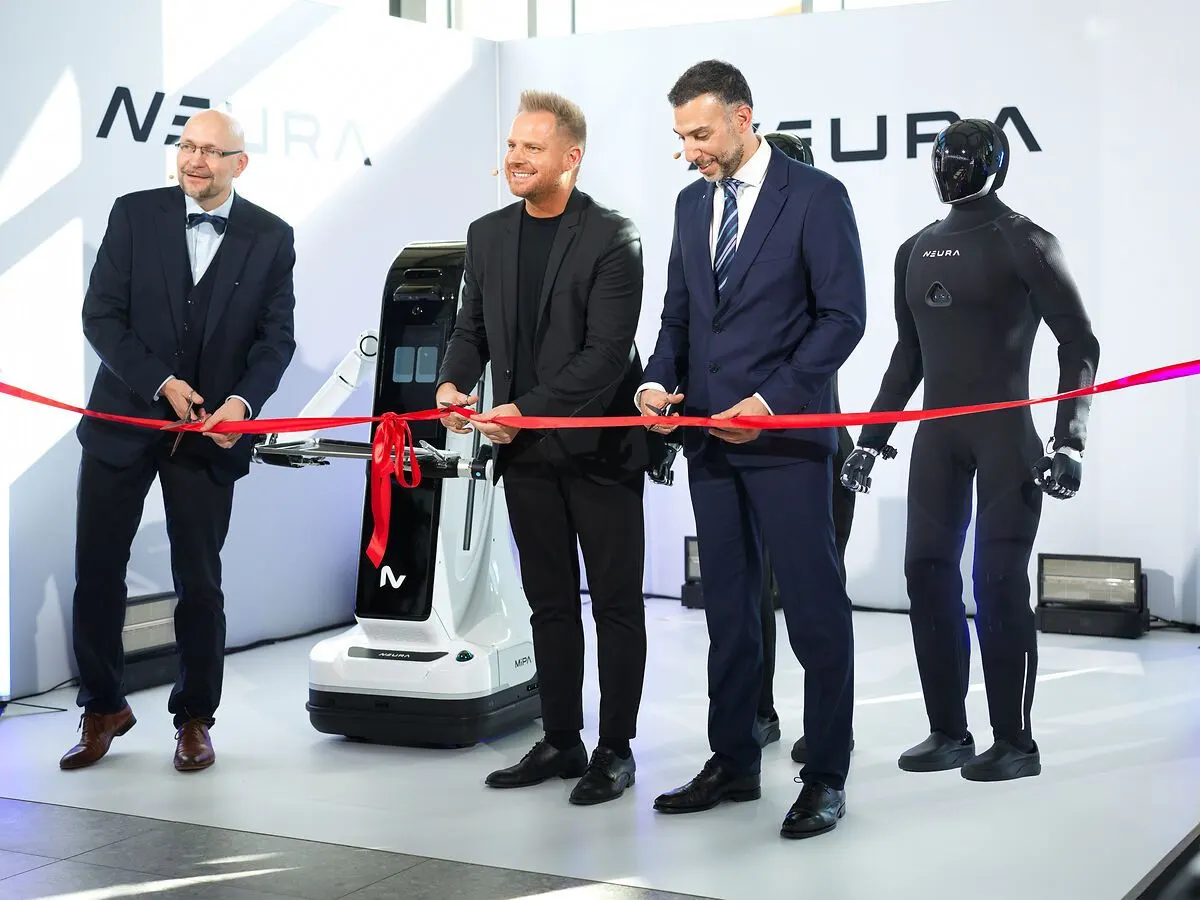
On October 22, 2026, German robot maker NEURA Robotics and the Technical University of Munich (TUM) opened the TUM RoboGym, a joint research and training center near Munich Airport. To mark the day, NEURA also launched 4NE1 Gen 4, the newest generation of its humanoid robot.
The pairing is deliberate. A humanoid is only useful if it can learn real jobs, and the RoboGym is where NEURA wants that learning to happen. The new robot was already working inside the center at the opening, according to NEURA's announcement.
Inside the RoboGym
The RoboGym covers more than 2,300 square meters and was built with TUM's Munich Institute of Robotics and Machine Intelligence. Companies bring concrete tasks and their process knowledge, while researchers study how robots can learn those tasks faster and perform them more reliably.
Partners have been training workflows there since September. NEURA says companies from more than ten industries are involved, including automotive, pharmaceuticals, medical technology, packaging, logistics, agriculture and care, and that capacity in Munich is already in strong demand.
Meet 4NE1 Gen 4
The Gen 4 name, which NEURA pairs with the slogan "For Anyone", marks a redesign rather than a small update. The company says the robot is 20 percent lighter than its predecessor and slimmer, and that it is designed for serial production, meaning it is built to be made in volume rather than as a one-off prototype.
NEURA has not published a height, weight, payload or price for the new model in its announcement, so those numbers are still unknown. What the company has shared is a change in philosophy: a machine meant to be manufactured, trained in the field and put to productive work.
A Robot Dressed in Fabric
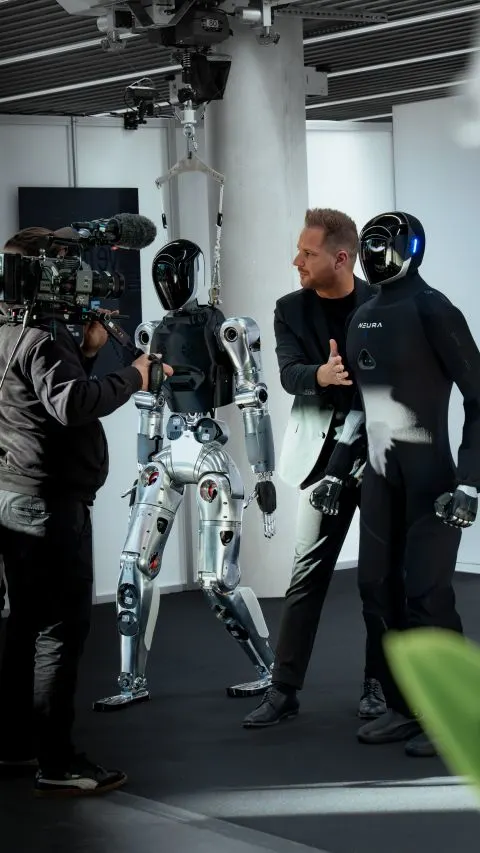
The most visible change is the outer layer. Gen 4 wears a black textile skin instead of hard panels. NEURA says the fabric makes the robot look more approachable, which matters for a machine that is built to work alongside people, and that the material could allow simple customization later.
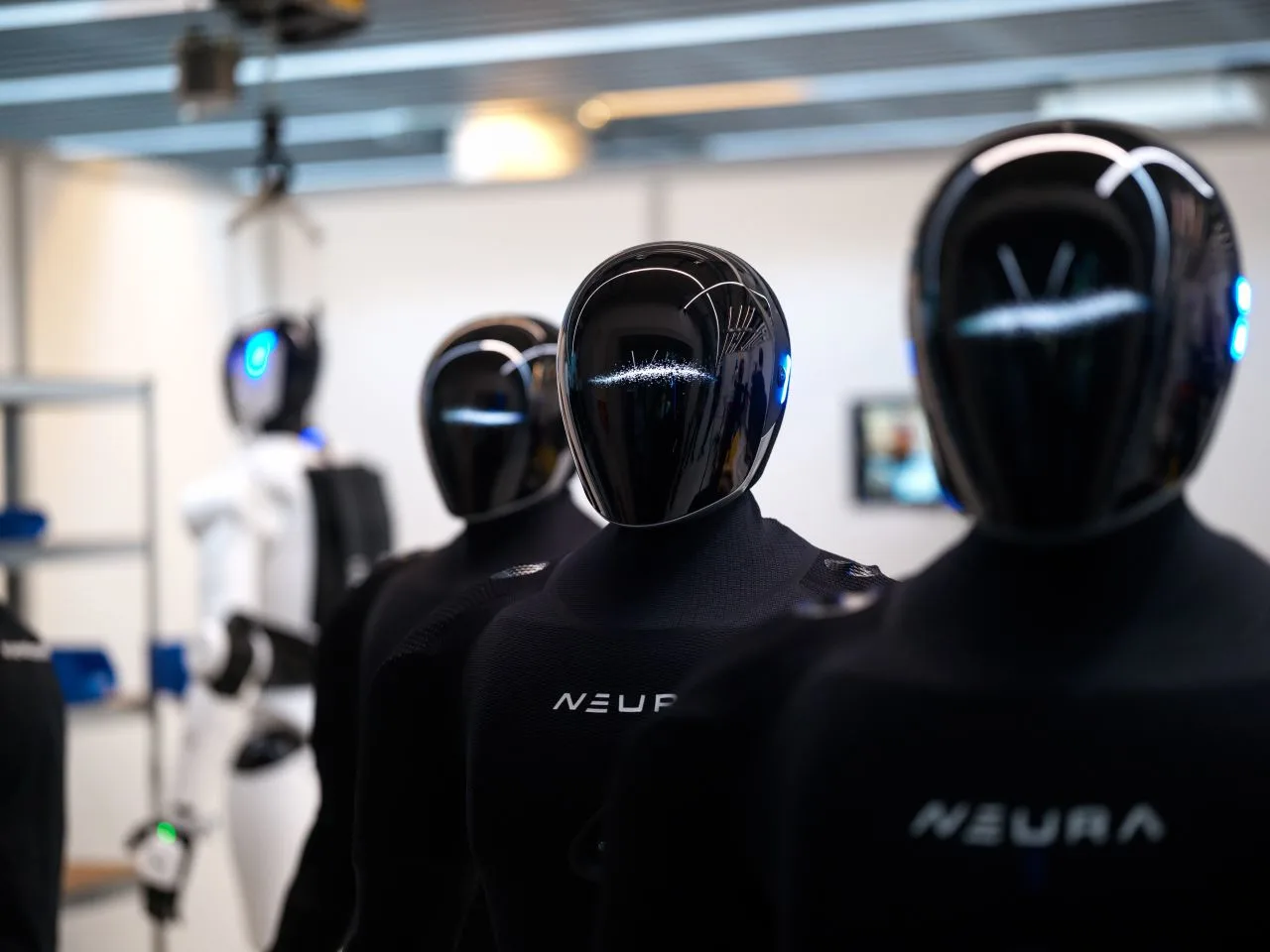
Photos from the launch show rows of the dark, glossy-faced robots with the NEURA name stitched across the chest. Whether a soft covering also helps in practice, for example by protecting people from hard edges, is not something the company has claimed.
Hands and Limbs With Their Own Reflexes
NEURA says Gen 4 has advanced hands that allow even more accurate grips. It also introduces what the company calls Smart Limbs, where reflexes are built directly into each arm and leg so that a limb can react on its own, much as your hand pulls back from a hot pan before you have time to think.
In theory, that lets the robot respond instantly to its surroundings and move more fluidly, in a more human-like way. The company describes this as an advanced motion control system. No independent tests have been published, so the claim remains NEURA's own.
Neuron AI, a Brain That Learns by Doing
The robot runs on Neuron AI, which NEURA describes as a Perception-Language-Action model: software that turns what the robot perceives directly into movement. Besides vision, it takes in touch, force, sound and the robot's own body state, which helps with tasks such as noticing that a fastener has clicked into place.
Neuron AI is trained on real robot data from NEURA's training sites, on human demonstrations and on simulation. Through a connected platform called the Neuraverse, a skill learned by one robot becomes available to others, so each new lesson can benefit the whole fleet.
From Prototype Toward the Factory Floor
NEURA says 4NE1 Gen 4 is being prepared for series production. Alongside the Munich opening, it is appearing at the NVIDIA GTC conference in Berlin and is already operating at NEURA's training facilities, where companies can teach it their own tasks and become among the first to work with the new generation.
No delivery date or price has been given, and there is no sign yet of independent performance data. For now, Gen 4 is best read as a serious production-minded design backed by a training pipeline, not a finished product proven across many factories.
The Voices Behind the Launch
NEURA founder and CEO David Reger framed the project around Germany's industrial know-how, saying the company wants businesses to carry their experience into the next era of manufacturing and decide for themselves where and how they share it. He described the robot as developed, built and trained in Germany.
TUM President Thomas Hofmann called the center unique in Germany and Europe, and said working with a German robot maker sends a signal for Germany as an industrial location. Lorenzo Masia, who heads the RoboGym, said the aim is to prepare concrete applications for the market.
A Network of Gyms Is Next
Munich is meant to be the first stop. NEURA says it plans an international network of NEURA Gyms, with further locations being set up in Europe, the United States and China, and another German site being built with RWTH Aachen.
If that network grows, every Gym becomes another source of real-world training data for Neuron AI. The open questions are practical ones: how quickly Gen 4 reaches customers, what it costs, and how well it performs once the cameras at the launch event are switched off.
Related Articles
Bitcoin Japan Wins Exclusive Rights to Sell UBTECH's Walker Humanoids in Japan

Unitree H2-X: The Kung Fu Guardian Robot Built to Stand Watch for About Eight Hours
Voxel Series-1: A Home Robot Trained With Animator Motion Opens $200 Reservations