NVIDIA Unveils GR00T 2, an AI Brain That Learns New Robot Skills From Human Video
Category
humanoidPublished
November 9, 2026
Reading Time
5 min read
Author
Origin Of Bots Editorial Team
A Robot Brain Trained by Watching People
NVIDIA has unveiled GR00T 2, a new artificial intelligence model that helps robots learn physical skills, in part by studying hundreds of thousands of hours of video of people going about tasks. Announced on November 9 at the Conference on Robot Learning in Austin, it aims to make teaching a robot a new job far quicker.
That matters beyond research labs. Humanoid and other general-purpose robots are held back less by their bodies than by the time needed to teach them each task. NVIDIA reports that with five demonstrations of a task, GR00T 2 averaged 95 percent success across 50 tasks. Those are the company's own numbers, from a whitepaper published alongside the launch.
Imagining the Next Moment Before Acting
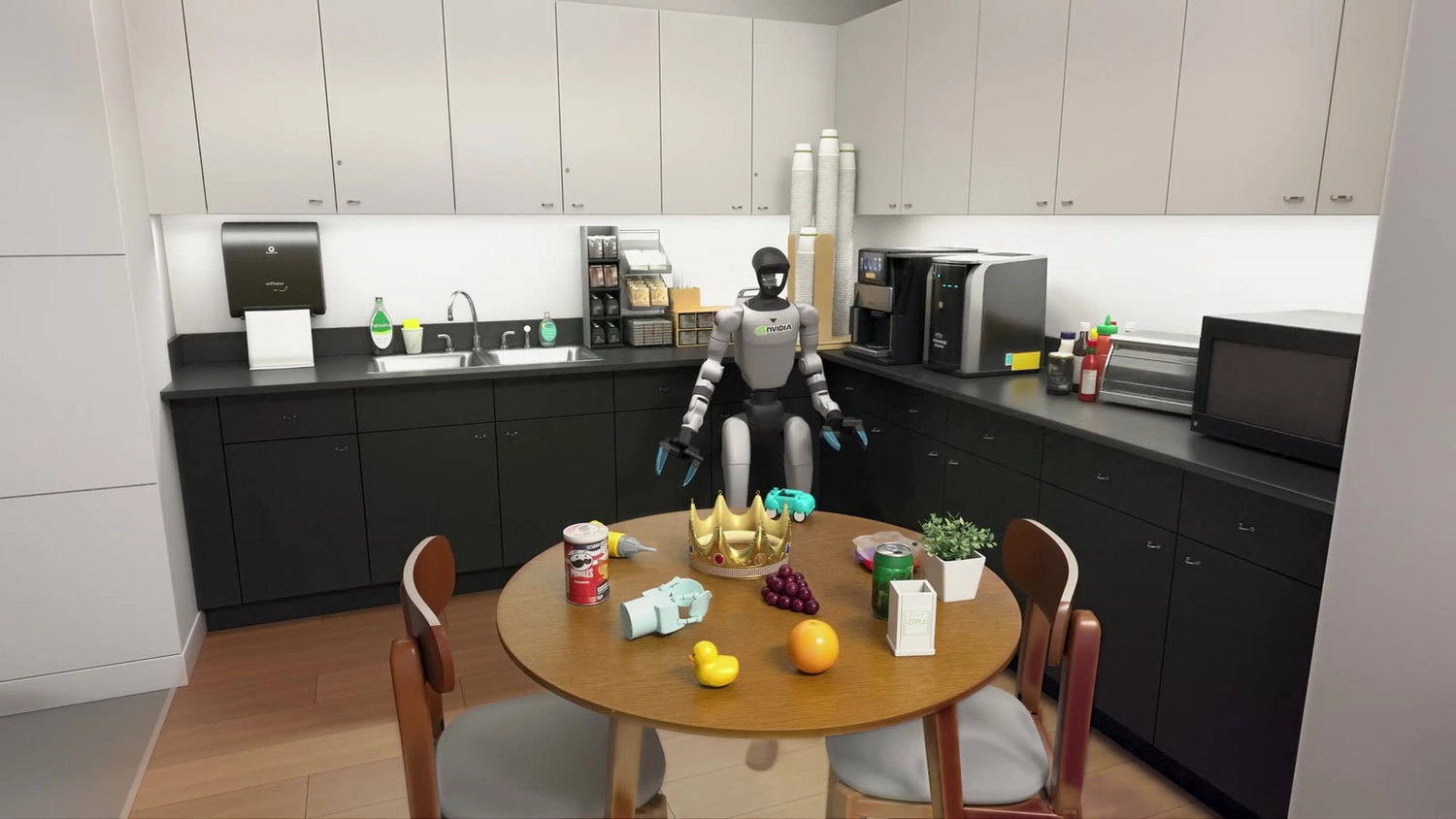
GR00T 2 is what researchers call a world action model, software that predicts what will happen next and what the robot should do about it at the same time. Each cycle it looks at recent camera footage, reads an instruction and checks the robot's position, then imagines a short future video alongside a matching set of movements.
The robot carries out that short plan and then repeats the process, constantly updating its picture of the world. One large network handles the imagining, while small add-ons translate the result into motor commands for each specific machine. That design lets a single model serve very different robot bodies, from simple arms to full humanoids.
Four Hundred Thousand Hours of Human Experience
The model's schooling is enormous. NVIDIA says it pretrained GR00T 2 on 402,730 hours of first-person video of people, 10,184 hours of demonstrations recorded with handheld grippers, and 23,500 hours of humans remotely steering robots. About 100,000 hours of the human footage is openly available for other researchers to use.
The human video made a measurable difference. Across 72 tasks on a test robot called Dexter, average progress on real hardware rose from 50 percent to 70 percent as more human footage was added. Because a video of a person is far easier to collect than a session with a robot, this could ease one of the field's worst shortages.
From One Demonstration to Near Mastery
The headline results concern how little teaching the model then needs. Without any practice on the target robot, it succeeded in 40 percent of attempts across 50 tasks, and managed 40 of those tasks at least once. A single demonstration per task lifted average success to 71 percent, and five demonstrations lifted it to 95 percent.
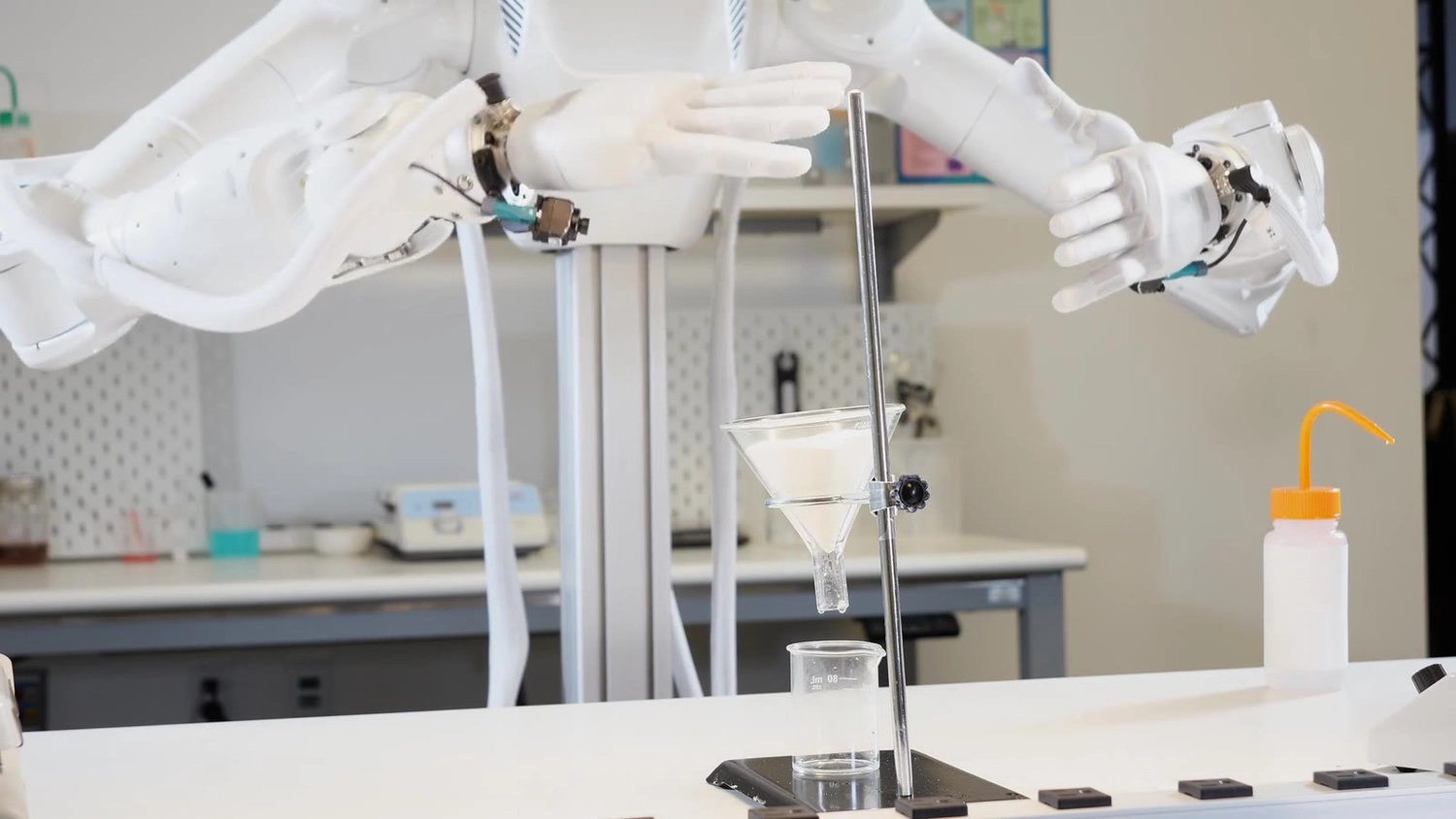
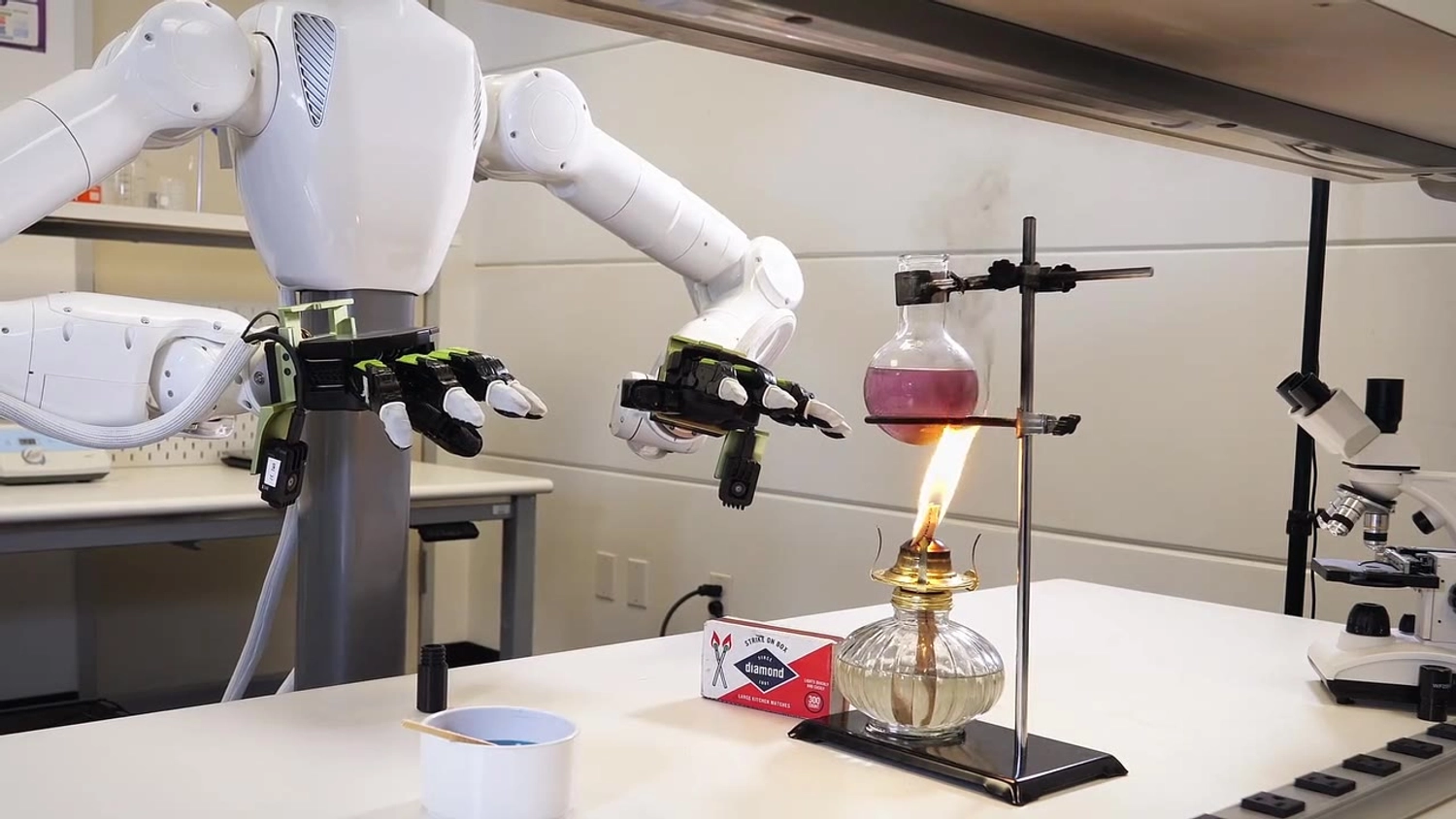
Those five demonstrations add up to under three minutes of robot data, and the follow-up training took 30 minutes on one RTX 5090, a high-end graphics card sold to gamers. NVIDIA also reports that a robot learned four chemistry-lab tasks purely from human demonstrations, although success on one, placing filter paper in a funnel, reached 65 percent.
Delicate Work and a Humanoid That Scoops Popcorn
Some of the demonstrations are strikingly fiddly. With two dexterous robot hands, GR00T 2 seated computer memory modules into place in 85 percent of trials and assembled a toy truck in 65 percent. Paired with a reasoning AI agent that called on it as a tool, the model finished 292 of 300 toy assembly runs.
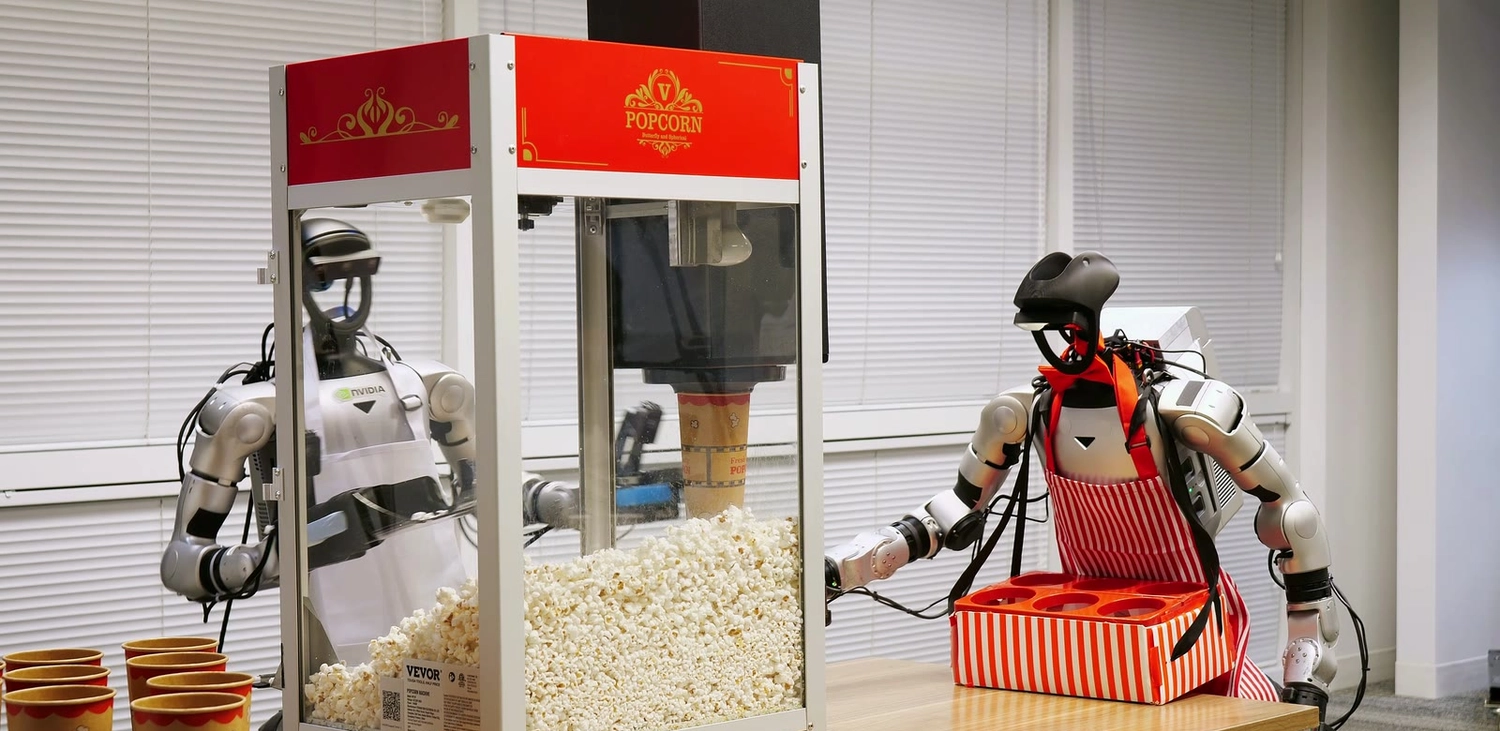
A smaller version called GR00T 2 Turbo runs directly on a Unitree G1, a child-sized Chinese humanoid, taking about 124 milliseconds per prediction. In NVIDIA's tests it scooped and served popcorn in all 48 attempts and cleared tables 93 percent of the time. Running onboard means the robot does not depend on a distant computer.
Who Is Already Trying It
Several companies are already testing the system, according to NVIDIA. Nexuni is applying it to robotic laundry handling, Foxconn, the giant electronics manufacturer, to server production, and Siemens is evaluating it for industrial work. MicroAGI has used a further-trained version to swap Ethernet cables with a robot arm, a job that demands careful handling of flexible objects.
The launch also came with Isaac Lab 3.0, NVIDIA's open-source robot training simulator, which can now model floppy items such as cables and cloth. Think of it as a flight simulator for machines. NVIDIA says the new version delivers up to 2.5 times the training throughput of an earlier release on one hand-manipulation benchmark.
What the Numbers Do Not Yet Show
Caution is warranted. These results come from NVIDIA's own whitepaper, and the project's web page lists the code as coming in December, so outside researchers cannot yet reproduce them. NVIDIA describes the model as open, but the page does not say whether the trained model itself will be released for download.
The paper is also candid about weak spots. Most failures without practice came from imprecise movement rather than misunderstanding the job. The lighter Turbo version trails the full model on most tasks, and the humanoid's success in unfamiliar setups reached 63.3 percent after simulated training data was added. That is up from 6.7 percent, but it is not yet reliability.
The December Test
The next milestone is the code release, when independent teams can see whether the results hold up away from NVIDIA's labs. The company is also running a challenge around its workflow that turns ordinary human video into simulated robot demonstrations, which would widen the supply of training material still further.
For anyone wondering when robots will do useful work at home or in factories, GR00T 2 offers a glimpse rather than an answer. It suggests that teaching may become much faster, even as precision, safety and cost remain unsolved. How far that carries outside the lab is the question the coming months will begin to settle.
Sources
Related Articles
South Korea's ETRI Unveils Its Own Humanoid Robot Brain at a Physical AI Showcase
Swiss Startup Embodied AI Unveils AIR, a Humanoid That Learns Factory Jobs on the Shift

Xinhua and UBTECH Unveil Xinyan and Xinyu, Humanoid Robot News Anchors Designed by Zhang Yimou