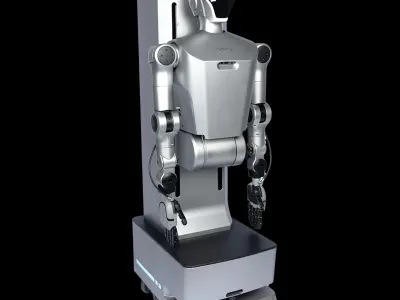
OpenMind Iris Humanoid Uses Living Human Neurons to Read Social Cues
Category
humanoidPublished
November 17, 2026
Reading Time
4 min read
Author
Origin Of Bots Editorial Team
A Humanoid With Living Cells in the Loop
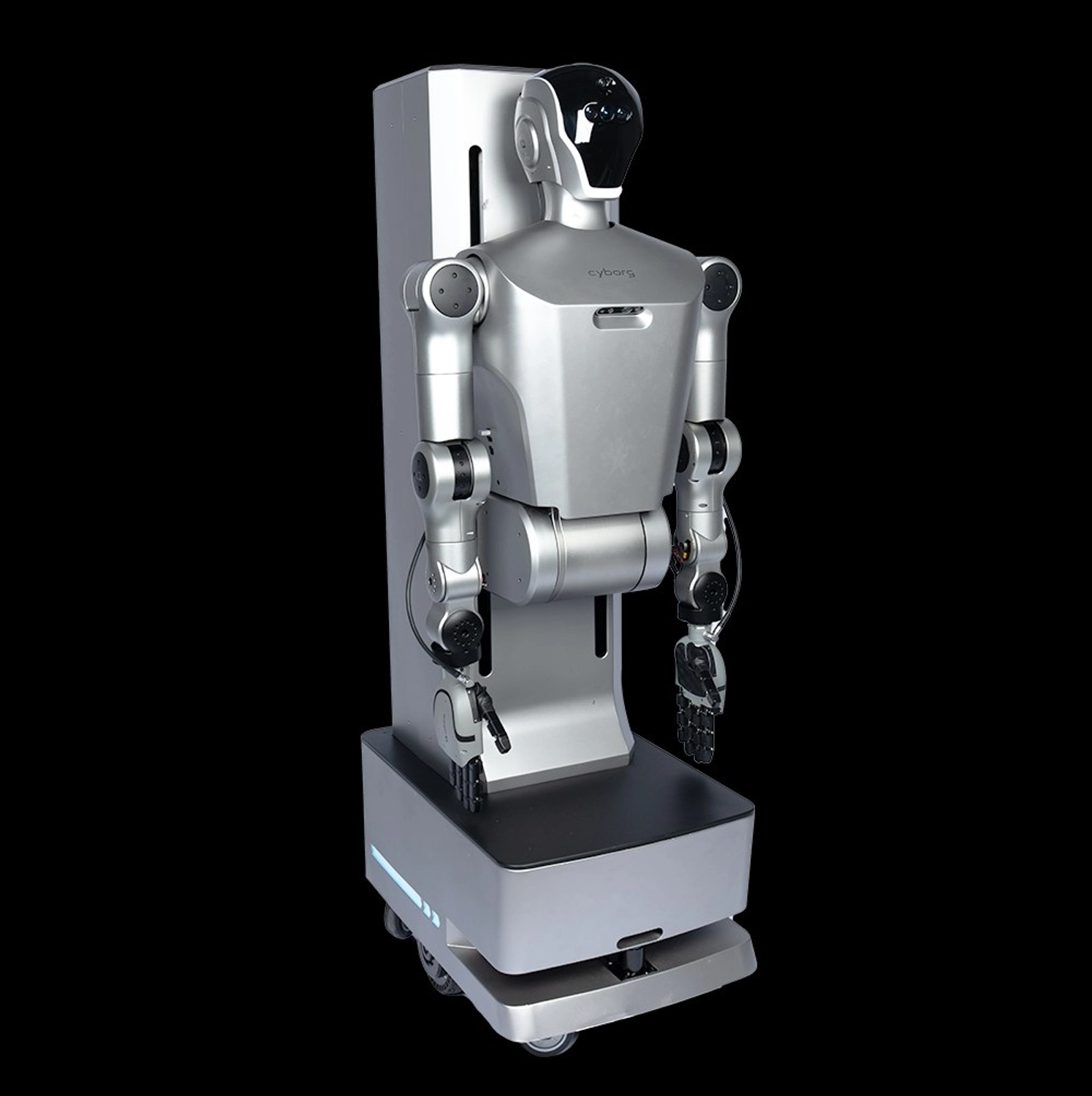
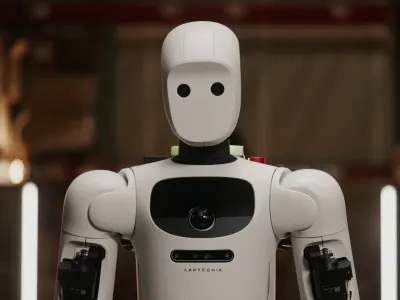
OpenMind, a robotics software company founded by Stanford bioengineer Jan Liphardt, has shown a humanoid robot named Iris that taps into lab-grown human neurons to help judge its surroundings and decide how to respond. The demonstration was disclosed on November 13, 2026.
Why it matters to ordinary readers: most robot brains are pure software running on chips. Iris is an early, small-scale test of a different idea, mixing living tissue with machines, and it shows how far that idea has actually come, and how far it has not.
Where the Neurons Come From
The neurons are grown from stem cells and are human cerebral cortex cells, the type found in the brain's outer layer. Iris was connected to two commercial platforms, each holding hundreds of thousands of them, one a flat 2D culture from an Australian company, the other a 3D clump called a spheroid from a Swiss company.
The cells do not sit inside the robot. They live remotely on a chip with an electrode array, a grid of tiny metal contacts that can send electrical pulses into the cells and listen to their replies, so the robot reaches them over a data connection.
How Iris Talks to a Dish of Brain Cells
A camera captures what Iris sees. Software turns that view into signals sent through an API, a standard digital doorway between programs, to the electrodes. The neurons' electrical activity then flows back and feeds into how the robot behaves.
In practice, Iris could pick up basic social cues, such as a person starting to engage with it, and adjust its responses. The neurons add to the robot's usual perception and language software rather than replacing any of it.
The Numbers Behind the Demo
Across nearly 500 stimulations, the flat 2D cultures decoded signals with up to 94 percent accuracy, responding in roughly 150 to 240 milliseconds, a bit faster than a blink. The 3D spheroids reached up to 91 percent, but with delays of up to two seconds.
Those figures come from the team's own testing and have not been independently checked. They suggest the flat cultures are quicker, while the 3D clumps are slower but still usable, a trade-off researchers will want to understand before building on it.
More Reflex Than Brain
Liphardt is careful about what the neurons do. He says they provide basic memory and help set the robot's mood, making them, in his words, less like a brain and more like a reflex. He also joked that the team is not building RoboCop.
That framing matters. Iris is not thinking with human brain cells in any meaningful sense. The neurons add a small, living layer to a machine that still depends heavily on conventional computers for nearly everything it does.
Why Try Biology at All?
Biological networks may use energy more efficiently, learn from limited data and store a great deal of information, according to Omdia analyst Lian Jye Su. Those are real attractions at a time when AI data centers consume enormous power.
Liphardt adds two more arguments: a partly living robot would be hard to copy, and its neural information hard to extract, which could help privacy. He also cites plain curiosity as a motive. These remain hypotheses rather than proven benefits.
The Hard Parts Nobody Has Solved
Su calls the work meaningful but limited and sees no realistic route to practical products at this stage, though he is open to hybrid systems. Liphardt himself describes Iris as a basic research project, not a commercial product.
The biggest obstacle is keeping the living cultures alive and stable. Scalability, reliability, reproducibility and joining soft biology to hard machinery are all open problems, and one early report notes the robot's responses lagged as the cultures aged.
What It Means for Buyers and the Industry
For anyone shopping for a humanoid today, nothing changes: Iris is a lab demonstration, with no price, no sale date and no plan to ship. The robots people can actually order still run on silicon and software.
For the industry, it is a signal to watch. OpenMind's next steps are improving stability, extending how long the cultures survive, adding electrodes, and then exploring learning and memory. If those hold up, hybrid robot brains could become a serious research path.
Sources
Related Articles
ASUS Gallop Is the PC Maker's First Humanoid Robot, and It Is Already Packing Motherboards on a Real Factory Line
GXO and Apptronik Plan Up to 1,000 Apollo Humanoid Robots in Warehouses Over Four Years