OTTO Motors positions OTTO 1200 as a heavy-payload AMR built for tight factory lanes
Robot Details
OTTO 1200 • OTTO MotorsPublished
June 7, 2026
Reading Time
3 min read
Author
Origin Of Bots Editorial Team
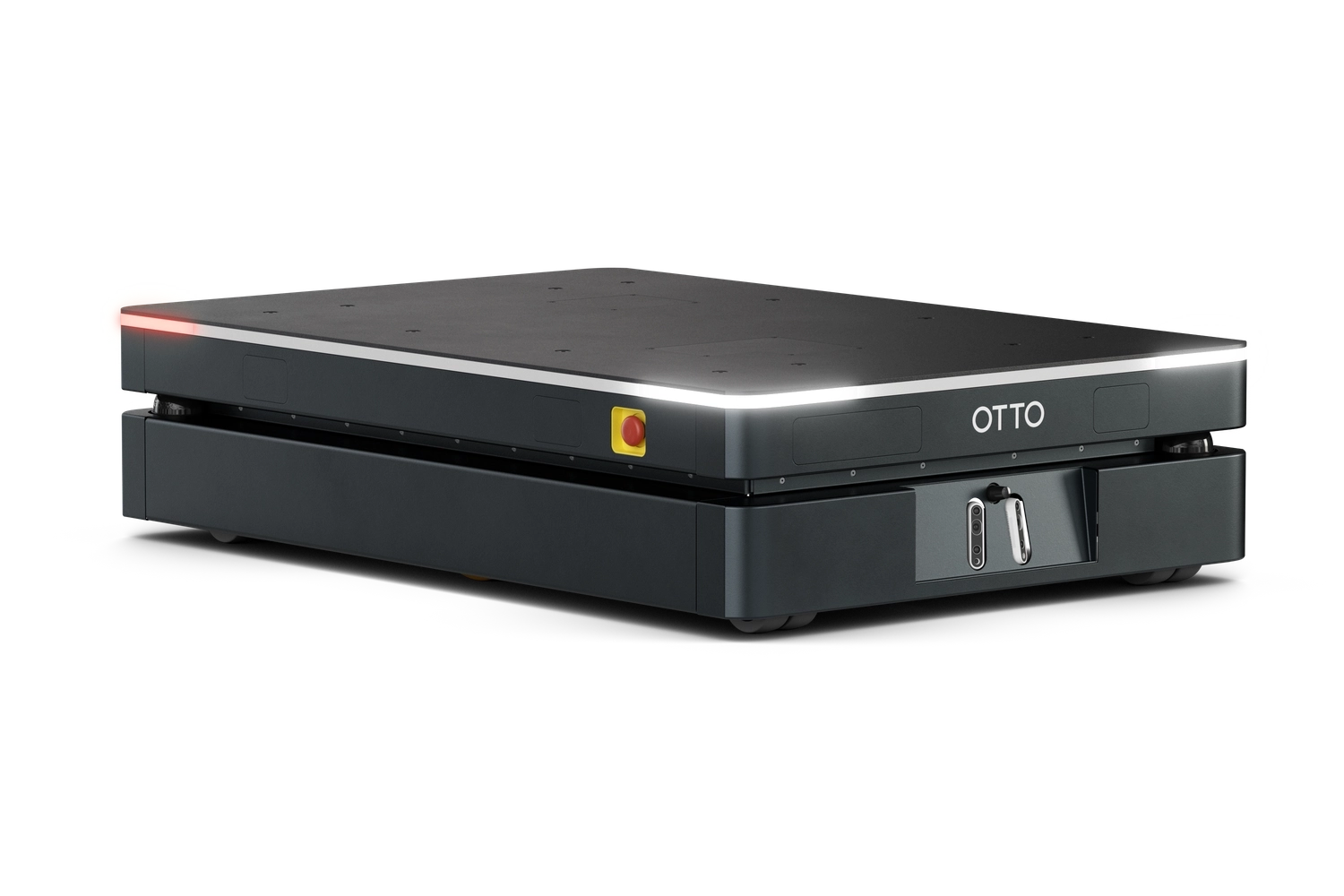
Compact power play
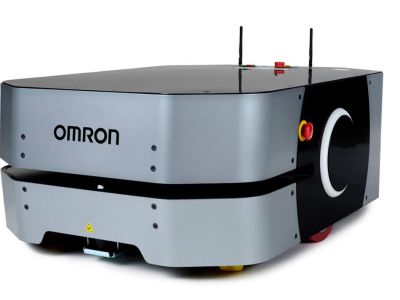
OTTO Motors has introduced the OTTO 1200 as a heavy-duty autonomous mobile robot for moving large industrial loads through constrained manufacturing spaces. The company said the machine was designed to combine high payload capacity, narrow dimensions, and safety-focused navigation for factory material handling.
Why it matters
For industrial operators, the draw is not just payload; it is how the robot is intended to preserve throughput in layouts where every turn and aisle width affects cycle time. OTTO says the 1200 uses adaptive fieldset technology, dual 3D cameras, dual corner LiDARs, and fleet software to support repeatable movement around people and equipment while keeping the workflow tied to existing production systems. The result is a system aimed at heavy pallets, automotive sub-assemblies, and bins in environments where manual transport can become a bottleneck. OTTO 1200 is less about brute force than about moving heavy loads without slowing the line.
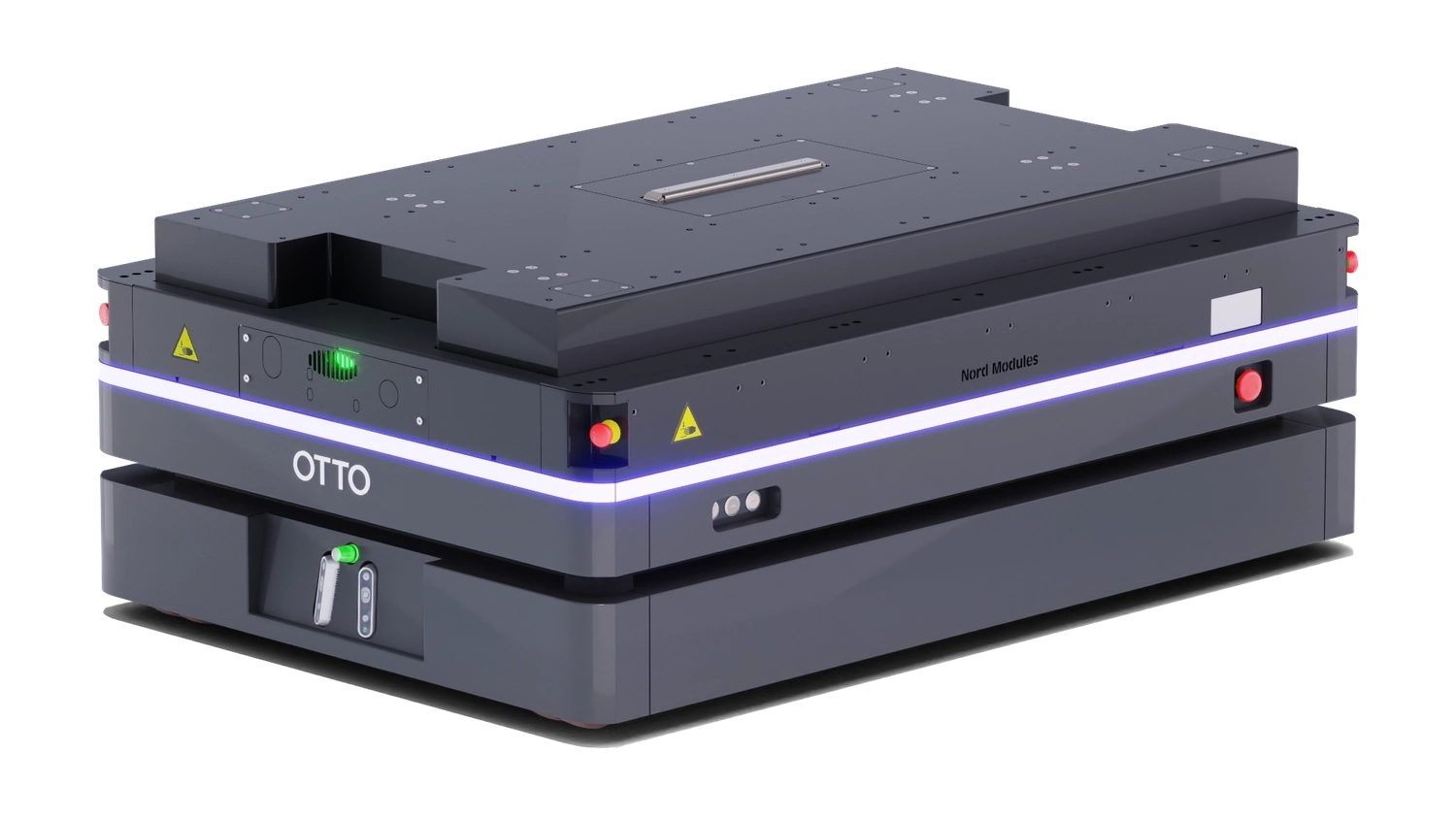
How it works
Input comes from task scheduling inside OTTO’s proprietary navigation software and fleet manager, which assigns transport jobs and routes. Processing happens through motion planning, obstacle detection, distance estimation, and 360-degree LiDAR plus camera sensing, which together guide high-precision navigation. Output is a wheeled differential-drive robot that can carry the load, dock at low speed, and feed materials into conveyors or other production points with repeatable timing.
Conveyor handoff
A realistic deployment is conveyor integration in a high-volume assembly plant, where the OTTO 1200 can move heavy pallets from receiving or staging to a line-side conveyor without relying on forklifts for every transfer. That matters in tightly packed facilities because the robot’s compact footprint and low-speed docking mode are meant to support precise handoff at fixed transfer points. In that setting, the value is not only transport, but consistent material arrival that helps keep upstream and downstream operations synchronized.
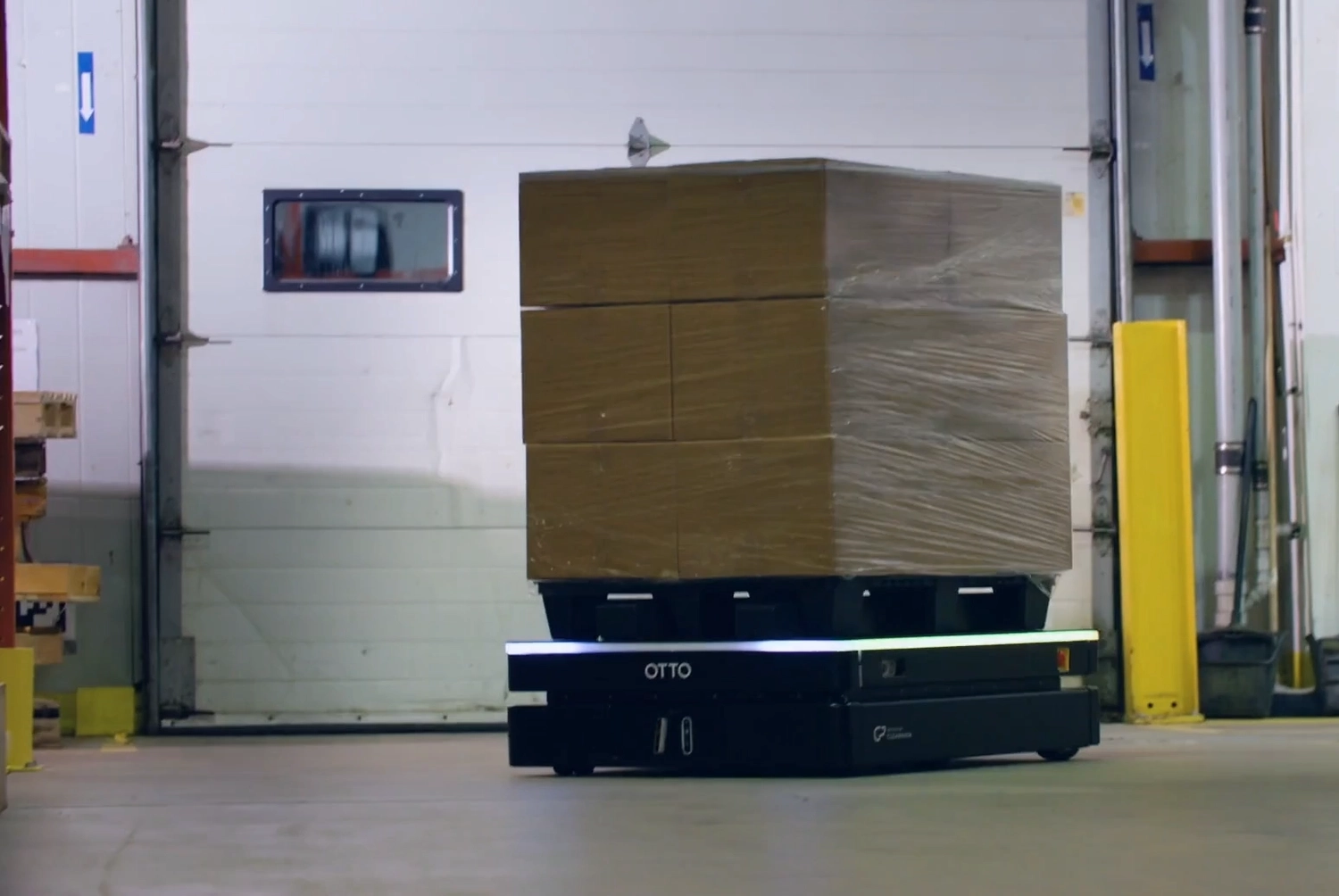
Built for the load
OTTO says the 1200 is designed around a 1,200 kg / 2,640 lb payload, a 1.5 m/s / 3.4 mph maximum travel speed, and a 0.3 m/s docking speed, which frame it as a robot for fast but controlled industrial moves. Its 1,350 x 910 x 320 mm footprint and 370 kg / 815 lb weight point to a machine engineered for narrow routes rather than open-floor transport. The sensing package includes dual forward-facing 3D cameras, dual corner LiDARs with 360-degree coverage, and obstacle and distance estimation sensors, while safety references include dual emergency stops and compliance with ISO 12100/13849-1, FCC Part 15 Subpart B, ICES-003, ICES-002, and EN 1175-1/60204-1.
Rivals Edge Check
| Robot | Key Advantage | Where OTTO 1200 Wins | Target Use |
|---|---|---|---|
| Lift CR1 AMR | Likely compact transport focus for smaller industrial loads | Higher reported heavy-payload capability and conveyor-oriented workflow integration | Lightweight or midweight materials movement |
| Lift RS1 AMR | Likely route flexibility for general factory transport | Stronger fit for heavy pallets and repetitive high-throughput duty cycles | General material handling |
| Tow Tractor S7 AMR | Likely towing of carts and line-feed trains | Better for direct pallet and bin movement with precise docking | Tugger-style transport |
| KUKA KMP 1500P | Known for heavy-duty autonomous movement in industrial environments | Narrow footprint and OTTO fleet software may better suit tight, repeated transfer routes | Heavy industrial transport |
Industrial signal
OTTO 1200 reflects a broader industrial trend toward robots that sit closer to production flow instead of operating as standalone movers. The emphasis on fleet management, conveyor integration, and safety-certified navigation suggests manufacturers are buying systems that can be woven into existing lines with less ambiguity about where material goes next. That also aligns with the growing role of collaborative automation, where the boundary between human work areas and robot transport is becoming more operationally managed than physically separated.
Related Articles
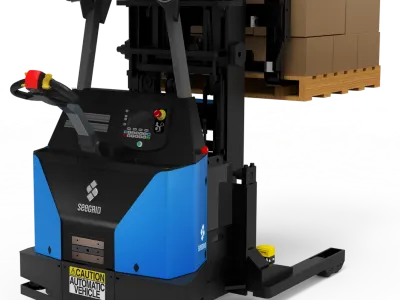
Seegrid’s Lift RS1 AMR targets the repetitive middle of manufacturing material flow
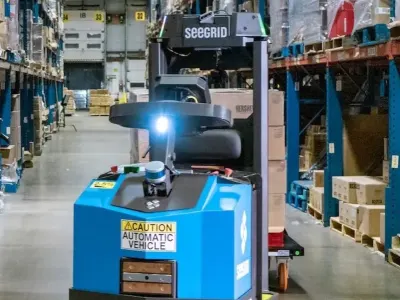
Seegrid’s Tow Tractor S7 AMR targets heavy horizontal material moves in manufacturing

OTTO 1500 targets heavy-duty manufacturing with infrastructure-free autonomy and layered safety
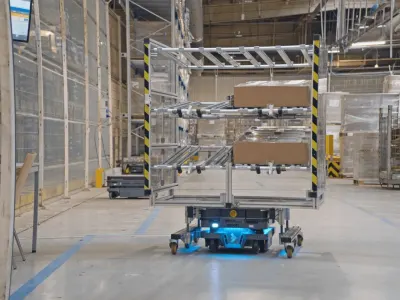
Mobile Industrial Robots positions MiR250 as a compact AMR for high-speed internal logistics
Related Comparisons
Compare OTTO 1200 with similar robots
Learn More About This Robot
Discover detailed specifications, reviews, and comparisons for OTTO 1200.
View Robot Details →