Reward AI Emerges from Stealth with OM-1 Universal Policy Trained Exclusively from Sensorized Human Hands
Robot Details
Robotics & AI News • OriginOfBotsPublished
September 14, 2026
Reading Time
4 min read
Author
Origin Of Bots Editorial Team
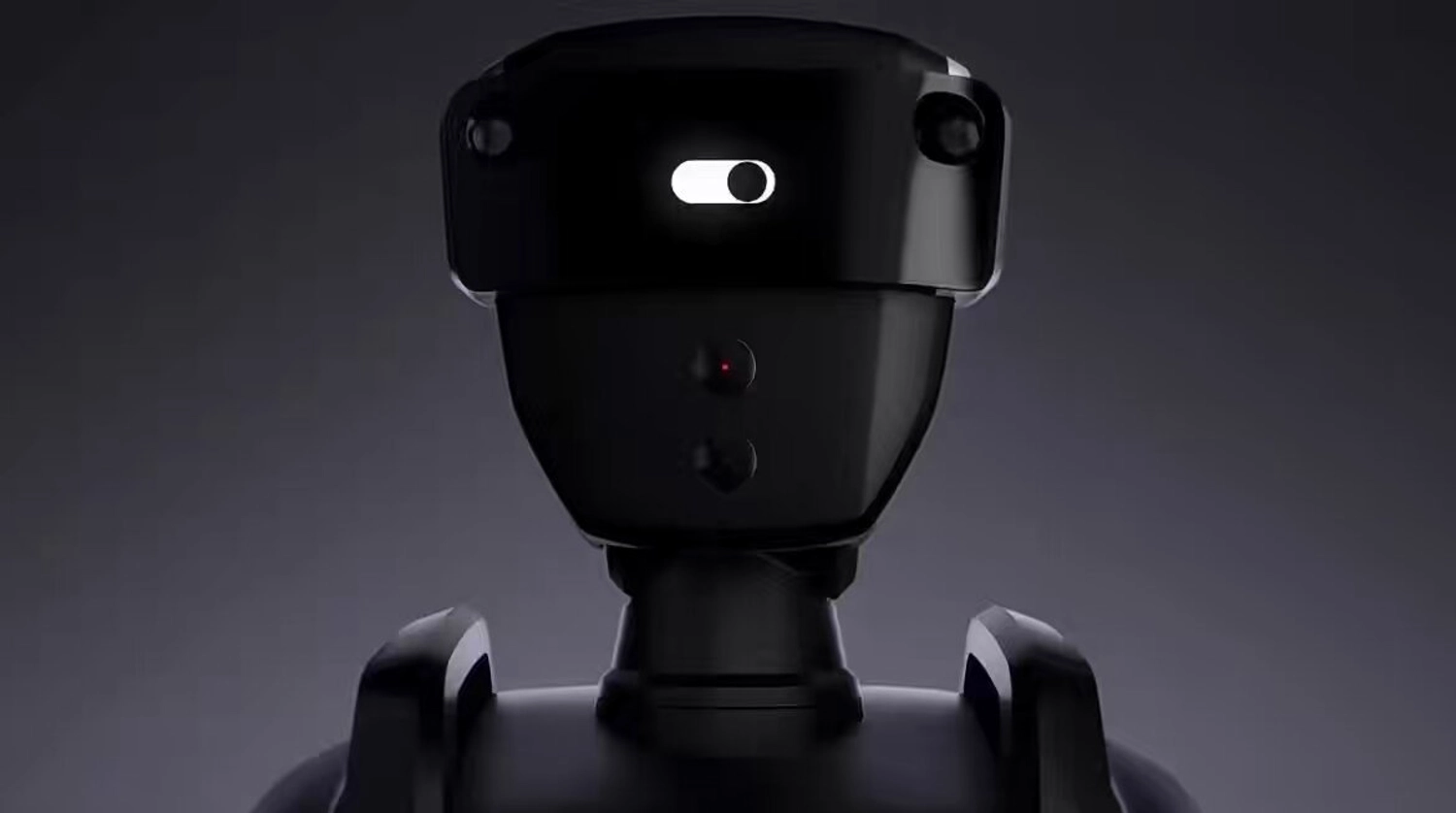
Upstream Data Harvesting Bypasses Legacy Robot Teleoperation
Robotics startup Reward AI officially emerged from stealth, unveiling OM-1 (Omnibody Model 1), a foundational manipulation policy. Founded by researchers behind landmark embodied AI projects including Stanford's DexCap, HumanPlus, and ALOHA, the venture tackles physical robotics' costliest bottleneck. OM-1 learns intricate manipulation skills directly from human hand demonstrations without ingesting a single frame of robotic teleoperation or on-robot experience.
Traditional teleoperation requires cumbersome VR headsets and sluggish robot puppeteering, producing unnatural and hardware-locked motion trajectories. By shifting data collection entirely upstream to human hands, Reward AI gathers rich physical demonstrations at natural human speeds. This direct human-to-policy paradigm captures nuance and fluidity that conventional robotic rigs inevitably lose.
The Omnibody Hand: Capturing High-Fidelity Human Kinematics
To harvest training demonstrations, human operators simply wear the company's proprietary Omnibody Hand, an ergonomic seven-degree-of-freedom sensorized glove. The lightweight device records fingertip contact pressure, high-frequency joint flexion angles, and optical wrist trajectories during everyday tasks. Whether peeling fruit, inserting delicate circuit connectors, or folding clothing, human operators work with complete physical freedom and speed.
Because human demonstrators move naturally without fighting mechanical robot latency, recorded demonstrations capture genuine physical compliance and dexterity. This natural biomechanical data provides clean, high-density demonstration tokens that traditional robot teleoperation setups fundamentally fail to replicate. Unencumbered biomechanical capture ensures high signal-to-noise ratios during delicate and high-frequency tactile tasks.
The 'One Model, One Interface, Any Body' Cross-Embodiment Promise
Reward AI built OM-1 around a radical engineering premise: a single foundation model operating across diverse robot bodies via a unified data interface. When hardware platforms vary—ranging from dual-arm humanoids and mobile manipulators to rigid industrial cobots—traditional policies break down. OM-1 abstracts task intent from physical joint mechanics, allowing the model to project learned manipulation strategies onto radically different kinematic morphologies.
In public demonstration reels, the identical OM-1 policy was flashed across three distinct bipedal humanoids and two standard industrial robotic arms. Each mechanical embodiment executed the contact-rich assembly tasks at full playback speed, proving genuine zero-shot cross-embodiment generalization. Decoupling control policies from specific kinematic morphology provides developers with an unprecedentedly versatile manipulation engine.
Thirty-Minute Skill Acquisition for Long-Horizon Manipulation
A core capability separating OM-1 from legacy reinforcement learning models is its sample efficiency during new skill acquisition. The startup demonstrated that the policy masters complex, multi-stage manipulation workflows with fewer than thirty minutes of human demonstration data. A human operator wearing the glove demonstrates an intricate assembly workflow twenty times, and OM-1 synthesizes a robust, generalized policy.
This rapid training turnaround eliminates the months of expensive trial-and-error simulation traditionally required to program industrial manipulators. Enterprise shop-floor technicians can teach a humanoid coworker a new assembly task during a single afternoon coffee break. Empowering front-line non-technical personnel to train autonomous coworkers fundamentally transforms factory workflow democratization.
Contact-Rich Physical Reasoning and Robust Error Recovery
Unlike vision-only imitation learning pipelines that fail upon minor visual distractions, OM-1 integrates dense tactile force feedback into its motor outputs. The model continuously senses contact resistance, adjusting gripper compliance dynamically when mating tight-tolerance mechanical parts. If an object shifts unexpectedly or slips during transport, OM-1 detects the shear displacement instantly and re-grasps without stalling.
This tactile closed-loop responsiveness mimics the instinctive touch-based adjustments human fingers execute during complex manual assembly. Enabling robots to feel mechanical tolerances enables automated assembly of pliable materials, rubber gaskets, and fragile electronic components. High-fidelity touch awareness closes the dexterity gap between biological mechanics and artificial end-effectors.
Disrupting the Robotics Data Collection Industry
By proving that pristine human hand demonstrations surpass expensive on-robot teleoperation data, Reward AI challenges the prevailing robotics data playbook. Frontier robotics companies have invested tens of millions of dollars building massive teleoperation farms with human drivers operating robots in VR rigs. Reward AI’s glove-based paradigm proves that human-centric data collection is vastly faster, cheaper, and fundamentally higher quality.
Crowdsourcing manipulation data across thousands of glove-wearing workers could soon generate the trillion-token datasets required for true physical artificial general intelligence. Decoupling physical data gathering from hardware availability unlocks exponential data scaling for embodied AI startups worldwide. Democratizing training data generation enables rapid collective intelligence accumulation across distributed global environments.
The Next Evolutionary Step for Physical AI Backbones
The debut of OM-1 marks a critical milestone in the transition toward universally capable foundation models for physical robotics. By demonstrating that human hand dexterity can transfer directly onto bipedal humanoids without robotic training wheels, Reward AI has opened an exhilarating frontier. The boundaries separating human craftsmanship and robotic execution are dissolving into unified mathematical representations.
As foundation policies like OM-1 mature, the friction involved in deploying humanoid assistants across factories, hospitals, and homes will vanish. Intelligent humanoid bodies will simply inherit the cumulative physical dexterity of humanity, distilled through the lens of embodied AI. Universal manipulation representations bridge the physical execution divide, unlocking true general-purpose automation across human environments.
Sources
Related Articles
Lumos Robotics positions MOS 2 as a factory-ready humanoid built for teleoperation and heavy handling
World's First Humanoid Robot Sports League 'CyberHero' Launches in Riyadh with Eight-City Global Tour
Reward AI Emerges from Stealth with OM-1 Universal Policy Trained Exclusively from Sensorized Human Hands

UBTECH Commissions 10,000-Unit 'Robots Building Robots' Mega-Factory Assembling a Humanoid Every 10 Minutes
Learn More About This Robot
Discover detailed specifications, reviews, and comparisons for Robotics & AI News.
View Robot Details →