World's First Humanoid Robot Sports League 'CyberHero' Launches in Riyadh with Eight-City Global Tour
Category
humanoidPublished
September 10, 2026
Reading Time
3 min read
Author
Origin Of Bots Editorial Team
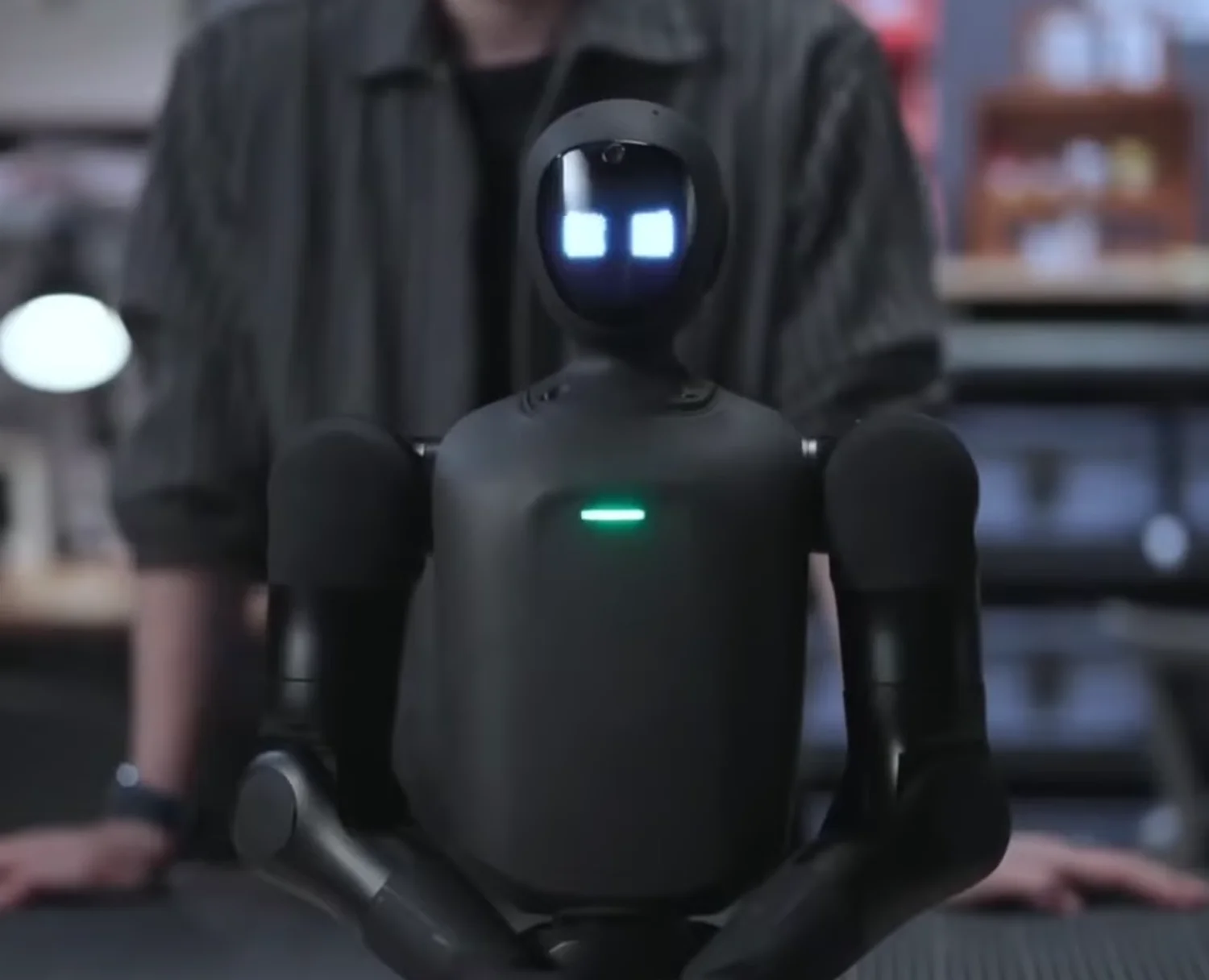
Inaugural Launch of CyberHero in the Saudi Capital
In an ambitious showcase of competitive embodied technology, the CyberHero humanoid robotics sports league officially launched in Riyadh on Wednesday night. The inaugural tournament brought together leading international robotics teams, establishing the world’s first structured professional sports league for full-sized humanoid machines.
Staged in a high-tech arena packed with global spectators, the competition departed from traditional stationary demonstrations to focus on intense physical sport. Organizers framed the event as an international proving ground where hardware durability, autonomous balance, and reflexive AI are tested under public pressure.
High-Impact Dynamic Combat and Obstacle Navigation
The centerpiece of the Riyadh tournament featured full-scale T800 humanoid robots competing across rigorous obstacle courses and head-to-head agility trials. Robots navigated shifting terrain platforms, cleared hurdle barriers, and engaged in controlled physical sparring designed to test dynamic recovery.
Unlike conventional wheeled robot competitions, the humanoids absorbed direct physical impacts while actively adjusting their bipedal balance in milliseconds. Spectators cheered as machines sustained heavy collisions, stumbled, and autonomously recovered upright balance without human intervention.
Extreme Engineering Demands on Bipedal Powertrains
The physical intensity of the CyberHero league imposes mechanical stress far exceeding typical warehouse or domestic operating environments. Actuator gearboxes must deliver instantaneous peak torques to execute rapid sidesteps and defensive blocks while enduring sudden shock loads.
Participating teams utilized lightweight carbon-fiber structural skeletons paired with custom brushless joint motors to maximize strength-to-weight ratios. These punishing physical bouts serve as an accelerated testbed, revealing microscopic metallurgical fatigue and actuator weaknesses that simulations miss.
Low-Latency Vision-Action Loops and Reflexive AI
Operating in dynamic athletic competition requires sensory and computational processing speeds that push the envelope of modern edge AI. The T800 competitors rely on integrated head-mounted stereo cameras and high-frame-rate event sensors to track opponent movements in three-dimensional space.
Onboard neural accelerators execute localized vision-action inference loops at frequencies exceeding 500 hertz, deciding whether to dodge or advance. Eliminating cloud latency is paramount, as a five-millisecond delay in motion planning can result in a destabilizing blow and a decisive knockdown.
Announcement of an Eight-City International Tour
Building on the triumphant reception in Riyadh, CyberHero officials announced a comprehensive global expansion roadmap spanning eight international metropolises. The upcoming competitive season will travel to major technology hubs across North America, Europe, East Asia, and the Middle East throughout 2026 and 2027.
This worldwide circuit aims to cultivate a massive global fan base while fostering competitive rivalries among corporate and academic robotics laboratories. Cities vying to host future stages view the league as a premier magnet for cutting-edge technology investment and public STEM engagement.
Accelerating Consumer Fascination and Public Trust
Beyond technical validation, the CyberHero league plays a pivotal cultural role in demystifying advanced humanoid robotics for the general public. Watching human-scale machines display agility, sportsmanship, and resilient balance inside a sporting arena transforms intimidating technology into thrilling entertainment.
Sociologists and industry analysts observe that public sporting events significantly lower psychological barriers to robotic integration in daily life. By presenting humanoids as athletic competitors rather than workplace replacements, the league fosters widespread public familiarity and cultural acceptance.
The Formula 1 of the Embodied Artificial Intelligence Era
Industry experts are already drawing direct parallels between CyberHero and the early developmental decades of Formula 1 automotive racing. Just as competitive motorsport drove breakthroughs in automotive brakes, aerodynamics, and turbochargers, competitive robot sports are driving mechatronic progress.
The harsh engineering lessons learned on Riyadh’s tournament floor will inevitably trickle down into safer, more resilient industrial and domestic humanoids. As CyberHero prepares for its global tour, it stands as a vibrant catalyst powering the future of embodied artificial intelligence.
Sources
Related Articles
Unitree’s H2 pushes humanoids toward teleoperation-first service work
Unitree’s Superman humanoid puts speed first as China’s robotics race accelerates
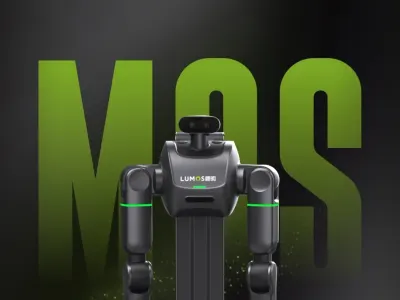
Lumos Robotics positions MOS 2 as a factory-ready humanoid built for teleoperation and heavy handling