Saudi Arabia and Humanoid AI Form Strategic Partnership for Up to 10,000 Humanoid Robots Under Vision 2030
Robot Details
Robotics & AI News • OriginOfBotsPublished
September 25, 2026
Reading Time
4 min read
Author
Origin Of Bots Editorial Team
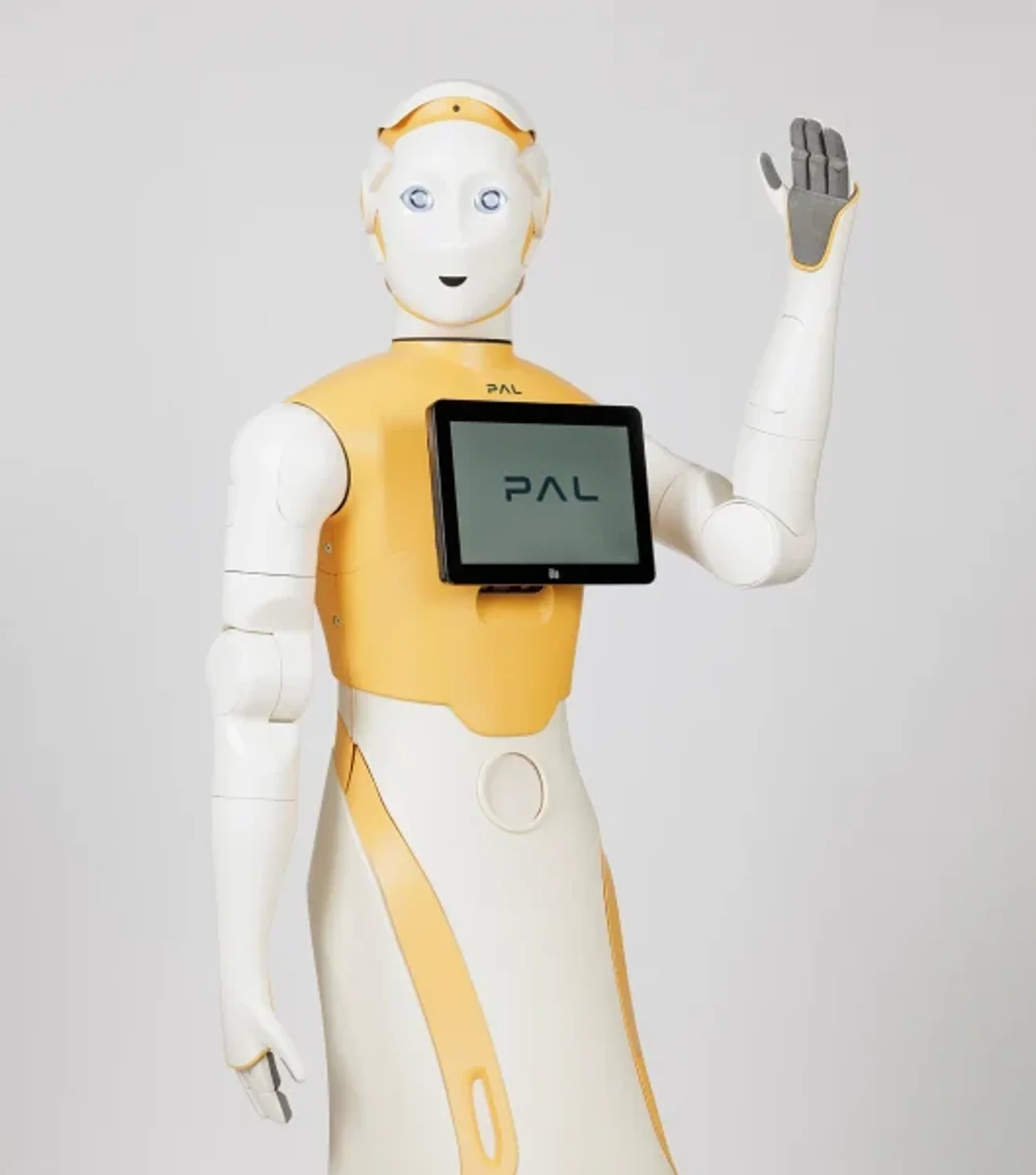
Historic Multi-Year Framework for Ten Thousand Humanoids
In one of the largest commercial commitments in robotics history, London-based developer Humanoid AI announced a major strategic alliance. The company executed a multi-year partnership framework with Saudi Arabian technology and automation conglomerate QSS AI & Robotics. Under the agreed framework, the partners will collaborate to deploy up to 10,000 humanoid robots across the Kingdom over five years.
While the agreement represents a structured pre-order framework rather than immediate upfront deliveries, the sheer volume is unprecedented. Across an industry where commercial deployments of dozens of robots still make global headlines, planning for ten thousand units is transformative. The partnership establishes Saudi Arabia as one of the world's most aggressive commercial proving grounds for large-scale humanoid labor.
Anchoring Robotics Deployment in the Vision 2030 Economic Agenda
The ambitious deployment agreement is directly aligned with Saudi Arabia’s sweeping Vision 2030 national economic transformation agenda. The Kingdom is committing hundreds of billions of dollars to diversify its economy away from hydrocarbon dependency into high-technology industries. Centralized sovereign investment allows Saudi planners to coordinate massive capital deployments across logistics hubs, smart cities, and clean energy projects.
Integrating thousands of humanoid workers into newly constructed industrial zones addresses chronic skilled labor shortages in remote desert regions. Robots will be assigned to hazardous solar farm maintenance, automated logistics sorting, petrochemical facility inspection, and smart city services. Sovereign backing provides the long-term capital stability required to deploy and maintain massive fleets across harsh desert operating conditions.
The Humanoid Lounge: A Physical Showcase for Enterprise Buyers
A centerpiece initiative of the partnership is the official unveiling of the 'Humanoid Lounge' commercial innovation center in Riyadh. The facility provides a dedicated physical showroom where enterprise executives and government officials can evaluate live humanoid performance. Potential buyers can observe robots manipulating industrial fixtures, navigating complex obstacles, and executing conversational tasks in person.
The establishment of the lounge addresses a critical deficiency currently stalling broader commercial adoption: reliance on curated marketing videos. Enterprise operators have grown increasingly skeptical of viral social media demonstrations that conceal teleoperation or edit out repeated failures. The Riyadh showroom allows prospective customers to inspect mechanical durability and calculate authentic return on investment before placing orders.
Deploying Bipedal Workforce Across Logistics, Energy, and Tourism
The operational rollout will target four foundational economic sectors: supply chain logistics, energy infrastructure, hospitality, and public administration. In automated distribution centers surrounding Riyadh and Jeddah, humanoids will handle pallet de-stacking, bin picking, and parcel consolidation. In remote photovoltaic installations, specialized robots will conduct solar panel cleaning and thermal sensor inspections under extreme ambient temperatures.
Concurrently, the Kingdom’s booming luxury tourism and cultural entertainment sectors will deploy humanoids in customer-facing ambassador roles. Robots equipped with multi-lingual conversational models will welcome international travelers, provide museum interpretation, and assist hotel guests. Spreading the fleet across diverse industrial and service environments provides a robust hedge against single-sector economic fluctuations.
Localized Manufacturing and Technology Transfer Commitments
Crucially, the partnership agreement between Humanoid AI and QSS incorporates extensive local manufacturing and intellectual property transfer provisions. QSS will establish localized assembly, maintenance, and fleet refurbishment centers within Saudi Arabia's emerging special economic zones. Developing domestic mechatronic assembly capacity ensures that fleet maintenance and spare parts availability are shielded from global supply shocks.
The alliance also establishes specialized robotics training academies to educate Saudi engineers in humanoid maintenance, calibration, and AI supervision. Training native engineering talent aligns with national localization mandates, creating high-skill domestic employment opportunities for the Kingdom's youth. This technology transfer framework ensures that capital expenditure builds lasting sovereign industrial capabilities rather than temporary imported hardware.
Operational Rigors of Extreme Desert Climates
Deploying advanced electromechanical bipeds across the Arabian Peninsula presents severe environmental and thermal engineering challenges. Humanoid robots must operate reliably in ambient temperatures regularly exceeding forty-five degrees Celsius while contending with pervasive abrasive sand dust. Fine sand particulates can infiltrate mechanical joint seals, contaminating precision gearboxes and causing catastrophic actuator seizures.
Humanoid AI is engineering specialized IP65-rated ingress protection seals, pressurized internal chassis filtering, and high-efficiency thermal heat sinks. Actuator cooling architectures are being upgraded to prevent thermal throttling during peak daytime shifts in unconditioned industrial facilities. Proving that humanoid robots can survive punishing desert conditions will establish new global benchmarks for mechanical ruggedization.
Establishing a Global Model for National Humanoid Fleets
The Saudi partnership provides a compelling glimpse into how sovereign nations may deploy humanoid robotics as foundational public infrastructure. Just as twentieth-century governments invested centrally in highway networks and electrical grids, future states may invest in centralized robotic workforces. A shared national robotics fleet can be dynamically redeployed to respond to infrastructure projects, industrial surges, or natural disasters.
If Humanoid AI and QSS succeed in deploying even a fraction of the targeted 10,000 units, the operational data generated will be unprecedented. Continuous real-world telemetric feedback will accelerate the evolution of foundation models, creating a powerful compounding advantage. Saudi Arabia's bold investment signals that the future of humanoid robotics will be shaped not only by Silicon Valley and Shenzhen, but by Riyadh.
Related Articles

XPENG Robotics Unveils XPACE: Simulation Platform Training IRON Humanoids via Video Prediction and Synthetic Failure Recovery

Tesla AI VP Ashok Elluswamy Delivers Candid Reality Check on Optimus Remote Control and Physical Safety Stakes
Boston Dynamics Opens Robotics Metaplant Application Center to Train Atlas Humanoid Fleet for Hyundai Manufacturing

Intel Unveils Open Edge Infrastructure Strategy to Scale Physical AI and Humanoid Robotics
Learn More About This Robot
Discover detailed specifications, reviews, and comparisons for Robotics & AI News.
View Robot Details →