Tesla AI VP Ashok Elluswamy Delivers Candid Reality Check on Optimus Remote Control and Physical Safety Stakes
Robot Details
Optimus • TeslaPublished
September 21, 2026
Reading Time
5 min read
Author
Origin Of Bots Editorial Team
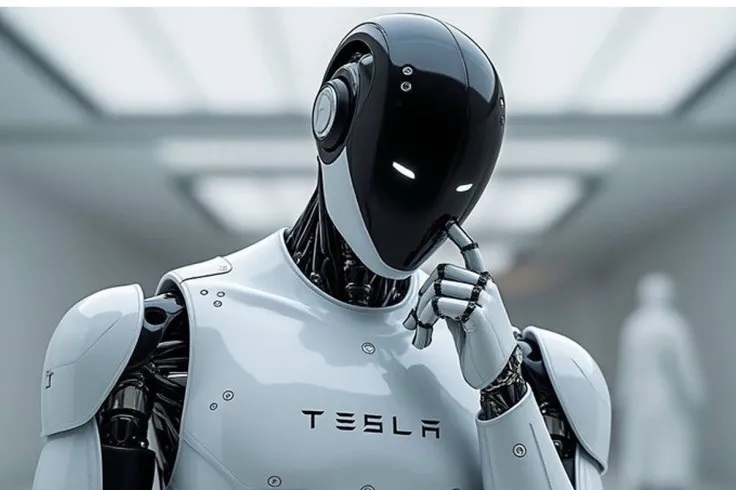
Public Disclosures Puncture the Illusion of Autonomous Demonstration Reels
In an extraordinary moment of technical transparency, Tesla Vice President of AI Software Ashok Elluswamy delivered a candid assessment of the Optimus program. Elluswamy, who leads Tesla's robotics software development, publicly acknowledged that viral showcase movements are essentially remote-controlled rather than autonomous. The frank disclosure directly punctures the popular narrative that humanoid bipeds are currently perceiving, reasoning, and acting within closed cognitive feedback loops.
When Optimus navigates an obstacle course or manipulates delicate items in promotional clips, a human operator directs task-level intent from afar. The onboard computer coordinates local physical balance, joint trajectory execution, and ground force distribution, but it does not improvise or decide. Recognizing this critical architectural boundary establishes a realistic baseline for evaluating the actual state of embodied artificial intelligence today.
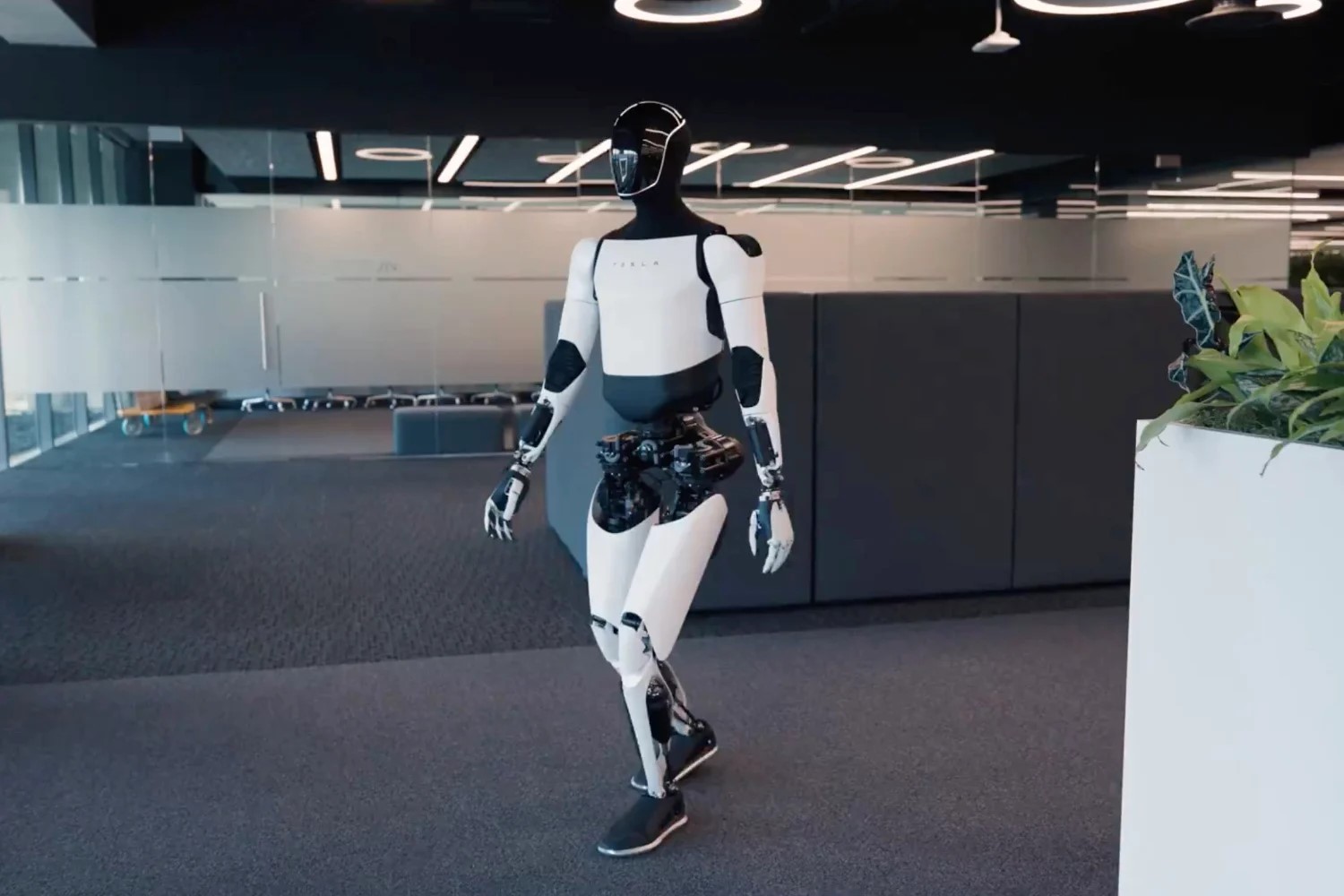
High-Frequency Physics Stabilization Versus Autonomous Cognitive Planning
The technical distinction between remote task guidance and onboard physical compliance highlights the multi-tiered nature of modern robotic control. Human teleoperators provide the semantic intelligence, dictating where the robot should step and which container it must retrieve from an industrial shelving unit. Simultaneously, Optimus’s internal controllers execute high-frequency mathematical algorithms to preserve bipedal balance and prevent catastrophic falls.
This symbiotic architecture allows the robot to adapt dynamically to floor friction, joint backlash, and variable load weights without falling. However, bridging the divide between following supervisory commands and displaying genuine open-world autonomy represents the true frontier of physical AI. The machine must eventually replace the remote human entirely, perceiving novel spatial environments and generating its own real-time execution strategies.
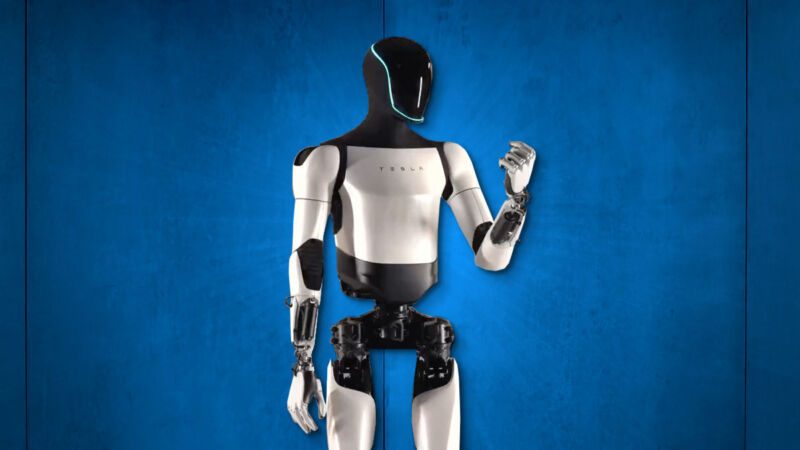
The Physical Stakes of Safety: Why Embodied Robotics Dwarfs LLM Risk
Elluswamy accompanied his architectural revelation with a sharp warning regarding the profound difficulty of physical artificial intelligence safety. He asserted that resolving embodied AI safety challenges makes the contemporary debate over large language model alignment look like child’s play. While an errant language model produces harmless incorrect text, a physical humanoid robot operates in a material domain where errors produce kinetic force.
Optimus possesses powerful custom rotary actuators and linear drive units capable of applying substantial torque across human-scale workstations. If a software hallucination or edge sensor anomaly causes an unconstrained arm swing, nearby factory personnel face severe physical trauma. Ensuring that autonomous bipeds operate safely alongside human workers requires deterministic physical guarantees that software guardrails alone cannot deliver.
Actuator Latency and the Microsecond Margin for Injury Prevention
Central to Tesla’s physical safety challenge is the delicate latency envelope governing torque sensing and unexpected collision response. Optimus incorporates integrated torque sensors designed to register mechanical resistance immediately upon physical contact with an unanticipated obstacle or human colleague. Once unexpected resistance is detected, the motor controllers must throttle output force within single-digit milliseconds to avoid crushing soft biological tissue.
This microsecond response window leaves virtually zero margin for software processing lag, communication jitter, or computational queuing. Operating in dense warehouse aisles and chaotic living rooms turns every spatial interaction into a high-stakes kinetic collision problem. Developing actuators that can execute heavy physical labor while exhibiting featherlight tactile compliance remains an arduous engineering mountain.
Adapting Full Self-Driving Neural Networks to Bipedal Kinematics
To achieve true autonomy, the Optimus software engineering team is repurposing the end-to-end vision neural architecture pioneered by Full Self-Driving. The vision-first framework eliminates brittle handcrafted heuristic rules, feeding raw multi-camera video streams directly into foundational neural networks. This computational approach mimics how human vision translates optic nerve signals into fluid neuromuscular motor movements.
However, adapting vehicular driving models to bipedal manipulation introduces an overwhelming computational challenge known as the curse of dimensionality. While an autonomous car navigates a two-dimensional road plane using steering, acceleration, and braking, a humanoid coordinates dozens of independent mechanical joints. Processing billions of multi-modal tokens within thirty-second windows to compute precise joint torques pushes modern edge silicon to its thermal limits.
The Interpretability Crisis in End-to-End Embodied Systems
The transition toward end-to-end neural networks introduces a troubling lack of system interpretability during physical operations. When an autonomous vehicle disengages or brakes errantly, software engineers can trace spatial occupancy vectors to diagnose the underlying model failure. Conversely, deciphering why a deep neural network commanded an erratic grip pressure or an unstable torso twist is extraordinarily opaque.
In enterprise industrial settings governed by strict safety compliance regulations, black-box motor unpredictability is an unacceptable operational liability. Robotics engineers currently lack robust diagnostic tools to audit the internal reasoning of physical AI models in real time. Solving this interpretability vacuum is essential before commercial enterprises allow autonomous humanoids to operate without human safety minders.
The Strategic Roadmap from Supervised Teleoperation to True Autonomy
Elluswamy's candid disclosures confirm that supervised teleoperation is not an embarrassing design flaw, but an indispensable stage of development. Tesla followed a virtually identical incremental progression with Full Self-Driving, gathering billions of miles of human driving data before expanding autonomous functionality. By maintaining remote supervisory oversight, Tesla gathers pristine real-world operational tokens while preventing dangerous physical accidents.
As Optimus logs thousands of supervised working hours inside Tesla's gigafactories, neural foundation models will gradually master routine material tasks. Autonomous operating envelopes will expand incrementally, allowing human supervisors to oversee expanding fleets rather than controlling individual machines. By confronting hard physical truths with public candor, Tesla’s robotics leadership is pursuing a disciplined, reality-based path toward scalable utility.
Explore Humanoids
Related Articles
International Broadcasters Spotlight Viral Milestone of Humanoid Robot Autonomously Walking Off Assembly Line
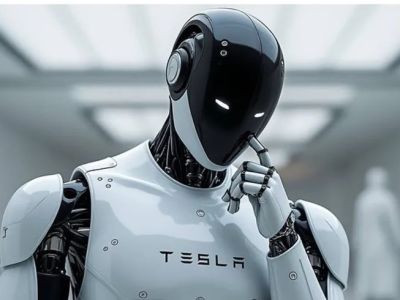
Samsung Begins Prototype 2nm AI5 Chip Fabrication for Tesla FSD and Optimus Humanoid Robots
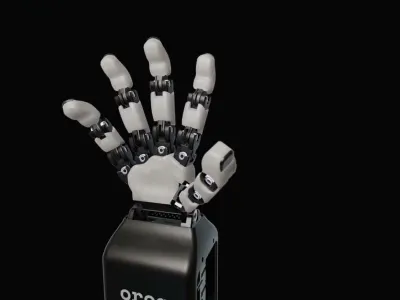
ETH Zurich Unveils 'Fingers as Legs': Anthropomorphic Hands Master Untethered Locomotion and Mobile Manipulation
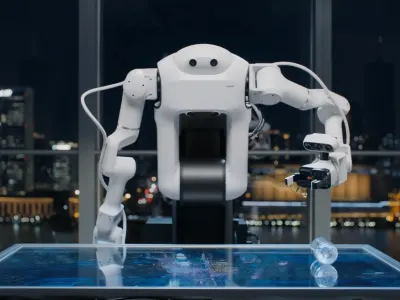
Spirit AI Forecasts General-Purpose Humanoid Robot Brains Poised for a 'ChatGPT-Style' Inflection by 2027
Related Comparisons
Compare Optimus with similar robots
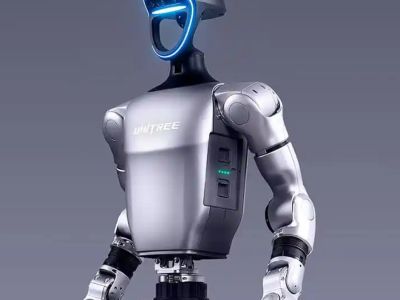
Optimus vs Unitree G1
Compare Optimus vs Unitree G1 for humanoid mobility, dexterity, autonomy, and payload capacity.
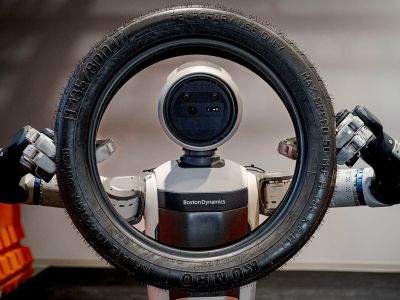
Optimus vs Atlas (Electric Atlas, 2025)
In-depth comparison of Optimus and Atlas (Electric Atlas, 2025), covering hardware capabilities, teleoperation, and enterprise readiness.
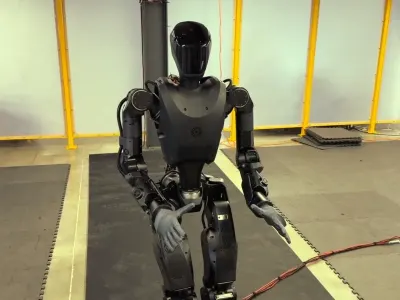
Optimus vs Phantom MK1
Optimus or Phantom MK1? See which humanoid robot performs better for manufacturing, logistics, defense, dexterity, autonomy, and payload in enterprise deployments.
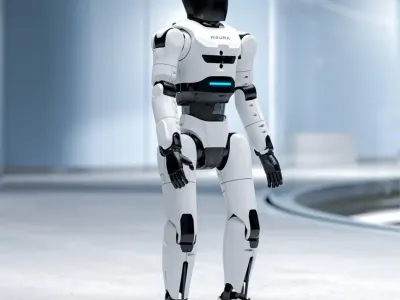
Optimus vs 4NE-1 Mini
Which humanoid robot is better? Optimus vs 4NE-1 Mini compared for dexterity, AI capabilities, payload, and industrial vs research use cases.
Learn More About This Robot
Discover detailed specifications, reviews, and comparisons for Optimus.
View Robot Details →