International Broadcasters Spotlight Viral Milestone of Humanoid Robot Autonomously Walking Off Assembly Line
Robot Details
Next‑Gen IRON • XPENGPublished
September 12, 2026
Reading Time
4 min read
Author
Origin Of Bots Editorial Team

The Viral Footage Captivating Global Audiences
Over the weekend, international news networks including NBC News broadcast striking factory footage that captured the imagination of viewers worldwide. The video depicts a full-scale bipedal humanoid robot powering up, detaching its overhead diagnostic tether, and walking straight off a serialized conveyor assembly line. Unlike scripted promotional demonstrations filmed on soundstages, the sequence documented the machine's unassisted transition from production hardware to autonomous locomotion.
The dramatic visual of a robot walking off its own birth line without human intervention rapidly went viral across global social platforms. Media commentators and technology analysts hailed the event as a visceral psychological turning point, proving that general-purpose humanoids are officially graduating into serialized industrial reality.
High-Precision Automated End-of-Line Diagnostic Checks
Behind the theatrical visual lies a sophisticated, fully automated end-of-line verification and calibration protocol. Before dismounting the assembly cradle, the humanoid’s onboard neural controller executes a comprehensive diagnostic sweep of all sixty-plus joint actuators. Optical encoders verify that zero-position alignments, bus voltages, and torque sensor calibrations match rigid engineering specifications within fractions of a percent.
Once internal diagnostic algorithms register green across all mechanical subsystems, the robot initiates its autonomous balance routine. By dismounting the assembly fixture under its own motive power, the machine verifies motor controller integrity and sensor feedback loops before ever reaching customer hands.
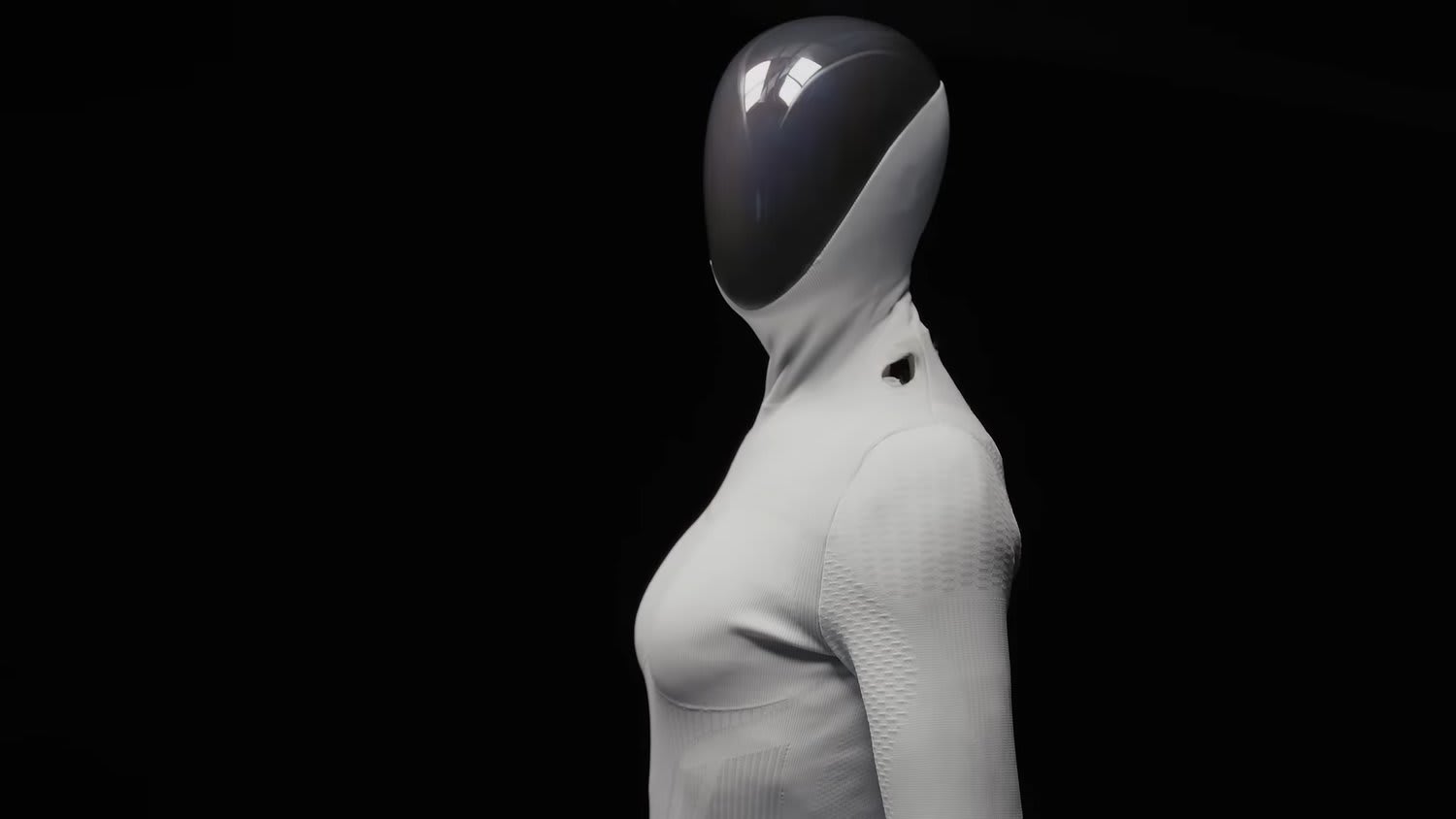
The Historic Transition from Handcrafting to Moving Assembly Lines
Industrial historians have drawn immediate comparisons between this manufacturing milestone and Henry Ford’s pioneering moving assembly line in 1913. For decades, advanced humanoid robots were bespoke, handcrafted laboratory curiosities requiring teams of elite roboticists weeks to assemble single units. Implementing serialized conveyor manufacturing slashes assembly times from hundreds of labor hours down into continuous multi-unit shift workflows.
This manufacturing breakthrough fundamentally alters the economic cost curve of embodied physical robotics. As serialized production replaces artisanal assembly, unit fixed costs decline rapidly, clearing the path toward mass-market commercial accessibility.
Validating Compliant Whole-Body Dynamic Equilibrium
Stepping off a moving conveyor platform and transitioning onto polished factory flooring represents a challenging kinetic hurdle for bipedal systems. Foot sensors must detect the instantaneous shift in surface elevation and friction, modulating knee and ankle joint stiffness in real time to absorb the step down. The robot’s whole-body reinforcement learning policy adjusted torso pitch and leg compliance smoothly, avoiding the mechanical stumbles that plagued earlier prototypes.
This seamless balance recovery highlights the rapid maturation of sim-to-real locomotion transfer pipelines. Because neural policies are trained across millions of randomized virtual terrains, the robot handles subtle physical perturbations with instinctive, biological fluidness.
Geopolitical Reactions and Manufacturing Leadership Debates
The international broadcast of serialized humanoid production ignited heated commentary across Western economic and defense policy circles. Legislators and business leaders noted that while Western firms maintain a strong edge in frontier AI research, Asian competitors are dominating physical mass production. Policy think tanks cautioned that lagging in physical robotics manufacturing could leave Western economies dependent on foreign automated workforces.
These geopolitical anxieties are accelerating calls for national manufacturing strategies and domestic supply chain reshoring. Industrial nations recognize that the country that masters the high-volume assembly of humanoid robots will command the economic high ground of the twenty-first century.
Customer Inspection and Immediate Plant Deployment Pathways
Following their autonomous walk-off, the newly manufactured humanoid units proceed directly into automated packaging and shipping cells. Commercial buyers in automotive manufacturing and electronics logistics have pre-ordered entire production runs to staff second and third manufacturing shifts. Upon delivery, the robots can be rolled onto factory floors, connected to local fleet Wi-Fi, and deployed into active material handling cells within hours.
This turnkey operational readiness is dismantling the long-standing hesitation among risk-averse enterprise procurement managers. Providing factory-certified, pre-calibrated bipedal workers transforms humanoid adoption from an unpredictable research gamble into a reliable operational upgrade.
The Irreversible Arrival of the Serialized Robotic Era
The broadcast of a humanoid walking off an assembly line marks the symbolic closing of robotics' experimental infancy. What was once the exclusive domain of science fiction cinema has entered the unyielding reality of serialized factory output and commercial balance sheets. As thousands of identical bipedal machines step off production lines in the months ahead, the structure of global physical labor will be permanently remade.
Human workers will increasingly collaborate alongside tireless mechanical partners capable of executing heavy, repetitive physical tasks. The viral video was more than a fleeting internet sensation; it was a definitive preview of a manufacturing future that has officially arrived.
Explore Humanoids
Sources
Related Articles
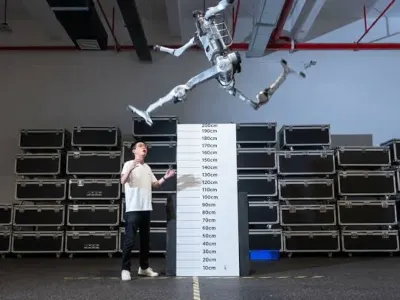
Unitree’s Superman humanoid puts speed first as China’s robotics race accelerates
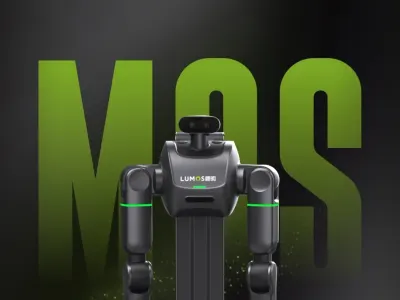
Lumos Robotics positions MOS 2 as a factory-ready humanoid built for teleoperation and heavy handling
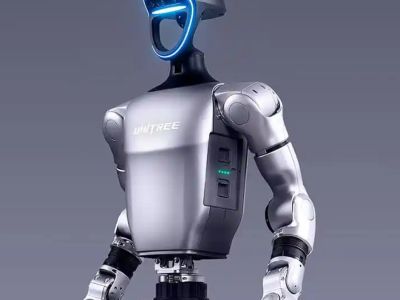
Unitree Expands Commercial Footprint with G1 Mass Deployments and Shanghai Market Momentum
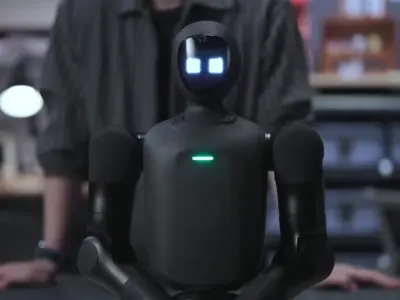
World's First Humanoid Robot Sports League 'CyberHero' Launches in Riyadh with Eight-City Global Tour
Related Comparisons
Compare Next‑Gen IRON with similar robots

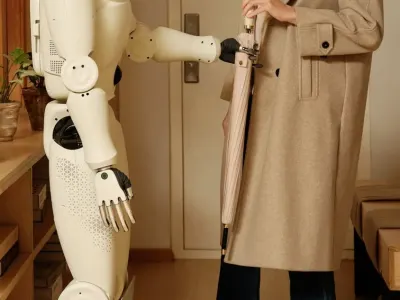
Next‑Gen IRON vs Jupiter
Which humanoid robot is better? Next-Gen IRON vs Jupiter compared for dexterity, AI autonomy, payload, and industrial use cases.
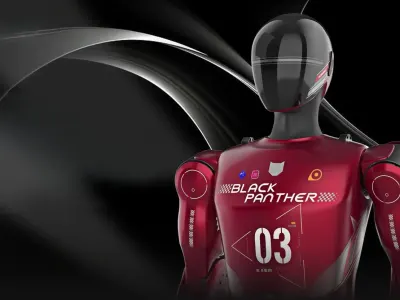
Next‑Gen IRON vs Bolt
Compare Next-Gen IRON vs Bolt for humanoid mobility, dexterity, autonomy, and payload capacity in industrial and dynamic use cases.

Next‑Gen IRON vs Moya
In-depth comparison of Next-Gen IRON by XPENG and Moya by DroidUp, covering hardware capabilities, teleoperation, and enterprise readiness.
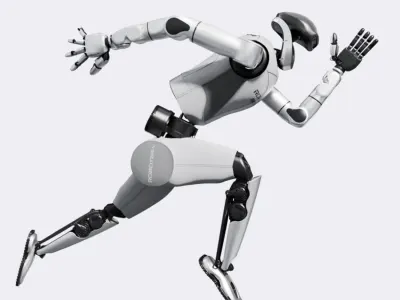
L7 vs Next‑Gen IRON
Head-to-head: L7 vs Next-Gen IRON. Explore differences in speed, sensors, navigation, and AI capabilities.
Learn More About This Robot
Discover detailed specifications, reviews, and comparisons for Next‑Gen IRON.
View Robot Details →