The L7 by Robot Era is a full-size humanoid robot from a Beijing-based spinoff of Tsinghua University, positioned for industrial automation, research, and agile tasks. It stands out with a maximum running speed of 14.4 km/h, 55 degrees of freedom including 12-DOF hands, and capabilities like jumping, dancing, and precise assembly such as screw-driving. Priced at USD 120,000 for base configurations, it targets enterprise partners with its ERA-42 AI computer and multi-sensor fusion for 360° perception.
Next-Gen IRON by XPENG is a humanoid robot estimated at $150,000-$250,000, aimed at customer service, industrial inspection, healthcare, and research applications. It differentiates through embedded touch sensors in its skin, a broad sensor suite including force and temperature sensors, and support for collaborative modes. With dimensions of 178 x 50 x 40 cm and a focus on learned behaviors via ROS2-based software, it emphasizes safe interaction in human environments.
Detailed Analysis
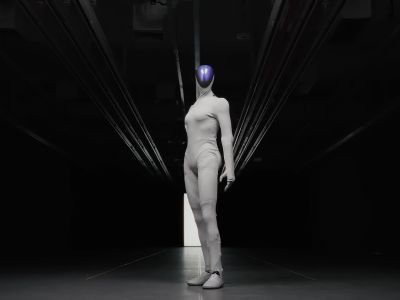
Design & Build Quality
L7 measures 171 x 50 x 40 cm, weighs 65 kg, and uses aerospace-grade aluminum alloy with carbon fiber composites for a lightweight yet durable frame supporting 55 DoF and 400 Nm torque joints. Next-Gen IRON is taller at 178 x 50 x 40 cm and heavier at 70 kg, featuring skin-embedded touch sensors for enhanced interaction feedback. L7's quasi-direct drive system reduces power loss and improves force accuracy, while Next-Gen IRON prioritizes collaborative design.
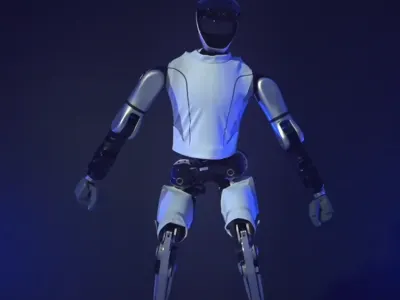
Mobility & Navigation
L7 achieves a maximum running speed of 14.4 km/h (4 m/s) with dynamic capabilities like 360° spins and balance recovery, using multi-sensor fusion, 3D LiDAR, stereo vision, and SLAM. Next-Gen IRON reaches 6 km/h (1.67 m/s) walking speed, relying on visual SLAM, LiDAR mapping, and indoor SLAM for navigation. L7 excels in high-speed agile movement, while Next-Gen IRON focuses on stable indoor traversal.
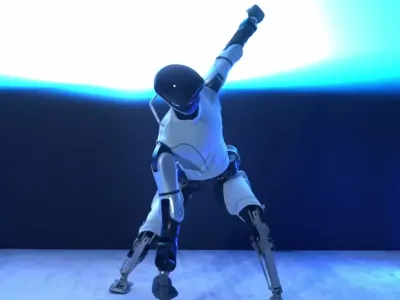
Sensors & Perception
L7 includes panoramic binocular RGB-D cameras with 360° FOV, 3D LiDAR, 6-axis IMU, microphone array, and speakers for voice interaction. Next-Gen IRON has RGB cameras, stereo cameras, LiDAR, ultrasonic, IMU, gyroscope, force, temperature, and skin touch sensors. Both employ multi-sensor approaches, but L7 emphasizes panoramic vision and Next-Gen IRON adds tactile and environmental sensing.
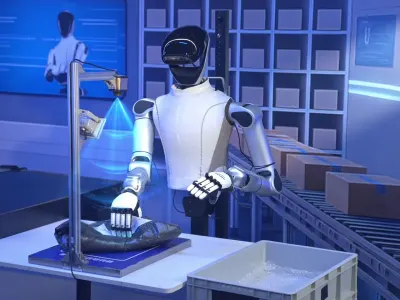
AI Capabilities
L7 runs custom AI software on the ERA-42 onboard embodied AI computer, supporting full-body control, autonomous operation, teleoperation, and APIs likely with ROS integration. Next-Gen IRON uses a proprietary OS based on ROS2 with Python and C++ APIs for autonomous control, teleoperation, and learned behaviors. L7 integrates vision-language-action models, while Next-Gen IRON leverages ROS2 for programming flexibility.
Battery & Power Efficiency
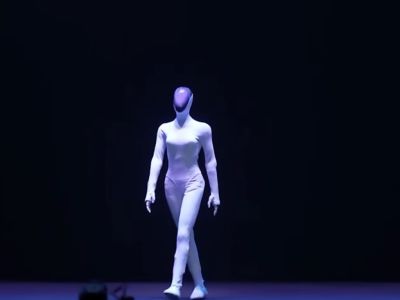
L7 offers a typical lithium-ion battery lifespan of 3-5 years, with runtime per charge not specified but supporting high-speed operations. Next-Gen IRON provides a 4-year battery lifespan. Both indicate long-term power solutions suitable for sustained use, with overlapping durability.
Use-Case Suitability
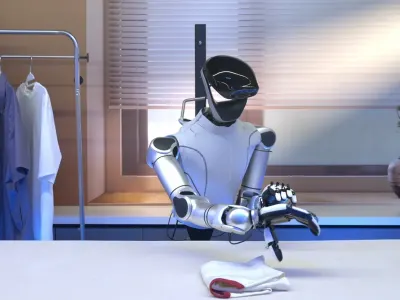
L7 targets industrial assembly like screw-driving and sorting, logistics goods-to-person, pharmaceutical handling, and embodied AI research. Next-Gen IRON suits customer guidance, sales assistance, industrial inspection, research, and healthcare support. L7 leans toward high-dexterity factory tasks, while Next-Gen IRON extends to service and collaborative environments.
Software Ecosystem
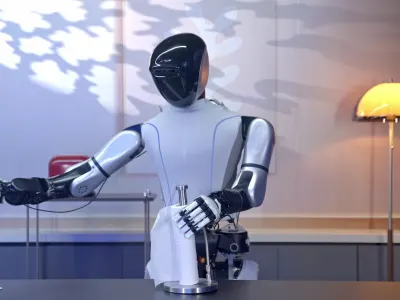
L7 employs custom AI software with ERA-42, likely Linux-based OS and ROS integration, plus APIs for programming, app control, and teleoperation. Next-Gen IRON runs proprietary ROS2-based OS supporting Python and C++ APIs for autonomous and learned behaviors. Both enable developer access, with ROS2 providing standardized tools for Next-Gen IRON.
Pricing & Value
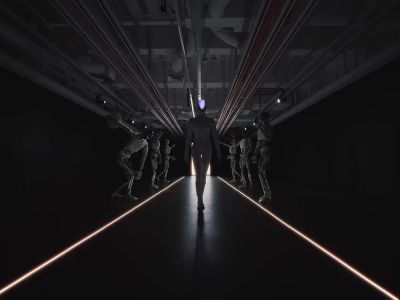
L7 is priced at USD 120,000 for base research and enterprise configurations. Next-Gen IRON ranges from $150,000 to $250,000 estimated. L7 offers a lower entry point for industrial-focused deployments.
Safety Features
L7 includes emergency stop, obstacle avoidance via real-time sensing, and torque-limited joints. Next-Gen IRON features force limiting, collision detection, emergency stop, and collaborative mode. Both prioritize human-safe operation through sensing and control limits.
Analysis Score Summary
Total Score
13
L7
VS
Based on Detailed Analysis
Total Score
5
Next‑Gen IRON
📊 Win: 2 points | Trade-off: 1 point each
Scores are summed across every insight: a clear winner earns 2 points, while balanced trade-offs give each robot 1 point. The total reflects how often each robot outperforms the other (or shares the spotlight) throughout the detailed analysis sections.
Capabilities & Operational Tasks
Head-to-head comparison of what L7 and Next‑Gen IRON can do, their applications, and capabilities.
What Can L7 & Next‑Gen IRON Do?
19Core operational tasks, activities, and physical manipulation duties evaluated side-by-side.
| Task & Description | Model AL718 supported | Model BNext‑Gen IRON7 supported |
|---|---|---|
| Assembly | High | — |
| Autonomous task execution | High | High |
| Carrying and transport | High | High |
| Collaborative work | High | High |
| Human interaction | — | High |
| Inspection | High | — |
| Loading and unloading | High | — |
| Machine operation | High | — |
| Machine tending | High | — |
| Material handling | High | — |
| Move objects | High | — |
| Navigation | High | High |
| Obstacle traversal | High | High |
| Packaging | High | — |
| Pick and place | High | — |
| Quality control | High | — |
| Repetitive physical tasks | High | High |
| Sorting | High | — |
| Tool use | High | — |
Technical Specifications
Head-to-head performance data and metrics
| Specification | Model AL7 | Model BNext‑Gen IRON |
|---|---|---|
Functional Utility & Use Cases4 Comparative Metrics | ||
Control Method | AI autonomous control, remote teleoperation (full-body or upper-body), manual override, app control | Autonomous, teleoperation, learned behaviors |
Use Cases | High-speed bipedal running, carton transport, industrial part sorting, obstacle traversal across rough terrain | Reception, guidance, retail assistance, industrial inspection, service tasks, and developer ecosystem testing |
Multi Robot Coord | Supported (Designed for "Swarm" logistics and multi-robot assembly lines) | Not publicly confirmed, but likely supported in fleet-style deployments |
Pet Friendly | Not Applicable | Yes, with safety protocols |
Manipulation & Load Capacity4 Comparative Metrics | ||
Carrying Capacity | 10 kg per arm (20 kg total) | 10 kg per arm (Inferred · Medium confidence · Typical range for humanoid service/manipulation robots) |
Deadlift Capacity | 25 kg | 20 kg maximum (Inferred · Medium confidence · Typical range for early commercial humanoids prioritizing safe manipulation) |
Payload Type | 20 kg dual-arm payload capacity (10 kg per arm) | Tools, packages, precision instruments, human interaction |
Modular Attachments | Interchangeable dexterous hands, grippers, sensors, tool mounts | Tool changers, interchangeable end-effectors |
Kinematic Architecture & Dexterity4 Comparative Metrics | ||
Degrees of Freedom | 55 DoF (Height: 171 cm, Weight: 65 kg, top speed: 4 m/s) | 40+ DOF including head, torso, arms, hands, and legs; likely around 60 active joints / ~200 motion DoF (Inferred · Medium confidence · Based on reported body-joint and total-motion counts) |
Material | aluminum alloy frame, polymer shells | Aluminum alloy, engineering plastics, elastomeric synthetic skin, and composite structures |
Mobility Type | Legged (full bipedal locomotion, high-speed running up to 4.0 m/s / 14.4 km/h, stair climbing) | Legged (bipedal walking) |
Hardware Interface | USB, Ethernet, GPIO (based on industrial robot standards) | USB-C, GPIO, CAN bus, serial ports |
Functional Utility & Use Cases
4 Comparative Metrics
Manipulation & Load Capacity
4 Comparative Metrics
Kinematic Architecture & Dexterity
4 Comparative Metrics
Related Comparisons
Discover similar robot matchups to expand your knowledge and find the perfect solution
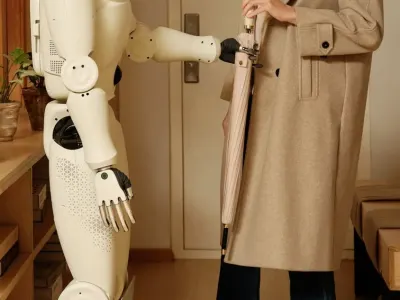
Next‑Gen IRON vs Jupiter
Which humanoid robot is better? Next-Gen IRON vs Jupiter compared for dexterity, AI autonomy, payload, and industrial use cases.
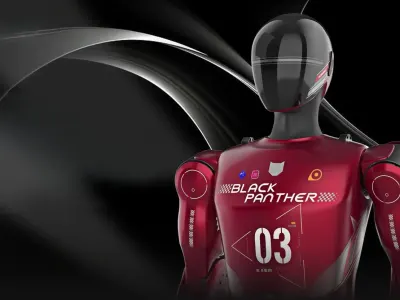
Next‑Gen IRON vs Bolt
Compare Next-Gen IRON vs Bolt for humanoid mobility, dexterity, autonomy, and payload capacity in industrial and dynamic use cases.
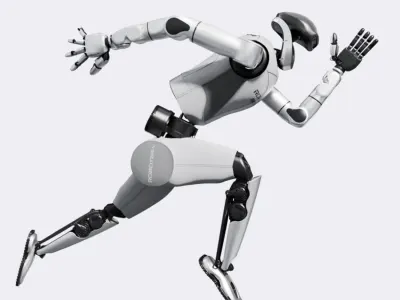
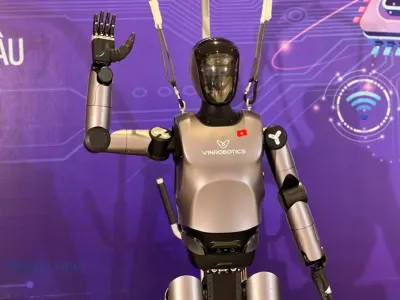
L7 vs VR-H3
Compare L7 by Robot Era vs VR-H3 by VinRobotics for humanoid mobility, dexterity, autonomy, and payload capacity in industrial applications.

Next‑Gen IRON vs Moya
In-depth comparison of Next-Gen IRON by XPENG and Moya by DroidUp, covering hardware capabilities, teleoperation, and enterprise readiness.
Disclaimer
All content, comparisons, and verdicts on this website are based on our research, testing, and opinion. While we strive for accuracy, we do not guarantee the completeness, reliability, or suitability of any information. Performance, specifications, and results may vary depending on usage and conditions. This website and its authors are not responsible for any decisions, actions, or outcomes based on the information provided. Always verify product details with the manufacturer before making purchase or operational decisions.