Next-Gen IRON by XPENG positions as a full-sized humanoid robot at 178 cm tall and 70 kg, targeting versatile applications from industrial inspection to healthcare support. Its full autonomy level, powered by three Turing AI chips delivering 2,250 TOPS, enables real-time vision-language-action processing without constant oversight. Key differentiators include a 6 km/h walking speed, bionic muscles, flexible skin with embedded touch sensors, and an estimated price of $150,000-$250,000, emphasizing human-like responsiveness in dynamic environments.
Jupiter by Zeroth enters the market as a compact 165 cm, 60 kg humanoid priced at $89,999, optimized for household chores, elderly assistance, and front-of-house service. With semi-autonomous operation and over 40 degrees of freedom, it balances accessibility with practical task execution. Standout features encompass a 3-5 year battery life, matching 5 kg per arm carrying and 15 kg deadlift capacities, and ROS2-compatible software, positioning it for cost-effective general-purpose deployments.
Detailed Analysis
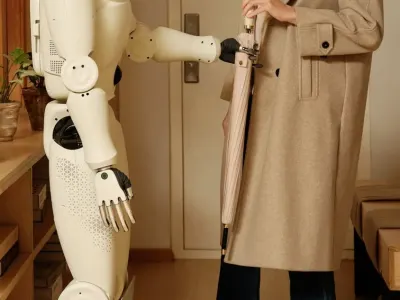
Bipedal Mobility & Balance
Next-Gen IRON achieves a maximum walking speed of 6 km/h (1.67 m/s), surpassing Jupiter's 3 km/h (0.83 m/s), due to passive toe degrees of freedom and bionic spine for fluid, human-like strides. Both robots maintain balance via IMU, gyroscope, and force sensors, but IRON's taller 178 cm frame and higher speed suit dynamic navigation. Jupiter's lighter 60 kg build aids stability in confined household spaces. IRON's design draws from XPENG's autonomous driving tech for superior terrain adaptability. Jupiter prioritizes steady, slower movement for safety in service roles.
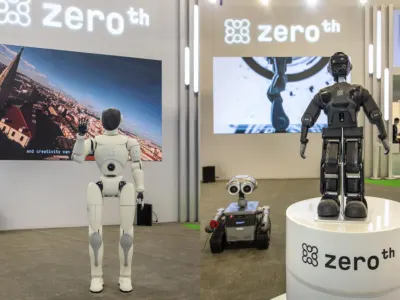
Dexterity & Manipulation
Next-Gen IRON features hands with 22 degrees of freedom each, enabling precise 1:1 human-sized manipulation for tasks like doorknob turning, supported by 82 total DoF and bionic muscles. Jupiter offers over 40 total DoF with comparable arm capacities but lacks specified hand-level detail. Both handle 5 kg per arm carrying, yet IRON's advanced shoulder dynamics and flexible skin enhance grip feedback. This gives IRON an edge in delicate industrial handling. Jupiter suffices for routine chores requiring basic grasping.
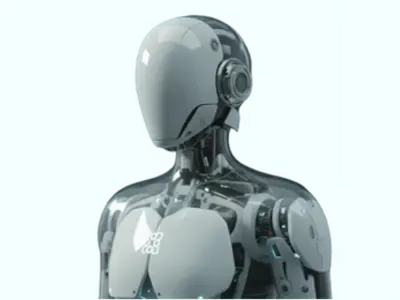
AI, Autonomy & Learning Capabilities
Next-Gen IRON operates at full autonomy using a second-generation VLA model and three Turing chips at 2,250 TOPS for on-board vision, language, and action without teleoperation. Jupiter is semi-autonomous, relying on ROS2-compatible software with Python APIs for structured environments. IRON's multi-model AI (VLT, VLA, VLM) supports real-time learning from human settings. Jupiter requires more human oversight for complex decisions. IRON excels in unsupervised research platforms.

Payload & Lifting Capacity
Both robots match at 5 kg carrying capacity per arm and 15 kg deadlift maximum, suitable for light industrial or household loads. Next-Gen IRON's bionic structure may distribute forces better during dynamic lifts. Jupiter's specs align directly without noted variances. No differences in torque or endurance are specified. These capacities limit both to non-heavy-duty tasks.
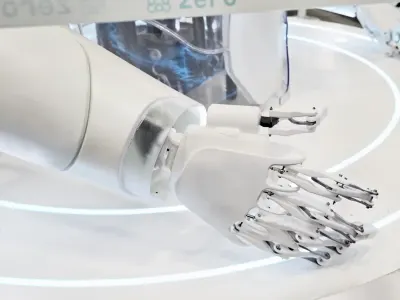
Battery Runtime & Power Efficiency
Next-Gen IRON uses all-solid-state batteries rated for 4 years, prioritizing safety and density for continuous operation. Jupiter's battery spans 3-5 years, offering comparable longevity. IRON's lightweight design enhances efficiency at higher speeds. Both avoid runtime-per-charge specs, focusing on multi-year lifespans. Solid-state tech in IRON reduces thermal risks.
Real-World Use Cases (Industrial vs General Purpose)
Next-Gen IRON targets customer guidance, sales assistance, industrial inspection, research, and healthcare, leveraging full autonomy for varied professional settings. Jupiter focuses on household chores, research simulation, front-of-house service, and elderly assistance, suiting semi-autonomous home use. IRON's speed and AI fit factory monitoring. Jupiter's lower price aids service deployments. Overlap exists in research platforms.
Sensor Suite & Vision Systems
Next-Gen IRON includes RGB cameras, stereo cameras, LiDAR, ultrasonic, IMU, gyroscope, force, temperature, and skin-embedded touch sensors, plus millimeter wave radar. Jupiter has RGB cameras, stereo cameras, LiDAR, IMU, gyroscope, force, ultrasonic, and temperature sensors. IRON adds touch for interaction feedback. Both enable 360-degree perception. IRON's suite supports advanced collision avoidance.
Which robot is better for industrial manufacturing?
Next-Gen IRON outperforms Jupiter in industrial manufacturing with 6 km/h speed, full autonomy, and 2,250 TOPS compute for inspection and handling in dynamic factories. Jupiter's semi-autonomy and slower pace limit it to lighter service tasks. IRON's bionic design handles repetitive precision better. For manufacturing, select Next-Gen IRON.
Which offers superior autonomous capabilities?
Next-Gen IRON provides full autonomy via VLA models and on-board AI, reducing teleoperation needs compared to Jupiter's semi-autonomous mode. Jupiter requires supervision for unstructured tasks. IRON processes vision-action loops independently. Jupiter suits guided operations. Choose Next-Gen IRON for high autonomy.
Analysis Score Summary
Total Score
5
Next‑Gen IRON
VS
Based on Detailed Analysis
Total Score
13
Jupiter
📊 Win: 2 points | Trade-off: 1 point each
Scores are summed across every insight: a clear winner earns 2 points, while balanced trade-offs give each robot 1 point. The total reflects how often each robot outperforms the other (or shares the spotlight) throughout the detailed analysis sections.
Capabilities & Operational Tasks
Head-to-head comparison of what Next‑Gen IRON and Jupiter can do, their applications, and capabilities.
What Can Next‑Gen IRON & Jupiter Do?
7Core operational tasks, activities, and physical manipulation duties evaluated side-by-side.
| Task & Description | Model ANext‑Gen IRON7 supported | Model BJupiter5 supported |
|---|---|---|
| Autonomous task execution | High | High |
| Carrying and transport | High | High |
| Collaborative work | High | High |
| Human interaction | High | High |
| Navigation | High | High |
| Obstacle traversal | High | — |
| Repetitive physical tasks | High | — |
Technical Specifications
Head-to-head performance data and metrics
| Specification | Model ANext‑Gen IRON | Model BJupiter |
|---|---|---|
Functional Utility & Use Cases4 Comparative Metrics | ||
Control Method | Autonomous, teleoperation, learned behaviors | Teleoperation, autonomous, learned behaviors |
Use Cases | Reception, guidance, retail assistance, industrial inspection, service tasks, and developer ecosystem testing | Household chores, research simulation, front-of-house service, elderly assistance |
Multi Robot Coord | Not publicly confirmed, but likely supported in fleet-style deployments | Yes |
Pet Friendly | Yes, with safety protocols | Yes, with safety protocols |
Manipulation & Load Capacity4 Comparative Metrics | ||
Carrying Capacity | 10 kg per arm (Inferred · Medium confidence · Typical range for humanoid service/manipulation robots) | 5 kg per arm |
Deadlift Capacity | 20 kg maximum (Inferred · Medium confidence · Typical range for early commercial humanoids prioritizing safe manipulation) | 15 kg |
Payload Type | Tools, packages, precision instruments, human interaction | Tools, packages, precision instruments, people interaction |
Modular Attachments | Tool changers, interchangeable end-effectors | Tool changers, end-effector options |
Kinematic Architecture & Dexterity4 Comparative Metrics | ||
Degrees of Freedom | 40+ DOF including head, torso, arms, hands, and legs; likely around 60 active joints / ~200 motion DoF (Inferred · Medium confidence · Based on reported body-joint and total-motion counts) | 40+ |
Material | Aluminum alloy, engineering plastics, elastomeric synthetic skin, and composite structures | Aluminum frame, composite, soft skin |
Mobility Type | Legged (bipedal walking) | Legged (bipedal walking) |
Hardware Interface | USB-C, GPIO, CAN bus, serial ports | USB, GPIO, CAN bus |
Functional Utility & Use Cases
4 Comparative Metrics
Manipulation & Load Capacity
4 Comparative Metrics
Kinematic Architecture & Dexterity
4 Comparative Metrics
Frequently Asked Questions
What is the deadlift and carrying capacity of Next-Gen IRON by XPENG versus Jupiter by Zeroth?
Both Next-Gen IRON by XPENG and Jupiter by Zeroth offer 5 kg per arm carrying capacity and 15 kg maximum deadlift.
How does the autonomy level of Next-Gen IRON by XPENG compare to Jupiter by Zeroth for enterprise deployment?
Next-Gen IRON by XPENG achieves full autonomy with VLA AI, while Jupiter by Zeroth is semi-autonomous requiring oversight.
Which humanoid robot has higher walking speed and better locomotion stability?
Next-Gen IRON by XPENG reaches 6 km/h with bionic balance; Jupiter by Zeroth is limited to 3 km/h.
What are the dexterity and hand manipulation capabilities of these humanoid robots?
Next-Gen IRON by XPENG has 22 DoF hands for precise tasks; Jupiter by Zeroth specifies 40+ total DoF.
Is Next-Gen IRON by XPENG suitable for industrial inspection and healthcare support use cases?
Yes, Next-Gen IRON by XPENG supports industrial inspection, customer guidance, sales assistance, research, and healthcare.
Can Jupiter by Zeroth handle household chores and elderly assistance deployments?
Yes, Jupiter by Zeroth is designed for household chores, front-of-house service, research simulation, and elderly assistance.
Related Comparisons
Discover similar robot matchups to expand your knowledge and find the perfect solution

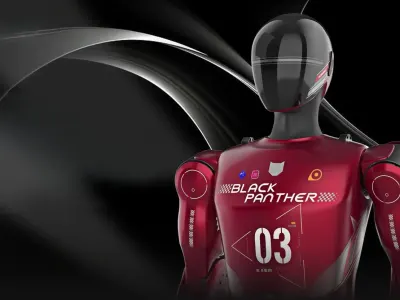
Next‑Gen IRON vs Bolt
Compare Next-Gen IRON vs Bolt for humanoid mobility, dexterity, autonomy, and payload capacity in industrial and dynamic use cases.

Next‑Gen IRON vs Moya
In-depth comparison of Next-Gen IRON by XPENG and Moya by DroidUp, covering hardware capabilities, teleoperation, and enterprise readiness.
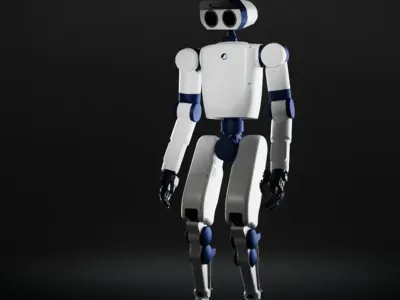
Jupiter vs P-73
Head-to-head: Jupiter vs P-73. Explore differences in speed, sensors, navigation, and software.
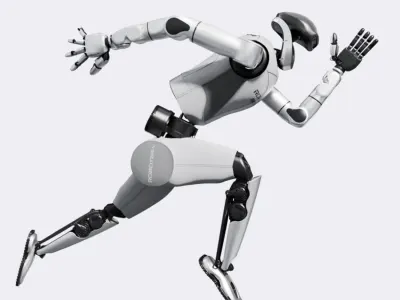
L7 vs Next‑Gen IRON
Head-to-head: L7 vs Next-Gen IRON. Explore differences in speed, sensors, navigation, and AI capabilities.
Disclaimer
All content, comparisons, and verdicts on this website are based on our research, testing, and opinion. While we strive for accuracy, we do not guarantee the completeness, reliability, or suitability of any information. Performance, specifications, and results may vary depending on usage and conditions. This website and its authors are not responsible for any decisions, actions, or outcomes based on the information provided. Always verify product details with the manufacturer before making purchase or operational decisions.