ETH Zurich Unveils 'Fingers as Legs': Anthropomorphic Hands Master Untethered Locomotion and Mobile Manipulation
Robot Details
Robotics & AI News • OriginOfBotsPublished
September 17, 2026
Reading Time
4 min read
Author
Origin Of Bots Editorial Team
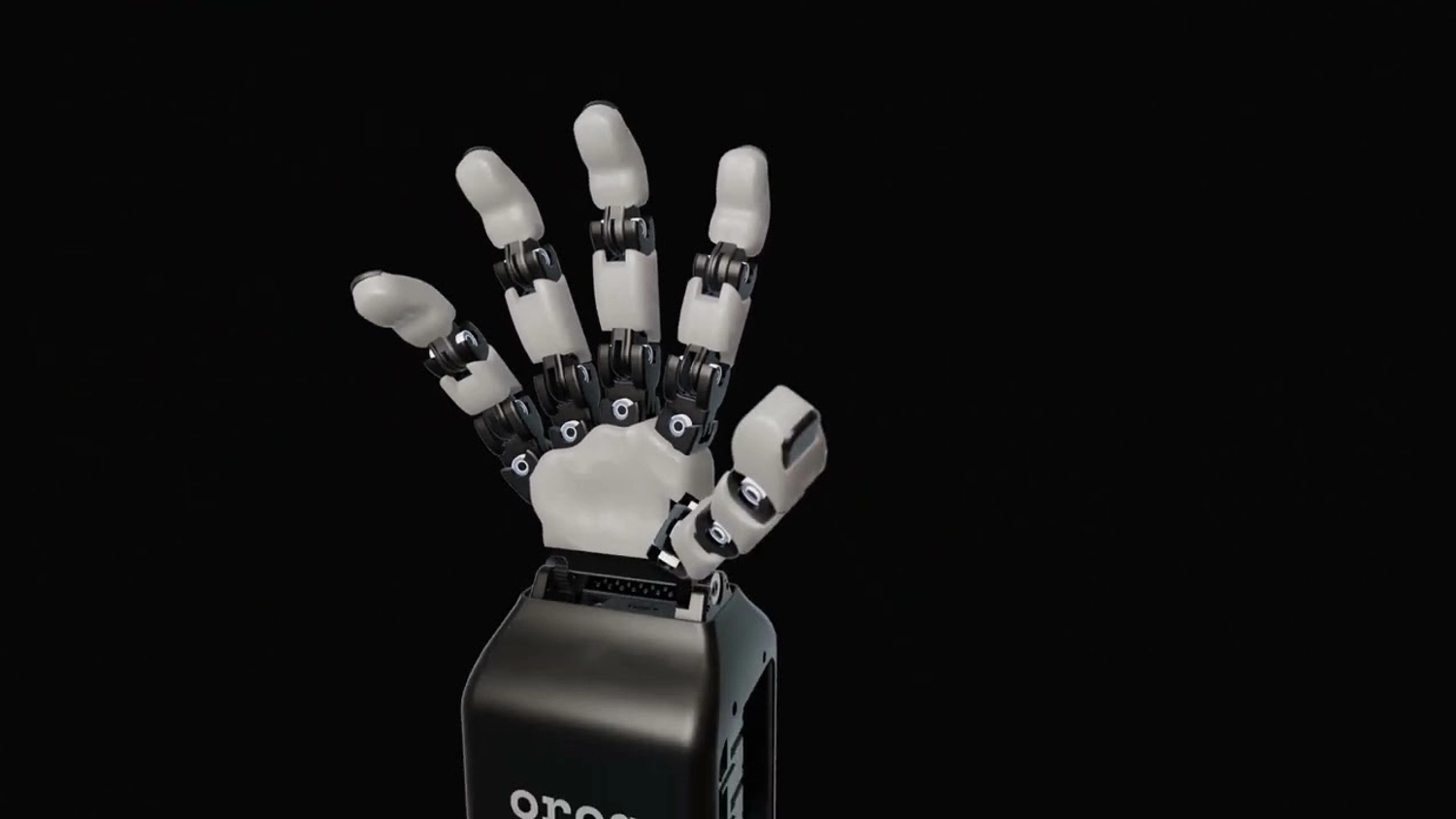
Reimagining the Anatomical Boundaries of Robotic Mobility
Robotics researchers at ETH Zurich's Soft Robotics Lab published a pioneering study introducing 'Fingers as Legs' locomotion. The research demonstrates that an off-the-shelf, non-backdrivable anthropomorphic robotic hand can serve as an autonomous, self-contained mobile manipulator. Instead of mounting robotic hands onto heavy wheeled bases or multi-jointed arms, the hand repurposes its five articulated fingers to crawl, walk, and manipulate objects.
This radical morphological re-interpretation eliminates the need for redundant locomotion mechanisms in space-constrained operational environments. By treating biological finger architecture as multi-legged running gear, researchers have unlocked an agile new paradigm for robotic exploration. The biological versatility of the human hand has thus been expanded from grasping tools to becoming its own autonomous vehicle.
Fully Untethered Onboard Power and Edge Computation
A critical engineering achievement of the ETH Zurich platform is its completely untethered, self-contained mechanical integration. The entire mobile unit weighs just 818 grams, packing an onboard battery pack, inertial measurement unit (IMU), and a Raspberry Pi microcomputer onto the dorsal back. The system operates without umbilical power cables or external workstations, executing high-frequency motor control loops entirely onboard.
Eliminating tether drag enables complete physical freedom of movement across desktops, machinery bays, and irregular floor terrain. Careful component weight distribution preserves finger load limits, ensuring that the hand supports its own structural mass during single-finger stance phases. Achieving untethered autonomy within an 818-gram envelope demonstrates that high-performance mobile manipulators can be realized with compact off-the-shelf hardware.
Overcoming Kinematic Asymmetry via Calibrated Reinforcement Learning
Training an anthropomorphic hand to walk presented unique biomechanical hurdles that conventional quadruped gait algorithms could not resolve. Human hands feature asymmetric finger lengths, non-uniform joint limits, and an opposable thumb situated in an entirely disparate geometric plane. ETH Zurich researchers developed a novel reinforcement learning framework featuring stance-calibrated reward formulations that account for unequal finger footprints.
Policies trained inside high-fidelity physics simulators calibrated with real-world torque measurements produced fluid, coordinated crawling gaits. Simulations revealed that the hand achieves significantly higher velocity using the specialized five-finger formulation than when using traditional quadruped locomotion rewards. Accounting for biological morphological asymmetry unlocks natural, energy-efficient multi-legged coordination across diverse ground surfaces.
Robust Fall Recovery and Dynamic Directional Steering
Deploying the untethered hand onto physical laboratory testbeds demonstrated exceptional mechanical resilience and dynamic behavioral recovery. Task-specific neural policies enable the hand to execute continuous crawling, perform tight heading turns, and recover automatically from roll-over falls. When pushed onto its back, the hand uses its fingers to push against the floor, executing an acrobatic righting reflex that restores its walking stance.
Real-time IMU sensor streams detect postural tilt anomalies, triggering reflexive finger stabilization within milliseconds to prevent tipping. Dynamic steering algorithms modulate individual finger strike cadences, allowing the hand to navigate around obstacles with nimble agility. Demonstrating autonomous righting reflexes ensures that the robotic hand can operate reliably in unpredictable real-world environments without human rescue.
Blind Keyboard Typing and Vision-Guided Object Manipulation
Beyond sheer mobility, the ETH Zurich platform demonstrated remarkable dexterity while simultaneously supporting its own physical body weight. In hardware trials, the crawling hand positioned itself over a computer keyboard, executing successive keystroke commands accurately without relying on camera vision. Using tactile pressure feedback and proprioceptive joint positioning, the fingers depressed specific keys while the remaining digits maintained body balance.
In secondary manipulation trials, the hand tracked an overhead camera feed to push scattered target objects across a tabletop into designated goal zones. Coordinating locomotion and precision manipulation simultaneously proves that the fingers can transition fluidly between load-bearing legs and delicate end-effectors. This dual-use functionality validates the concept of a self-contained mobile manipulator capable of operating existing human tool interfaces.
Detachable Scout Modules for Full-Scale Humanoid Systems
The practical applications of crawling anthropomorphic hands extend directly into the architecture of next-generation full-scale humanoid robots. A full-sized bipedal humanoid could deploy its hand as a detachable autonomous scout to explore confined spaces inaccessible to a human-sized chassis. The crawling hand could enter narrow air ducts, inspect damaged pipe interiors, or service cramped electronics bays before returning to reattach to the humanoid arm.
Detachable mobile end-effectors provide humanoids with unprecedented operational versatility across disaster response, aerospace maintenance, and industrial plant repair. A single robotic system can thus project dexterous manipulation deep inside hazardous machinery without risking the main robot's structural airframe. This modular architecture transforms robotic hands from passive extremities into intelligent, semi-autonomous partner agents.
The Expanding Horizon of Bio-Inspired Robotic Morphology
The 'Fingers as Legs' breakthrough by ETH Zurich challenges conventional assumptions regarding the separation of mobility and manipulation in robotics. By proving that complex, multi-functional manipulation hardware can generate its own agile locomotion, the research opens new design paradigms. Future robotic architectures will increasingly blur the boundaries between limbs, tools, and locomotion platforms.
As tactile sensing skins and onboard artificial intelligence continue to miniaturize, autonomous micro-manipulators will proliferate across industry. ETH Zurich’s innovative research demonstrates that creative algorithmic re-purposing can unlock astonishing new capabilities from existing mechanical designs. The future of robotics may well belong to versatile, shape-shifting machines that adapt their physical form to conquer any challenge.
Sources
Related Articles
Lumos Robotics positions MOS 2 as a factory-ready humanoid built for teleoperation and heavy handling
AGIBOT Outlines Industrial Deployment Playbook to Scale Humanoids from Lab Prototypes to Real-World Factories

Tesla Optimus Scales Internal Gigafactory Operations and Reaffirms 2027 Consumer Target
International Broadcasters Spotlight Viral Milestone of Humanoid Robot Autonomously Walking Off Assembly Line
Learn More About This Robot
Discover detailed specifications, reviews, and comparisons for Robotics & AI News.
View Robot Details →