AGIBOT Outlines Industrial Deployment Playbook to Scale Humanoids from Lab Prototypes to Real-World Factories
Robot Details
AgiBot A2 Ultra • AgiBotPublished
September 9, 2026
Reading Time
3 min read
Author
Origin Of Bots Editorial Team
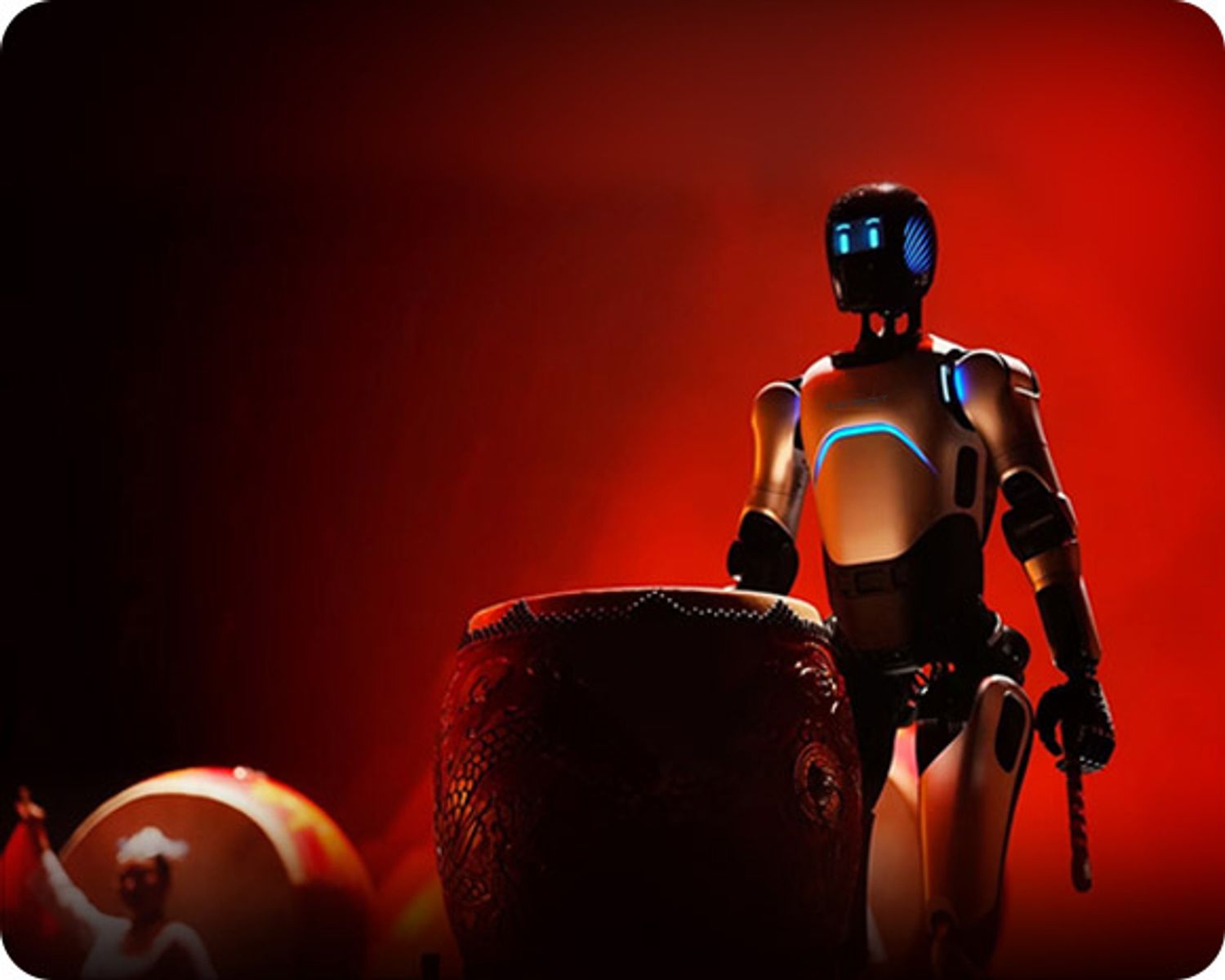
Transitioning Past Proof-of-Concept Fatigue
At the upcoming RoboBusiness 2026 conference, Shanghai-based humanoid manufacturer AGIBOT will present its industrial deployment blueprint for scaling bipedal automation. As enterprise clients experience proof-of-concept fatigue from isolated pilot trials, the robotics sector faces mounting demand for predictable commercialization playbooks.
AGIBOT’s executive team aims to dismantle the lingering skepticism surrounding humanoid productivity by sharing empirical deployment data from thousands of operational units. The presentation focuses on closing the notorious 'deployment gap' that separates laboratory demonstration success from continuous factory floor reliability.
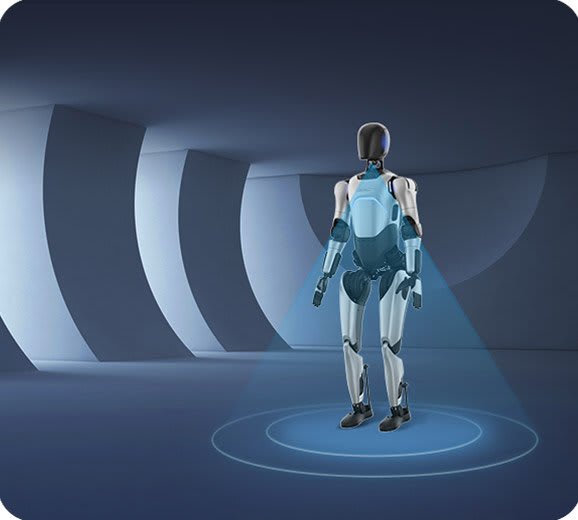
Dual-System Whole-Body Motion Control Architecture
A cornerstone of AGIBOT's industrial hardware stack is its proprietary dual-system whole-body motion control architecture. This decoupled framework separates high-level semantic task planning from low-level joint reflex stabilization, ensuring that sudden external perturbations do not crash the robot.
While high-level vision-language models process assembly instructions, localized kinematic controllers maintain balance across slippery, oil-slicked shop floors. This architectural division of labor guarantees that even if higher-level cloud reasoning suffers a transient delay, the humanoid remains safely upright.
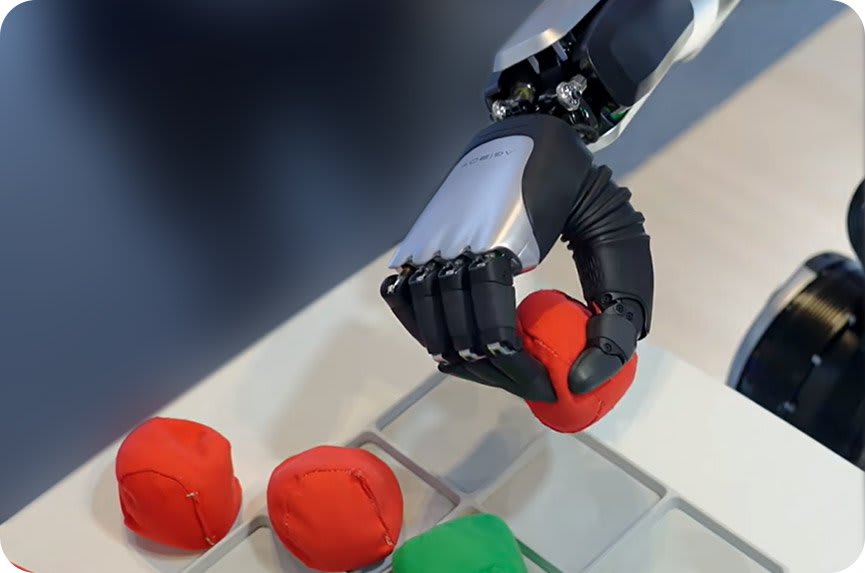
Sub-Millimeter Tactile Grasping for High-Precision Manufacturing
In commercial manufacturing environments, mere bipedal balance is insufficient without high-dexterity tactile manipulation capabilities. AGIBOT’s Expedition and Yuanzheng humanoid models incorporate five-fingered end-effectors embedded with high-density capacitive tactile arrays.
These sensitive sensor arrays detect microscopic shear slippage and contact forces at sub-millimeter tolerances, allowing humanoids to seat fragile electronic connectors. Mastering precision assembly tasks enables the robots to perform intricate wire insertion and stamping inspections that rigid robotic arms cannot easily accommodate.
Zero Facility Retooling: Slotting into Brownfield Factories
A critical economic differentiator highlighted in AGIBOT’s deployment playbook is the ability to integrate into brownfield factories without structural modifications. Traditional automated guided vehicles and stationary robotic arms demand millions of dollars in floor remodeling, safety fences, and specialized magnetic tracks.
In contrast, humanoids utilize existing human walkways, climb conventional facility staircases, and open standard access doors using human-scaled handles. By eliminating facility retooling costs, enterprise manufacturers can deploy humanoid fleets overnight with minimal disruption to ongoing production lines.
Decentralized Edge Intelligence and Low-Power Inference
Operating fleets of dozens of humanoids within industrial plants requires overcoming severe enterprise network bandwidth constraints. Rather than streaming continuous raw video feeds to centralized cloud servers, AGIBOT’s platforms perform spatial mapping and object classification locally.
Onboard low-power neural inference accelerators process sensory data at the edge, consuming less than 150 watts of total electrical power. This decentralized computational design safeguards plant operational security while ensuring uninterrupted performance even during enterprise Wi-Fi dropouts.
Validating a Two-Year Return-on-Investment Benchmark
For corporate chief financial officers, adopting humanoid robotics hinges entirely on achieving a defensible return on investment within standard capital cycles. AGIBOT’s deployment case studies demonstrate that scaling humanoid fleets across multi-shift operations achieves full capital payback within 18 to 24 months.
Savings are realized by reducing repetitive strain injuries, lowering product defect rates, and maintaining steady assembly output during overnight shifts. Providing verified financial payback data is transforming humanoid robotics from speculative research bets into justifiable capital expenditure line items.
Establishing the Blueprint for Mass Industrial Adoption
AGIBOT’s comprehensive deployment playbook establishes a vital pragmatic roadmap for the global embodied robotics industry. By addressing the unglamorous realities of floor safety, maintenance cycles, and network reliability, the company is bridging the chasm to mass adoption.
As enterprise manufacturers worldwide seek solutions to structural labor shortages, the transition to bipedal automation is accelerating rapidly. The lessons codified in AGIBOT's industrial framework will guide the next generation of humanoid workers stepping into factories across the globe.

Sources
Related Articles
Unitree’s H2 pushes humanoids toward teleoperation-first service work
Unitree’s Superman humanoid puts speed first as China’s robotics race accelerates
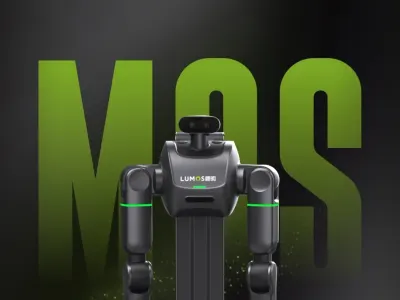
Lumos Robotics positions MOS 2 as a factory-ready humanoid built for teleoperation and heavy handling
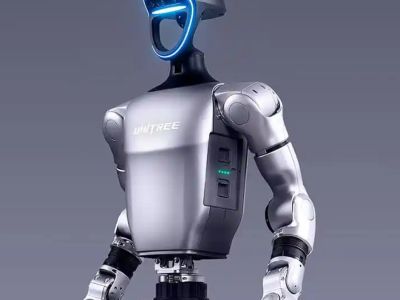
Unitree Expands Commercial Footprint with G1 Mass Deployments and Shanghai Market Momentum
Related Comparisons
Compare AgiBot A2 Ultra with similar robots

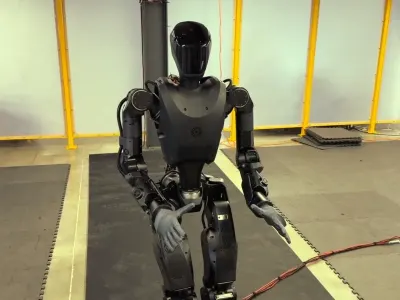
AgiBot A2 Ultra vs Phantom MK1
Which humanoid robot is better? AgiBot A2 Ultra vs Phantom MK1 compared for dexterity, AI capabilities, payload, and defense use cases.
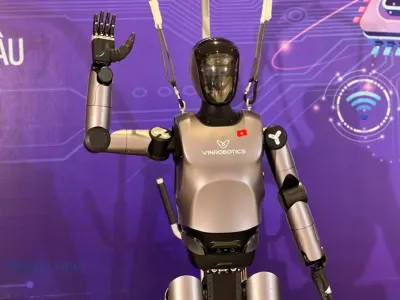
AgiBot A2 Ultra vs VR-H3
Which humanoid robot is better? AgiBot A2 Ultra vs VR-H3 compared for dexterity, AI autonomy, payload capacity, and industrial deployment readiness.
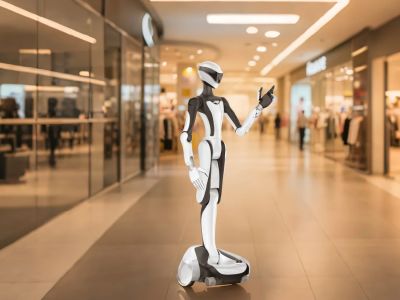
RobotEra Q5 vs AgiBot A2 Ultra
In-depth comparison of Q5 by Robot Era and AgiBot A2 Ultra by AgiBot. Analyze sensors, navigation, battery life, and mobility differences.
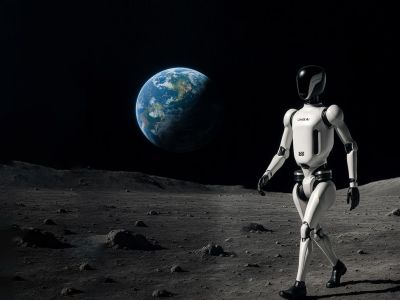
Martian vs AgiBot A2 Ultra
Head-to-head: Martian vs AgiBot A2 Ultra. Explore differences in navigation, battery, sensors, mobility, and software.
Learn More About This Robot
Discover detailed specifications, reviews, and comparisons for AgiBot A2 Ultra.
View Robot Details →