Boston Dynamics Opens Robotics Metaplant Application Center to Train Atlas Humanoid Fleet for Hyundai Manufacturing
Robot Details
Atlas • Boston DynamicsPublished
September 21, 2026
Reading Time
4 min read
Author
Origin Of Bots Editorial Team
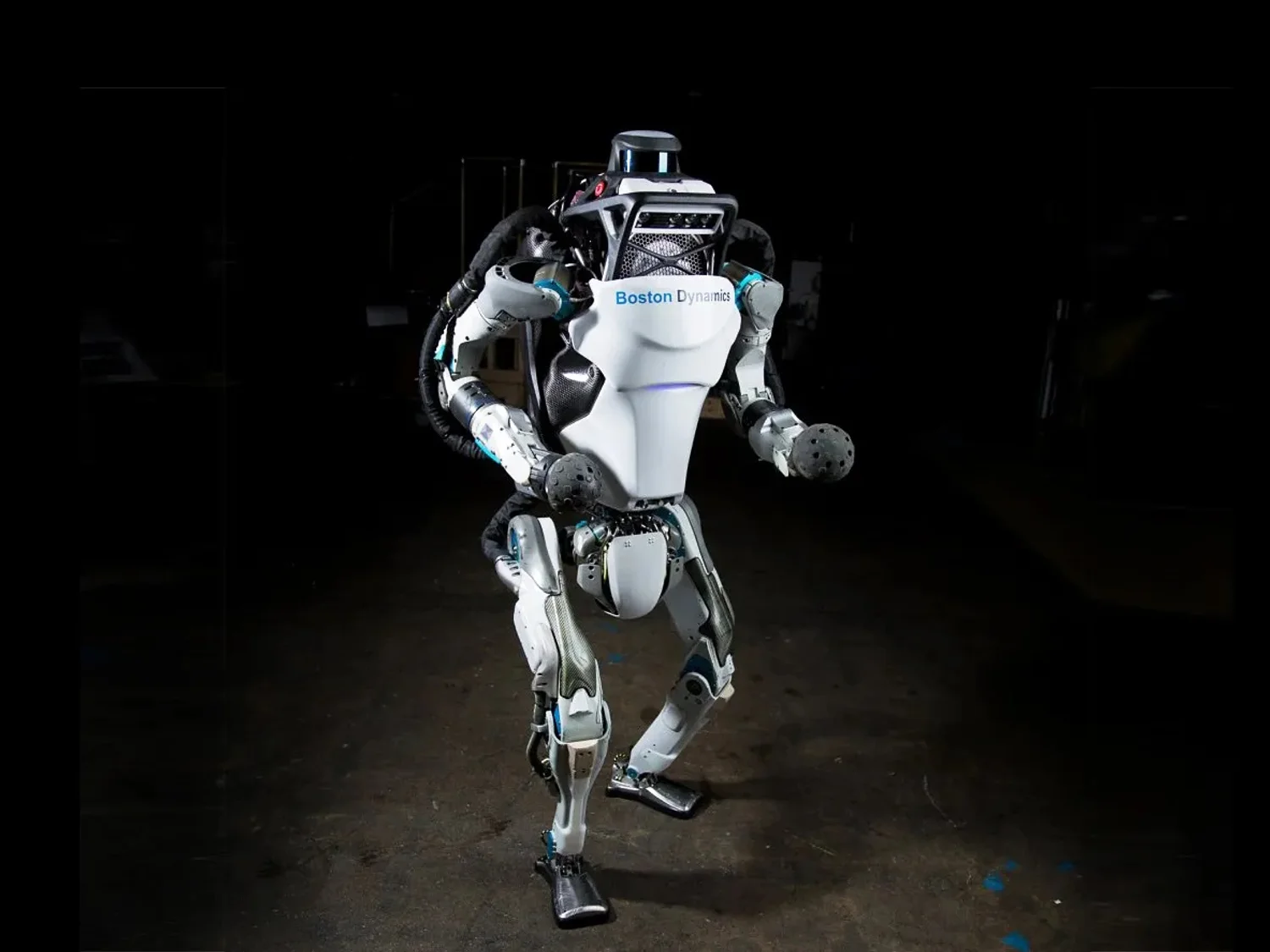
Launching the Robotics Metaplant Application Center in Georgia
Boston Dynamics has officially inaugurated its Robotics Metaplant Application Center near Savannah, Georgia, marking a pivotal industrial milestone. Constructed within Hyundai Motor Group Metaplant America, the dedicated facility serves as an advanced operational proving ground for the electric Atlas humanoid. Rather than conducting isolated laboratory trials, engineers are embedding bipedal robots directly alongside active automotive production infrastructure.
The establishment of the center represents a strategic evolution from time-boxed exploratory pilots into permanent, factory-integrated training regimens. Hyundai and Boston Dynamics are pioneering enterprise-scale physical artificial intelligence designed to enhance worker ergonomics and plant productivity. By embedding the humanoid development cycle directly into an active manufacturing complex, the partners are accelerating the transition toward commercial readiness.
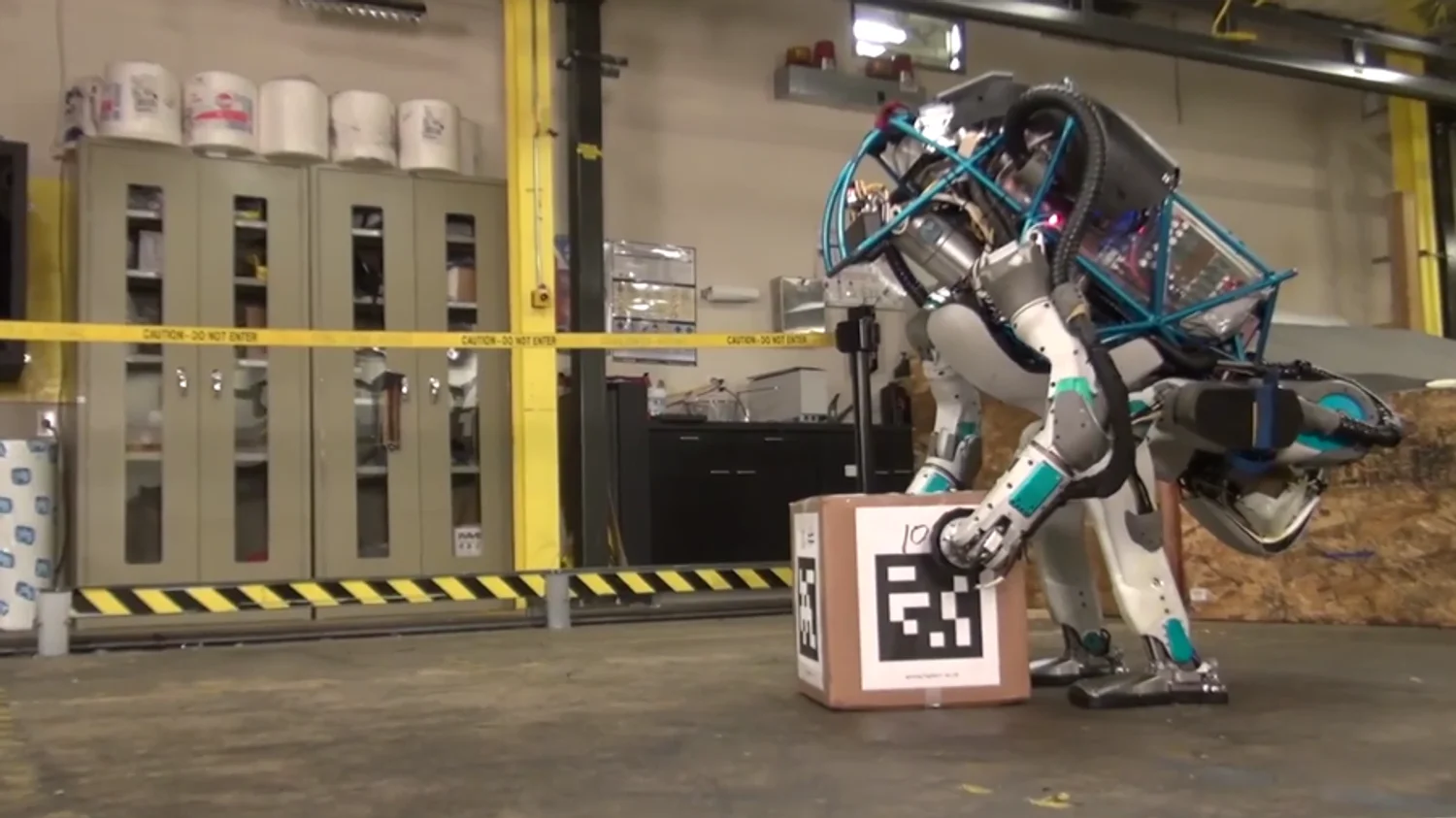
The 'Robot Behavior Factory': Generating Industrial Physical Data
Zack Jackowski, Chief Product and Technology Officer at Boston Dynamics, described the Georgia facility as a dedicated robot behavior factory. The center brings together authentic vehicle components, industrial fixtures, specialized assembly workcells, and experienced robot teleoperation pilots. This coordinated ecosystem systematically generates dense, high-fidelity physical interaction data required to train robust neural manipulation policies.
Atlas models absorb behavioral intelligence through a multi-modal curriculum spanning teleoperation, simulation reinforcement learning, and Universal Manipulation Interfaces. Collecting diverse telemetric data directly from real factory fixtures ensures that learned control policies withstand genuine industrial noise. This data pipeline transforms raw automotive handling tasks into repeatable, generalizable behaviors that can be deployed across global manufacturing networks.
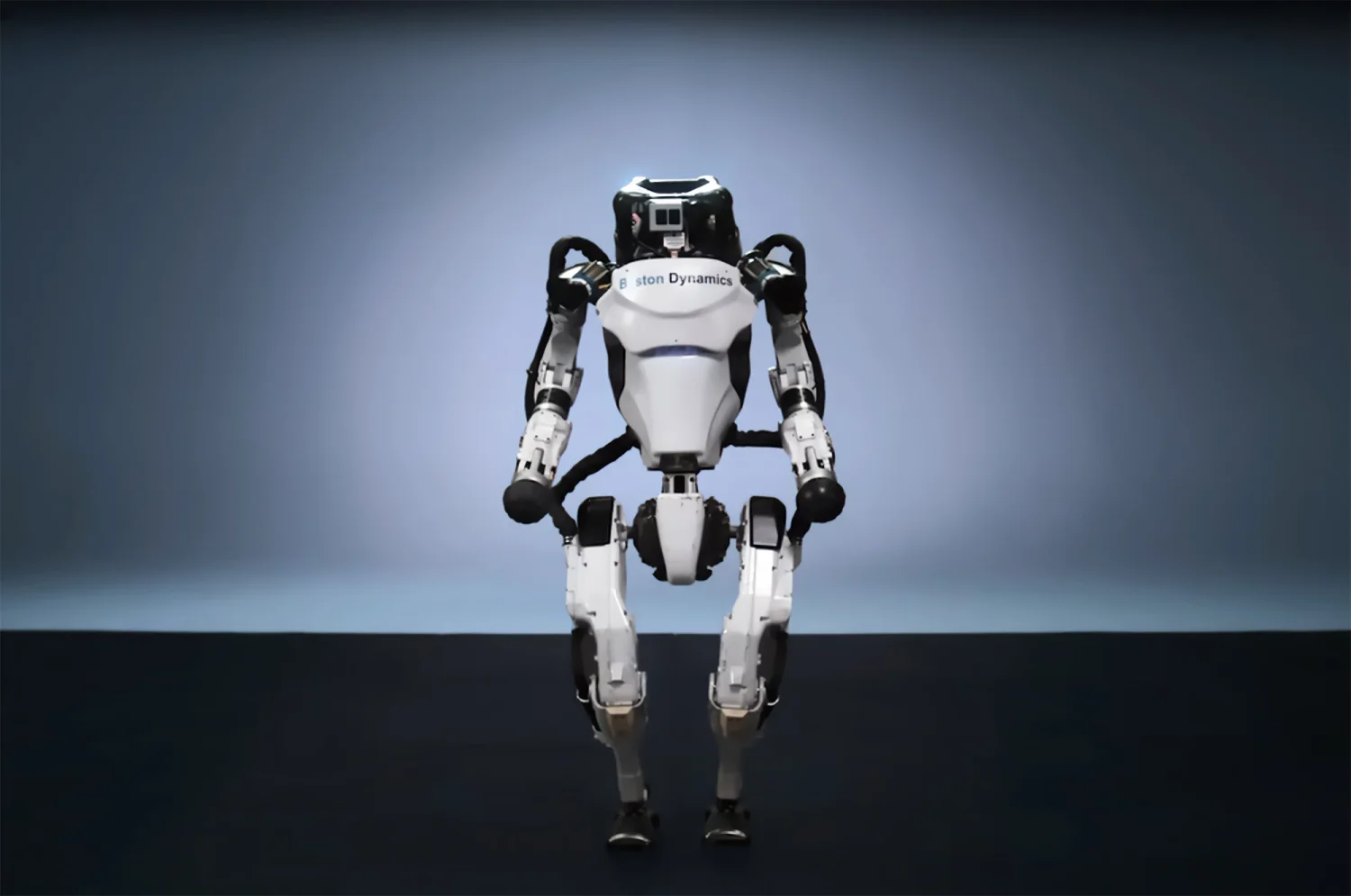
Mastering Complex Automotive Parts Sequencing and Dexterous Handling
Initial operational training at the application center focuses on parts logistics, sorting, and sequencing prior to final assembly line placement. Automotive sequencing demands sophisticated manipulation because vehicle components feature irregular geometries, delicate cosmetic surfaces, and uneven mass distribution. Robots must identify designated non-cosmetic grip points to prevent surface blemishes while extracting heavy items from dense shipping crates.
Many components mandate synchronized bimanual manipulation, requiring Atlas to balance dynamic payload shifts while transferring parts into high-density line cubbies. Engineers report that the mechanical design assumptions built into the production version of electric Atlas have proven exceptionally accurate in initial tests. The operational focus has consequently shifted toward refining plant fixtures and optimizing industrial packaging to facilitate seamless humanoid interaction.
Validating Production Tooling and Hardware Durability
Beyond software training, the Savannah facility provides an unforgiving testing environment to evaluate the mechanical durability of Atlas hardware. Robots execute repetitive material transfers across extended continuous shifts, exposing custom rotary actuators and harmonic drives to relentless thermal loading. Monitoring joint backlash and sensor drift under industrial workloads enables Boston Dynamics engineers to validate component life expectancies before serial rollout.
Operating in close proximity to assembly technicians also provides essential validation data for multi-layered physical safety architectures. Onboard torque-sensing motors detect minute deviations in contact resistance, halting movement instantaneously if an unexpected human obstruction is encountered. Proving mechanical resilience and deterministic fail-safe behavior is mandatory before automotive regulatory bodies permit unrestricted shop-floor coexistence.
Hyundai's 25,000-Unit Enterprise Deployment Strategy
The opening of the application center serves as the foundational cornerstone for Hyundai Motor Group's long-term commercial automation roadmap. Following the corporate robotics vision unveiled at CES, Hyundai plans to deploy approximately 25,000 Atlas humanoids across its global manufacturing network. Initial production units will be phased into high-ergonomic-strain workstations across Hyundai Motor and Kia assembly facilities over the coming years.
By 2030, corporate planners intend to expand Atlas's operational scope from parts sequencing into direct structural component assembly. Humanoid workers will shoulder physically demanding responsibilities, including heavy stamping press tending, structural adhesive application, and chassis marriage. This long-term commitment guarantees Boston Dynamics a captive, high-volume customer pipeline capable of absorbing substantial serialized output.
Scaling Infrastructure: A Tenfold Expansion and Manufacturing Plant
To support this aggressive deployment trajectory, Boston Dynamics has already commenced preliminary construction on a major facility expansion. Next year, training operations will transition into an adjacent building that will expand the Metaplant Application Center's physical footprint tenfold. Concurrently, Hyundai announced plans to construct a dedicated domestic manufacturing facility capable of producing up to 30,000 humanoid robots annually by 2028.
This substantial manufacturing capacity positions Hyundai to compete directly against aggressive volume targets announced by Tesla, Agility Robotics, and 1X Technologies. Building a vertically integrated American supply chain shields the robotics program from international logistics disruptions and trade friction. Scaling domestic manufacturing infrastructure ensures that software advances developed at RMAC are immediately matched by scalable assembly lines.
Cross-Industry Expansion and the Future of General-Purpose Labor
While automotive assembly remains Atlas's primary proving ground, Boston Dynamics is actively exploring commercial applications across diverse industries. The company is leveraging established enterprise relationships from its Spot quadruped and Stretch trailer-unloader deployments to evaluate new markets. Discussions are already underway with industrial leaders across aerospace manufacturing, semiconductor fabrication, third-party logistics, and pharmaceutical production.
Deploying humanoids across diverse operational environments will test whether physical foundation models can generalize beyond structured factory floors. As the Savannah center scales its behavior factory, Atlas is mastering the foundational sensorimotor skills required for true general-purpose utility. The opening of RMAC firmly cements the shift of humanoid robotics from speculative laboratory curiosity into the bedrock of modern industrial automation.
Sources
Related Articles

International Broadcasters Spotlight Viral Milestone of Humanoid Robot Autonomously Walking Off Assembly Line

Samsung Begins Prototype 2nm AI5 Chip Fabrication for Tesla FSD and Optimus Humanoid Robots
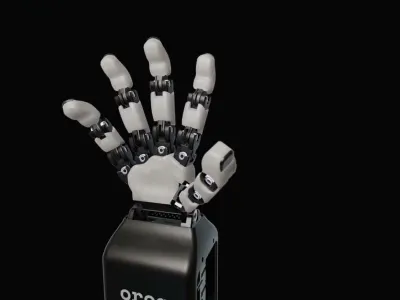
ETH Zurich Unveils 'Fingers as Legs': Anthropomorphic Hands Master Untethered Locomotion and Mobile Manipulation
Spirit AI Forecasts General-Purpose Humanoid Robot Brains Poised for a 'ChatGPT-Style' Inflection by 2027
Related Comparisons
Compare Atlas with similar robots
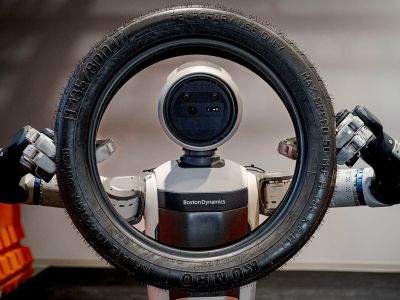
Optimus vs Atlas (Electric Atlas, 2025)
In-depth comparison of Optimus and Atlas (Electric Atlas, 2025), covering hardware capabilities, teleoperation, and enterprise readiness.
Optimus vs Unitree G1
Compare Optimus vs Unitree G1 for humanoid mobility, dexterity, autonomy, and payload capacity.
Unitree G1 vs Unitree H1
Head-to-head: Unitree G1 vs Unitree H1 compared on bipedal balance, AI learning, and real-world deployment.

Ameca vs Moya
Which humanoid robot is better? Ameca vs Moya compared for dexterity, AI capabilities, and price.
Learn More About This Robot
Discover detailed specifications, reviews, and comparisons for Atlas.
View Robot Details →