XPENG Robotics Unveils XPACE: Simulation Platform Training IRON Humanoids via Video Prediction and Synthetic Failure Recovery
Robot Details
Next‑Gen IRON • XPENGPublished
September 18, 2026
Reading Time
4 min read
Author
Origin Of Bots Editorial Team

Solving the High Cost of Real-World Robotic Demonstration
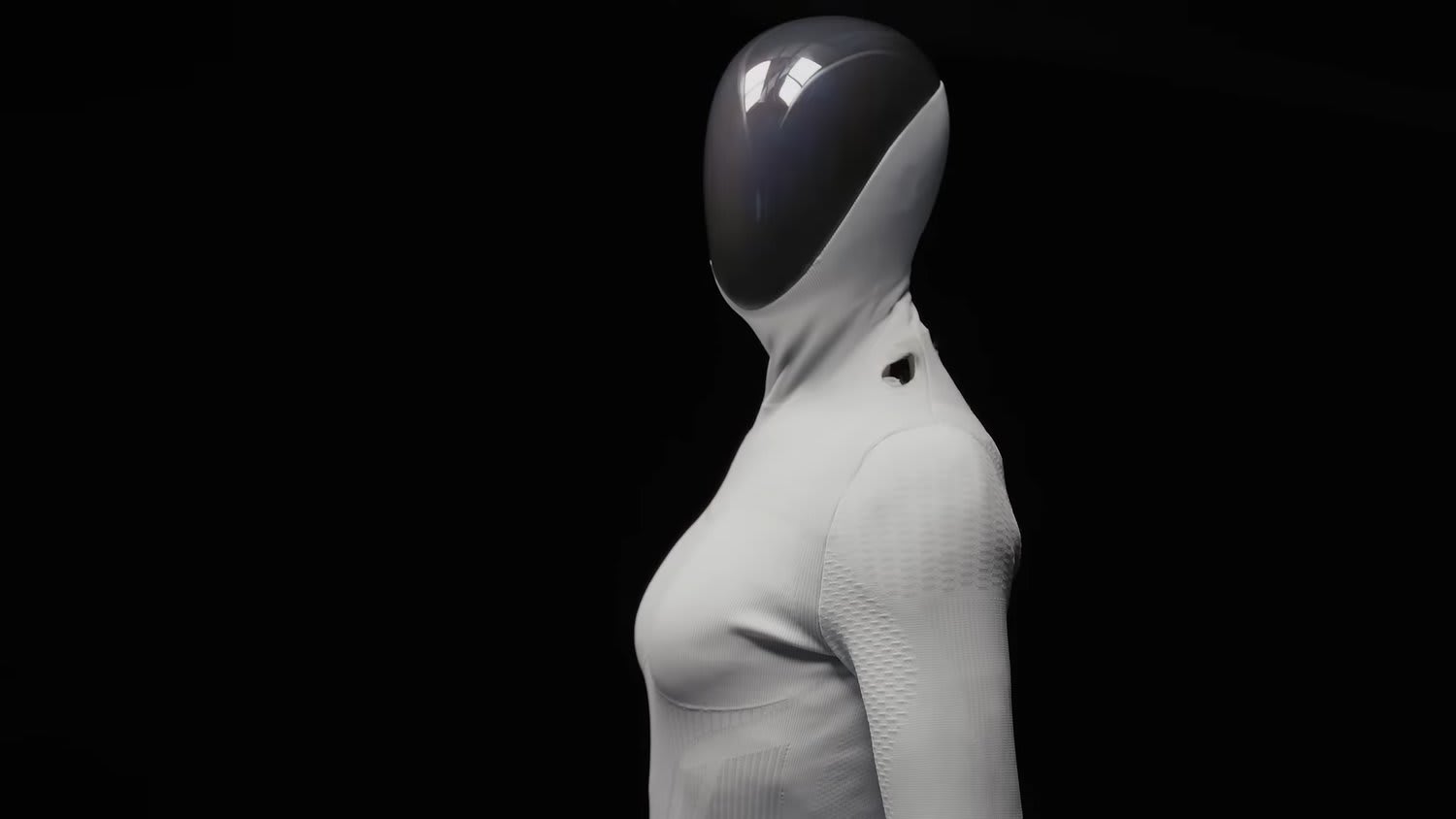
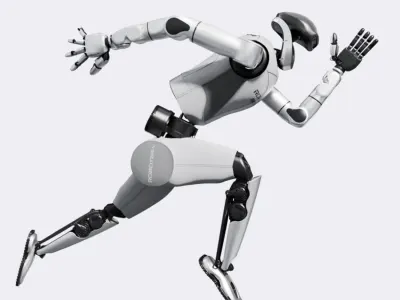
XPENG Robotics announced the release of XPACE, a groundbreaking embodied AI simulation and policy learning platform for its IRON humanoid. The breakthrough directly addresses robotics' most expensive bottleneck: the grueling requirement to manually demonstrate every physical action on actual hardware. Traditional teleoperation and physical robot staging require thousands of operator hours, resulting in slow training cycles and hardware wear.
XPACE circumvents these limitations by combining real human video demonstrations with advanced video prediction and synthetic mistake simulation. The dual-role system simultaneously generates robot actions alongside predicted video frames, modeling how potential actions alter physical surroundings. This computational architecture allows the IRON biped to learn new manipulation workflows in virtual space within minutes instead of weeks.
Training on 5,000 Hours of Diverse Multimodal Demonstration Data
To establish a versatile behavioral foundation, XPENG trained the XPACE architecture across five thousand hours of rich physical video streams. The training corpus integrates unscripted everyday human activity, motion-tracked demonstrations, aligned task videos, and physical IRON teleoperation captures. By observing skilled human hands executing intricate tasks, the neural model learns natural trajectories, grasping compliance, and object ergonomics.
Cross-embodiment data ingestion enables the system to transfer human manipulation strategies directly onto the robot’s five-fingered articulated hands. The model bridges kinematic differences between human arms and the robot’s mechanical joints through unified spatial coordinate representations. Leveraging diverse human demonstrations ensures that the humanoid inherits versatile physical intuitions without demanding exhaustive robot-specific logging.
The Power of Synthetic Failure Injections and Recovery Training
The defining algorithmic innovation of XPACE is its autonomous generation of synthetic operational mistakes and recovery trajectories. In traditional imitation learning, robots learn only ideal expert trajectories, leaving them completely helpless when an object slips or bounces off-course. XPACE deliberately injects kinematic deviations into virtual simulations, perturbing arm angles and dislodging grasped items during mid-motion.
The system then autonomously simulates plausible physical recovery paths that restore the robot’s end-effectors back to the intended trajectory. These synthetically generated recoveries were filtered for physical plausibility and mixed into training datasets as eight percent of the total volume. Exposing policies to controlled failure scenarios teaches the humanoid how to self-correct slips and misalignment without human intervention.
Empirical Benchmarks: Boosting Task Success from 61.7% to 86.7%
XPENG published rigorous empirical evaluation benchmarks demonstrating dramatic performance gains resulting from synthetic recovery training. Across a demanding physical testing suite comprising banana placement, liquid pouring, and object handovers, mean success surged from 61.7% to 86.7%. Liquid pouring showed the most astonishing improvement, jumping from an inconsistent fifty percent success rate up to a flawless ninety-five percent.
In comparative trials, XPACE achieved a 68.3% average success across challenging multi-step benchmarks, compared to 40% for DreamZero and 6.7% for GR00T. Crucially, tasks such as bowl stacking were mastered successfully despite being absent from robot demonstration datasets, proving genuine zero-shot transfer. These empirical leaps prove that simulating mistake recovery builds resilient physical policies capable of handling messy, real-world execution.
Seamless Integration with NVIDIA Isaac Sim 6.1 GA Architecture
The computational muscle powering XPACE relies on close integration with NVIDIA's newly released Isaac Sim 6.1 general availability platform. NVIDIA’s accelerated physics engine simulates contact dynamics, deformable material physics, and sensor noise across thousands of parallel GPU instances. High-fidelity ray tracing and photometric rendering generate photorealistic visual feeds that eliminate visual sim-to-real domain gaps.
Parallel GPU rendering allows XPENG engineers to compress months of physical trial-and-error training into a few hours of compute cluster runtime. Policies trained inside Isaac Sim transfer directly onto IRON-R01 physical prototypes without requiring delicate on-robot fine-tuning. This deep synergy with NVIDIA’s simulation stack provides XPENG with an industrial-grade foundation to scale embodied intelligence rapidly.
Preparing IRON for Scaled Q4 2026 Production and Retail Deployment
The development of XPACE directly underpins XPENG’s aggressive commercialization roadmap for the serialized IRON bipedal platform. Following its recent 900-million-dollar funding round at a 6.3-billion-dollar valuation, XPENG is targeting mass pilot production in Q4 2026. Initial commercial deployments will place IRON units into XPENG retail showrooms and corporate facilities in 2027 to serve as autonomous greeters and guides.
Operating inside customer-facing showrooms demands an exceptionally high standard of physical safety, situational awareness, and behavioral reliability. XPACE’s self-correcting recovery policies ensure that IRON can navigate crowded retail aisles and interact with shoppers without awkward operational freezes. Validating software autonomy ahead of volume manufacturing ensures that production units deliver immediate commercial value upon deployment.
The Shift Toward Self-Correcting, Resilient Embodied Intelligence
XPENG’s release of XPACE signals a vital conceptual evolution in how researchers train next-generation humanoid robotic systems. The robotics industry is moving decisively beyond rigid imitation learning pipelines that shatter upon the slightest unexpected physical disturbance. By systematically teaching robots how to recover from mistakes, XPACE bridges the perilous chasm between laboratory demos and production reliability.
A humanoid robot that can catch a slipping tool, re-grasp an awkward package, and adapt to shifting workpieces is a viable economic tool. As XPENG integrates automotive manufacturing rigor with resilient physical foundation models, the pathway to widespread humanoid adoption becomes clear. XPACE proves that true robotic mastery lies not in avoiding mistakes, but in possessing the intelligence to correct them.
Explore Humanoids
Sources
Related Articles

Tesla Optimus Scales Internal Gigafactory Operations and Reaffirms 2027 Consumer Target

International Broadcasters Spotlight Viral Milestone of Humanoid Robot Autonomously Walking Off Assembly Line
Samsung Begins Prototype 2nm AI5 Chip Fabrication for Tesla FSD and Optimus Humanoid Robots
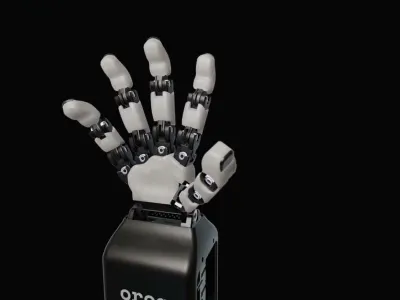
ETH Zurich Unveils 'Fingers as Legs': Anthropomorphic Hands Master Untethered Locomotion and Mobile Manipulation
Related Comparisons
Compare Next‑Gen IRON with similar robots
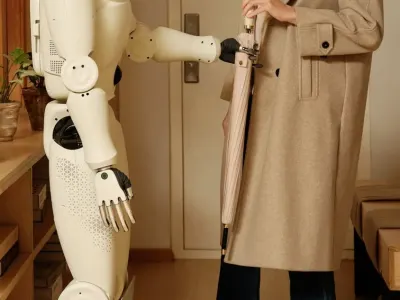
Next‑Gen IRON vs Jupiter
Which humanoid robot is better? Next-Gen IRON vs Jupiter compared for dexterity, AI autonomy, payload, and industrial use cases.
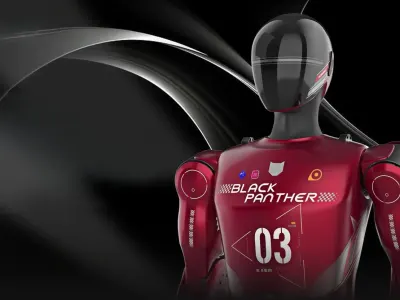
Next‑Gen IRON vs Bolt
Compare Next-Gen IRON vs Bolt for humanoid mobility, dexterity, autonomy, and payload capacity in industrial and dynamic use cases.

Next‑Gen IRON vs Moya
In-depth comparison of Next-Gen IRON by XPENG and Moya by DroidUp, covering hardware capabilities, teleoperation, and enterprise readiness.
L7 vs Next‑Gen IRON
Head-to-head: L7 vs Next-Gen IRON. Explore differences in speed, sensors, navigation, and AI capabilities.
Learn More About This Robot
Discover detailed specifications, reviews, and comparisons for Next‑Gen IRON.
View Robot Details →