SenseRobot Launches AI Go Robot for Physical Board Practice
Robot Details
SenseRobot Go • SenseRobotPublished
May 6, 2026
Reading Time
3 min read
Author
Origin Of Bots Editorial Team
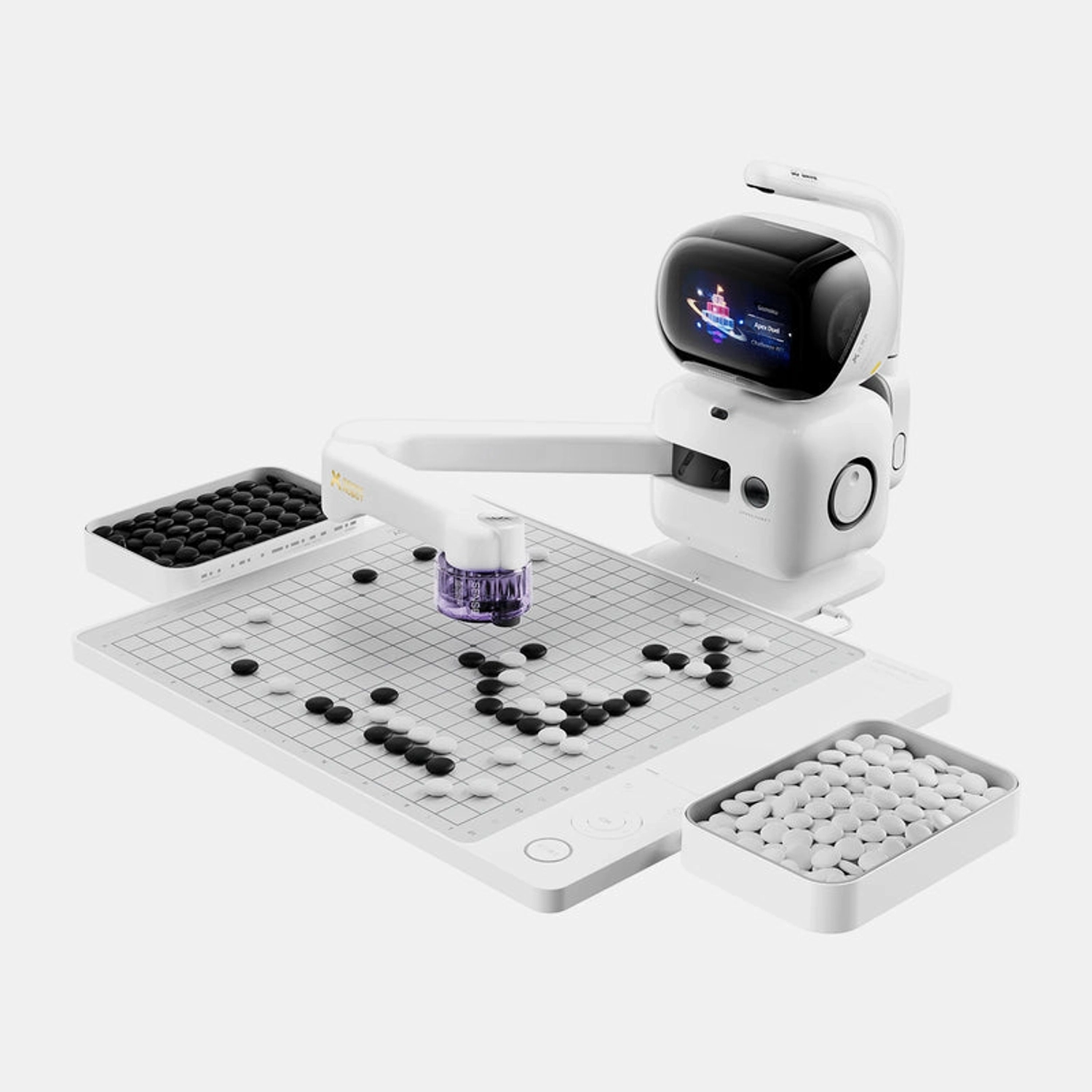
Go Learning Challenge Met
Manual Go practice has long relied on human opponents or screens, limiting accessibility for learners worldwide. SenseRobot, developed by SenseTime, unveiled the SenseRobot Go in June 2023 as an AI-powered robotic arm system designed for real-board Go gameplay and teaching. The stationary arm robot enables human-AI matches, remote play with friends, and structured exercises from beginner to amateur 5-dan levels, integrating SenseTime's AI vision and robotics for an immersive, screen-free experience.
Niche Precision Stands Out
This robot excels through purpose-built design for Go, with over 99.9% piece recognition accuracy via real-time cameras, support for multiple board sizes from 9x9 to 19x19, and interactive voice guidance paired with robotic demonstrations. It fills a gap in physical board games by offering 20 AI difficulty levels up to beyond professional 9-dan strength, plus family-friendly Gomoku mode and game record analysis via app. SenseRobot Go prioritizes tactile learning over digital alternatives, enabling consistent practice without screen fatigue. SenseRobot Go turns abstract strategy into hands-on mastery via robotic precision.
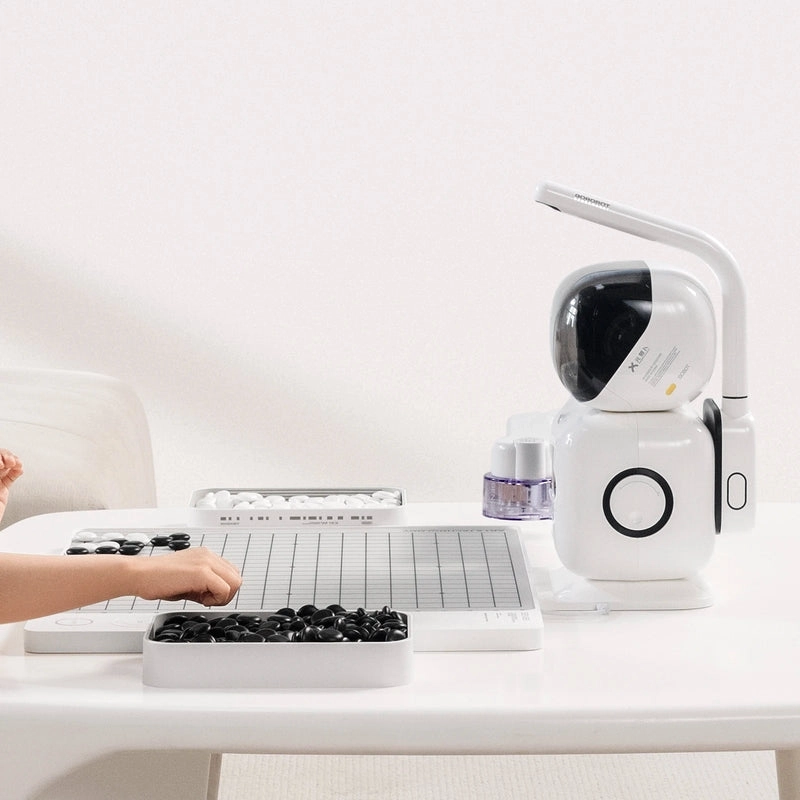
Vision Drives Precise Play
Game and front cameras capture board states as input, feeding into proprietary AI processing for move analysis and strategy generation. The system then outputs targeted actions through a three-degree-of-freedom robotic arm with electromagnet gripper, placing ABS plastic Go stones accurately at 0.1 m/s. This sensor-to-execution flow ensures reliable gameplay on structured boards, with collision avoidance enhancing safety during human interaction.
Family Practice Unfolds
In a home setting, a child beginner selects a 9x9 board exercise from over 2,000 AI-curated problems, receiving voice hints and visual labels for tricky positions. The robot demonstrates optimal moves by placing stones, allowing the user to respond physically, while the app later reviews the session for skill gaps. This cycle builds spatial reasoning and concentration through repeated, distraction-free rounds, scaling to full 19x19 games as proficiency grows.
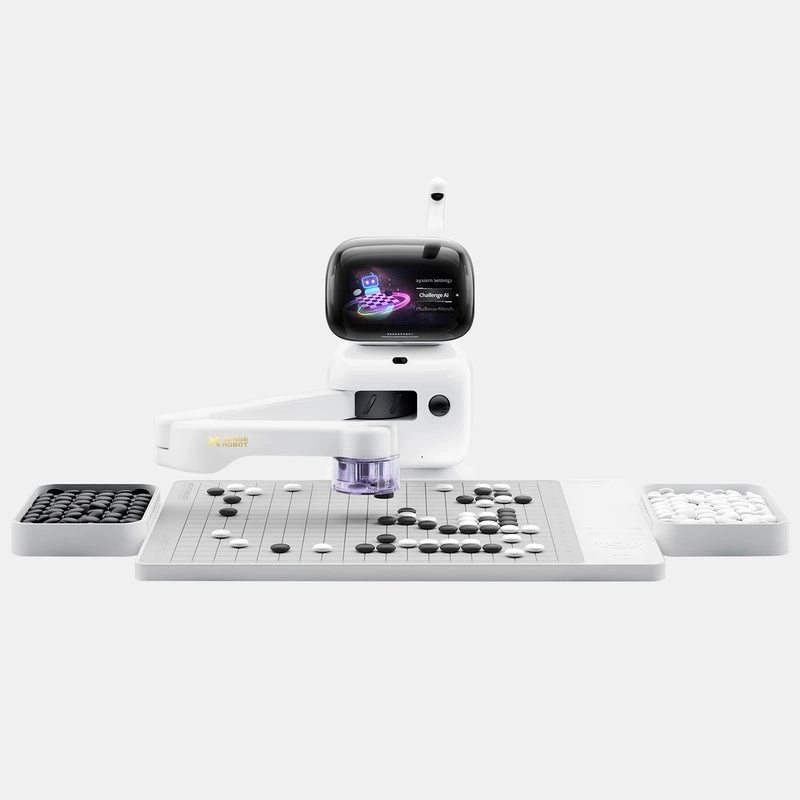
Compact Form Enables Home Use
Designed at 78.7 x 59.4 x 35.53 cm and 4.86 kg including board and pieces, the robot fits standard tabletops for stationary deployment. Visual navigation and soft gripper with collision avoidance support safe, reliable operation in shared spaces. These features make it practical for daily educational use without needing extensive setup.
Fills Go Training Void
SenseRobot Go occupies a specialized niche in the robotics landscape by automating Go instruction on physical boards, distinct from general-purpose arms or screen-based apps. It targets education and family gaming, blending AI depth with tangible play to address the scarcity of patient, always-available Go tutors. This positioning expands robotics beyond industrial or service roles into recreational skill-building, appealing to Go enthusiasts seeking low-screen alternatives.
Niche Robotics Expands
The SenseRobot Go signals a push in miscellaneous robotics toward hyper-specialized tools for intellectual games, proving viability for low-volume, high-precision consumer niches previously uneconomical to automate. This reflects broader industry momentum in embedding AI into hobby domains, potentially inspiring similar systems for other board games and accelerating adoption in home learning environments.
Sources
Related Articles
Toyota's Kirobo Mini Pioneered Palm-Sized Emotional Companionship
HUROTICS Launches H-Medi Pro, First Garment-Type Wearable Rehab Suit with AI-Driven Gait Correction
Acemate Launches AI Tennis Robot for Solo Rally Training
Festo's BionicTurtleWalker Demonstrates Pneumatic Logic Without Electronics or Batteries
Learn More About This Robot
Discover detailed specifications, reviews, and comparisons for SenseRobot Go.
View Robot Details →