Topstar Unveils Star, a 172 cm Two-Legged Humanoid Robot Built for Factory Work
Robot Details
Topstar Star • TopstarPublished
November 7, 2026
Reading Time
5 min read
Author
Origin Of Bots Editorial Team
A Factory Automation Veteran Takes Its First Steps
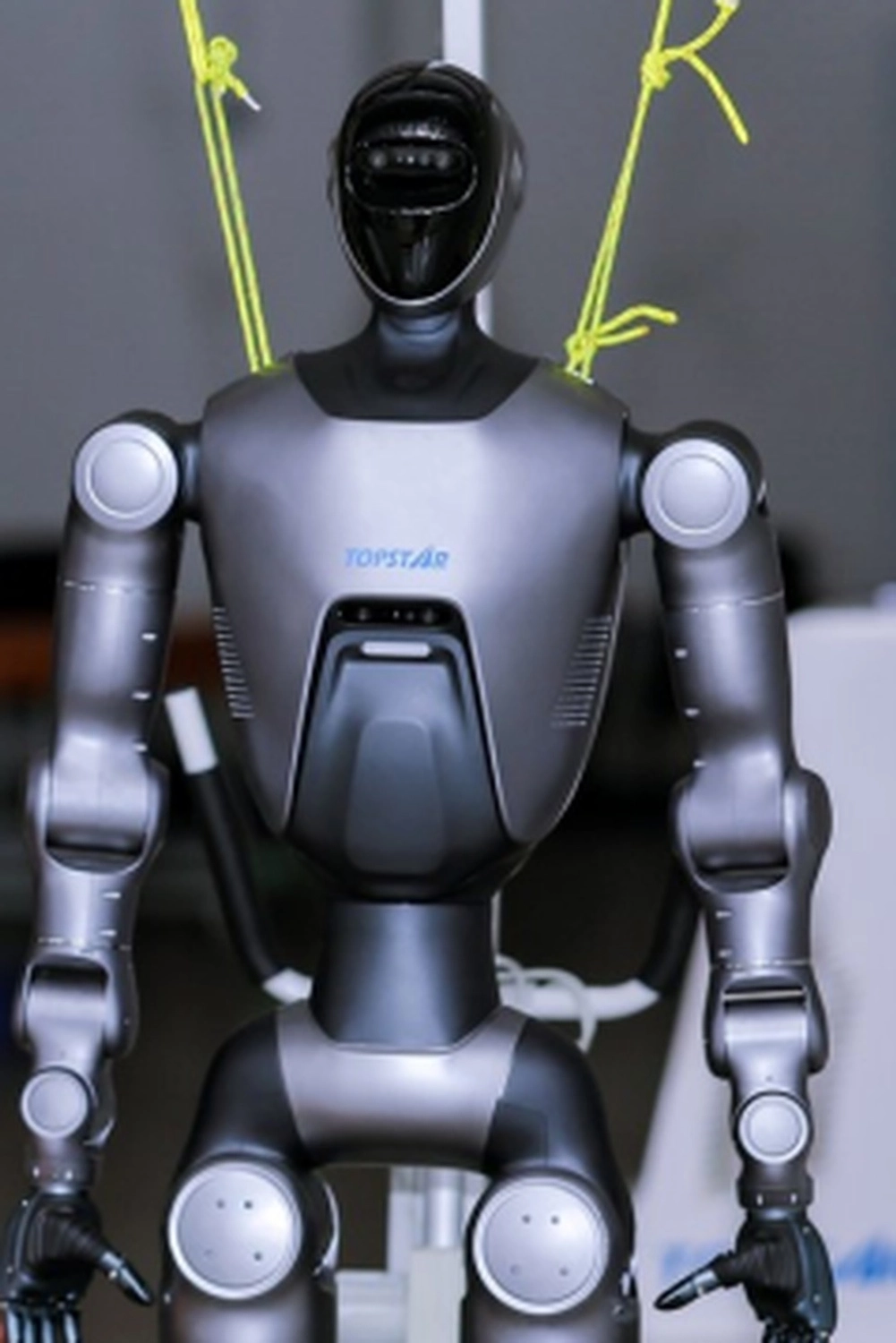
Topstar, a Chinese maker of industrial robots and factory equipment, has unveiled Star, its first publicly known two-legged humanoid robot. Shown on November 7 at the company's open day in Dongguan, Star stands 172 centimeters tall, about the height of an average adult, and is designed to move materials and sort parts inside working factories.
The debut matters because it comes from a company that already sells automation to manufacturers, rather than a startup with only a prototype to show. If established equipment suppliers can add humanoids to their catalogs, factory customers gain a familiar vendor. Whether Star can do the work reliably, however, has yet to be publicly shown.
Built to Fit Where People Already Work
Star weighs 72 kilograms, close to the weight of an adult man, and its height was chosen so it can fit production lines laid out for people. Topstar quotes a 10-kilogram payload for its arms, about the weight of a large sack of rice. Battery life is given as more than four hours, with fast charging.
The company says that is enough to cover a single factory shift, though an eight-hour shift would need at least one recharge, and battery capacity has not been published. Three cameras, on the head, chest and back, give the robot a full 360-degree view of its surroundings, and workers can give it instructions in ordinary language.
Arms Shaped Like Ours
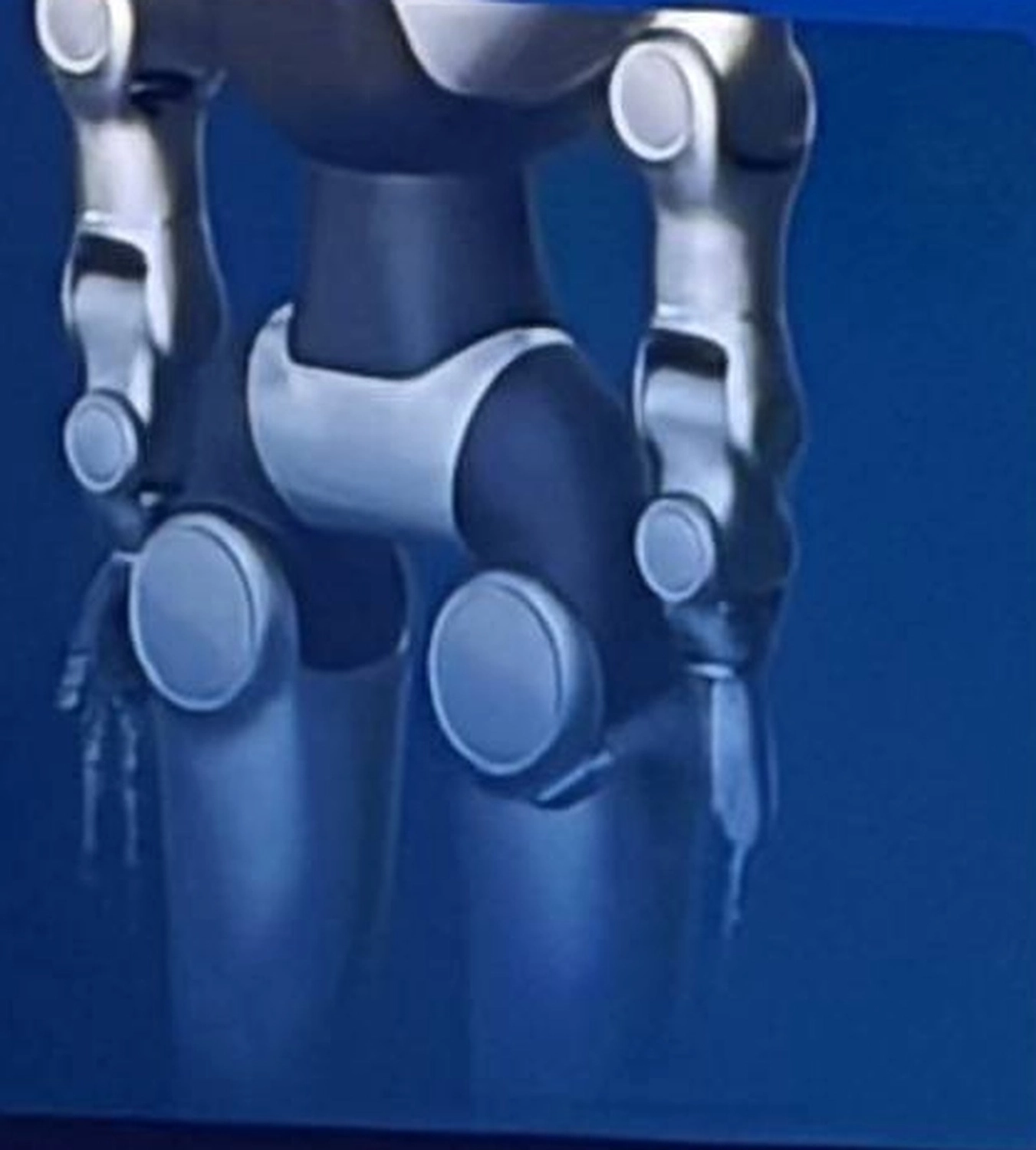
The most carefully described part of Star is its upper body. Each arm has seven axes, meaning seven separate points of rotation, in imitation of the freedom of a human arm. A cross-shaped wrist joint adds the twist and tilt that workers use when handling parts, driven by joint modules, the combined motor units that move each joint.
Star also works as a data collector. Topstar says the robot records physical data on the job, feeding information back to improve its skills over time. That loop is increasingly central to humanoid development, since the AI systems that control robots learn best from examples drawn from the real, messy conditions they will actually face.
Why Legs, When Wheels Are Cheaper
Topstar already sells wheeled and dual-arm humanoids, so adding legs is a deliberate choice. The company argues that walking lets Star move between factory areas without any changes to the production line, and gives it an advantage in narrow spaces. Wheeled machines, by contrast, depend on smooth, clear floors to get around.
Outside experts are more measured. Analyst Bo Wenxi, quoted by the Beijing Business Daily, said wheeled robots are cheaper and pay back faster on flat production lines. Legs make more sense for stairs, thresholds, uneven ground and older multi-story factories, according to the analyst, while other uses for two-legged machines remain at an early stage of testing.
Thirty Trials and Three Jobs
Star did not arrive alone. Topstar also presented an AI workstation, along with its dual-arm and wheeled humanoids, as a package aimed at three kinds of factory job: sorting many different products in small batches, combining several production steps, and moving materials intelligently. Those were chosen after more than 30 trials in real workplaces.
Huang Jing, who runs the company's robot business, said the team visited more than 100 customers over the past year or so, and called industrial settings the necessary path for physical AI to reach the real world. Kaihang Technology, a Dongguan maker of optical connectors, signed at the event to buy a Topstar humanoid called Xiaotuo, not Star.
Supplying the Robot Makers While Becoming One
Founded in Dongguan in 2007 and listed on Shenzhen's ChiNext stock market in 2017, Topstar is also a supplier to the industry it is now joining. At the same event, its machine-tool subsidiary launched the S400, a five-axis cutting machine for complex curved humanoid parts such as joints, arm links and housings.
One customer, the precision parts maker Lewei, has bought 100 of the subsidiary's five-axis machines since 2023. Topstar's revenue rose 16.68 percent to about 1.969 billion yuan in the first nine months of 2026, according to the Beijing Business Daily. The company has also named David Navarro of Hong Kong Polytechnic University as its chief scientist for robot intelligence.
No Price, No Date, No Independent Proof
For now, much about Star remains unknown. Topstar has not disclosed a price, delivery schedule or production volume, and the Beijing Business Daily said its questions had not been answered by publication. All of the specifications come from the company, with no independent test of how the robot performs on a real production line.
Analyst Hou Wenjie described Star as still at the launch and validation stage, and said investors should keep valuing Topstar on its equipment business. The company itself describes its humanoid work as small-batch validation with customers. In other words, Star raises what Topstar might become, but it has not yet changed what the company actually does.
The Shop Floor Will Decide
What comes next is the test that matters most: putting Star to work in customer plants and seeing how many hours it can run without help. Topstar has set up joint laboratories with Greater Bay Area University and Nanchang University, and is working with partners on simulation software and data tools to train its robots.
Star enters a crowded field in China, where dozens of companies are chasing the same factory jobs. Its advantage is that Topstar already knows those factories and their owners. Its challenge is to show that a walking robot can earn its keep on a production line, shift after shift, at a price buyers will accept.
Explore Humanoids

Related Articles
South Korea's ETRI Unveils Its Own Humanoid Robot Brain at a Physical AI Showcase
Swiss Startup Embodied AI Unveils AIR, a Humanoid That Learns Factory Jobs on the Shift
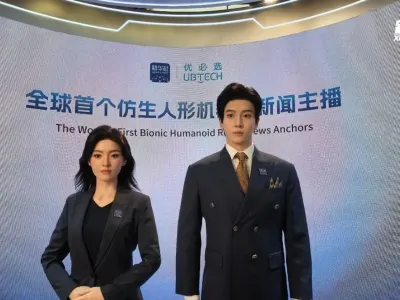
Xinhua and UBTECH Unveil Xinyan and Xinyu, Humanoid Robot News Anchors Designed by Zhang Yimou
Related Comparisons
Compare Topstar Star with similar robots
Unitree R1 vs Unitree H2
Unitree R1 vs Unitree H2: height, battery, joints, arms and software compared, with a clear pick by budget, space and project.
Figure 03 vs Atlas (Electric 2025)
Figure 03 from Figure AI vs Atlas from Boston Dynamics: runtime, charging, lifting, hands and safety compared, with a clear pick by job.
Figure 03 vs NEO Home Robot
Figure 03 from Figure AI vs NEO Home Robot from 1X Technologies: runtime, hands, safety and AI compared, with a clear pick by need.
Pepper vs AIREC
Pepper or AIREC? Compare these two humanoid robots on purpose, sensors, AI, arms and battery, from customer service to elderly care research.
Learn More About This Robot
Discover detailed specifications, reviews, and comparisons for Topstar Star.
View Robot Details →